• KGS/USD = 0.01144 0%
  • KZT/USD = 0.00212 0%
  • TJS/USD = 0.10432 -0.29%
  • UZS/USD = 0.00008 0%
  • TMT/USD = 0.28571 0.28%
  • KGS/USD = 0.01144 0%
  • KZT/USD = 0.00212 0%
  • TJS/USD = 0.10432 -0.29%
  • UZS/USD = 0.00008 0%
  • TMT/USD = 0.28571 0.28%
  • KGS/USD = 0.01144 0%
  • KZT/USD = 0.00212 0%
  • TJS/USD = 0.10432 -0.29%
  • UZS/USD = 0.00008 0%
  • TMT/USD = 0.28571 0.28%
  • KGS/USD = 0.01144 0%
  • KZT/USD = 0.00212 0%
  • TJS/USD = 0.10432 -0.29%
  • UZS/USD = 0.00008 0%
  • TMT/USD = 0.28571 0.28%
  • KGS/USD = 0.01144 0%
  • KZT/USD = 0.00212 0%
  • TJS/USD = 0.10432 -0.29%
  • UZS/USD = 0.00008 0%
  • TMT/USD = 0.28571 0.28%
  • KGS/USD = 0.01144 0%
  • KZT/USD = 0.00212 0%
  • TJS/USD = 0.10432 -0.29%
  • UZS/USD = 0.00008 0%
  • TMT/USD = 0.28571 0.28%
  • KGS/USD = 0.01144 0%
  • KZT/USD = 0.00212 0%
  • TJS/USD = 0.10432 -0.29%
  • UZS/USD = 0.00008 0%
  • TMT/USD = 0.28571 0.28%
  • KGS/USD = 0.01144 0%
  • KZT/USD = 0.00212 0%
  • TJS/USD = 0.10432 -0.29%
  • UZS/USD = 0.00008 0%
  • TMT/USD = 0.28571 0.28%

Viewing results 343 - 348 of 611

Controversial Kazakh Opposition Figure Aidos Sadykov Shot in Kyiv

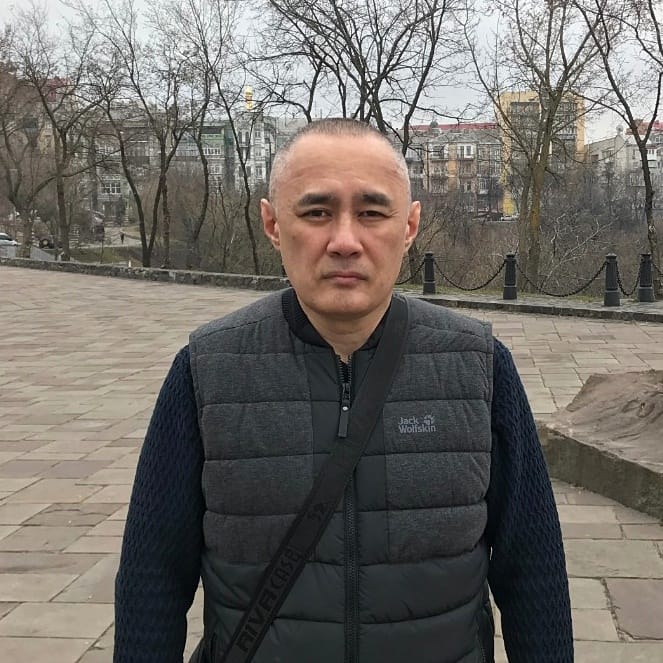
An unknown man in Kyiv fired several shots at Kazakh activist and oppositionist Aidos Sadykov, who has been granted official refugee status in Ukraine. It is reported that the incident occurred in the Shevchenkivskiy district of the Ukrainian capital when Sadykov was approaching his car with his wife, Natalia, who previously worked for Mukhtar Ablyazov’s opposition paper, Respublika. The gunman used a silencer on the firearm. Sadykov's condition is currently assessed as serious; his wife was not injured. As this is a case involving a high-profile individual, the head of the regional police, Andriy Nebytov, was called to the crime scene. Sadykov is the author of the Telegram channel 'Base', which has 59,000 subscribers, and has been permanently residing in Kyiv since 2014. Over the years, he has criticized the current Kazakh authorities, including the current president, Kassym-Jomart Tokayev. In 2020 Base, together with the initiative to create the opposition Democratic Party, became the co-organizers of a rally in Almaty demanding a boycott of the upcoming parliamentary election. The Democratic Party of Kazakhstan, an unregistered political party, was founded and led by Zhanbolat Mamai, a former journalist who was convicted for receiving funds from Ablyazov in 2017. Sadykov and Mamai both actively supported the protests in January 2022 in Kazakhstan, widely seen as an attempted coup. He is wanted in Kazakhstan under the articles on the incitement of discord.

Eurasian Connectivity Comes One Step Closer at the 2024 CAMCA Forum in Bishkek

The wider Eurasia region took another step towards cooperation and connectivity last week, as the 10th annual CAMCA Regional Forum was held in Bishkek. CAMCA – standing for Central Asia, Mongolia, the Caucasus and Afghanistan – is an initiative to accelerate dialogue between governments, private enterprises and media figures from these ten nations. Organized by the Washington, D.C.-based Central Asia-Caucasus Institute and the Rumsfeld Foundation, this year’s Forum – the first such event to take place in Kyrgyzstan – featured over 300 delegates across its two days, and presented insights from over 70 speakers. Attendees came from 25 countries in total. Professor Frederick Starr, the Central Asia-Caucasus Institute’s chairman, used his opening address to call on the countries of the region to start preparing for a future within a cohesive international bloc. Dr Starr reasoned that Russia and China, imperial powers that have traditionally had a controlling presence in Central Asia, may see their global influence wane in the coming decade. This would give the countries of Central Asia, and their neighbors, more space to create projects that serve their economies directly. A leading CAMCA regional project is the ‘Middle Corridor’ trade route, which bypasses Russia to transport goods more efficiently between Europe and China. Discussions are also taking place concerning the creation of single business and tourist visas for the whole Central Asia region. The importance of collaboration between countries in the Caucasus and Central Asia to mitigate the impact of climate change has never been so great. Addresses by senior members of the Kyrgyz government highlighted the progress that Kyrgyzstan has made since the administration of president Sadyr Japarov began its work in 2021. The country’s deputy prime minister Edil Baisalov reported that Kyrgyzstan is on track to double its GDP to $30 billion by 2030, while the minister for digital development, Nuria Kutnaeva, spoke about the rapid digitalization of the country’s government services.  In a noticeably warm and collaborative atmosphere, the event nonetheless highlighted the barriers that prevent the ten countries from forming a tangible ‘CAMCA’ space in the present. A key goal is the harmonization of their legislation and policy directions; however, no delegates from Tajikistan could travel to Bishkek for the Forum, as otherwise solid relations between Tajikistan and Kyrgyzstan are still strained by a dispute over their common border. Likewise, Armenian voices were also absent this time, in light of several of the sessions featuring Azerbaijani speakers and talking points. The event featured only one guest from Turkmenistan.  Even in these conflicts, however, Central Asian diplomacy is at work. The conflict on the Kyrgyz-Tajik border, mainly in Tajikistan’s Vorukh district, is being resolved through negotiations between the two countries’ governments, which would have been unthinkable even five years ago. Meanwhile, Kazakhstan is acting as a mediator between Baku and Yerevan in the aftermath of the war in Nagorno-Karabakh. Other topics on the agenda included security priorities for Central Asia, digital innovation in business, cooperation with Afghanistan, transitions in global energy markets, and infrastructure projects...

Kazakhstan Developing Digital System of Flood Forecasting and Modeling

An information system for forecasting and modeling floods in Kazakhstan was discussed with representatives at a Cabinet of Ministers meeting, as reported on the official website of the Government of Kazakhstan. The information system includes four modules: data collection, analysis, forecasting, and modeling. It will use both operational and long-term data from Kazakhstan Ғarysh Sapary, Kazgidromet, and the National Center of Geodesy and Spatial Information. The system will be integrated with the Ministry of Emergency Situations' database on floods, mud-flows, landslides, avalanche-prone areas, and hydraulic structures. The Ministry of Digital Development, Innovation, and Aerospace Industry suggested utilizing the European program for remote Earth sensing in its operations. Deputy Prime Minister, Kanata Bozumbayev directed the ministry to also consider domestic digital solutions. Additionally, to develop a comprehensive data set, it is necessary to increase the number of hydrological and meteorological stations, perform bathymetric surveys of water bodies and rivers, and create a "digital relief" map of areas in the country that frequently experience flooding. In the spring of 2024, Kazakhstan experienced its largest flooding in 80 years. Ten regions of the country declared a state of emergency, and thousands of houses and buildings were flooded. Thousands of people were evacuated from flooded areas and are still in the process of recovering from the damage.

Kazakhstan in 80th Place in New Global Ranking of Average Wages

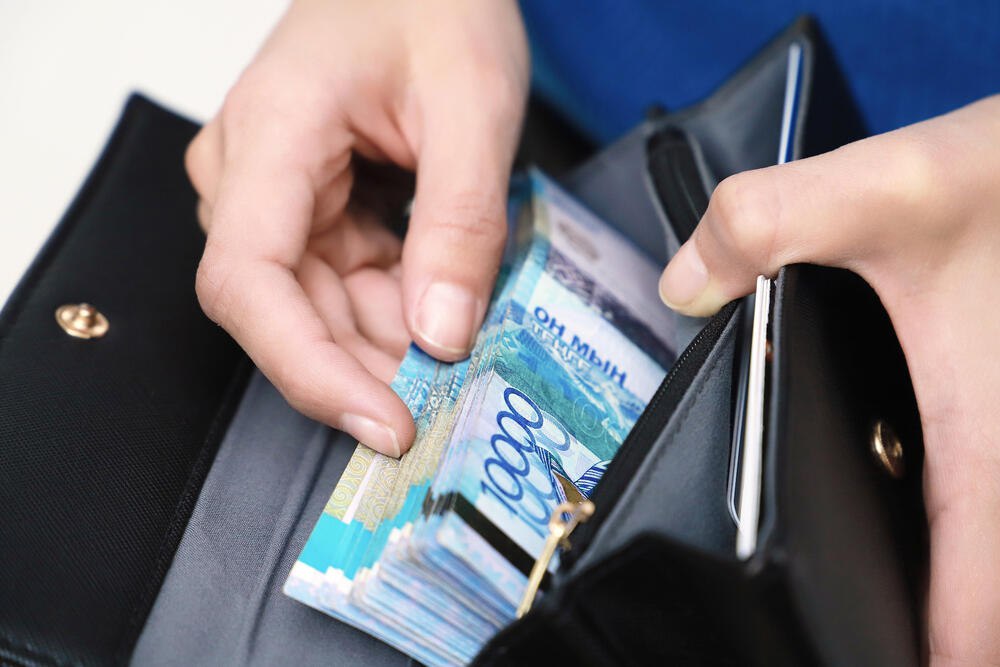
In a new ranking of the gross average salary in 196 countries recently published by CEO World Magazine, Kazakhstan is in 80th place. The average wage in the country amounts to $673 per month. Salaries are highest in the oil-producing western Atyrau and Mangystau regions, followed by the capital city Astana, and business capital Almaty. Wages are lowest in the southern regions of Zhambyl, Zhetysu and Turkestan, as well as in the North Kazakhstan region. Gross wages are the total sum of wages before taxes and other deductions, such as contributions to pension funds, health insurance, and others. Kazakhstan has the highest average salaries in Central Asia, followed by Turkmenistan ($654 per month), Uzbekistan ($351), Kyrgyzstan ($228) and Tajikistan ($169). The CEO World ranking states that in the first quarter of 2024, the average monthly nominal salary of workers in Kazakhstan amounted to 382,000 tenge ($844), which is 12.2% more in value terms than a year earlier. The index of real wages amounted to 102.7%, which shows an increase in purchasing power of 2.7%.

Controversial Petition on “LGBT Propaganda” Passes Threshold for Consideration in Kazakhstan

A petition against so-called “LGBT propaganda” has received more than 50,000 signatures, meaning Kazakhstan’s Ministry of Culture and Information must consider it. However, a number of experts believe that restrictions on the gay community would damage Kazakhstan’s image. In addition, the petition’s authors are known for their controversial initiatives.  The Kazakhstan Parents' Union is the author of the petition “We are Against Open and Concealed LGBT Propaganda in the Republic of Kazakhstan,” which was published on the official E-Petition.kz portal. According to Article 90-4 of the Administrative Procedural Code, the government must consider a petition with 50,000 signatures. A working group including interested parties, government agencies, and public associations will be created. The consideration of official petitions are a relatively recent innovation. So far, only three have collected the required number of signatures. The first came in the wake of the Nukenova murder at the hands of a disgraced former minister.  It was considered by the Kazakhstan president himself and brought about landmark legislation on domestic violence. The decision to allow public input via petitions is seen as a sign of the fulfillment of President Tokayev's promise of a more engaging and aware "listening state." Kazakhstan has seen repeated attempts to include in various legislative acts such a ban on promoting “nontraditional relations.” However, these amendments were not adopted, though numerous Mazhilis (lower chamber of parliament) deputies and public figures spoke out in favor of them. Nevertheless, there have been cases in Kazakhstan where media products containing what is deemed “homosexual content” did not reach the market. For example, in 2022, the former Minister of Culture and Information, Dauren Abaev, announced that, "In response to numerous requests from citizens and the media, I inform you, the animated film Lightyear will not be shown in Kazakhstan." Officially, however, the ministry did not prohibit the screening of the Hollywood animation in cinemas. According to rumors, distributors themselves canceled showings in response to the public outcry. Also, in January 2024, a website for LGBT people was blocked in Kazakhstan. The site, among other things, had materials to help young people answer questions about their sexual orientation. “During monitoring of the internet resource selftanu.kz, a violation of the law was identified related to the posting of information harmful to the health and development of children,” the Ministry of Culture stated in justifying blocking the site. The head of the group pushing the current petition, Bagila Baltabaeva, stated that, “Same-sex love is being openly forced on our children. It is forced [on them] in bookstores, on TV screens, and on smartphones. Young people openly spread [information about] and promote their unhealthy relationships. Thus, stealthily and subtly, new standards of sexual relations are taking shape among young people. In parallel, it is promoted that traditional values are relics of the past, a sign of backwardness. Therefore, for fear of criticism, many remain silent. And those who work up the courage and speak out against LGBT propaganda are branded as retrogrades and conservatives.” This is not the...

Kazakhstan President Pinpoints Flaws in Tourism Development

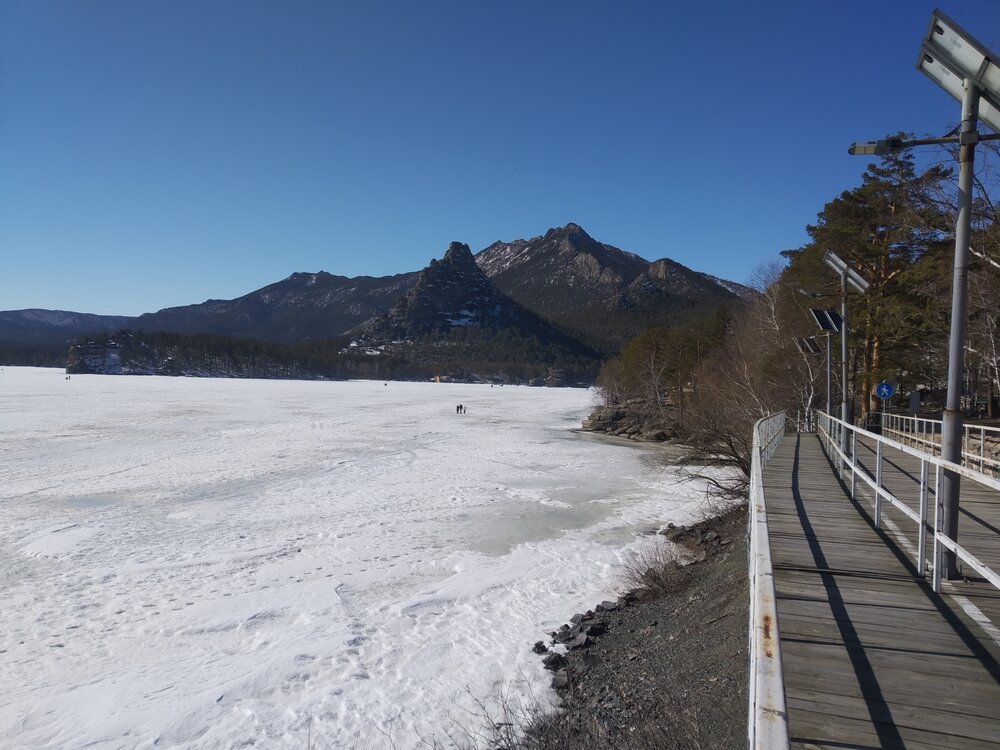
On June 13, Kazakhstan President Kassym-Jomart Tokayev chaired a government meeting on the development of the country’s tourism industry. He opened by noting that despite its favorable geographical location, the diversity of its nature, and its rich historical and cultural heritage, Kazakhstan’s wide-spanning tourism potential remains largely unexploited. “Tourism as an important sector of the economy is not yet effective, which is a big omission of the government. Over the past four years, the share of tourism in the economic structure has decreased from 3.7% to 3.2%, almost threefold lower than the world average. According to this indicator, Kazakhstan falls below neighboring countries with similar climates and culture. It is obvious that a qualitative breakthrough in the development of the tourism industry requires urgent systemic measures,” said the president. Tokayev then outlined areas in need of urgent improvement, beginning with problems posed by the country’s weak transport infrastructure for domestic tourism: “The quality of railway transportation in the country is beyond criticism. Most of the rail carriages are worn out, and some do not even have air conditioning. The government needs to renew the fleet of rail carriages in the next five years. In addition, it is important to improve railway stations. Their appearance and infrastructure must meet international standards. In summer, the flow of railway passengers increases sharply. It is therefore necessary to increase the number of trains with comfortable carriages to the most popular destinations. The quality of our roads also leaves much to be desired, making it very difficult to reach remote recreation areas by car. There are practically no fully serviceable highways. The reconstruction of the Astana-Almaty highway, connecting the south and center of Kazakhstan, has been ongoing since 2021. There are many similar unfinished roads across the country and it is imperative that the government completes these road projects this year.” The President emphasized that the poor logistics connectivity of holiday destinations affects not only domestic tourism, but also the influx of guests from abroad. “Almost 90% of foreign tourists come to Kazakhstan from neighboring CIS [former Soviet] countries. There are still few tourists from non-CIS countries. International studies show that over 70% of travelers prefer to visit vacation destinations within a 4-hour flight, making Kazakhstan  very attractive to tourists from China, India, East Asia, and the Middle East. It is also necessary to consider, specific issues related to the national mentality of foreign tourists, their interests, and requests. Within 5 years we can double and even triple the number of foreign tourists but to do so, we need to develop air transport, firstly by expanding the presence of low-cost airlines on popular air routes. Their current share in passenger air transportation in Kazakhstan is only 21%.” The head of state criticized the Government's plans to simultaneously develop 20 tourist zones across the country, claiming the approach ineffective regarding the dispersion of the state's limited resources. Instead, he recommended that efforts focused on the development of the most promising locations, in the shortest possible time,...