• KGS/USD = 0.01144 0%
  • KZT/USD = 0.00212 0%
  • TJS/USD = 0.10432 0%
  • UZS/USD = 0.00008 0%
  • TMT/USD = 0.28490 0%
  • KGS/USD = 0.01144 0%
  • KZT/USD = 0.00212 0%
  • TJS/USD = 0.10432 0%
  • UZS/USD = 0.00008 0%
  • TMT/USD = 0.28490 0%
  • KGS/USD = 0.01144 0%
  • KZT/USD = 0.00212 0%
  • TJS/USD = 0.10432 0%
  • UZS/USD = 0.00008 0%
  • TMT/USD = 0.28490 0%
  • KGS/USD = 0.01144 0%
  • KZT/USD = 0.00212 0%
  • TJS/USD = 0.10432 0%
  • UZS/USD = 0.00008 0%
  • TMT/USD = 0.28490 0%
  • KGS/USD = 0.01144 0%
  • KZT/USD = 0.00212 0%
  • TJS/USD = 0.10432 0%
  • UZS/USD = 0.00008 0%
  • TMT/USD = 0.28490 0%
  • KGS/USD = 0.01144 0%
  • KZT/USD = 0.00212 0%
  • TJS/USD = 0.10432 0%
  • UZS/USD = 0.00008 0%
  • TMT/USD = 0.28490 0%
  • KGS/USD = 0.01144 0%
  • KZT/USD = 0.00212 0%
  • TJS/USD = 0.10432 0%
  • UZS/USD = 0.00008 0%
  • TMT/USD = 0.28490 0%
  • KGS/USD = 0.01144 0%
  • KZT/USD = 0.00212 0%
  • TJS/USD = 0.10432 0%
  • UZS/USD = 0.00008 0%
  • TMT/USD = 0.28490 0%

Viewing results 349 - 354 of 611

Women and Girls in Central Asia in Need of Protection from Violence

 Central Asian Countries are seeing a new wave of violence against women and girls, and the fight against their long-standing powerlessness is just beginning. In 2023, the Women, Peace and Security Index (WPS Index), published by the Georgetown Institute for Women, Peace and Security and the PRIO Centre on Gender, Peace and Security, found Kyrgyzstan and Uzbekistan the most dangerous countries in Central Asia for women. Things were deemed slightly better in Kazakhstan, Tajikistan, and Turkmenistan. The challenges faced by women in the region result from a combination of factors: the low number of women in government and law enforcement, women’s lack of financial independence, especially in rural areas, a distorted understanding of traditions across populations, and a mentality in society that often denies or covers up flagrant cases of injustice.   The law is written in blood: the case of Kazakhstan According to WPS experts, Kazakhstan has progressed further than its neighbors toward equality. Still, according to Kazakhstan’s Ministry of Internal Affairs, 69 women and seven children died in 2023 in domestic conflicts alone. It is believed that, on average, at least 80 women die every year at the hands of those they live with; every day, the police receive hundreds of calls, while thousands of women need the help of specialized protection and support centers. According to the Prosecutor General, last year 150 women sustained severe injuries and 200 moderate injuries in marital conflicts, with another 4,000 suffering minor bruises. This year, however, marked a turning point for Kazakhstani society – more and more women are recording videos with marks from beatings, posting the videos on social media, and calling on the police to punish their abusers. Even high-profile domestic abusers can now be exposed. The trigger for these changes was the trial of former Nazarbayev-era Minister of the National Economy, Kuandyk Bishimbayev, who beat his wife, Saltanat Nukenova, to death last November. Following a live-streamed trial, this May, Bishimbayev was sentenced to 24 years in prison for her murder. Even during the Bishimbayev trial, Karina Mamash, the wife of a Kazakh diplomat in the UAE, went public with allegations about systematic abuse, calling on the state to help. The Ministry of Foreign Affairs urgently recalled her husband, Embassy Counselor Saken Mamash, who may be fired. Karina is now at home with her children while a criminal case has been opened against her husband. She has since reported threats from her husband's relatives. Also in May, Akmaral Umbetkalieva, a resident of Atyrau, alleged that her ex-husband, Rinat Ibragimov – the akim (mayor) of Makat District in Atyrau Region – had beaten her for eleven years and taken away their children. Ibragimov called the allegations slander. The month before, former Taldykorgan police chief, Marat Kushtybaev was sentenced to eleven years for raping a girl in his office in November 2023. Another headline from April was that a security guard at an Almaty bar who had been convicted of raping a girl at knifepoint would serve eight years in prison. The...

Kazakhstan’s National Railway Carrier Under Threat of Default

The Chairman of the Supreme Audit Chamber (SAC), Alikhan Smailov, has discussed the possible default of national rail carrier, Kazakhstan Temir Zholy (KTZ). According to Smailov, the company cannot currently fulfill its obligations. "The company is in the ‘red’ zone of credit risk. At the beginning of 2024, its debt amounted to 2.9 trillion tenge ($6 billion) and continues to grow; 45%, or 1.3 trillion tenge ($2 billion), of the total debt is aimed at refinancing previously assumed debt obligations,” said Smailov, answering questions from deputies. According to Smailov, Samruk-Kazyna JSC's existing corporate governance methods and development strategy, which include KTZ, are not able to prevent the crisis the country's national railway company is facing. “Further deterioration of assets, the build-up of debts, and the inability to service them without fundamental management changes will lead to the default of KTZh,” Smailov stated. A large amount of budget funds has been spent on developing the railway industry over the past four years, but it has not been enough. The money invested has yet to meet the nation's needs for freight and passenger transportation, Smailov emphasized.

By 2025, All of Kazakhstan Will Have Access to Clean Drinking Water

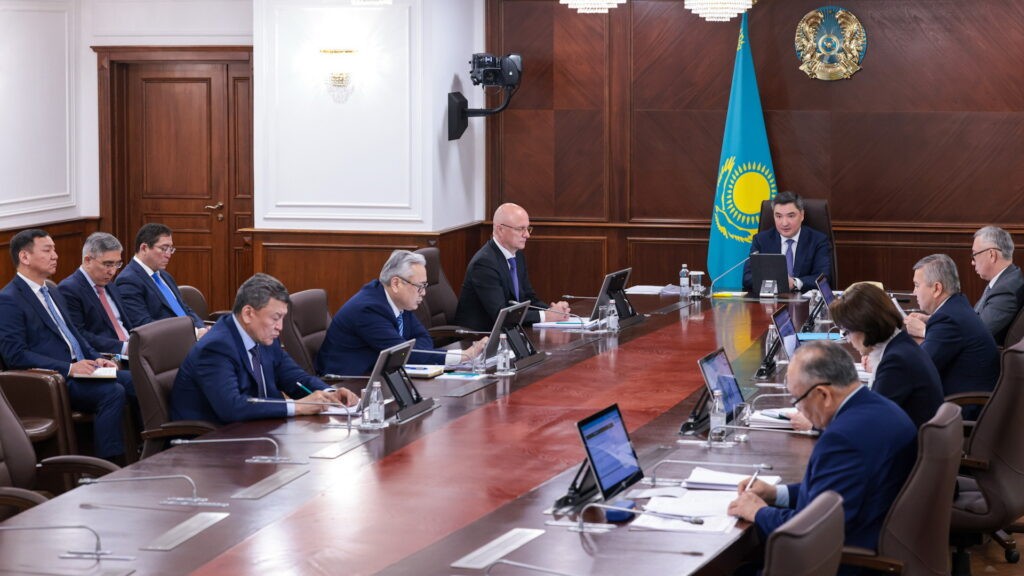
The Prime Minister of Kazakhstan, Olzhas Bektenov, has said at a government meeting where issues of water supply services to urban and rural settlements were addressed that the entire population will have access to clean drinking water within eighteen months. At the end of last year, access to water supply services in Kazakhstan's cities amounted to 98.9%, and in rural settlements, 96.6%. Full coverage of the urban population has been achieved in nine regions, with the lowest level of provision noted in the Abai and Pavlodar regions. To improve the situation in the regions with low indicators, funds are being allocated on a priority basis. Twenty-nine projects to construct and reconstruct pipelines in nine oblasts are being implemented, with plans to reconstruct and develop 2,000 kilometers of water pipelines, providing water supply to 437 settlements. A connection to a centralized water supply will be made in 44 of these, with a total population of 92,000 people. Five projects are under development and will be implemented after receiving state expertise; their implementation will improve the water supply in 200 settlements. In 2024, 218 billion tenge was bookmarked from the republican budget to fund the construction and reconstruction of water supply and sewage systems. The Prime Minister emphasized that by the end of 2025, 100% of the population must have access to quality drinking water. "This is one of the most socially important tasks. Only one-and-a-half-years are left for its fulfillment. Despite the high percentage of fulfillment, akimats (local authorities) should intensify work to achieve the plans to bring the relevant infrastructure to villages and towns. All works on the water supply should be prioritized. The implementation of water supply networks within settlements should be synchronized with the plans to bring the infrastructure of group water conduits to the borders of villages", said Bektenov.

Price of Liquefied Petroleum Gas to Rise Again in Kazakhstan

The Ministry of Energy of Kazakhstan has published for public discussion, a draft by the Minister of Energy to increase the price of liquefied petroleum gas (LPG) from July 1. The maximum wholesale price of one ton of LPG will be increased from the current 40,320 tenge to 45,158 tenge, and the maximum retail price will increase slightly — by 5-8 tenge per liter, depending on the region. Cheaper than gasoline, LPG is the most popular fuel for vehicle owners in Kazakhstan. A sharp hike in the price of LPG was met with nationwide objection in January, triggering mass protests in Zhanaozen which spread nationwide and turned violent in Almaty and Astana. The ministry issued several reasons for what will be an unpopular move. First, the price of liquefied petroleum gas is much lower than the cost of its production. The production cost of LPG varies from 60 thousand to 70 thousand tenge per ton, whereas the current maximum wholesale price is 40,320 tenge per ton. Second, LPG consumption in Kazakhstan increases year on year. In 2023, it increased by 400 thousand tons, or 28%, compared to 2022. Last year, LPG consumption volumes amounted to 2.2 million tons compared to 1.8 million tons in 2022. Increasing consumption and the unprofitability of LPG production due to low prices have led to a decrease in the production of the fuel and its shortage in the regions. Today the deficit of LPG stands at 20-25%. Third, due to unprofitability, manufacturers are increasingly losing interest in LPG production and switching instead, to more profitable products. For the same reason, investors are also reluctant to invest in its production. Fourth, the price of LPG in Kazakhstan, between 54-86 tenge per litre depending on the region, is the lowest among former Soviet states. For comparison, the price per litre in Russia is equivalent to 132 tenge; in Kyrgyzstan, 159 tenge; in Azerbaijan, 171 tenge; and in Tajikistan, 273 tenge. According to analysts, in 2024, LPG consumption in Kazakhstan will increase by another 200 thousand tons and reach 2.4 million tons, leading to a potential shortage of 30-40%

How Kazakhstan Is Cleansing Itself of Nursultan Nazarbayev’s Legacy

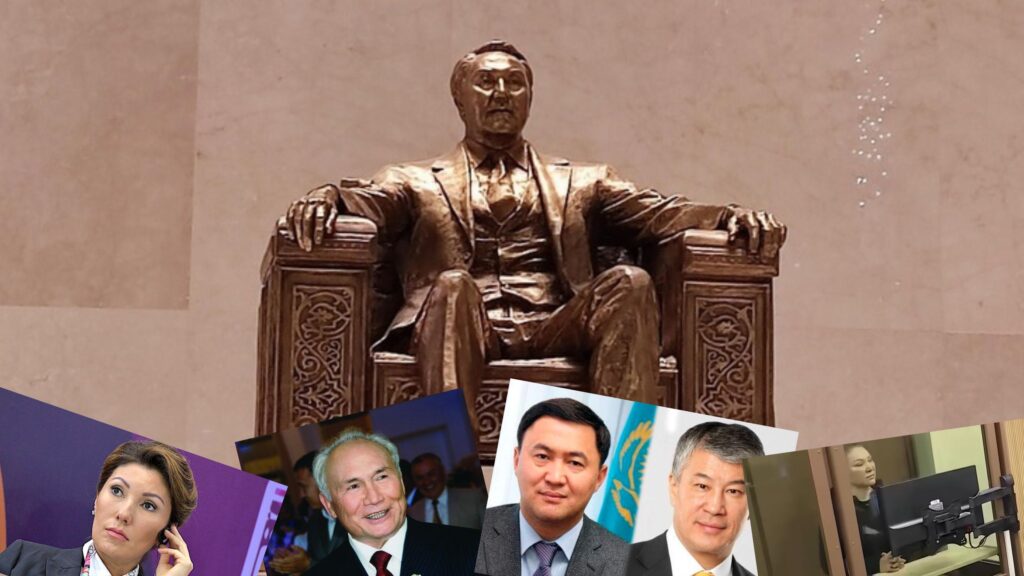
“New Kazakhstan,” the term introduced by Kassym-Jomart Tokayev after the attempted coup d'état in January 2022, has also given birth to a thesis about “Old Kazakhstan." "Old Kazakhstan" is associated with the country's first president, Nursultan Nazarbayev, and his numerous relatives, who penetrated all spheres of life in the country. So,  which former head of state's relatives fell into the clutches of justice? Gulmira Satybaldy Gulmira Satybaldy, former wife of Kairat Satybaldyuly, nephew of the first president of Kazakhstan, Nursultan Nazarbayev, is currently on trial in Almaty. She is accused of locking up her relative and business partner, Abai Zhunusov, for 165 days and, after intimidating him, transferring his shares in various companies to her proxies. Damages are estimated at $2.2 million (1.4 billion KZT). The guilty verdict, which few doubt will be passed, will not be her first. On 4 May 2023, the Astana court sentenced Gulmira Satybaldy to seven years' imprisonment for self-rule and kidnapping. A month later, on 30 June 2023, the Kyzylorda court sentenced her to eight years in prison for embezzlement and misappropriation of other people's property. The new, harsher sentence absorbed the previous punishment. Kairat Satybaldyuly Next is Kairat Satybaldyuly, a rather grim figure from the Nazarbayev clan. In the early noughties, on the now defunct Internet site “Aziopa,” which was attributed to Nazarbayev's former eldest son-in-law Rakhat Aliyev,  Kairat Satybaldyuly was painted black with hints of his handcuffing his wife to the radiator and beating her. It also pointed to Kairat's presidential ambitions. Satybaldyuly is the son of Nursultan Nazarbayev's younger brother, Satybaldy, who died in 1981 in a car accident. According to Forbes Kazakhstan, during his uncle's presidency, Kairat was listed as one of the country's most influential business people with a fortune of 163 million dollars. According to Kazakhstan's media, the nephew of the former president of Kazakhstan was listed as the sole founder of the offshore firm Skyline Investment Company S.A., which owns over 24% of the shares of Kazakhstan's telecommunications company Kazakhtelecom. In addition to working  in the civil service, including in the National Security Committee, he was deputy akim of Astana, and held senior positions in national companies. Detained in March 2022 on suspicion of abuse of power and large-scale embezzlement of funds by Kazakhtelecom JSC and Transport Service Center JSC, Satybaldyuly was held in custody until the trial. In court, Satybaldyuly reached a mediation agreement with the injured parties and paid 40 billion tenge ($89.5 million) in damages. He also entered into a procedural plea agreement. In September 2022, he was sentenced to six years in prison. The court ordered the confiscation of his property and banned him from working in the civil service for ten years. A submission was also made to the President of Kazakhstan to strip Satybaldyuly of the title “Major General of the National Security Bodies of Kazakhstan,” as well as the state orders “Kurmet” and “Parasat.” Despite reports that the Anti-Corruption Service of Kazakhstan is investigating criminal cases against Satybaldyuly involving tax...

Kazakhstan Poised for Large-Scale Locust Invasion

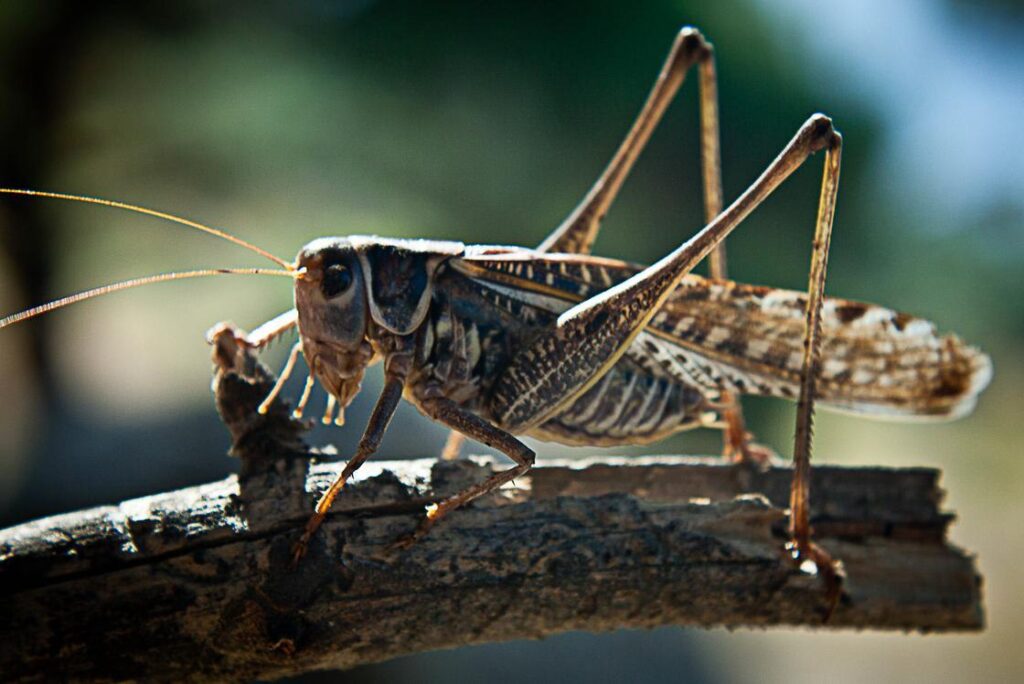
At a central operational headquarters meeting to counteract the spread of locusts, Vice Prime Minister of Kazakhstan Serik Zhumangarin received new reports on projected risks to the region. Alarmed by the forecast, Zhumangarin announced, "We have never before faced such a wide spanning  infestation of locusts and must not underestimate the possible consequences.  I instruct the Committee of State Inspection of the Ministry of Agriculture to immediately finalize all procedural issues and send necessary equipment to the regions where it is needed. In the hot season, as a precaution, we will switch to meetings at the headquarters twice a week" The government reported that 260,000 hectares had already been treated in the Turkestan Oblast, but thereafter, the areas affected by locusts had spread to an additional 50,000 hectares. Treatment is therefore being extended to the districts of  Arys City, Saryagash, Keles, Ordabasinsk, and Shardara. According to forecasts, the largest invasion of locusts  is expected in the regions of Kostanay and Aktobe. "Locusts have always been with us, from the time of  dinosaurs and mammoths. We have always and will continue, to battle them," stated Zhumangarin. He then  said that whilst locusts are regarded as halal and some countries have learned to harvest them as a source of great protein food,  that's not us, I guess!"