• KGS/USD = 0.01144 0%
  • KZT/USD = 0.00212 0%
  • TJS/USD = 0.10432 0%
  • UZS/USD = 0.00008 0%
  • TMT/USD = 0.28490 0%
  • KGS/USD = 0.01144 0%
  • KZT/USD = 0.00212 0%
  • TJS/USD = 0.10432 0%
  • UZS/USD = 0.00008 0%
  • TMT/USD = 0.28490 0%
  • KGS/USD = 0.01144 0%
  • KZT/USD = 0.00212 0%
  • TJS/USD = 0.10432 0%
  • UZS/USD = 0.00008 0%
  • TMT/USD = 0.28490 0%
  • KGS/USD = 0.01144 0%
  • KZT/USD = 0.00212 0%
  • TJS/USD = 0.10432 0%
  • UZS/USD = 0.00008 0%
  • TMT/USD = 0.28490 0%
  • KGS/USD = 0.01144 0%
  • KZT/USD = 0.00212 0%
  • TJS/USD = 0.10432 0%
  • UZS/USD = 0.00008 0%
  • TMT/USD = 0.28490 0%
  • KGS/USD = 0.01144 0%
  • KZT/USD = 0.00212 0%
  • TJS/USD = 0.10432 0%
  • UZS/USD = 0.00008 0%
  • TMT/USD = 0.28490 0%
  • KGS/USD = 0.01144 0%
  • KZT/USD = 0.00212 0%
  • TJS/USD = 0.10432 0%
  • UZS/USD = 0.00008 0%
  • TMT/USD = 0.28490 0%
  • KGS/USD = 0.01144 0%
  • KZT/USD = 0.00212 0%
  • TJS/USD = 0.10432 0%
  • UZS/USD = 0.00008 0%
  • TMT/USD = 0.28490 0%

Viewing results 337 - 342 of 611

Kazakhstan Facing Challenge of Developing Roads in Ninth Largest Country in World

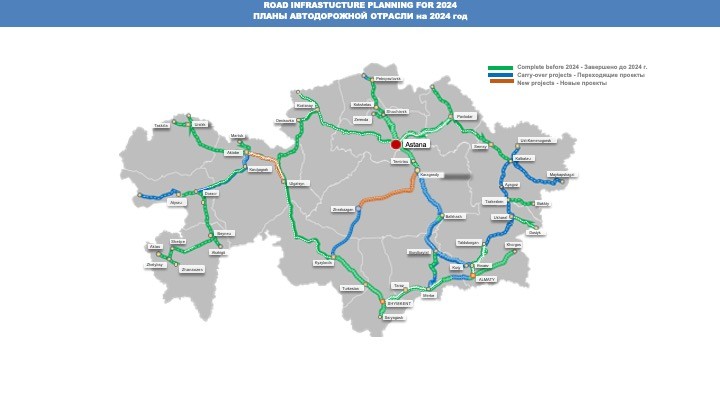
Kazakhstan is one of the most active post-Soviet states in building roads. Over the past decade, KZT4 trillion ($8.55 billion) has been spent on highway construction in the country, yet in a world ranking of road quality, Kazakhstan stands 93rd out of 141 countries. Record year for road construction The focus of the current road construction season is completing the reconstruction of sections of the main road transport corridors: Karaganda–Balkhash–Almaty, Taldykorgan–Ust-Kamenogorsk, Aktobe–Kandyagash, and Atyrau–Astrakhan. Overall, the current season is due to be set new records. There are plans to repair, reconstruct and build twelve thousand kilometers of road. Another feature of the work this year is the implementation of a major new program for the “medium repair” of local roads to strengthen them structurally, which is designed to improve transport links between populated areas. This program is set to repair about 2,500 kilometers of road throughout the country. Betting on tolls In February, the government announced plans to increase tariffs on federal toll roads. However, the initiative is still under consideration. The current tariffs – KZT 1 per kilometer for passenger vehicles (0.002 US cents) and KZT 5-25 per kilometer for freight vehicles depending on the load capacity and transport class – were approved back in March 2013 for the first toll highway built in the country (Astana-Shchuchinsk). Since then, the tariffs have not changed. In 2024, there are plans to roll out a toll system on another 2,400 kilometers of federal roads, namely on the sections Kostanay–Troitsk, Aktobe–Russian border (toward the city of Orenburg), Aktau–Beineu, Kyzylorda–Aktobe Region border, Usharal–Dostyk, Kostanay–Denisovka, Makat–Kandyagash, Taraz bypass, Karaganda bypass, Balkhash–Burylbaital, and Shu– Burylbaital. According to the national company in charge of federal and international roads in Kazakhstan, KazAvtoZhol, the toll system will be introduced only after repair work is completed and the roads fully comply with regulatory requirements. In addition, attention is being paid to transit routes when introducing tolls. This is especially relevant in the context of the government’s plans to develop freight transit through Kazakhstan and make the country a regional transport and logistics hub. Thanks to international transport, including transit, tolls are expected to become a significant contributor to the country’s budget. Today in Kazakhstan, there are 17 toll road sections with a total length of more than 3,200 kilometers, which, along with the state budget, help finance the maintenance of federal roads. According to the Ministry of Transport, KZT60 billion ($130 million) is required annually to maintain the country’s roads. Internationally, road maintenance is financed by taxes allocated for transport, but this is not enough in Kazakhstan – it is one of the largest countries in the world, but has a low population density, meaning its road infrastructure remains underutilized. Because of this, historically, road maintenance in the country was financed from the state budget. Overall, the toll system will be gradually introduced on 11,000 kilometers of road by 2029 as reconstruction work is completed. The further rollout of the system, which aims to support year-round maintenance, should reduce the...

Over a Million Ethnic Kazakhs Have Returned to Kazakhstan Since 1991

Since 1991, over 1.1 million ethnic Kazakhs have returned to live in Kazakhstan, the government has reported. Since the start of this year 7,353 ethnic Kazakhs have received the status of kanda (Kazakh repatriates). Just under half (49.4%) arrived from China, 34.4% came from Uzbekistan, followed by Turkmenistan (6.3%), Mongolia (5.4%) and Russia (3.2%). These kandas have settled in different regions of Kazakhstan, but labor-deficient regions -- the Akmola, Abay, Kostanay, Pavlodar, East, and North Kazakhstan regions -- have been promoted as potential new homes. Kandas resettling in these regions are provided state support, namely a relocation subsidy of KZT 258,400 ($560) per family. The Ministry of Labor has announced that since 2023 the pilot relocation program has implemented a "one window" mechanism for granting kandas status through Kazakhstan's embassies. This initiative allows ethnic Kazakhs to address issues related to visiting Kazakhstan, securing employment, finding housing, and obtaining official status without physically entering the country. To date, 9,569 applications from ethnic Kazakhs have been processed under this new system.

Kazakhstan to Invest $1 Billion in Repairing Water Management Infrastructure

Kazakhstan's minister of national economy, Nurlan Baibazarov, has announced that the country is to repair its water management system following recent severe floods. "The floods that took place in the spring showed the underdeveloped infrastructure of the country's water management system. We have identified 16 projects that require investments of more than 500 billion tenge [over $1 billion]," Baibazarov said. According to the minister, preferential financing will come from from the Saudi Islamic Development Bank. Funds are provided for an extended period at a very low rate, enabling the resolution of long-standing issues in this sector. The renovation of the water management system will include the construction of reservoirs and irrigation canals and the fortification of the technical infrastructure for all services. "First of all, according to the instructions of the head of state, we will carry out a complete renewal of equipment and facilities in the Ministry of Emergency Situations system. In the water sector, we will also equip the Kazvodkhoz system with the necessary equipment," Baibazarov added.

Who is Aidos Sadykov?

The tragic shooting of Kazakh journalist, Aidos Sadykov is suspected to be collateral damage in Russia’s war of aggression against Ukraine and the ensuing geopolitical subversions. Aidos Sadykov and his wife Natalya Sadykova host the YouTube channel @base-kazakh, which, according to their description, “covers events in Kazakhstan and the world and does not depend on the authorities, oligarchs and grants”. The couple left Kazakhstan in 2014 following allegations of slander against Sadykova by Kazakh MP Maral Sergazievich Itegulov, a charge no longer considered a criminal offense as of 2020. Since 2014, they have resided in Kyiv, where they have received refugee status. Sadykov has criticized the Kazakh authorities in the regional press since 2000. Also a former chair of the Aktobe NSDP Party Azat branch, Aidos Sadykov was imprisoned for hooliganism in 2010, but was released early under amnesty. He later founded the "Gastat" opposition movement after leaving the NSDP and establishing an independent trade union at CNPS-Aktobemunaigas, a local oil and gas enterprise. He is associated with another outspoken controversial figure, Mukhtar Ablyazov, who has sought political asylum in France. Ablyazov faced murder charges in Kazakhstan following the death of a bank CEO – the same bank that Ablyazov later took over and reportedly defrauded. He now faces judgements against him exceeding $5 billion in UK and U.S. courts related to laundering stolen funds. Sadykova worked for the newspaper Respublika, which was allegedly funded by Ablyazov. The apparent assassination attempt of Sadykov has raised questions about motive. Kazakhstan parliamentary deputy, Ermurat Bapi has suggested that the assassination attempt was due to “third forces” that want to create a “quarrel between Kazakhstan and some countries”. Sadykova has accused President Tokayev of ordering the assassination. The couple’s YouTube channel has been consistently critical of Kazakhstan’s government, starting with President Nazarbayev’s term and continuing under new President Tokayev. Since the war broke out in Ukraine, Sadykov and his wife have claimed that Kazakhstan’s leadership is colluding with the Kremlin. According to The Guardian, Sadykov is a “prominent blogger with more than 1 million subscribers on YouTube.” While the YouTube channel does in fact show 1.01 million followers, Washington University’s public tool demonstrates that at least 88% of these are dead accounts (meaning they show no activity), according to an analysis conducted three days after the attack on Sadykov. On June 20, the Prosecutor General of Kazakhstan announced that they had reached out to the Prosecutor General of Ukraine and offered their full assistance in solving the crime by involving highly-skilled investigators from Kazakhstan.

Kazakhstan’s Parliament To Consider Ban on Religious Clothing

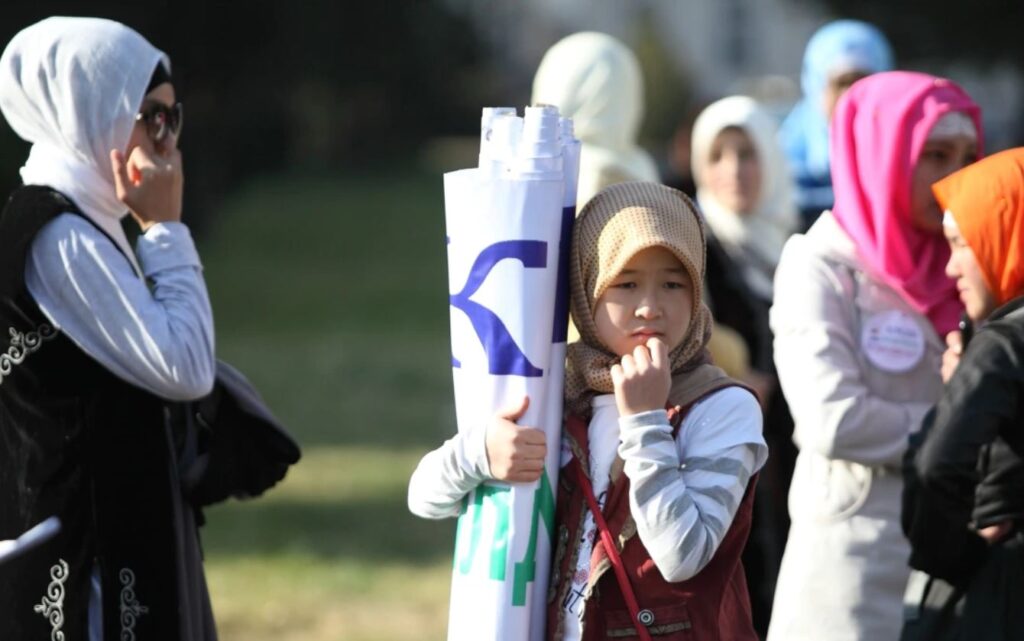
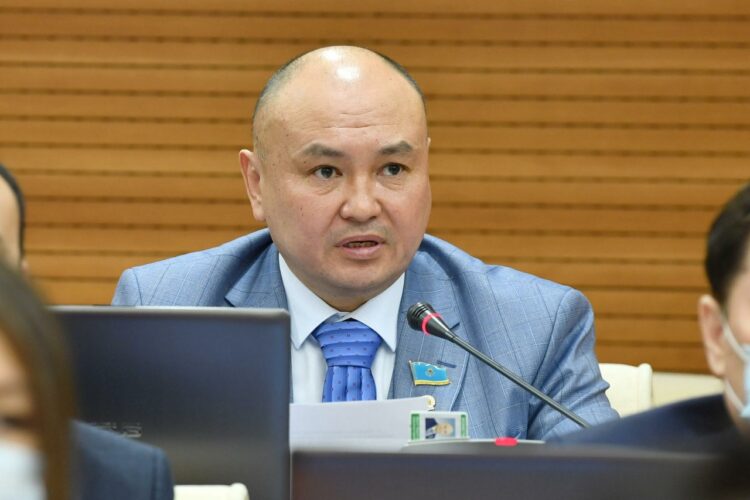
The Kazakh authorities are once again trying to restrict the wearing of religious clothing -- hijabs and niqabs -- in public places. There have been heated discussions on social media, and Muslim women have appealed to President Kassym-Jomart Tokayev himself. The hijab (headscarf) has long become an everyday accessory, and today, the secular part of society is trying to prevent its wearing in schools. However, women wearing niqabs -- a long, usually black cape that covers the face -- are increasingly common on the streets. Many Kazakhs consider the niqab categorically unacceptable. The issue of wearing religious clothing in public places may be considered in Kazakhstan's parliament, said Yermurat Bapi, a member of the Mazhilis (lower house of parliament). "Now, the most important issue for us is to preserve our country's national interests, traditions, and culture. And if we look at the current situation, more Kazakhs are dressed in black in society. This situation seriously harms our future national interests," Bapi said. "That is why we, a group of deputies, have prepared such a bill. It will be submitted to the Parliament at the fall session. I think that the issue of hijab, niqab, and other religious clothing in society will be solved after its adoption. Then we will be able to regulate the issues of religious dress in some way," he added. In May this year, President Tokayev spoke sharply about covered faces. "Dressing in all black contradicts the worldview of our people, is thoughtless copying of foreign norms, conditioned by religious fanaticism. We must not break away from our spiritual roots and erode our national identity," he said. Also, in October 2023, Minister of Culture and Information Aida Balayeva said that the new law on religion will prohibit wearing religious clothing in public places. Kazakhstan has been trying to solve the problem of wearing religious clothing in schools, universities, courts, and other organizations for years. In the past, the ban on wearing hijabs to school repeatedly caused clashes between school administrations, akimats (mayor's offices), and parents of female students. For example, in Atyrau region in 2023, more than 150 girls refused to attend classes without a hijab. As the Ministry of Education explained, the parents were spoken with, after which the children returned to classes. Experts believe the hijab and niqab have become fashion elements imposed by foreign influences alien to Kazakhstanis. However, local theologians are virtually unanimous: Kazakh women have never covered their faces. "After gaining independence, our youth began to study in foreign educational institutions and began to instill in our people certain clothes and dress codes, which were abroad: in Pakistan, Saudi Arabia, and other Muslim countries. These are their customs, especially about covering the face. Popularly it is called a burqa -- a headscarf with slits for the eyes -- but in Arabic it is called a niqab. The niqab, which completely covers the face, is generally unacceptable for our people, and our people do not use it. Today, in some regions of our...

Kazakh MP Accuses Nazarbayev’s Relatives of Raiding

MP Yerlan Sairov believes that relatives of former president Nursultan Nazarbayev, Rakhat Aliyev and Kairat Satybaldy are involved in a business seizure. The parliamentarian demanded that the General Prosecutor's Office return the property to the affected businessmen, Kursiv has reported. During a meeting of the Mazhilis, the deputy stated that representatives of the Old Kazakhstan, taking advantage of their impunity, had initiated a series of business takeovers. "Such a system was formed by Rakhat Aliyev (Nazarbayev's former son-in-law) and his supporters," Sairov stated. Now, the victims have begun demanding the return of seized property. According to him, Nurlan Bimurzin and Megdat Kaliyev lost their oil business worth 170 million tenge ($369,000) in 2003. Zharkyn Kurentayev and Sholpan Karaneeva also "fell victim to the greed of the above-mentioned persons. The same group selected several vacation spots in the town of Konaev and the Altyn Bulak sanatorium in the Turkestan region," Sairov specified. Referring to the victims' posts on social networks, Sairov said that a group linked to Nazarbayev's nephew, Kairat Satybaldy, and his former sister-in-law, Gulmira, allegedly annexed the Hilton Hotel in Almaty and German citizen Robert Schumacher's construction company. The latter is now considered bankrupt. "The Prosecutor General's Office needs to take steps to protect the economic interests of the victims from representatives of the Old Kazakhstan and return the property," added Sairov. Rakhat Aliyev, the husband of Dariga Nazarbayeva from 1983 to 2007, was one of the most influential people in Kazakhstan in the early 2000s. In 2007, he was charged with kidnapping and preparation for a coup d'état and sentenced in absentia to 40 years; Aliyev fled to Austria, where he was arrested in 2014, and found hanged in a cell in Vienna in 2015. The official cause of death was suicide. In late February 2024, businessmen Bimurzin and Kaliyev announced that they had applied with the Prosecutor General's Office to reclaim assets they claimed to have transferred under duress to the former president's daughter, Aliya Nazarbayeva, in 2003. Nazarbayeva sued them for libel and lost Furthermore, earlier this year, businesswoman Sholpan Karaneeva reported that the Hilton Hotel was taken by Kairat Satybaldy and his supporters in 2021. After the nephew of the former president was behind bars, the transfer of his assets to the state, among them the hotel, was initiated. Kairat Satybaldy and his former wife, Gulmira Satybaldy, have been sentenced under articles on laundering money and the embezzlement of others property.