• KGS/USD = 0.01144 0%
  • KZT/USD = 0.00212 0%
  • TJS/USD = 0.10432 -0.29%
  • UZS/USD = 0.00008 0%
  • TMT/USD = 0.28571 0.28%
  • KGS/USD = 0.01144 0%
  • KZT/USD = 0.00212 0%
  • TJS/USD = 0.10432 -0.29%
  • UZS/USD = 0.00008 0%
  • TMT/USD = 0.28571 0.28%
  • KGS/USD = 0.01144 0%
  • KZT/USD = 0.00212 0%
  • TJS/USD = 0.10432 -0.29%
  • UZS/USD = 0.00008 0%
  • TMT/USD = 0.28571 0.28%
  • KGS/USD = 0.01144 0%
  • KZT/USD = 0.00212 0%
  • TJS/USD = 0.10432 -0.29%
  • UZS/USD = 0.00008 0%
  • TMT/USD = 0.28571 0.28%
  • KGS/USD = 0.01144 0%
  • KZT/USD = 0.00212 0%
  • TJS/USD = 0.10432 -0.29%
  • UZS/USD = 0.00008 0%
  • TMT/USD = 0.28571 0.28%
  • KGS/USD = 0.01144 0%
  • KZT/USD = 0.00212 0%
  • TJS/USD = 0.10432 -0.29%
  • UZS/USD = 0.00008 0%
  • TMT/USD = 0.28571 0.28%
  • KGS/USD = 0.01144 0%
  • KZT/USD = 0.00212 0%
  • TJS/USD = 0.10432 -0.29%
  • UZS/USD = 0.00008 0%
  • TMT/USD = 0.28571 0.28%
  • KGS/USD = 0.01144 0%
  • KZT/USD = 0.00212 0%
  • TJS/USD = 0.10432 -0.29%
  • UZS/USD = 0.00008 0%
  • TMT/USD = 0.28571 0.28%

Viewing results 355 - 360 of 611

Kazakhstan’s Constitution Now Published in Braille

The Kazakh Constitutional Court has presented the first edition of the country's Constitution printed in Braille, making it accessible to the visually-impaired. The initiative to translate copy of Kazakhstan's Basic Law into Braille (relief-dot tactile font) was realized with support from the OSCE Program Office in Astana and the Ministry of Culture and Information. Welcoming the move, Chair of the Constitutional Court of Kazakhstan Elvira Azimova stated: “The Constitutional Court will continue to promote equality, dignity, and justice for everyone according to the Constitution of Kazakhstan and the Universal Declaration of Human Rights. The publication of the Braille text of the Constitution is our joint contribution to promoting this policy." Volker Frobart, Head of the OSCE Programme Office in Astana, emphasized the Kazakh authorities' commitment to valuing human rights  and demonstrating an inclusive approach to ensure equal access to information. Publications in Braille will be distributed  to 56 institutions, including national and regional libraries, training centers, and specialized schools. According to the World Health Organization,  Kazakhstan is currently home to 160 thousand visually- impaired citizens.

The Aral Sea: Addressing Water Issues, Crisis, and Striving for a Better Life in Central Asia

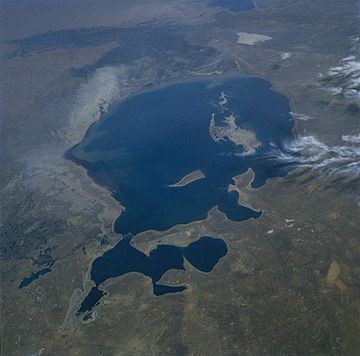
By Arindam Banik and Muhtor Nasirov   The world is currently grappling with the devastating impact of climate change, as rising temperatures have become an undeniable reality. In January 2024, the global temperature exceeded normal levels for the second consecutive month, pushing the global average temperature over the 1.5-degree threshold for the first time. Many human activities, such as unplanned water use, excessive groundwater extraction, and climate change, are thought to be contributing to this situation. One poignant example is the case of the Aral Sea in Central Asia. This once breathtaking and teeming endorheic lake, nestled between Kazakhstan and Uzbekistan, was not just a body of water. It was a symbol of life, a testament to the beauty and resilience of nature. Its azure waters and diverse marine life were a source of sustenance and livelihood for the region's people. It was a vibrant ecosystem, nourished by the almost entire flow of the two main rivers, the Amu Darya and the Syr Darya, in the upstream region of Central Asia. Interestingly, the Amu Darya River used to flow into the Caspian Sea through Uzboy Channel. However, a significant shift occurred during human settlement when the flow of these rivers was redirected into the Aral Sea, marking a crucial turning point in the region's hydrological history. Despite its former glory as the third-largest lake in the world, covering an area of 68,000 km2 (26,300 sq miles), the Aral Sea began shrinking in the 1960s after the rivers that fed it were diverted to support large-scale irrigation for cotton production intended for export. The irrigated area in the Aral Sea Basin has now expanded to eight million hectares. By 2007, it had decreased to only 10 percent of its original size, dividing into four lakes. By 2009, the southeastern lake had vanished, and the southwestern lake had shrunk to a thin strip at the western edge of the former southern sea. In the following years, occasional water flows partially replenished the southeastern lake. In August 2014, NASA satellite images revealed that the eastern basin of the Aral Sea had completely dried up, leading to the formation of the Aralkum Desert. This dramatic change has severely impacted the ecology, risking the survival of numerous fish subspecies and three endemic sturgeon species. The loss of these species disrupts the natural balance and affects the livelihoods of the local communities that depend on fishing. The herring, sand smelt, and gobies were the first planktivorous fish in the lake, and their decline led to the lake's zooplankton population collapse. Consequently, the herring and sand-smelt populations have not recovered. Except for the carp, snakehead, and possibly the pipefish, all introduced species survived the lake’s shrinkage and increased salinity. In an attempt to revive fisheries, the European flounder was introduced. This situation is urgent as the delicate balance of this ecosystem is on the verge of collapse. The region's once-prosperous fishing industry has been devastated, leading to unemployment and economic hardship. Additionally, the diverted Syr Darya River...

Nazarbayev In-Law, Askar Kulibayev’s Oil Terminal Seized

Representatives of the General Prosecutor's Office of Kazakhstan have reported that an oil terminal in the port of Aktau belonging to Askar Kulibayev has been returned to the state. The 134-hectare property is valued at $66 million. “It was established that in 2011, the oil terminal was alienated into the ownership of Kulibayev's company. On February 26th, 2024, by the decision of the Specialized Inter-district Economic Court of Mangistau region, the claim of the Almaty city prosecutor was satisfied, and the oil terminal was returned to the state's ownership," said the supervisory body. The Almaty prosecutor's office stated that the claim was filed to compensate for the damage caused by the unlawful seizure of a foreign investor's property. However, the official message does not name the affected company. Now 87-years-old, Askar Kulibayev served as First Secretary of the Guryev (now Atyrau) Regional Committee of the Communist Party of Kazakhstan and as the Minister of Construction in independent Kazakhstan. He is the matchmaker of former President Nursultan Nazarbayev's daughter, and the father of Kazakhstan's richest man, Timur Kulibayev. In 2024, Timur Kulibayev and his wife Dinara Kulibayeva, still sit atop the list of the richest Kazakhs. The combined fortune of the Nazarbayev family is estimated at almost $10 billion.

Kazakhstan to Build the World’s Largest Greenhouse

Kazakhstan's Prime Minister, Olzhas Bektenov and  the president of the Agro-Industrial Holding Company “ECO-Culture,” Alexander Rudakov, have issued a joint announcement that the world's largest greenhouse complex is to  be built in the Turkestan region According to the Prime Minister's press service, Agro-Industrial Holding Company  has confirmed plans for the construction of a greenhouse complex in the Keles district of the Turkestan region. Under the first phase, scheduled for completion by the end of 2025 and spanning 51 hectares, the project aims to produce over 28 thousand tons of tomatoes per year. Thereafter, the complex will expand over 500 hectares, to produce 240 thousand tons of vegetables all year round. Produce will be marketed  both domestically and  exported abroad through established logistics and distribution centers. As reported by Alexander Rudakov, his company will create competitive labor conditions for residents and contribute to the region's development within the social responsibility framework. Once up and running, the complex should create no fewer than 7,000 jobs. The Prime Minister's press service commended  “ECO-Culture” as one of the most extensive agro-industrial holdings producing organic vegetables, with a 13-year history of stable development. Last year, its  volume of products exceeded 300 thousand tons. It was also noted that Kazakhstan's climate of investment coupled with measures to support natural production, make a significant contribution to implementing critical economic projects.

Kazakhstan Changing Its Labor Laws to Better Reflect the Country’s Needs

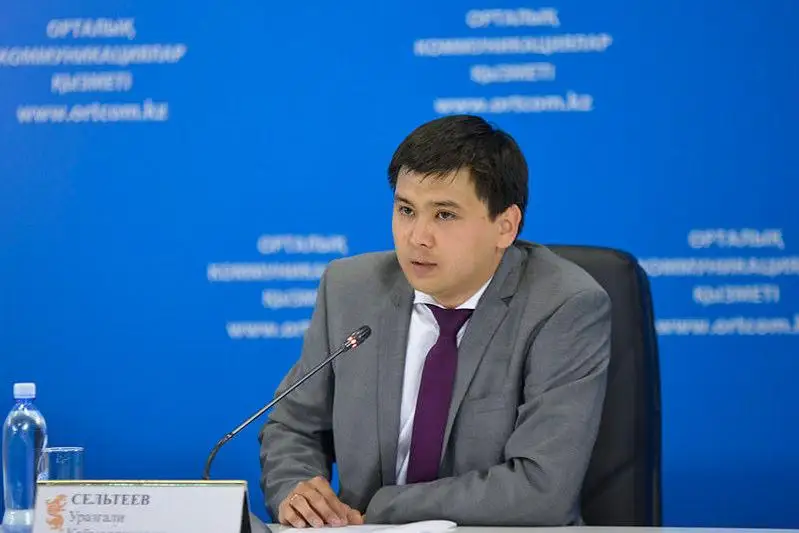
Kazakhstan has recently adopted regulations that make it more difficult for migrants and citizenship-seekers to enter the country. Urazgali Selteyev, a political scientist and director of the Institute for Eurasian Integration, told The Times of Central Asia that the legislation is being streamlined rather than tightened. According to some experts, Kazakhstan is the most attractive country in Central Asia for migrants. For many years, foreign workers have been entering the country, and illegal migration is high, as residents of neighboring countries are hired in the agricultural and construction sectors and are involved in transportation and services. In recent years, cases of detection and deportation of illegal migrants from the farthest regions, including Africa, have become more frequent. In addition, since 1991, more than one million 'kandas' (formerly known as oralmans) have arrived in Kazakhstan -- persons of Kazakh nationality resettling in the country according to established quotas. Often, kandas arrive from Uzbekistan, Kyrgyzstan, Turkmenistan, China, and Russia. Also, after the partial mobilization for Russia's war in Ukraine announced in September 2022 by Russian president Vladimir Putin, an unspecified number of draft evaders and their family members entered Kazakhstan. This situation forces the Kazakh authorities to take a stricter approach to regulating migration flows. Just the other day, the website “Open Normative Legal Acts” (“Open NLA”) posted a document highlighting the discussion that began two years ago. The document states that Kazakhstan will develop rules to determine whether kandas have a right to claim Kazakh nationality. In May this year, Kazakhstan's president Kassym-Jomart Tokayev signed the law “On introducing amendments and additions to some legislative acts of the Republic of Kazakhstan on the improvement of legislation in the field of migration and penal system.” This law provides new grounds for refusal of admission and restoration of Kazakh citizenship, such as ignorance of the state language at the elementary level, the basics of the Constitution of Kazakhstan, and a certain level of national history determined by an authorized body in the field of science and higher education. Simply put, applicants for citizenship will have to pass the exam. As explained by the Minister of Science and Higher Education Sayasat Nurbek, the test will include three components: the first is knowledge of the Kazakh language, the second is the basics of the Constitution, and the third is the basics of the history of Kazakhstan. “These tests will be required to be taken by persons who apply for citizenship. There are reservations on a separate list of honored: on the presidential list, minors and people with disabilities will be exempted,” explained Nurbek. According to the new migration rules, EAEU citizens can stay in the country for no more than 90 days within 180 days; other foreigners can stay for no more than 30 days, and a maximum of 90 days in six months. In the previous version of legislative acts, there were no restrictions concerning the 180 days, thus, foreigners lost the opportunity to repeatedly renew the terms of stay, leaving the country for...

Three Kazakh Officials Suspected of Taking Large Bribes

Three high-ranking officials from Kazakhstan's Ministry of Emergency Situations have been accused of receiving bribes amounting to around 40 million tenge ($90,000). The country's Anti-Corruption Service is conducting an investigation into the conduct of the chairman of the ministry's fire fighting service, and the heads of the emergency situations department of the city of Shymkent and the region of Zhetisu. The service commented: "The officials are suspected of receiving bribes on a systematic basis from a representative of business for a total amount of more than 40 million tenge. The investigative court authorized a measure of restraint in the form of detention against the suspects. The criminal case is considered on the merits by the military court of Akmola garrison." No further information concerning the investigation has been published.