• KGS/USD = 0.01143 0%
  • KZT/USD = 0.00205 0%
  • TJS/USD = 0.10433 0.1%
  • UZS/USD = 0.00008 0%
  • TMT/USD = 0.28577 0%
  • KGS/USD = 0.01143 0%
  • KZT/USD = 0.00205 0%
  • TJS/USD = 0.10433 0.1%
  • UZS/USD = 0.00008 0%
  • TMT/USD = 0.28577 0%
  • KGS/USD = 0.01143 0%
  • KZT/USD = 0.00205 0%
  • TJS/USD = 0.10433 0.1%
  • UZS/USD = 0.00008 0%
  • TMT/USD = 0.28577 0%
  • KGS/USD = 0.01143 0%
  • KZT/USD = 0.00205 0%
  • TJS/USD = 0.10433 0.1%
  • UZS/USD = 0.00008 0%
  • TMT/USD = 0.28577 0%
  • KGS/USD = 0.01143 0%
  • KZT/USD = 0.00205 0%
  • TJS/USD = 0.10433 0.1%
  • UZS/USD = 0.00008 0%
  • TMT/USD = 0.28577 0%
  • KGS/USD = 0.01143 0%
  • KZT/USD = 0.00205 0%
  • TJS/USD = 0.10433 0.1%
  • UZS/USD = 0.00008 0%
  • TMT/USD = 0.28577 0%
  • KGS/USD = 0.01143 0%
  • KZT/USD = 0.00205 0%
  • TJS/USD = 0.10433 0.1%
  • UZS/USD = 0.00008 0%
  • TMT/USD = 0.28577 0%
  • KGS/USD = 0.01143 0%
  • KZT/USD = 0.00205 0%
  • TJS/USD = 0.10433 0.1%
  • UZS/USD = 0.00008 0%
  • TMT/USD = 0.28577 0%

Viewing results 385 - 390 of 596

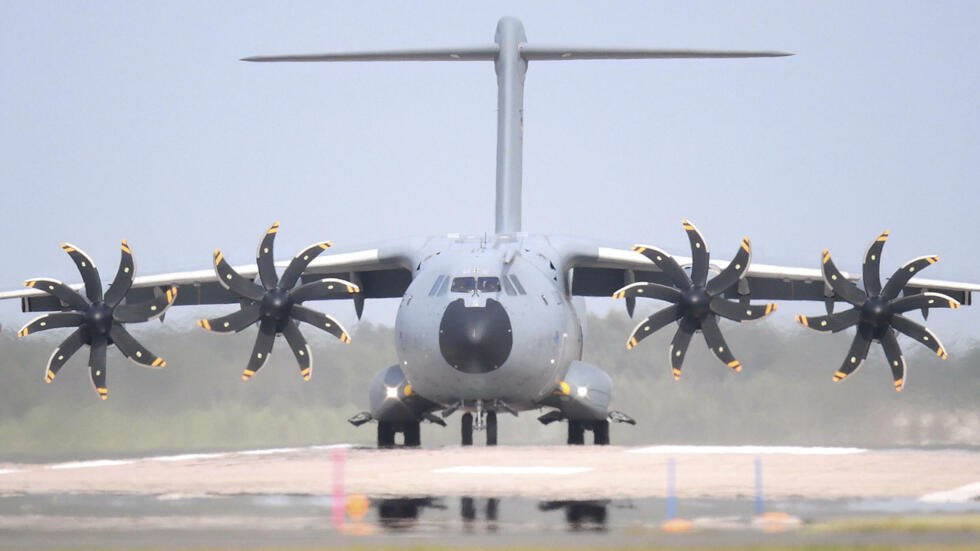
Kazakh Military to Receive Transport Plane From Airbus

The world's largest aerospace company Airbus is preparing to deliver its first military transport aircraft to Kazakhstan. The A400M Atlas aircraft will be used by the Ministry of Defense. Airbus recently published a video on its website which shows how the aircraft has been painted for the Kazakh Ministry of Defense. The airliner will begin test flights in the near future. In 2021 Kazakhstan placed an order for a pair of four-engine military transport aircraft. It was subsequently reported that the country intends to use these airliners together with other vessels from the military fleet. Kazakhstan will become the ninth country to operate this type of aircraft -- and the first foreign customer since 2005.  The A400M is already in use in Turkey, Belgium, Germany, France, Spain, the United Kingdom, Malaysia and Luxembourg. The first of the two airplanes, bearing tail number MSN139 and service number 21, is intended to be delivered to the country by the end of this year. The second airliner is scheduled for delivery in 2025. The A400M can carry 116 fully equipped paratroopers and 37 tons of cargo at a time. It quickly transforms into a flying hospital with accommodations for 66 stretchers.

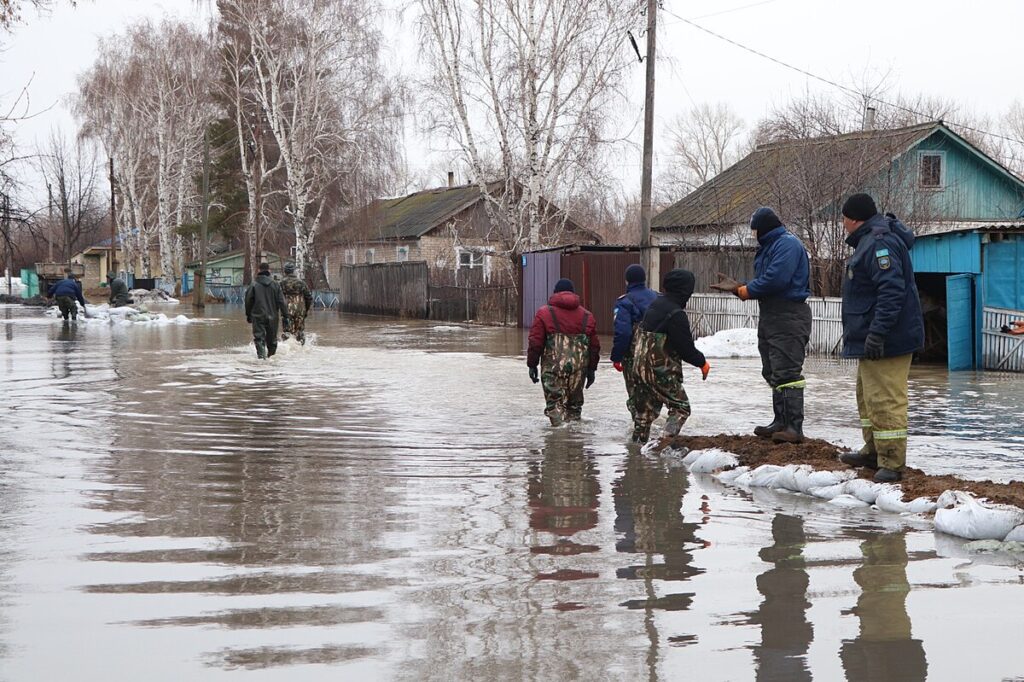
No Lessons Being Learned From Kazakh Floods, Says Political Analyst

Kazakhstan has been prone to flooding before, but the 2024 Kazakh floods have added a catastrophic page to the chronicles. Political analyst Marat Shibutov tells The Times of Central Asia that only extremely tough measures can motivate ministers and akims (local government executive) to actually work on flood prevention.   The Floods Have Not Yet Peaked Areas and homes in many regions of Kazakhstan -- Atyrau, West Kazakhstan, Aktobe, Akmola, Kostanay, East Kazakhstan, North Kazakhstan and Pavlodar -- remain flooded. According to the Ministry of Emergency Situations, more than 113,000 people have been evacuated from the various disaster zones. The threat of another destructive wave of surface water still remains for major cities, even high-rise buildings are battling high in water in Atyrau, Petropavlovsk and Kostanay. Kazakh president Kassym-Jomart Tokayev has already visited the affected regions several times. According to local reports, people are now concerned not with punishing those responsible, but with paying fair compensation for lost housing, farms and livestock, and, most importantly, with creating an effective flood control system. In particular, residents of dacha (detached suburban) houses in Uralsk blocked the highway, demanding that the akim of the city include them in the list of those to be paid. If more floods occur it will be impossible to live in flood-prone areas. The only alternative is a radical revision of the requirements for residential zoning protective measures. Tokayev spoke about the responsibility for breached and unfinished dams and dikes, as well as the overlooked forecasts made by meteorologists about increased snowmelt and the threat of flooding not only from rivers, but also from the steppes in late March. For the lack of timely flood control measures, he announced a harsh reprimand to First Deputy Prime Minister Roman Sklyar and Minister of Water Resources and Irrigation Nurzhan Nurzhigitov. Local administrators weren't spared either, with harsh reprimands and warnings for incomplete official compliance to the akims of Aktobe, Kostanay and West Kazakhstan regions -- and a harsh reprimand to the akims of Atyrau, Akmola, Almaty, Pavlodar and Abay regions. According to official data from the Ministry of Emergency Situations, in 2024 to date seven billion tenge ($15.5 million) have been allocated just to local executive bodies for flood mitigation activities. In March 2024, 66 billion tenge ($147 million) was allocated to carry out work relating to combating emergency situations. From 2019 to 2023, the Emergency Situations Ministry's expenditures increased almost fourfold, to 264 billion tenge ($588 million). Over the past five years, over 762 billion tenge ($1.7 billion) has been allocated from the national budget. What exactly those funds were towards remains an open question -- possibly as part of ongoing criminal cases.   Disasters of the Past It's not the first time that high water has caused irreparable damage in Kazakhstan. In Uralsk they still talk about a serious flood in 1942. In early May, the water level in the Urals reached 943 centimeters, and a 9-point storm raged on the river. Over 500 families were evacuated from...

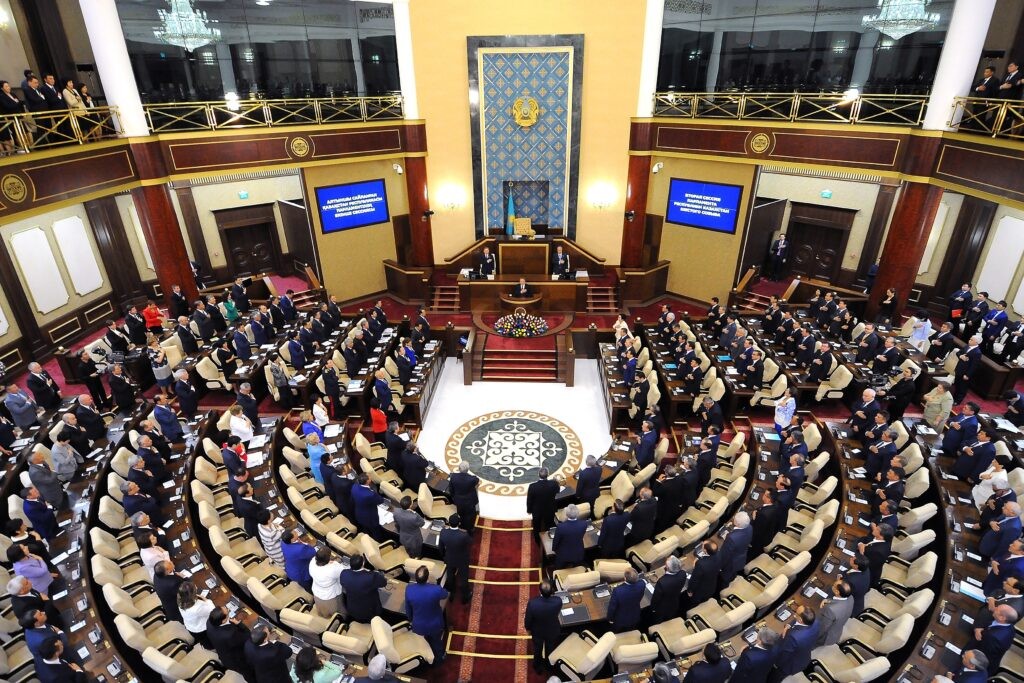
Fringe Kazakh Politicians Propose Prison Terms for Supporters of LGBT Rights

A fringe group of Kazakh politicians are in favor of imprisoning people for supporting LGBT rights and freedoms. Members of parliament Yedil Zhanbyrshin and Samat Musabayev are proposing an amendment to Article 174 of Kazakhstan's Criminal Code, which ostensibly concerns the 'incitement of discord'. Their idea, reports Tengrinews.kz, is to add the phrase: "including by propaganda of non-traditional sexual relations." The penalties for violating this article range from fines of between $16,200 and $57,500, to a prison term of up to seven years. Zhanbyrshin and Musabayev claim that in Kazakhstani society, a traditional family means a man and a woman, and their children -- including adopted children. In turn, however, members of the Mazhilis (lower house of parliament) have emphasized that the word family, according to the law "On Marriage (Matrimony) and Family," relates to a circle of persons bound by property and personal non-property rights, and obligations arising from marriage. Two other members of the Mazhilis, Askhat Aimagambetov and Zhanarbek Ashimzhanov, from the Amanat Party, have proposed a ban on the media mentioning LGBT people, and to close or suspend any outlet that did. This amendment was also included in the draft law "On Mass Media," which is currently under consideration.

As Bishimbayev Case Continues, Kazakhstan Toughens Domestic Violence Laws

While a court in Astana tries former economy minister Kuandyk Bishimbayev for murdering his wife Saltanat Nukenova, the Kazakhstani Senate has passed a law strengthening protections for women and children against domestic violence. The new law, if properly implemented, can hand out much harsher punishments to those who abuse those closest to them. In particular, a term of life imprisonment has been introduced for the murder of a minor child.   In the Face of Widespread Indifference The trial of Bishimbayev – and his relative Bakhytzhan Baizhanov, who is accused of failing to report the murder - has uncovered an uncomfortable truth. Many people already knew that Bishimbayev beat his wife, who died last November. Relatives and close acquaintances of the victim recounted details in court about bruises on Nukenova's face. On the day of her death, a number of witnesses saw Bishimbayev arguing with, and possibly beating, Nukenova. Many of these witnesses are employees of the restaurant where the alleged murder took place. Baizhanov admitted under interrogation that he saw blood as Nukenova was laying motionless, but, on the orders of Bishimbayev, had the restaurant's surveillance tapes deleted, and then drove Nukenova's phone around the city, so that it would seem later that she was still alive at the time. According to Baizhanov, he "did not know and did not realize" that Nukenova was dying. However, a forensics expert testified in court that the nature of Nukenova's injuries indicated serious beatings, not "light slaps and falls," as Bishimbayev had previously claimed. Examinations confirmed that Nukenova died of multiple brain injuries and a lack of oxygen, likely as a result of asphyxiation.   Will the New Law Help Stop Violence?  Kazakhstanis are closely following the legal proceedings that have resulted from Nukenova's death, and are organizing viral online actions and rallies in her memory in cities across Europe. Human rights activists and ordinary Kazakhstanis fought long and hard for domestic violence to be criminalized. Under the new law, criminal liability will be applied to any intentional infliction of harm to health, however minor. The Code "On marriage (matrimony) and family" establishes the legal status of family support centers and the functions they perform, and establishes helplines for information and psychological assistance relating to women's and children's rights. The law also contains many measures aimed at protecting children in public and online. Activists are still cautious about the new law, and argue that much will depend on its practical application and the amount of funds allocated to it. Support centers for victims of violence receive many calls per day, and physically cannot provide assistance to all those in need.   Central Asia's Changing Attitudes to Domestic Violence The other countries in Central Asia face a similar, and perhaps more difficult, situation. Uzbekistan, for example, adopted a law last year to give women and children more protection against domestic violence. Domestic violence in Uzbekistan is subject to administrative and criminal liability, and harassment has been made a crime. The sentences for sexual...

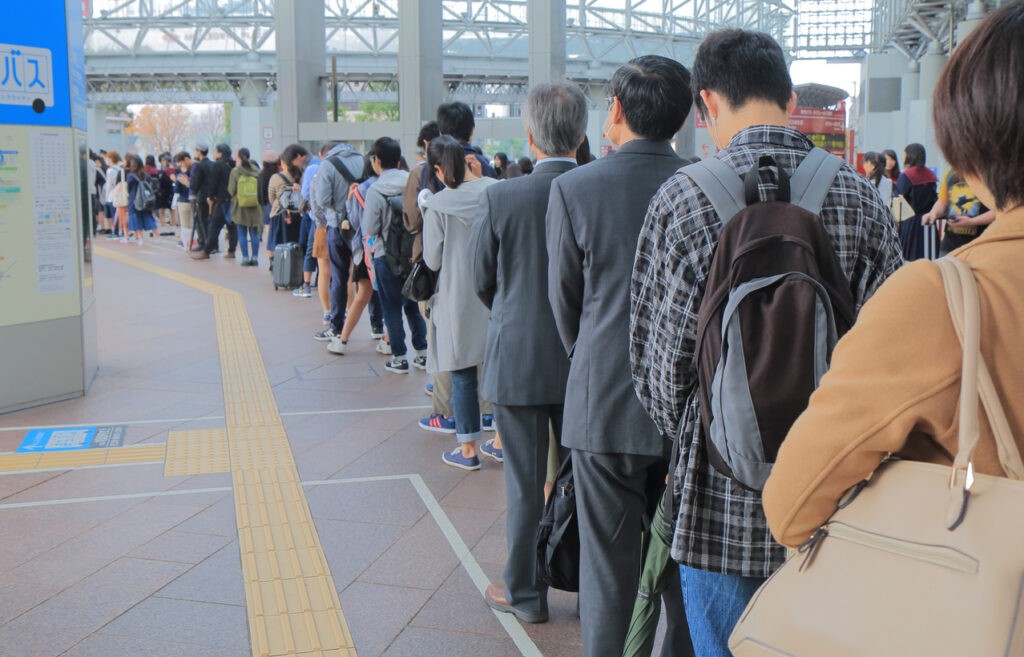
Over One Million Kazakhs Work Under the Radar

According to data, of the 9 million Kazakh citizens employed in the country in 2023, 1.1 million were 'working under the radar'. Most of those employed without any formal contracts - 617,200 men and 544,200 women - held low-level jobs including 496,900 in factories, shops and ateliers; 365,900 on private farms; 172,600 on land plots and 34,300 on construction sites. A further 29,300 worked in private homes, 24,800 used their own transport as taxis etc. and 15,000 earned a living in open markets and street vendor stalls. The overwhelming majority of the unofficially employed - some 343,800 people- had graduated from vocational courses at colleges and trade schools, whilst 260,100 were educated to secondary level. Workers in the sector with technical and professional education numbered 238,000. The fact that the talents and skills of such a vast proportion of Kazakh citizens is not officially recognized has a significant impact on their potential contribution to both the country's economy and society. Furthermore, by having to resort to working in this way, these individuals are deprived of stability in the workplace as well as opportunities for advancement and learning new skills. Kazakhstan is now actively seeking to recruit foreign specialists in science, healthcare, industry and IT to compensate for the domestic shortage of skilled labour but whilst this demonstrates the country's desire for development, it also raises questions concerning the provision of stable and decent positions for its own citizens.

Tokayev Signs Off on New Business Rules for Kazakhstan

Kazakhstan's president Kassym-Jomart Tokayev has signed a law on the creation of new rules for the country's business sectors. The move is designed not only to streamline forms of state control and supervision over business, but also to improve the general conditions for entrepreneurship in the country. "Our goal is to create more favorable conditions for the development of business in the country," the Akorda press service said, outlining some key points of the new law. At the sectoral level, the amendments lay out mechanisms that will facilitate rapid response, investigations and preventive control procedures without any physical presence at inspection sites. The changes apply to various business areas: - Fisheries: it will now be possible to open aquaculture facilities on promising land plots intended for agriculture; - Plant quarantine: the administrative burden on the movement of regulated products is significantly reduced with the cancellation of quarantine certificates; - Industry: manufacturing enterprises will receive support in the form of supply of domestic raw materials; - Oil & gas industry: requirements have been clarified regarding documents confirming the origin of refined oil products; - Financial markets: procedures for business interaction with banks will become more simplified; and, - Registration of legal entities: the processes of registration and re-registration of legal entities and their branches are being converted to electronic format, which will make the receipt of state services more accessible and transparent. The purpose of these changes is not only to facilitate the process of doing business, but also to balance the interests of consumers, entrepreneurs and the state. This direction is part of a strategy to promote entrepreneurship in Kazakhstan -- which confirms the desire to improve the business environment and stimulate economic growth outside of the extractive industries.