• KGS/USD = 0.01144 0%
  • KZT/USD = 0.00210 0%
  • TJS/USD = 0.10528 0%
  • UZS/USD = 0.00008 0%
  • TMT/USD = 0.28571 0%
  • KGS/USD = 0.01144 0%
  • KZT/USD = 0.00210 0%
  • TJS/USD = 0.10528 0%
  • UZS/USD = 0.00008 0%
  • TMT/USD = 0.28571 0%
  • KGS/USD = 0.01144 0%
  • KZT/USD = 0.00210 0%
  • TJS/USD = 0.10528 0%
  • UZS/USD = 0.00008 0%
  • TMT/USD = 0.28571 0%
  • KGS/USD = 0.01144 0%
  • KZT/USD = 0.00210 0%
  • TJS/USD = 0.10528 0%
  • UZS/USD = 0.00008 0%
  • TMT/USD = 0.28571 0%
  • KGS/USD = 0.01144 0%
  • KZT/USD = 0.00210 0%
  • TJS/USD = 0.10528 0%
  • UZS/USD = 0.00008 0%
  • TMT/USD = 0.28571 0%
  • KGS/USD = 0.01144 0%
  • KZT/USD = 0.00210 0%
  • TJS/USD = 0.10528 0%
  • UZS/USD = 0.00008 0%
  • TMT/USD = 0.28571 0%
  • KGS/USD = 0.01144 0%
  • KZT/USD = 0.00210 0%
  • TJS/USD = 0.10528 0%
  • UZS/USD = 0.00008 0%
  • TMT/USD = 0.28571 0%
  • KGS/USD = 0.01144 0%
  • KZT/USD = 0.00210 0%
  • TJS/USD = 0.10528 0%
  • UZS/USD = 0.00008 0%
  • TMT/USD = 0.28571 0%

Viewing results 421 - 426 of 614

China Poised to Increase Imports of Agricultural Produce from Kazakhstan

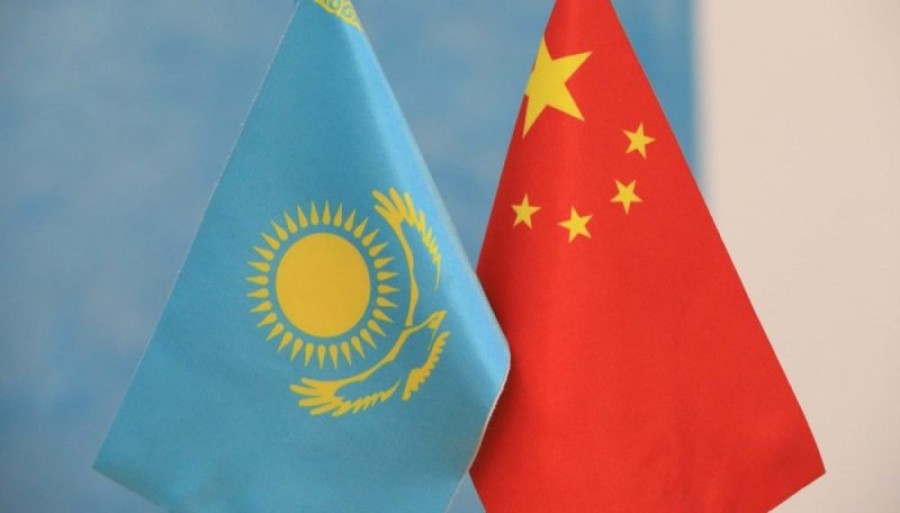
In recent years, Kazakhstan has seen a steady growth in China’s demand for its organic and environmentally friendly agricultural produce. As reported at a meeting on March 4th between Kazakhstan’s Minister of Agriculture, Aidarbek Saparov and Chinese Ambassador to Kazakhstan Zhang Xiao, in 2023, exports almost doubled to $1.01 billion. The Kazakh Ministry of Agriculture relayed the ambassador’s assurance that the importation of meat, grain, and other agricultural products from Kazakhstan is set to continue. The minister stated that Kazakhstan has the potential to increase its export of grain to China to two million tons per annum and asked the ambassador for assistance in accelerating the signing of bilateral agreements on the export of a wider range of agricultural products including chilled meat, poultry, offal, beet pulp, and potatoes. Saparov also requested assistance in accrediting new Kazakh enterprises to export livestock produce to China. In early February China lifted restrictions, imposed since 2005, on the import of poultry Kazakhstan. A ban on the import of meat, resulting from concerns over foot-and-mouth disease and in place since 2022, was similarly overturned. The lifting of the restrictions allows exports of frozen beef and pork from the south-eastern regions of Kazakhstan to resume.

Kazakhstan’s Improving Corruption Score Leads Central Asian Peers

Transparency International's annual Corruption Perceptions Index (CPI) for 2023 has been published, with the global anti-corruption organization ranking 180 countries using a 100-point system. On the CPI scale, the higher the score, the lower the degree of corruption. Kazakhstan achieved the highest ranking  -- i.e. the highest score, and the lowest degree of corruption -- among Central Asian states, taking 93rd place with a score of 39. The republic improved its ranking by three places compared to 2022, meaning that the level of corruption has improved. With 33 points, Uzbekistan ranked 121st out of 180 countries in the new ranking, a gain of five places on its ranking for 2022. In 2023's CPI rating Kyrgyzstan scored 26 points and took 141st place, a rise of one place. Kyrgyzstan now has the same score as Russia. The lowest absolute CPI scores in the Central Asia region were observed in Tajikistan and Turkmenistan. Tajikistan took 162nd place with 20 points, and Turkmenistan took 170th place with 18 points. Compared to last year, Tajikistan improved by four places on the list, and Turkmenistan gained one spot.

Most of Kazakhstan Changes Time Zone

From March 1st the whole of Kazakhstan will be on the time zone UTC+5. Currently only the country's western regions are in the UTC+5 zone, with the rest of Kazakhstan set an hour later at UTC +6. This means that at midnight on 29 February the central, eastern and southern parts of Kazakhstan will move an hour back. Kazakhstani scientists have claimed that the UTC +6 time zone has had a negative effect on people's biological rhythms and health, as it does not correspond to natural solar time in the country. They believe that the establishment of a single time zone will have a positive impact on people's wellbeing. The clock change will also eliminate time barriers between different regions, and simplify the running of transport and other communications. This in turn will benefit business, government work and emergency services. This switch, however, has had a mixed reception. Some people are unhappy that the reduction in daylight hours will increase their electricity bills, while others are worried that lighter mornings will affect their sleep.

Development Plan for Astana Agglomeration Approved

The plan for the agglomeration of Astana through to 2028 was approved by the government of Kazakhstan on February 27th. The country’s capital since 1997, Astana has since grown and developed into one of the most modern cities in Central Asia. In addition to the city, the agglomeration will include more than 40 nearby towns and villages. Over the past 10 years, the population of Astana has increased by 46%. Records show that in January 2024, it exceeded 1.43 million and by 2035, is expected to grow to 2.3 million people. The key aims of the Astana agglomeration are the improvement of urban development, the modernization of social, engineering and transport infrastructures, environmental sustainability and safety, and safeguarding against emergencies. A unified urban planning policy will enable the synchronization of plans for the development of the capital and adjacent Akmola region, including the creation of eco-towns on an area of over 940 hectares. The new transport and logistics infrastructure will comprise six logistics complexes, a service centre for the maintenance of electric locomotives, and subsidies for suburban routes. Over 400 km of existing roads will be repaired, and 300 km of new roads and four bridges built in agglomerated towns and villages. To attract investment and supply food, 25 facilities to produce food and 12 for industrial goods will be built in an industrial zone covering 300 hectares. At the meeting, Kazakhstan’s Prime Minister Olzhas Bektenov highlighted the fact that the main problem to be addressed by the agglomeration is the sharp population increase in the suburbs and the daily migration to the capital and back, which significantly impacts the entire infrastructure of Astana, its ecology and safety. In recognition of ongoing problems faced by many suburban villages, such as water supply, waste disposal, a stable electricity supply, and the condition of roads, the prime minister stated: "I believe that the implementation of the plan should solve these pressing issues. Moreover, we need to create permanent jobs in the suburbs. Astana as the core of the agglomeration creates prerequisites for sustainable development of the adjacent territories. This will help smooth out the existing imbalance between the living standards in the capital and neighboring settlements."  

Kazakhstan Uses Income Declaration to Fight the Shadow Economy

Kazakhstan's third stage of universal income declaration is underway. As part of the current stage, declarations must be submitted by entrepreneurs, company founders and directors, and their spouses. In 2025 yet another new stage of declarations, will commence which will oblige all adult citizens to submit declarations. Currently, many entrepreneurs and small business owners use mobile transfers, which are intended for personal purposes. Such actions are illegal and violate the guidelines of the Entrepreneurial Code - Article 27, which stipulates that an entrepreneur may only use business accounts when carrying out commercial activities. It's specified in the law that mobile transfers and payments made for personal purposes are not taxable. Regarding taxation of individuals in Kazakhstan, every adult citizen is obliged to pay taxes to fund the budget. Currently, individuals pay taxes applicable to their wages. One tax and two mandatory contributions are withheld from an employee's official salary in Kazakhstan: Individual Income Tax (IIT); contributions for compulsory medical insurance (VOSMS); and mandatory pension contributions (MPC). Individual income tax (IIT) is levied on the income of employees and transferred to the state treasury by the employer. According to Article 322 of the Tax Code, such income includes wages and salaries. In addition, income classified as in-kind (transfer of goods, securities, provision of services to an employee, non-paid transfer of property, etc.) and material benefit (cancellation of debt to an employee, sale of goods to them, etc.) are subject to personal income tax. According to paragraph 1 of Art. 320 of the Tax Code, the individual income tax rate for all types of income is 10%. All Kazakhstan citizens who have a car are also subject to transportation tax. It includes excise tax on fuel and lubricants -- the larger the engine volume of the car, the higher the tax burden due to high consumption of fuel and lubricants; a vehicle tax -- the larger the engine displacement, the higher the tax burden; utilization fee, and fee for the initial registration of a motor vehicle. Real estate owned by citizens is also taxed in Kazakhstan. The amount of tax depends on one's type of property and is calculated for each object separately. The value of property for tax purposes is determined on the basis of a formula by multiplying several indicators: the base cost per square meter, which depends on the specific city or type of settlement; usable area of the property ( in sq. m.); a coefficient indicating the physical deterioration of the dwelling, which is determined by taking into account the age of the building from the date of commissioning and depreciation; a functional wear coefficient, which depends on the floor, location, amenities, engineering condition and type of heating; a zoning coefficient, which takes into account the location of the property in a particular community; and the MRP change factor, which shows how much this indicator has increased compared to the previous year.

Kazakhstan Continues Countdown Ahead of Move to Single Unified Time Zone

In less than two weeks, the stroke of midnight will unify all of Kazakhstan in a single timezone. On the night of February 29th-March 1st, residents of twelve regions - as well as the cities of Astana, Almaty and Shymkent - will have to move their clocks back an hour unifying the country in a single timezone (UTC+5). But not all citizens are happy about it, with some arguing it will impact their health. Residents of the East Kazakhstan region are especially fierce in defending their perceived rights. Earlier this year, a lawyer from Ust-Kamenogorsk filed a grievance against then-Prime Minister Alikhan Smailov demanding compensation for damages due to the time change. For that reason, scientists were dispatched to the region to explain the benefits of the timezone change to local residents. Among the advantages they noted were the elimination of time barriers between residents of different regions of Kazakhstan, more favorable conditions for doing business, streamlining the work of government agencies and emergency services, and improved coordination of transport and communication. Professor Sultan Tuleukhanov, head of the Department of Biophysics and Biomedicine of the Kazakh State University, agrees with the residents of East Kazakhstan. "There is such a concept as desynchronises, a type of inconsistency. In particular, it's a change to the chrono-structural parameters of biological rhythms of the human organism," he noted. Desynchronosis causes irritability and fatigue while also reducing the efficiency of the body. However, according to other specialists, residents of most regions will experience this only in the short term. There is one more concern, however. In some cities, it will get dark earlier after the time change, meaning people will have to work under artificial lights and turn on electricity earlier, meaning expenditure on electricity will increase. Yeraly Shinasilov, the director of the national dispatching center of the system operator, KEGOK (Kazakhstan Electricity Grid Operating Company), said that the change of time zones will only affect the finances of residents slightly. "Our consumption grows about 2% every year. Due to the fact that our peak demand will move to an hour earlier, it will all dissolve into the natural growth of consumption during the year," he stated. Only time will tell how effective the single time zone will be for Kazakhstan.