• KGS/USD = 0.01144 0%
  • KZT/USD = 0.00212 0%
  • TJS/USD = 0.10456 0.19%
  • UZS/USD = 0.00008 0%
  • TMT/USD = 0.28490 0%
  • KGS/USD = 0.01144 0%
  • KZT/USD = 0.00212 0%
  • TJS/USD = 0.10456 0.19%
  • UZS/USD = 0.00008 0%
  • TMT/USD = 0.28490 0%
  • KGS/USD = 0.01144 0%
  • KZT/USD = 0.00212 0%
  • TJS/USD = 0.10456 0.19%
  • UZS/USD = 0.00008 0%
  • TMT/USD = 0.28490 0%
  • KGS/USD = 0.01144 0%
  • KZT/USD = 0.00212 0%
  • TJS/USD = 0.10456 0.19%
  • UZS/USD = 0.00008 0%
  • TMT/USD = 0.28490 0%
  • KGS/USD = 0.01144 0%
  • KZT/USD = 0.00212 0%
  • TJS/USD = 0.10456 0.19%
  • UZS/USD = 0.00008 0%
  • TMT/USD = 0.28490 0%
  • KGS/USD = 0.01144 0%
  • KZT/USD = 0.00212 0%
  • TJS/USD = 0.10456 0.19%
  • UZS/USD = 0.00008 0%
  • TMT/USD = 0.28490 0%
  • KGS/USD = 0.01144 0%
  • KZT/USD = 0.00212 0%
  • TJS/USD = 0.10456 0.19%
  • UZS/USD = 0.00008 0%
  • TMT/USD = 0.28490 0%
  • KGS/USD = 0.01144 0%
  • KZT/USD = 0.00212 0%
  • TJS/USD = 0.10456 0.19%
  • UZS/USD = 0.00008 0%
  • TMT/USD = 0.28490 0%

Viewing results 433 - 438 of 614

Changes in Composition of National Kurultai

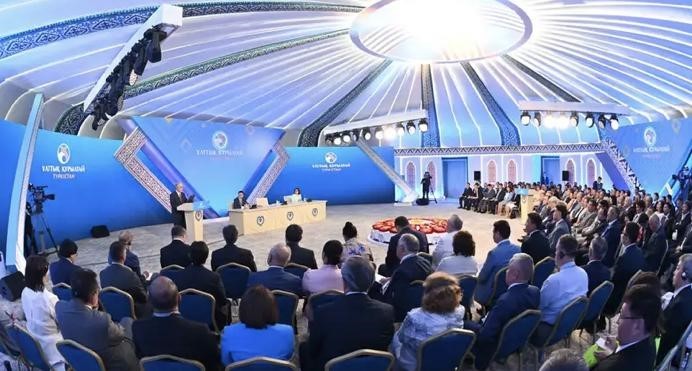
The Kurultai is a body which brings together representatives from different sectors of society to address important public issues. The involvement of public representatives and activists in the work of the Kurultai testifies to an aspiration for a broader and more comprehensive discussion and decision-making process at a national level. On January 19th there were changes to the composition of the National Kurultai, with Bauyrzhan Alteyev, Amangeldy Tolamisov, Gulmira Kanai, Sergey Ogai, Zhiguli Dairabayev, Kazbek Maigeldinov, Berik Uali, Anastasia Timoshchenko-Borovikova, Serik Sarybai, Daulet Turlykhanov, Alexei Lodochnikov, Sarsen Kuranbek, and Edik Sularov leaving their posts. At the same time, new representatives were added, including the children's ombudsman, Dinara Zakieva, and Mazhilis deputies, Nikita Shatalov and Nurlan Auesbayev. In addition, representatives of public councils from various regions were added. Preparations are currently underway for the third meeting of the National Kurultai, which is scheduled for this spring.

Kazakhstan Advocates for Cadaveric Donation to Address Organ Transplantation Needs

As of today, more than 3,800 individuals in Kazakhstan are in urgent need of internal organ transplants, with 90 of them being children. Despite the pressing demand for transplantation, the current waiting list is moving slowly, leading the head of the Kazakhstan Khalkyna (To the People of Kazakhstan) foundation to propose changes to the country's laws. Specifically, the suggestion is to reinstate cadaveric donation, allowing the extraction of organs from deceased individuals without the need for explicit permission from their relatives. Bolat Zhamishev, the head of the foundation, expressed the urgency of amending transplantation and cadaveric donation laws during a conference conducted in collaboration with the Ministry of Health. He emphasized the need to move both the government and the public to address the shortcomings, as Kazakhstan lags in organ donation rates. Zhamishev highlighted that many individuals awaiting transplants have to rely on organs from foreign countries, particularly those where permission from relatives is not a requisite. The financial constraints faced by those seeking organs from abroad have led individuals to seek assistance from Kazakhstan Khalkyna. However, due to the substantial costs associated with organ transplantation, the foundation's resources are insufficient to support all of those in need. Health Minister of Kazakhstan, Azhar Giniyat, acknowledged that the issue of transplantology is widespread globally, but emphasized that it extends beyond a medical problem, delving into moral and ethical realms. Giniyat stressed the importance of raising public awareness and readiness to consider organ donation after death. Giniyat disclosed her personal commitment to becoming a posthumous donor and shared that, to date, approximately 40,000 citizens have registered consent for their organs to be donated in the case of their death on an electronic government platform. Of this number, 15% have formally documented their consent. Over the past decade, Kazakhstan has conducted nearly 2,500 organ transplants. However, the country faced a setback last October when the authorities detained a group of individuals involved in illicit organ trading. The group, consisting of medical professionals and notaries, were engaged in the buying and selling of internal organs. A total of 22 people were detained, and eight instances of organ sales were identified, with transactions ranging from $13.200 to $22,000.

Mazhilis Expanding Network of Charging Stations for Electric Vehicles

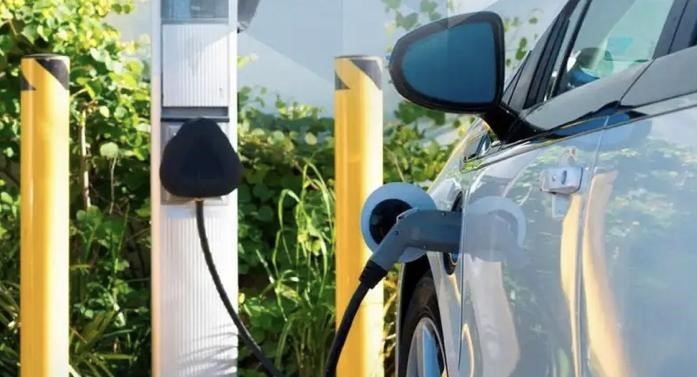
A draft law aimed at creating the necessary infrastructure for electric vehicles in Kazakhstan was presented at the meeting of the Mazhilis. Deputy Samat Musabayev noted that in 2022 a new world record for electric vehicles was set, with sales reaching over 7.8 million units. Forecasts also point to significant growth in sales of electric cars and hybrid vehicles worldwide in 2023, with about 17 million units expected to be sold. In the context of this trend, 7,793 electric vehicles were registered in Kazakhstan by the end of last year. The deputy noted that the increase in demand for environmentally friendly cars requires the development of appropriate infrastructure and improvement of the current legislation, which the proposed bill is aiming to rectify. The draft law aims to introduce new rules to ensure the installation of electric charging stations on roads, in residential and public areas. It also defines the competence of the authorities to locate electric charging stations, reserve the territory for them, and facilitates the parking and movement of electric vehicles. In addition, the bill provides for the exemption of electric car owners from parking charges. In addition, the deputies of the Mazhilis approved in its first reading a bill that provides for administrative liability for violating the rules of stopping or parking vehicles in places intended for recharging electric vehicles. The draft law "On amendments and additions to some legislative acts of the Republic of Kazakhstan on the popularization of environmentally friendly transport and the development of infrastructure for electric vehicles" was approved.

Kazakhstan Sums Up Democratic Reforms, Human Rights Efforts

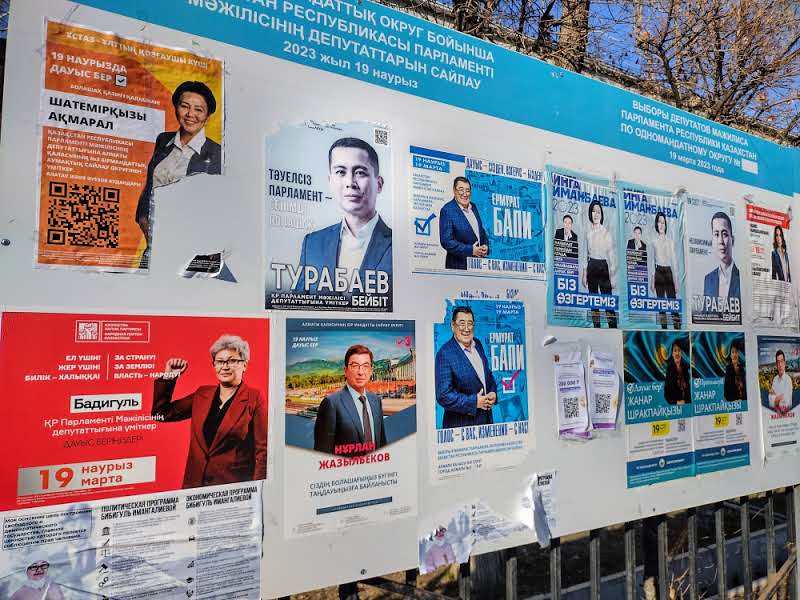
Kazakhstan has undergone “large-scale democratic transformations and made significant progress towards protecting human rights in full compliance with its international commitments,” states a factsheet published on the website of the President on January 12th. “Significant changes have been made to the legislation on democratic participation, human rights protection, and the rule of law. This has ensured greater participation of the population in the decision-making process as the concept of the ‘Listening State’ continues to evolve, and contributed to a more balanced political system and greater accountability to ensure the irreversibility of the ongoing political transformation towards a ‘Just and Fair Kazakhstan,’” the document says. Among the reforms enacted are the limit of a single seven-year term for presidents, the abolition of presidential power over local office-holders, the reduction of presidential authority over the Senate, and the reduction of the threshold for political parties to be registered from 20,000 to 5,000 members. “Such liberalization has resulted in the registration of new political parties - Baytaq and Respublica,” the document states, with the latter winning seats in the parliamentary election of March 2023. The reforms have also seen the powers of the Mazhilis (lower house of parliament) significantly expanded, whilst the election of mayors of districts and cities were held for the first time. The factsheet states that these “reforms have strengthened the system of human rights protection. Legislative amendments have been adopted to strengthen the independence of the courts [and] the categories of cases for jury trials have been expanded.” The factsheet goes on to say that the Constitutional Court has been reinstated with an enhanced mandate, aiming to fortify the protection of fundamental rights and freedoms by providing citizens with the direct right of appeal. The death penalty has also been abolished and criminal accountability for acts of torture reinforced. “Administrative and criminal liability for domestic violence has been significantly strengthened,” and a new law governing peaceful assemblies has been introduced, expanding the scope of peaceful gatherings and rallies in Kazakhstan. Human Rights Watch, in their World Report 2024, has raised concerns over the lack of accountability for human rights violations in Kazakhstan. The organization voiced their reservations about points in the new legislation that, while designed to protect women, does not specifically criminalize domestic violence as a separate offense. They have been consistently urging the Kazakhstan government to ensure justice and take necessary steps to prevent future violations.

Import of Disassembled Right-Hand Drive Cars Banned

Ensuring road safety is a priority in Kazakhstan, and therefore, in order to maintain safety standards, the country has introduced a ban on the import of disassembled right-hand drive vehicles, the Ministry of Industry and Construction has stated. Currently, driving in Kazakhstan is officially on the right side, and registration of right-hand drive vehicles is prohibited. However, citizens have circumvented this legislation by importing right-hand drive cars in the form of construction kits. This ban is intended to prevent such violations, and ensure the safety of all road users, the ministry said.

Kazakhstan President Tokayev: “As a progressive nation, we should look only forward”

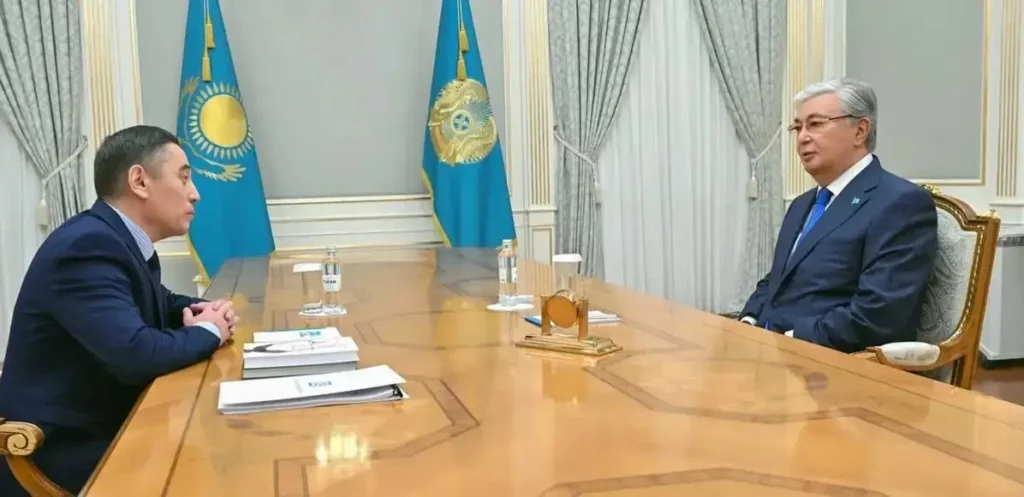
“As a progressive nation, we should look only forward”, said President Kassym-Jomart Tokayev in an interview with Egemen Qazaqstan newspaper, stressing the importance of focusing on long-term goals and placing “national values at the center”. The interview, published on January 2, 2024, included frank discussions on many topics ranging from the government’s “constructive and balanced” foreign policy to its extensive reforms in political, social and economic arenas, while also covering uneasy issues such as the “complex and tense” events of January 2022, which devolved into an attempted violent seizure of power by criminal groups and risked pushing the country into chaos. On foreign policy, Tokayev summarized his government’s “unchanged” priorities as “ensuring the inviolability of the country's sovereignty and territorial integrity, protecting the rights and interests of the citizens of Kazakhstan, and creating favorable external conditions for sustainable economic growth.” The interview revealed key insights on Kazakhstan’s relations with powerful neighbors Russia and China, as well as the country’s strengthening international role, such as through hosting the International Astana Forum, and the One Water Summit with France in 2024. On political reforms, Tokayev highlighted that Kazakhstan was the only country in its geopolitical environment to have undergone large-scale democratic transformations and progressed towards protecting human rights. Some of the advancements detailed in the interview include political modernization and implementing a fairer and more balanced political system, including expanding powers of the elected Mazhilis [parliament] and eliminating the “super presidential powers”. Tokayev described the political reforms to date as “irreversible”. In terms of economic achievements and goals, Tokayev said the goals he set for the economy in 2023 (i.e., to double the GDP to $450 billion by 2029) were “achievable” while stressing that Kazakhstan had the most significant nominal GDP growth in Central Asia in 2023. He described his government’s new approach to economic management, specifying large industrial projects, attracting investment and asset recovery as components of one direction and, on the other, highlighting systemic reforms such as new tax and budget codes as well as new laws on public procurement and public private partnerships to increase transparency. On other issues, he reiterated his vision for the future of energy security as including clean nuclear energy. He also maintained his support for the country’s younger generation of professionals, including in government positions, and touched upon the government’s efforts to further counter domestic violence. The full text of the interview, translated from Kazakh, is given below: EQ:       Thank you, Kasym-Zhomart Kemelevich, for finding time in your busy work schedule for an interview with the newspaper Egemen Qazaqstan. The Kazakh press has been waiting for your opinion on issues of concern to our society. Therefore, today I would like to talk to you frankly on these topics. What was memorable for you last year? KJT:      I would like to take this opportunity to once again congratulate all compatriots on the New Year! The year 2023 was a year full of significant events for our country. We have come to the completion of...