
• KGS/USD = 0.01144 0%
  • KZT/USD = 0.00214 0%
  • TJS/USD = 0.10543 -0.09%
  • UZS/USD = 0.00008 0%
  • TMT/USD = 0.28530 0%
  • KGS/USD = 0.01144 0%
  • KZT/USD = 0.00214 0%
  • TJS/USD = 0.10543 -0.09%
  • UZS/USD = 0.00008 0%
  • TMT/USD = 0.28530 0%
  • KGS/USD = 0.01144 0%
  • KZT/USD = 0.00214 0%
  • TJS/USD = 0.10543 -0.09%
  • UZS/USD = 0.00008 0%
  • TMT/USD = 0.28530 0%
  • KGS/USD = 0.01144 0%
  • KZT/USD = 0.00214 0%
  • TJS/USD = 0.10543 -0.09%
  • UZS/USD = 0.00008 0%
  • TMT/USD = 0.28530 0%
  • KGS/USD = 0.01144 0%
  • KZT/USD = 0.00214 0%
  • TJS/USD = 0.10543 -0.09%
  • UZS/USD = 0.00008 0%
  • TMT/USD = 0.28530 0%
  • KGS/USD = 0.01144 0%
  • KZT/USD = 0.00214 0%
  • TJS/USD = 0.10543 -0.09%
  • UZS/USD = 0.00008 0%
  • TMT/USD = 0.28530 0%
  • KGS/USD = 0.01144 0%
  • KZT/USD = 0.00214 0%
  • TJS/USD = 0.10543 -0.09%
  • UZS/USD = 0.00008 0%
  • TMT/USD = 0.28530 0%
  • KGS/USD = 0.01144 0%
  • KZT/USD = 0.00214 0%
  • TJS/USD = 0.10543 -0.09%
  • UZS/USD = 0.00008 0%
  • TMT/USD = 0.28530 0%

Viewing results 631 - 636 of 4834

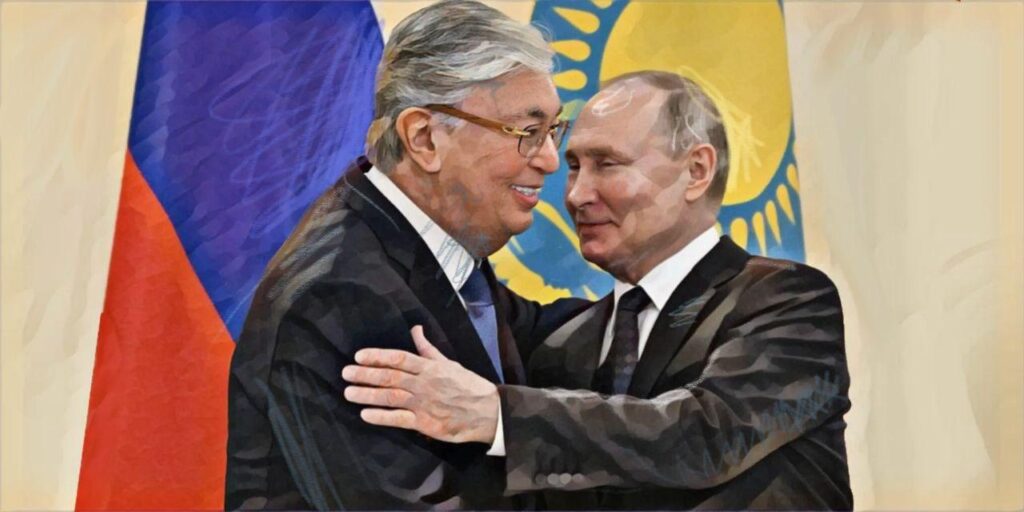
Between Trump and Putin: Tokayev Emerges as a Regional Diplomatic Powerbroker

In a striking display of diplomatic balancing, Kazakhstan’s President Kassym-Jomart Tokayev ended 2025 with a high-profile state visit to Moscow, where he and Russian President Vladimir Putin signed a declaration elevating bilateral relations to a comprehensive strategic partnership and alliance. The visit came just days after Tokayev returned from Washington, where he participated in a summit with U.S. President Donald Trump, and the September meeting with Xi Jinping in Tianjin. Back-to-back high-level diplomatic engagements have underscored Tokayev’s rising stature as a regional statesman navigating the complex geopolitical landscape between Russia and the West, representing a somewhat diplomatic ‘hat trick’ for the Kazakh leader. Kazakhstan’s multi-vector foreign policy has long sought to maintain balanced relations with Russia, China, the United States, and Europe. This approach allows Astana to position itself as a neutral and pragmatic actor even during periods of geopolitical tension, and explains why Tokayev is one of the few leaders trusted by both Washington and Moscow. Amid speculation in global media about Kazakhstan’s accession to the Abraham Accords, Tokayev’s stop in Moscow has drawn attention not only for its symbolism but also for its possible behind-the-scenes diplomacy. Kazakhstan’s agreement to sign the Abraham Accords has generated considerable discussion within diplomatic circles. For Washington, Astana’s endorsement signals alignment with U.S. regional objectives in the Middle East, while for Russia, it raised questions about Kazakhstan’s strategic leanings, making Tokayev’s immediate trip to Moscow particularly important. No Central Asian state had previously moved to formally support a U.S.-brokered Middle Eastern diplomatic framework, making Kazakhstan’s position especially noteworthy. A Private Conversation at the Kremlin Russian political analyst Arkady Dubnov highlighted the significance of an informal, private meeting between Tokayev and Putin ahead of their official talks. “The presidents exchanged brief greetings, and then Putin invited his guest to his Kremlin apartment for a private conversation,” Dubnov noted. Tokayev later confirmed that the tête-à-tête lasted over two-and-a-half hours. Dubnov suggested that such discretion may point to confidential messages being relayed. He cited recent remarks by Finnish President Alexander Stubb, who visited Astana shortly before Tokayev’s Washington trip. Stubb reportedly said that Tokayev could serve as a conduit for communication between Trump and the Kremlin. Before this, only Chinese President Xi Jinping had been granted such extended privacy with Putin, Dubnov emphasized. Tokayev is one of the few leaders who has maintained uninterrupted working relationships with both Western capitals and Moscow throughout recent years. His neutral stance on the Ukraine conflict, refusal to recognize breakaway territories, and active participation in U.S.-backed initiatives - combined with Kazakhstan’s deep economic and security links with Russia - place Tokayev in a uniquely credible position. Neither side views him as fully aligned with the other, which increases his utility as a channel for sensitive political messaging. Kazakhstan as a Strategic Messenger? Kazakh political analyst Andrei Chebotarev also underscored the potential geopolitical significance of the Tokayev-Putin meeting. “Most likely, the Russian president was interested in the details of his Kazakh counterpart's recent visit to the U.S. and his talks with...

Kazakh Lawmakers Seek Ban on Unscrupulous Mining Companies

Bakytzhan Bazarbek, a member of the Mazhilis, the lower house of Kazakhstan's parliament, has proposed the creation of a national register of unscrupulous subsoil users, calling for companies that violate environmental or legal norms to be suspended from operating at deposits for up to five years. His comments came during parliamentary discussions of proposed amendments to Kazakhstan’s legislation on subsoil and subsoil use, submitted by the government earlier this week. Bazarbek argued that the proposed changes fail to address the industry's systemic problems. Citing satellite monitoring data, Bazarbek said around 2,500 cases of illegal subsoil use have been recorded across the country. He pointed to widespread violations such as unreclaimed land, contaminated soil, and abandoned quarries, problems he attributed to the “excessive liberality” of the current legal framework. “The Subsurface Use Code was pushed through by oligarch lobbyists. It hasn’t fulfilled its intended purpose and was adopted in the interest of a narrow circle, citing models from Australia and Canada. As a result, most extraction revenues go to foreign investors, while the state receives only 7-8%. Why should we adhere to international standards that harm national interests?” Bazarbek said. He called for a registry of violators, where subsoil users found guilty by court could be suspended from mineral extraction activities for up to five years. He also urged stronger criminal penalties for violations in the subsoil sector. “Currently, the punishment is three to seven years. That is too lenient. It should be increased to between three and fifteen years of imprisonment,” he said. Bazarbek further proposed harsher penalties for concealing information and for conducting illegal mining without licenses or contracts, and called for reforms to streamline appeals against decisions by state bodies regulating subsoil use. Government Response Speaking during the plenary session, Vice Minister of Industry and Construction Iran Sharkhan said the government intends to deny licenses to companies that have previously failed to meet financial obligations. “If a company or its affiliates have not paid the subscription bonus after winning an auction in the past five years, they will be barred from receiving a license to explore solid minerals. These companies will also be prevented from acquiring subsoil rights from third parties,” Sharkhan said. He highlighted that a unified digital platform for subsoil use was launched in 2024, automating much of the mineral exploration and extraction process. “Currently, the platform provides 22 public services. Its interactive map indicates zones available for exploration and those closed to issuance, such as settlements, national parks, nature reserves, and defense lands. The system will also manage the turnover of subsoil areas following the termination or liquidation of previous rights,” Sharkhan added. As previously reported by The Times of Central Asia, Kazakhstan attracted over $150 million in geological exploration investment in 2025 and aims to maintain that level through the end of the year.

Vaccine Refusals Nearly Quadruple in Kazakhstan Over Eight Years

The number of vaccine refusals in Kazakhstan has surged nearly fourfold over the past eight years, according to Sarkhat Beisenova, Chair of the Sanitary and Epidemiological Control Committee at the Ministry of Health. Speaking at a recent briefing, Beisenova said the rise in vaccine hesitancy reflects a broader global trend that has also taken hold in Kazakhstan. “If we compare with 2017, the number of refusals has increased by a factor of 3.8. At that time, around 5,300 individuals declined vaccination; this year, nearly 20,000 have already been registered. The increase is evident,” she said. Beisenova noted that refusals span all types of vaccinations, except for flu shots, which, she said, no one has refused this year. As part of the country’s guaranteed volume of free medical care, the government purchased 2.1 million doses of the Grippol+ influenza vaccine, enough to cover about 11% of Kazakhstan’s 20.5 million population. So far, 1.9 million people, or 9.4% of the population, have been vaccinated. Free flu vaccination is offered to vulnerable groups, including healthcare workers, children with chronic illnesses, orphans, seniors over 65, people with disabilities, military personnel, pregnant women, and patients with cardiovascular or respiratory conditions. “The World Health Organization forecasts that three strains of influenza, A (H1N1), A (H3N2), and B, will be dominant this season. All are included in the vaccine, which offers protection against severe forms of the disease,” Beisenova emphasized. Since the start of the flu season, Kazakhstan has recorded 84 cases of COVID-19, alongside 150,600 cases of acute respiratory viral infection (ARVI) between October 30 and November 5. Since the beginning of autumn, the total has reached 1.2 million ARVI cases. Laboratories have also confirmed 304 cases of influenza A (H3N2), with 173 occurring in children under the age of 14. This year, the virus began circulating earlier than usual: the first cases appeared in early October, whereas last year’s outbreak began in November. According to Beisenova, this year’s strain is not new but consistent with typical seasonal influenza patterns. Annually, Kazakhstan registers up to 4 million ARVI cases and around 2,000 cases of influenza, the Ministry of Health reported. As previously reported by The Times of Central Asia, this year Kazakhstani citizens have also faced medicine shortages and a sharp rise in drug prices.

Kazakhstan, Russia Sign Comprehensive Strategic Partnership Declaration

Kazakh President Kassym-Jomart Tokayev and Russian President Vladimir Putin signed a declaration in Moscow on November 12, 2025, elevating their countries’ relationship to what they have dubbed a “Comprehensive Strategic Partnership and Alliance.” The document was signed at the Kremlin during Tokayev’s working visit to Russia at Putin’s invitation. Ahead of the trip, Tokayev wrote in Rossiyskaya Gazeta that the new declaration “will open a new era in bilateral relations, confirming an unprecedented level of mutual trust and joint readiness for closer work in all areas.” Putin described Kazakhstan as one of Russia’s closest allies and said the agreement “outlines measures to enhance regional partnerships and border cooperation.” Expanding Economic Cooperation During the Moscow visit, both leaders highlighted growing economic links and gas supplies. Tokayev told Russian media that bilateral trade had reached almost $30 billion in 2024 and continued to rise through 2025. Putin noted that Russia remained Kazakhstan’s largest trading and investment partner, while Tokayev said he wanted to increase joint projects in energy, manufacturing, and transport. Energy cooperation featured prominently. The two presidents discussed boosting Russian gas supplies to Kazakhstan’s northern and eastern regions and reaffirmed plans to build Kazakhstan’s first nuclear power plant in cooperation with Russia’s state company Rosatom. They also pledged to coordinate policies in the oil and electricity sectors and maintain stable operations of the Caspian Pipeline Consortium, which carries Kazakh crude to the Black Sea via Russia. Education and technology links were also addressed; Tokayev pointed to new Russian university branches opening in Kazakhstan as evidence that bilateral cooperation extends beyond energy and trade into culture and science. A Long Tradition of Partnership Kazakhstan and Russia share a 7,600-kilometer border and economic and security ties through the Eurasian Economic Union and the Collective Security Treaty Organization. Their cooperation spans space exploration at the Baikonur Cosmodrome, industrial projects, and joint infrastructure development across Central Asia. Tokayev’s government has framed the alliance as a natural evolution of their longstanding partnership. “Despite the complex international situation, interaction and cooperation are actively developing for the benefit of our people,” Tokayev stated. Balancing Major Powers While reinforcing ties with Moscow, Tokayev has also been extremely active in his diplomatic outreach with other world powers. Just days before his Russia trip, Tokayev and his Central Asian counterparts met U.S. President Donald Trump at the White House in a C5+1 summit marking ten years of U.S.-Central Asia cooperation. At that meeting, he welcomed what he called a new stage of engagement between Central Asia and the United States and oversaw new investment deals. Earlier in 2025, Tokayev met Chinese President Xi Jinping in Astana during a China-Central Asia summit, where both sides praised record trade volumes and agreed to deepen collaboration in energy, logistics, and technology. Kazakhstan’s leadership views these parallel partnerships as part of its long-standing multi-vector foreign policy - a strategy designed to maintain balanced relations with Russia, China, the U.S., and Europe - diversifying alliances and avoiding dependence on any single power. Cautious Neutrality on Global...

Traffic Jam of 1,500 Trucks Reported at Kazakhstan-China Border Crossing

Approximately 1,500 freight trucks have been stranded at the Nur Zholy border checkpoint between Kazakhstan and China, Nur.kz has reported, citing the State Revenue Committee (SRC) of Kazakhstan. According to the SRC, the congestion occurred despite a prior agreement with China to allow at least 800 trucks to pass through the crossing daily, with plans to increase that figure to 1,000 by year-end. However, from November 8 to 12, the actual number of vehicles processed by the Chinese side averaged only 700 to 750 per day. This shortfall was cited as the primary reason for the backlog on the Kazakh side. Compounding the issue, repair and installation work at the Kalzhat-Dulaty crossing significantly reduced its capacity for about a week. As a result, part of the freight traffic was diverted to Nur Zholy, placing additional pressure on its infrastructure. To alleviate the congestion, authorities have implemented a temporary adjustment to the electronic queue system. Starting November 13, daily vehicle entries will be capped at 650 to ensure a more balanced distribution of traffic and to support operational stability. The SRC stated that the situation is under constant monitoring and that negotiations with Chinese officials have resulted in mutual agreement on measures to improve border throughput. In May, President Kassym-Jomart Tokayev issued a formal reprimand to then Transport Minister Marat Karabayev for persistent problems at border crossings and delays in key transit infrastructure projects. Karabayev was dismissed from his post the following month.

Former Soviet Nuclear Test Site in Semipalatinsk to House Kazakhstan’s Nuclear Waste

Kazakhstan plans to establish disposal sites for radioactive waste from its nuclear power plants at the former Semipalatinsk nuclear test site in the eastern part of the country, Deputy Chairman of the Atomic Energy Agency Gumar Sergazin announced during a briefing in Astana. Sergazin stated that the operation of two 1,200 MW reactors, similar to those under construction at the country’s first nuclear power plant in the Almaty region, will produce approximately 50 cubic meters of radioactive waste annually. Burial in the Semipalatinsk Zone A new bill on radioactive waste management, presented to parliament this week, outlines plans to develop burial sites within the Semipalatinsk nuclear safety zone. “This is already a contaminated area: the total area of the site is 18,000 square kilometers, of which about 8,300 are zones of elevated radiation,” Sergazin said. The National Nuclear Center is scheduled to begin site preparation in 2026. The depth of burial will depend on groundwater levels, with international norms typically placing high-level waste at depths of up to 400 meters. “Sanitary requirements will determine technical standards, including the type of cement and sealing techniques to prevent radiation leakage. Liquid radioactive waste will not be buried,” he clarified. Sergazin emphasized that the Semipalatinsk site will serve as a centralized repository for waste from all future nuclear power plants in Kazakhstan. He also noted that radioactive waste is already present in the country, even in the absence of operational nuclear power stations. Scale and Sources of Radioactive Waste Kazakhstan has accumulated approximately 293 million cubic meters of radioactive waste to date, of which 290 million cubic meters are low-level waste, Sergazin said. “The majority, about 237 million cubic meters, is located at the Semipalatinsk test site,” he noted. The remaining waste, consisting of medium and high-level material, originates from industrial and scientific operations. Key contributors include the National Nuclear Center, the Institute of Nuclear Physics, the Ulba Metallurgical Plant in East Kazakhstan region, and facilities in Western Kazakhstan such as Koshkar-Ata and the Chemical and Hydrometallurgical Plant. The agency estimates that safe disposal of liquid radioactive waste alone will require around $40 million. Funding and International Participation Given the scale and cost of the project, Kazakhstan intends to secure international grant funding. Sergazin confirmed that negotiations have begun with the European Bank for Reconstruction and Development. A draft agreement and roadmap have already been prepared as part of the Central Asia Environmental Safety Program. “Participating countries are expected to provide grant-based funding. Adoption of the new legislation will establish the legal foundation necessary to attract external resources, avoiding the need for increased domestic budget spending,” he said. Previously, The Times of Central Asia reported that Kazakhstan’s first nuclear power plant is slated for construction by the Russian state corporation Rosatom by 2035, while the second and third plants are expected to be built with the involvement of China National Nuclear Corporation (CNNC).
