• KGS/USD = 0.01144 0%
  • KZT/USD = 0.00211 0%
  • TJS/USD = 0.10460 0.19%
  • UZS/USD = 0.00008 0%
  • TMT/USD = 0.28490 0%
  • KGS/USD = 0.01144 0%
  • KZT/USD = 0.00211 0%
  • TJS/USD = 0.10460 0.19%
  • UZS/USD = 0.00008 0%
  • TMT/USD = 0.28490 0%
  • KGS/USD = 0.01144 0%
  • KZT/USD = 0.00211 0%
  • TJS/USD = 0.10460 0.19%
  • UZS/USD = 0.00008 0%
  • TMT/USD = 0.28490 0%
  • KGS/USD = 0.01144 0%
  • KZT/USD = 0.00211 0%
  • TJS/USD = 0.10460 0.19%
  • UZS/USD = 0.00008 0%
  • TMT/USD = 0.28490 0%
  • KGS/USD = 0.01144 0%
  • KZT/USD = 0.00211 0%
  • TJS/USD = 0.10460 0.19%
  • UZS/USD = 0.00008 0%
  • TMT/USD = 0.28490 0%
  • KGS/USD = 0.01144 0%
  • KZT/USD = 0.00211 0%
  • TJS/USD = 0.10460 0.19%
  • UZS/USD = 0.00008 0%
  • TMT/USD = 0.28490 0%
  • KGS/USD = 0.01144 0%
  • KZT/USD = 0.00211 0%
  • TJS/USD = 0.10460 0.19%
  • UZS/USD = 0.00008 0%
  • TMT/USD = 0.28490 0%
  • KGS/USD = 0.01144 0%
  • KZT/USD = 0.00211 0%
  • TJS/USD = 0.10460 0.19%
  • UZS/USD = 0.00008 0%
  • TMT/USD = 0.28490 0%

Viewing results 1207 - 1212 of 4592

Opinion: Xi Jinping Heads to Astana – What’s at Stake in the Central Asia-China Summit?

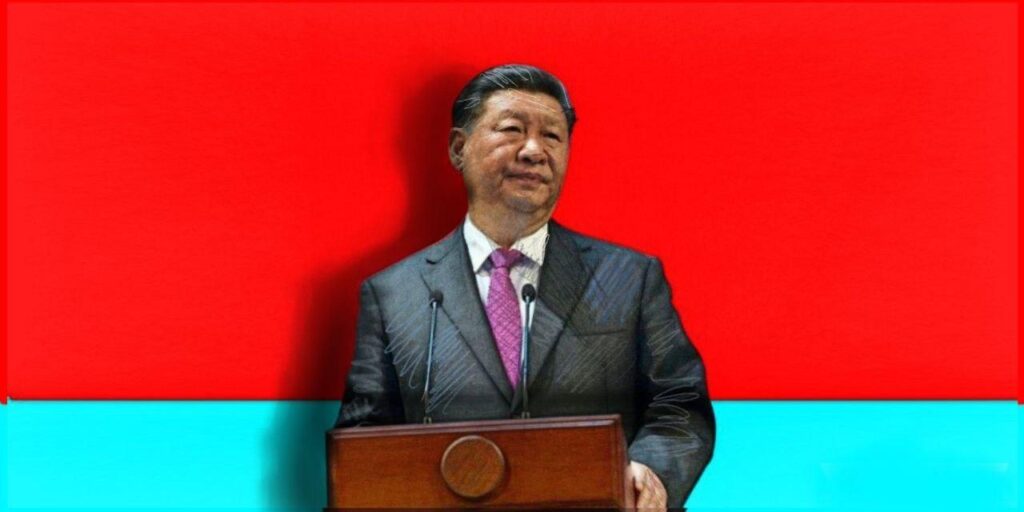
On June 16-17, President Xi Jinping of the People’s Republic of China will visit Kazakhstan. The second Central Asia-China summit is scheduled for June 17 in Astana. Leading up to the event, a series of forums, meetings, and conferences have been unfolding across Central Asia and China, drawing experts, journalists, diplomats, and energy-sector representatives. These activities suggest that the upcoming summit is poised to overshadow its predecessor. While U.S. analysts continue debating the viability of their own C5+1 framework for engaging with Central Asia, and the European Union advanced its outreach with the inaugural EU-Central Asia summit, China has relied on a well-worn path. The thousand-year legacy of the Middle Kingdom is filled with moments when it had to engage with the complex mosaic of Central Asia, once a turbulent region of khanates, emirates, and nomadic tribes. Despite the chaos, China succeeded in carving out a secure overland corridor, the Great Silk Road, which threaded through what are now the independent Central Asian republics, linking them like beads in a continental necklace. Then, as now, China is seeking stability in the region, not just for political influence but to safeguard its global supply chains. Beijing’s modern initiatives, including the Belt and Road Initiative and its broader “community of shared future” concept, aim to establish global “islands of comfort” conducive to Chinese interests.  At the heart of this strategy lies a deeply embedded worldview: that China represents civilization itself. The Chinese learned long ago to deal with their neighbors not with violence, but through economic incentives, a method which is proving just as effective today. This layer of understanding is notably absent in many Western and post-Soviet analyses of China’s actions in Central Asia, the Middle East, Africa, and beyond. The reasons for this are twofold. First, Chinese officials are careful never to state views about cultural hierarchies explicitly; doing so would risk alienating partners. This reticence is a feature of traditional Eastern diplomacy. Second, Beijing has cultivated its own expert ecosystem within the post-Soviet sphere. In response to a wave of Sinophobia that swept through Central Asia a decade ago, China now primarily engages with favorable media outlets and Sinologists, many of whom are nurtured through carefully managed media tours. One such tour, organized by People’s Daily, is currently underway ahead of the Astana summit. As a result, the discourse surrounding the summit is shaped less by hard policy proposals than by diplomatic pageantry, with everything presented in the best possible light. At the recent 5th Forum of Think Tanks, “Central Asia-China: New Horizons for Regional Partnership,” Kazakhstan's State Councilor Yerlan Karin likened China and Central Asia to “the two lungs of Asia,” emphasizing the symbolic depth of their growing relationship. The 6th Central Asia-China Foreign Ministers’ Meeting, chaired by Chinese Foreign Minister Wang Yi and held in Almaty in April, likewise offered little in terms of concrete summit outcomes. According to a general statement from Kazakhstan’s Foreign Ministry, topics included political dialogue, trade, connectivity, sustainable development, and security cooperation,...

Experts Warn of Escalating Climate Risks for Central Asia

As global temperatures rise, Central Asia is emerging as one of the world’s most vulnerable regions to the impacts of climate change. This warning comes from three recent reports by the World Meteorological Organization (WMO), which predict intensified warming, more frequent droughts, and rapid glacier retreat in the region. Without urgent adaptation and coordinated policy responses, the region faces growing risks to its water resources, agriculture, and energy systems. Beyond the Climate Norm According to the WMO’s Climate Outlook for 2025-2029, Central Asia is projected to experience sustained warming and greater variability in precipitation. Every year in the 2025-2029 period is expected to be hotter than the 1991-2020 average. Particularly troubling is the growing likelihood that global temperatures may temporarily exceed +1.5°C above pre-industrial levels in the near term. One contributing factor is the heightened intensity of the South Asian monsoon, which is 82% more likely to be stronger than normal. While this could increase rainfall, the unpredictability raises concerns, periods of heavy rain could be followed by prolonged droughts, severely impacting regional agriculture. Another alarming development is the rapid retreat of glaciers in the Pamirs, which feed the region’s primary waterways, including the Amu Darya and its major tributary, the Vakhsh.  The loss of these glaciers threatens long-term water availability and necessitates a rethinking of regional water management strategies. The WMO forecasts that the 2025-2029 period could be the warmest on record, with global temperatures projected to rise by 1.2-1.9°C. Although the chance of exceeding +2°C during this period is currently low, about 1%, the probability is rising. Spring Floods, Summer Droughts A second WMO report, though focused on the Pacific region, reinforces global climate trends relevant to Central Asia. It confirms that 2024 was the hottest year on record, with global average temperatures 1.55°C above pre-industrial levels. For high-altitude countries like Tajikistan, the implications are already evident. Snow is melting earlier, shortening the runoff season. Water that once lasted through summer now disappears within weeks in the spring, heightening the risks of spring flooding followed by summer droughts. The region lacks sufficient reservoir infrastructure to capture and store water during periods of excess. The report also highlights the looming disappearance of Indonesia’s glaciers by 2026, a fate that may soon await Central Asia’s glaciers. The consequences are serious, particularly for countries like Tajikistan, where over 90% of electricity is generated by hydropower. Climate anomalies across the region are increasing, including dust storms, intense rainfall, extreme heat, and landslides. The WMO stresses the urgent need for adaptation measures such as modernized infrastructure and improved climate monitoring and water management systems. The Need for a Regional Strategy The third WMO report emphasizes Central Asia’s unique vulnerability to droughts, which often cross national borders. This underscores the need for a coordinated regional approach, especially in the Amu Darya and Syr Darya river basins. The report advocates for transboundary mechanisms for monitoring, data sharing, and joint response strategies. While Central Asia is part of the Global Network of Climate-Resilient River Basins, progress...

Fifteen Killed in Industrial Accidents in Kazakhstan Since Start of 2025

Kazakh authorities are tightening oversight of hazardous industrial facilities and will require operators to promptly modernize aging equipment, which is frequently cited as a leading cause of workplace accidents. “From January to May, 11 accidents occurred in Kazakhstan across the petrochemical and mining industries, as well as at boiler and gas facilities and during the processing of vegetable raw materials. These incidents resulted in over 60 emergency situations, injuring 22 workers and claiming the lives of 15,” Emergency Situations Minister Chingiz Arinov reported during a government meeting. Officials from the Ministry of Labor and Social Protection added that in 2024, more than 1,400 people were injured in industrial accidents, and 202 Kazakh citizens lost their lives. Additionally, nearly 16,000 individuals lost their ability to work, with approximately half of the cases linked to occupational illnesses and the other half to workplace injuries. Currently, over 445,000 jobs in Kazakhstan are classified as harmful or dangerous. Since the beginning of the year, inspections of around 16,000 facilities for industrial and fire safety revealed more than 100,000 violations. Authorities suspended operations at more than 7,500 production sites for severe infractions. Arinov emphasized that outdated and poorly maintained equipment is a key contributor to these accidents. “To address this, the ministry plans to legislate mandatory renovation and technical upgrade plans for owners of hazardous facilities,” he said. “These plans will require official approval by our department.” The Ministry of Labor has also proposed the implementation of continuous digital monitoring in high-risk sectors. This would involve installing sensors linked to a unified automated information system to track working conditions in real time. As previously reported by The Times of Central Asia, President Kassym-Jomart Tokayev ordered comprehensive inspections of industrial facilities following the deaths of seven Kazakhmys Corporation workers at the Zhomart mine in the Zhanaarka district of Ulytau region in February.

Joint Military Exercises to Strengthen Ties Between Azerbaijan, Kazakhstan, Pakistan, Turkey, and Uzbekistan

News sources in Azerbaijan citing the Ministry of Defense of the Republic report that five nations, Azerbaijan, Turkey, Uzbekistan, Kazakhstan, and Pakistan, are set to participate in a significant joint military exercise, signaling a coordinated effort to enhance military cooperation, strengthen regional security, and bolster strategic partnerships among the participating countries. Scheduled to take place in September, the Eternal Brotherhood-IV multinational exercise highlights the growing collaboration in defense and security among these countries, which share common geopolitical and strategic interests. Purpose and Objectives The forthcoming exercises aim to improve interoperability among the armed forces of Azerbaijan, Turkey, Uzbekistan, Kazakhstan, and Pakistan. The participating nations - each with their unique military capabilities - are seeking to tackle evolving security challenges such as terrorism, regional instability, and transnational threats. Joint maneuvers will include combat training, search-and-rescue operations, sharing tactical expertise, and honing operational coordination in various combat scenarios. Geopolitical Significance The joint exercises underscore a shared commitment to regional peace and stability at a time of shifting dynamics in global geopolitics. With Central and South Asia witnessing challenges such as the ongoing threats from militant groups, border conflicts, and the need for safeguarding vital trade and energy routes, these drills offer participating nations the opportunity to showcase unity and resilience. As a NATO member, Turkey brings extensive military experience and technological support to the table, while Pakistan has counterterrorism expertise. Kazakhstan and Uzbekistan, with their strategic positions in Central Asia, bring a regional focus to the exercises, ensuring operational relevancy in the heart of Asia. Azerbaijan, meanwhile, is eager to strengthen ties with regional and global partners after its recent military successes. These exercises also send a clear message of the countries’ commitment to multilateral defense strategies to any external adversaries seeking to exploit regional vulnerabilities. A Broader Vision for Partnership The exercises will serve as a platform to test state-of-the-art defense technologies, develop combined operational strategies, and examine responses to scenarios involving asymmetric warfare and hybrid threats. For participating nations, it is an opportunity to refine their respective military tactics and elevate their personnel's proficiency by working alongside allies. Furthermore, the drills are expected to solidify political and military relationships among the nations, extending cooperation beyond defense into economic and strategic realms. By aligning priorities and enhancing mutual trust, the exercises could pave the way for future joint programs and initiatives aimed at fostering long-term collaboration. Such initiatives are especially relevant in the context of securing critical infrastructure projects like transnational pipelines and trade corridors. The joint military exercises are part of ongoing efforts to deepen relationships across Eurasia and South Asia through defense diplomacy. They reflect a broader vision of building an integrated regional security framework while respecting the sovereignty and unique needs of each nation involved. For the participating countries, the exercises are a strategic step toward achieving a stable and cooperative future in an increasingly uncertain global landscape.

A British Scholar’s Glimpse into Kazakh Life a Century Ago

A century ago, in 1925, British historian, writer, and revolutionary Ralph Fox published People of the Steppes, a compelling account of his travels offering rare insights into the life and culture of the Kazakh people. Fox (1900–1936) was no ordinary observer. A journalist, Marxist, and author of biographies on Lenin and Genghis Khan, he traveled through Soviet Central Asia in the early 1920s and spent his final years working at the Marx-Engels Institute in Moscow, where he wrote his last major tome. In the foreword to People of the Steppes, Fox states that his aim was not political propaganda but to record what he had witnessed. His observations, written as he journeyed through the steppe from the Orenburg region to the Aral Sea, provide a vivid portrait of nomadic life. As the train carried him across Turkestan, Fox was struck by the sights outside his window: “For the first time I see, through the train windows, the round black tents of the nomads, shaped like broad beehives, and I whisper to myself that under just such a tent was Chingiz Khan born… Sometimes there passes a family on the march, the elders and children perched above their household goods on the beautiful shaggy Bactrian camels, the youths on horseback, small, sturdy ponies. It is all strange to me and I feel a beauty of slowness and order in their movements, the eternal rhythm of a wandering shepherd's life.” Fox shortly visited a nomadic camp, recording his impressions in the sub-section “The Tents of the Kazakhs”. “We sat on some empty crates and watched the hens scutter across the floor," he wrote, "while his wife, a quiet, kindly woman, brought us a bowl of Kummis (Mare’s milk) to drink." The hospitality of the Kazakhs left a lasting impression: “ They roused me when the meal was ready. ‘The Kazaks, men and women, sat round the pot in the dim tent, for smoke filled all the upper part now, and the sun had set. Brown arms were thrust into the mess, or painted wooden spoons, while we dainty whites were given wooden bowls. ‘The meat was tough and greasy, and to me only the little cakes of dough were palatable, though they were gritty with sand, so I did not eat much… It was all fantastic around that evil-smelling fire.” The next day, Fox encountered a group of Lesser Horde Kazakhs migrating from Siberia along the Syr Darya River. He noted that some had already settled in Torgai, while others aimed to reach the Urals. “ Once there, they would willingly sell off their surplus stock to buy their necessities on the bazaars to last them through the following year, at Kazalinsk, at Jussali, at Perovsk and ‘Turkestan, the great bazaars of the Syr Daria.” Fox also explored the broader historical and cultural context of the Kazakhs, noting that their nomadic lifestyle limited the development of written literature but fostered rich oral traditions and epic poetry: “It is hard to unravel their...

Lenin Falls in Osh: Central Asia Redefines Its Soviet Legacy

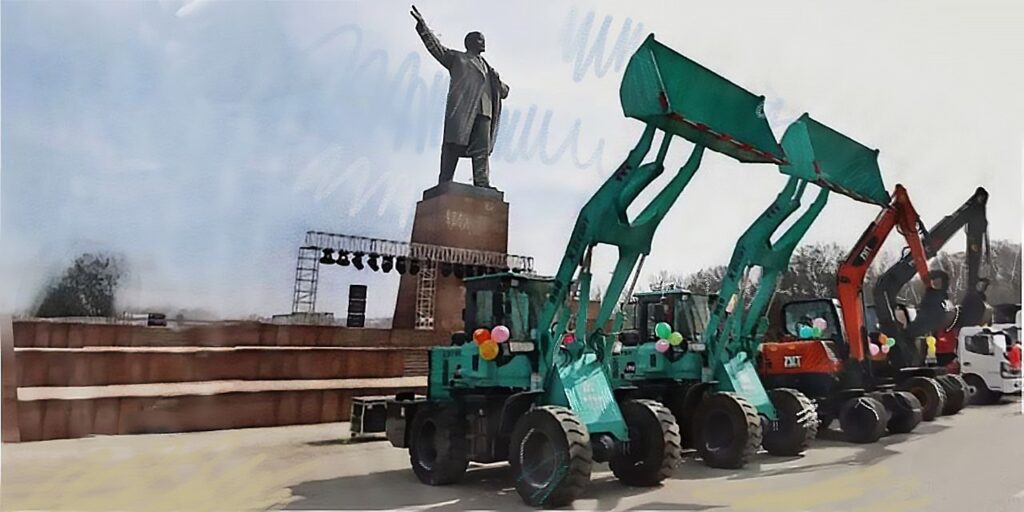
The recent removal of a towering 23-meter-tall monument to Vladimir Lenin in Osh, Kyrgyzstan, has ignited heated debate both domestically and abroad. While many are surprised the monument remained in place for more than three decades after the fall of the Soviet Union, its dismantling is part of a broader regional trend of de-Sovietization, a complex process involving the renaming of cities, removal of Soviet-era symbols, and the reassertion of national identity across Central Asia. A Symbol Removed, A Debate Ignited [caption id="attachment_32769" align="aligncenter" width="2560"] Lenin Monument in Osh, October 2024; image: TCA, Jonathan Campion[/caption] On June 7, Osh authorities dismantled what was once the tallest Lenin statue in Central Asia. Originally installed in 1975, the monument is to be relocated to a city park, according to the local government. Officials stressed the move was intended to improve the city’s architectural landscape, not to make a political statement, and have warned against "politicizing" the issue. Despite official reassurances, the move has sparked sharp reactions on social media and in the press, with Russian media outlets characterizing the relocation as an anti-Russian gesture. Generational divides have become apparent: younger residents tend to support the removal, while older citizens have expressed dismay over what they see as the erasure of history. “It’s a shame. It was more than a monument, it was part of our lives,” Elena, a local schoolteacher told The Times of Central Asia. “We joke that Lenin crossed the ‘red line’ and got demolished.” Irina Bayramukova, a 68-year-old public figure, called the decision a mistake. “The Lenin monument by Nikolai Tomsky was not only artistically significant, it represented an era. Removing it is like declaring war on those who identify with that past,” she told TCA. Kyrgyzstan, like other Central Asian republics, has been distancing itself from its Soviet legacy since gaining independence in 1991. One of the earliest symbolic moves was the renaming of the capital, once called Frunze after a Bolshevik military leader, back to Bishkek, a modified version of its pre-Soviet name. A Museum to Mikhail Frunze still stands in Bishkek, where the thatched-roof hut of his boyhood was purportedly transported brick by brick. A supporter of Stalin’s rival Zinoviev, when forced to undergo routine surgery by Uncle Joe in 1925, Frunze “mysteriously” died of chloroform anesthetic poisoning. Redefining History [caption id="attachment_32778" align="aligncenter" width="2560"] Lenin Monument in Bishkek; image: TCA, Stephen M. Bland[/caption] Originally erected in 1984 in the Central Square of Bishkek, a Lenin statue was relocated behind the State Historical Museum in 2003. As previously reported by TCA, earlier this year a debate on removing the monument altogether flared up. In 2022, the National Historical Museum of the Kyrgyz Republic in Bishkek finally reopened its doors after being closed in 2016 for renovations which were planned to take less than a year but ended up taking six years. Several government officials were charged with misappropriating funds designated for the renovations, with former Prime Minister Sapar Isakov sentenced to 18 years in prison. Reportedly, over...