• KGS/USD = 0.01144 0%
  • KZT/USD = 0.00212 0%
  • TJS/USD = 0.10456 0.19%
  • UZS/USD = 0.00008 0%
  • TMT/USD = 0.28490 0%
  • KGS/USD = 0.01144 0%
  • KZT/USD = 0.00212 0%
  • TJS/USD = 0.10456 0.19%
  • UZS/USD = 0.00008 0%
  • TMT/USD = 0.28490 0%
  • KGS/USD = 0.01144 0%
  • KZT/USD = 0.00212 0%
  • TJS/USD = 0.10456 0.19%
  • UZS/USD = 0.00008 0%
  • TMT/USD = 0.28490 0%
  • KGS/USD = 0.01144 0%
  • KZT/USD = 0.00212 0%
  • TJS/USD = 0.10456 0.19%
  • UZS/USD = 0.00008 0%
  • TMT/USD = 0.28490 0%
  • KGS/USD = 0.01144 0%
  • KZT/USD = 0.00212 0%
  • TJS/USD = 0.10456 0.19%
  • UZS/USD = 0.00008 0%
  • TMT/USD = 0.28490 0%
  • KGS/USD = 0.01144 0%
  • KZT/USD = 0.00212 0%
  • TJS/USD = 0.10456 0.19%
  • UZS/USD = 0.00008 0%
  • TMT/USD = 0.28490 0%
  • KGS/USD = 0.01144 0%
  • KZT/USD = 0.00212 0%
  • TJS/USD = 0.10456 0.19%
  • UZS/USD = 0.00008 0%
  • TMT/USD = 0.28490 0%
  • KGS/USD = 0.01144 0%
  • KZT/USD = 0.00212 0%
  • TJS/USD = 0.10456 0.19%
  • UZS/USD = 0.00008 0%
  • TMT/USD = 0.28490 0%

Viewing results 2257 - 2262 of 4651

China to Build a Trade and Industrial Park in Astana

Last week, Xinjiang Hengyuan Investment Management Co., Ltd., based in the Chinese city of Baiyang, and Kazakh Invest signed a memorandum to implement the construction of a trade and industrial park, spanning 50 hectares, in Astana. As reported by Kazakh Invest, the project is expected to positively impact the development of critical sectors of Kazakhstan's economy, including logistics, warehousing, processing, trade, and real estate management. The project will also attract Chinese trade and manufacturing companies to operate in Kazakhstan. Yan Wang, Deputy Mayor of Baiyang, commented: "We are entering this project with great enthusiasm, seeing the enormous potential of Kazakhstan as a key logistics hub in the region. Creating the Kazakhstan-China Trade and Industrial Park in Astana will significantly expand the country's logistics capabilities and strengthen its role as an important transit corridor between East and West. We believe this project will catalyze attracting new trade flows and manufacturing." Yerzhan Yelekeyev, Chairman of the Board of Kazakh Invest, added: "This project opens up new horizons for cooperation between Kazakhstan and China. The creation of the Kazakhstan-China Trade and Industrial Park in Astana will not only accelerate the development of key sectors of our economy -but-also create numerous new jobs.”

With the Russian Language Waning in Central Asia, Will Other Languages Replace It?

Russian is still the most widespread foreign language in Kazakhstan, though its role is declining there, and across Central Asia in general. At the same time, the people of the region have been slow to learn other languages, in part due to economic factors such as slowing globalization, according to the Kazakhstani political analyst Zamir Karazhanov, who is head of the Kemel Arna Public Foundation.   The language of cities Since declaring independence in 1991, all the counties of Central Asia have made promoting their national languages a priority. But foreign languages, which link the region with the rest of the world, have also historically been seen as critical. In practice, however, the study and use of foreign languages other than Russian is not widespread. The Russian language is losing its prominence in Kazakhstan as the number of ethnic Russians declines. According to official statistics, as of January 1, 2024, Russians made up 14.89% of the country’s population, down from close to 40% in 1989. Nevertheless, thanks to the education system and Kazakhstan’s proximity to Russia, the level of proficiency in Russian remains high. In Kazakhstan and Kyrgyzstan, Russian is a second official language. In Tajikistan, it is called the “language of interethnic communication”. In Uzbekistan and Turkmenistan, however, it does not have an official status. More than 90% of Kazakhstanis know Russian to some degree, while 20% of the population considers it their native language. Meanwhile, those figures for Turkmenistan are 40% and 12% respectively. In Kyrgyzstan, about 44% know Russian and 5% consider it their native language; in Uzbekistan, it is about 50% and 2.7%; and in Tajikistan, 55% and 0.3%. Kazakhstan's President Kassym-Jomart Tokayev has repeatedly spoken about the need to preserve the Russian language in Kazakhstan, and the unacceptability of language-based discrimination. Last year, he unveiled the International Russian Language Organization, established by the CIS Heads of State Council. “The new organization is open to all countries and, of course, very relevant from the point of view of global humanitarian cooperation,” explained Tokayev, while underlining that measures to promote the Russian language in the Eurasia region and elsewhere are congruous with the trend of strengthening national identities. “Kazakhstan will continue the policy of bolstering the status of the state language of Kazakh,” Tokayev said at the time. Today, Kazakhstan has many Russian-language media, while Russian remains the lingua franca at meetings among post-Soviet countries. Even though Russian is concentrated in big cities, all Kazakhstanis receive a significant amount of western and other foreign news from Russian sources. “Russian is spoken in most of Kazakhstan. In the biggest city, Almaty, communicating in Russian is not a problem. But, if you move 30-50 km outside the city, it gets harder to speak it. Russian is the language of cities and the language of interethnic interaction,” the political analyst Karazhanov told The Times of Central Asia. “Of course, the number of native speakers of the Kazakh language is growing, and the number of Russian speakers is declining, but Kazakh...

Burabay National Park: A Place of Respite, Legends and Cultural Heritage

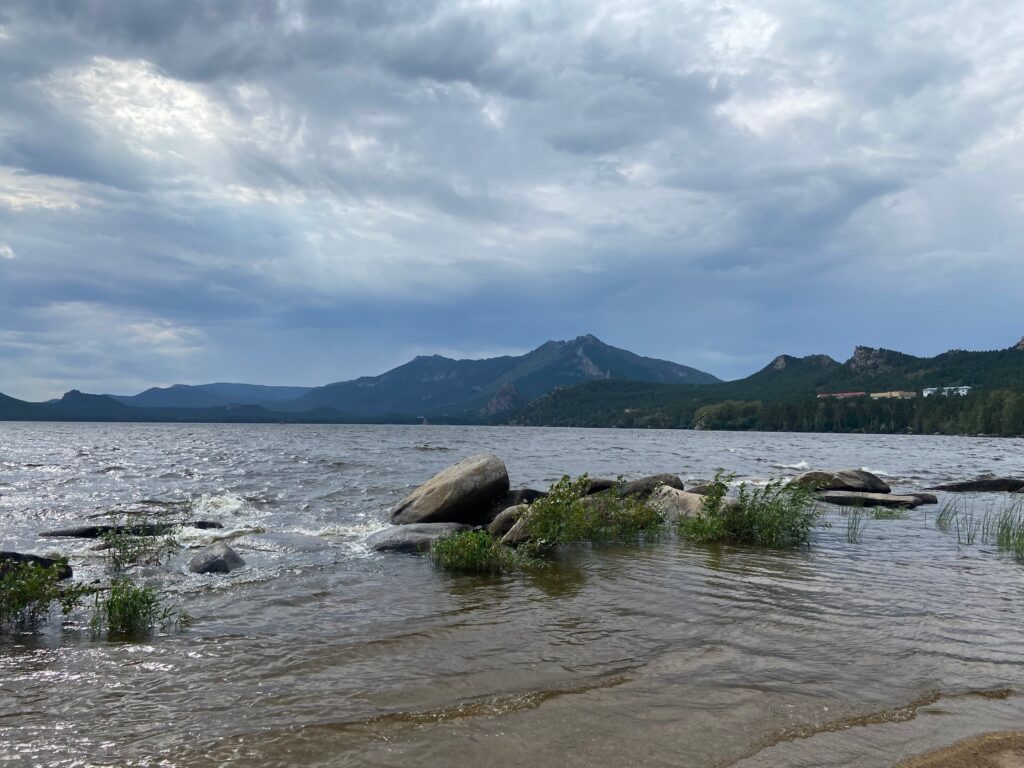
Burabay National Park, located just 250 kilometers from Kazakhstan’s capital Astana, is a place of outstanding natural beauty offering easily accessible respite from the hustle and bustle of city life. Known by its Russian name ‘Borovoye’, from boro meaning pine forest - until 2000, the park spans 85,000 hectares on which visitors can participate in outdoor pursuits from cycling, horseback riding and skiing, to swimming, kayaking, sailing and water skiing, or simply relax and enjoy the fresh clean air and magnificent views of the hills and mountains. [caption id="attachment_22204" align="aligncenter" width="1260"] Photo: Mt Okzhetpes - TCA, Tamila Olzhbaekova[/caption]   Mountaineers can test their skills on Mt Kokshetau, the highest peak standing at 957 meters. For those less experienced, The Three Sisters provide a range of gradients suited to different levels of hikers and climbers, and Mt Bolektau affords panoramic views within an easy 20-minute ascent. For many, the pearls in Burabay’s crown are its crystal-clear lakes. The park boasts no fewer than fourteen, each with its own unique beauty and atmosphere. Amongst the best known are Maloye, Shchuchye, Chebachye, home to 300 species of fish, and the largest, Lake Borovoye, popular for its well-maintained beaches and water sports. Burabay is also a place of great archaeological, cultural, and historic significance and both its origins and natural landmarks are steeped in legends. Origins Different myths tell how disappointed by its barren terrain, either Allah or Tengri decided to enhance the flat Kazakh steppe by scattering it with small mountains, lakes, and forests. The area and its settlers were guarded by a beautiful white camel; a bura in Kazakh, and hence the name, Burabay. Coveting it as a trophy, robbers shot it with an arrow but were instantly flattened when the camel turned into a rock. Today, it is but one of the park’s many legendary landmarks. [caption id="attachment_22211" align="aligncenter" width="752"] Photo: Adobe stock -Zhumbaktas[/caption]   Zhumbaktas In the center of Borovoe Lake stands a rocky outcrop known as ‘Zhumbaktas’ which translates as ‘mysterious stone’ in Kazakh. According to legend, a rich Khan sought a wealthy husband for his beautiful daughter but instead, she fell in love with a talented, roaming musician. The couple fled and pursued by the girl’s brothers, sailed to the middle of the lake. The young man, shot through the chest with an arrow, toppled into the water. The girl appealed Tengri, who granting her wish to join her beloved, turned her into a rock. From one side, the island looks like a boat, from another, a girl with her hair blowing in the wind, and when viewed from a different angle, an old woman. [caption id="attachment_22205" align="aligncenter" width="1200"] Photo: Dancing Birch Grove - TCA, Tamila Olzhbaekova[/caption]   Dancing Birch Grove Amid the park’s vast forests, stands an enchanting grove, where blown by the wind, birch trees sway and intertwine. According to legend, village girls dancing in a clearing froze in fear and turned into trees when they noticed the khan watching them. Mount Okzhetpes According to research...

CAREC Think Tank Development Forum to Focus on Climate Solutions

The 8th CAREC Think Tank Development Forum (CTTDF) will be held on August 27 and 28 in Almaty. Themed “The Climate Challenge: Thinking Beyond Borders for Collective Action,” the forum aims to address regional climate challenges by fostering collaborations for policy recommendations and joint research. The CAREC Institute, the Eurasian Development Bank, the Asian Development Bank, and other partners will organize the forum, which will bring together policymakers, experts, and leaders from across Asia to advance regional cooperation on climate action. Headquartered in Urumqi in China’s Xinjiang, the CAREC Institute is an intergovernmental organization contributing to the Central Asia Regional Economic Cooperation (CAREC) Program through knowledge generation and capacity building. The Institute is jointly shared and governed by the CAREC's eleven member countries: Afghanistan, Azerbaijan, China, Georgia, Kazakhstan, Kyrgyzstan, Mongolia, Pakistan, Tajikistan, Turkmenistan, and Uzbekistan. The forum participants will engage in meaningful policy discourse to identify solutions for a climate-resilient region, explore joint research opportunities, and facilitate innovative climate studies beyond mainstream agendas. Representatives from international organizations, high-level government officials, esteemed university scholars, and experts from leading think tanks will be key speakers. The Director of the CAREC Institute and the Vice President of the Asian Development Bank will address the opening ceremony. The forum will include a research presentation by Arman Akhunbaev, Eurasian Development Bank’s head of the Center for Infrastructure and Industrial Research, with insights into the financial solutions to close the investment gap in Central Asia's drinking water and sanitation infrastructure. The forum will also feature presentations, panel discussions, case studies, and interactive sessions designed to foster dialogue and develop actionable strategies for climate resilience in the CAREC region.

Kazakhstan and Germany to Cooperate in Water and Agriculture

During a visit to Germany last week, Kazakhstan Deputy Prime Minister Kanat Bozumbayev met with the German Federal Ministry of Food and Agriculture to discuss the possibility of Kazakh agricultural and organic products entering the German market. The parties agreed to draft a concept for the Regional Center for Sustainable Agriculture in Central Asia, an initiative announced by the President of Kazakhstan during his official visit to Germany back in September 2023. Following Kazakh Deputy Prime Minister's meeting with Boris Greifeneder, Managing Director of the German Water Partnership (GWP), a decision was made to draft an Agreement on a Water Partnership between Kazakhstan and Germany. Cooperation  with GWP, a network of more than 300 companies in the water sector with a strong international focus, marks an essential step towards sustainable and efficient water management in Kazakhstan and will allow the use of proven new technologies. Speaking at the roundtable "Water for Sustainable Development," Bozumbayev noted that the consequences of the unprecedented floods experienced by Kazakhstan in spring, illustrate the need for innovative approaches to combat and prevent similar disasters in the future. To this end, he added that Kazakhstan is currently testing Talsim, a German digital flood forecasting solution, and is ready to study German cases in solving flood problems. The Kazakh Deputy Prime Minister discussed training specialists for Kazakhstan’s water management industry and in turn, the German side expressed its readiness to identify a university to collaborate with the newly- established Kazakh National University of Water Management and Irrigation in Taraz.

Who Will Benefit if Kazakhstan Refuses To Build Nuclear Power Plants?

Kazakhstan is facing a growing energy deficit while having large reserves of uranium which would allow the country to develop its nuclear power industry. However, so far, uranium mined in the country is used solely for export, and every year difficulties with supply chains only increase. All these problems can be solved in one elegant way, but this solution is what a part of the Kazakhstani public actively opposes.   Difficulties with production and supplies Kazakhstan ranks second in the world in terms of proven reserves of natural uranium. About 14% of the world's proven reserves are concentrated in the country's subsoil. According to estimates, the country's explored reserves contain more than 700,000 tons of uranium. In 2009, Kazakhstan became the world's largest uranium producer and continues to maintain its leading position in the global market, producing approximately 40% of the world's uranium. In 2021, uranium production in Kazakhstan amounted to 21,800 tons, but by 2023 this had decreased to 21,112 tons. Moreover, due to difficulties related to the availability of sulfuric acid, the national company Kazatomprom reduced production plans for 2024. According to the initial plan, between 25,000 and 25,500 tons were to be produced; now, the plan is to produce 21,000 to 22,500 tons. Kazatomprom has also stated that if limited access to sulfuric acid continues through 2024 and the company fails to reduce the construction backlog at new sites, it could have a negative impact on production plans for 2025. Uranium mining in Kazakhstan is carried out solely by in-situ leaching, the most environmentally safe and lowest-cost method available. The Russia-Ukraine conflict could not help but affect this area of Kazakhstan's exports. This year, it became known that Kazakhstan is working on diversifying its uranium export routes, bypassing Russia. This is stated in the report on implementing the concept of development of Kazakhstan's fuel and energy complex for 2023. As part of this, Kazatomprom is working on an agreement with the Chinese companies CNUS, CNEIC, and CNNC to provide uranium transit services through China. Kazakhstan currently transports uranium products to customers in North America and Europe through the port of St. Petersburg. An alternative way is to use the Trans-Caspian international transportation route, with shipments through the ports of Aktau (Kazakhstan), Alyat (Azerbaijan), and Poti (Georgia).   Nuclear deadlock Obviously, some of the concerns of Kazakhstan's leadership and Kazatomprom regarding the sale of uranium products could be alleviated by developing the country's own nuclear industry, meaning that uranium mined in the country would feed its own nuclear power plants. Talks about the need to build nuclear plants in the country have regularly been raised since the beginning of the 2000s. Kazakhstani nuclear physicists and nuclear specialists, with the persistence of a Don Quixote have periodically rush to attack the windmills of Kazakhstani radio-phobia, which, however, did not arise without reason. The Semipalatinsk Nuclear Test Site (SNTS) and the Chernobyl disaster are two significant elements of this phobia. In the early 1990s, when the SNTP was closed, the...