• KGS/USD = 0.01144 0%
  • KZT/USD = 0.00213 0%
  • TJS/USD = 0.10605 0.57%
  • UZS/USD = 0.00008 0%
  • TMT/USD = 0.28530 0%
  • KGS/USD = 0.01144 0%
  • KZT/USD = 0.00213 0%
  • TJS/USD = 0.10605 0.57%
  • UZS/USD = 0.00008 0%
  • TMT/USD = 0.28530 0%
  • KGS/USD = 0.01144 0%
  • KZT/USD = 0.00213 0%
  • TJS/USD = 0.10605 0.57%
  • UZS/USD = 0.00008 0%
  • TMT/USD = 0.28530 0%
  • KGS/USD = 0.01144 0%
  • KZT/USD = 0.00213 0%
  • TJS/USD = 0.10605 0.57%
  • UZS/USD = 0.00008 0%
  • TMT/USD = 0.28530 0%
  • KGS/USD = 0.01144 0%
  • KZT/USD = 0.00213 0%
  • TJS/USD = 0.10605 0.57%
  • UZS/USD = 0.00008 0%
  • TMT/USD = 0.28530 0%
  • KGS/USD = 0.01144 0%
  • KZT/USD = 0.00213 0%
  • TJS/USD = 0.10605 0.57%
  • UZS/USD = 0.00008 0%
  • TMT/USD = 0.28530 0%
  • KGS/USD = 0.01144 0%
  • KZT/USD = 0.00213 0%
  • TJS/USD = 0.10605 0.57%
  • UZS/USD = 0.00008 0%
  • TMT/USD = 0.28530 0%
  • KGS/USD = 0.01144 0%
  • KZT/USD = 0.00213 0%
  • TJS/USD = 0.10605 0.57%
  • UZS/USD = 0.00008 0%
  • TMT/USD = 0.28530 0%

Viewing results 2419 - 2424 of 4858

ADB to Advise Kazakhstan’s Energy Ministry on Hydropower Development

The Asian Development Bank (ADB) has signed a transaction advisory services agreement with the Kazakh government for its Hydropower Development Program, which aims to attract the private sector to design, finance, construct, operate, and maintain the country’s hydropower projects. According to the agreement, ADB will work with Kazakhstan's Energy Ministry to conduct pre-feasibility studies, prepare auction documents and a template power purchasing agreement, and attract competitive offers to crowd investors. ADB will help the ministry prepare and auction hydropower projects with private sector participation in the southeast, with a potential cumulative capacity of around 600 megawatts across the Alakol, Balkhash, and Irtysh/Zaysan basins. The agreement was signed on July 26 in London by Kazakhstan’s minister for energy, Almasadam Satkaliyev, and ADB’s head of public–private partnerships, Cleo Kawawaki. Emphasizing that supporting Kazakhstan in developing renewable energy sources is a priority for ADB, Ms. Kawawaki commented: “ADB’s focus is to assist the country’s efforts to address the impacts of climate change, promote decarbonization, and facilitate sustainable economic growth. This will help Kazakhstan achieve its goal of increasing its renewable energy capacity, reduce carbon emissions, and enhance the country’s energy security.” Satkaliyev also proposed collaborating with ADB to attract technological support, investments, and grants to reduce methane emissions in all sectors of Kazakhstan’s economy, including the oil and gas industry.

Kazakhstan Looking to Develop Tourism

In recent years the government has made sizeable efforts to develop the country’s tourism industry. Today, more than ten tourist clusters are being developed in Kazakhstan, including the Almaty agglomeration, the resorts of Burabay, Katon-Karagay, and Bukhtarma in the East Kazakhstan Region, the Caspian resort areas in the west of the country, and ancient Turkestan. [caption id="attachment_20746" align="aligncenter" width="479"] @iStock, Charyn Canyon[/caption] A lot has been done, but there is more to do In June of this year, President Kassym-Jomart Tokayev held a meeting on developing tourism, where he outlined new priorities. “Today, the share of tourism in GDP has exceeded 9%. So, we can say that this indicator is returning to pre-pandemic levels. About 10% of jobs in the world are provided by tourism. Thirty percent of world exports, 7% of investment, and 5% of tax revenues are attributable to tourism services sector. Kazakhstan has everything necessary for the development of all types of tourism: from environmental to business,” he noted. “Almost 90% of foreign tourists in Kazakhstan come from neighboring CIS countries. There are still a few tourists from further abroad. Meanwhile, international research shows that more than 70% of travelers prefer to visit vacation destinations within a four-hour flight. That is, Kazakhstan can be very attractive to tourists from China, India, East Asia, and the Middle East. At the same time, we must take into account specific issues related to the national mentality of foreign tourists, their interests and demands, and not approach all tourists with a single program. This requires qualified cadres and the will to do quality work. Within five years, we can double or even triple the number of tourists. We need to develop air transportation. First of all, we need to expand the presence of low-cost airlines on popular air routes.” As the most promising destinations, President Tokayev cited the mountain cluster in the Almaty Region, Caspian Sea beaches in the Mangistau Region, and the Shchuchinsk-Burabay resort area in Akmola Region. Almaty was singled out as the locus of tourism development in Kazakhstan. The city accounts for a quarter of the country’s total tourist flow, including half of foreign tourists. President Tokayev also noted shortcomings: in some resort areas, there is not enough capacity, logistics need to be developed, and personnel training is lagging. [caption id="attachment_20747" align="aligncenter" width="456"] @borovoe.kz, Burabay resort area[/caption] Higher rankings and higher investment In May, Kazakhstan rose in the World Economic Forum’s latest Travel & Tourism Development Index, jumping 14 spots to rank 52nd out of 119 countries, ahead of Qatar, Azerbaijan, Uzbekistan, Vietnam, Egypt, and Latvia. Kairat Sadvakassov, chair of the state company, Kazakh Tourism, called this a victory. “Our long-term goal is to break into the top 50 of this ranking. Now, we are only two spots away from [achieving] this goal. This became possible thanks to the coordinated work of central government entities and local executive-branch entities, associations, businesses, and universities,” explained Sadvakassov. This year, the Ministry of Tourism and Sports expects more than 10 million...

Responsible AI Rankings: Uzbekistan Leads in Central Asia

The Global Center on AI Governance has published a report titled “Results of the Global Index on Responsible AI in Eastern Europe and Central Asia.” Among Central Asian countries, Uzbekistan has been judged to use artificial intelligence in the most responsible way. Recent AI initiatives in Uzbekistan cover fields including cultural and linguistic diversity, international cooperation, public sector skills development, and transparency. Kazakhstan ranks second in the region. Among Central Asian countries, Kazakhstan ranks first for the number of government initiatives related to responsible AI. Kyrgyzstan ranks third in the region, demonstrating significant non-governmental sector participation in responsible AI. However, the need for a comprehensive government system affects its overall outcome. The report states that the country has received a high rating for responsible AI governance, second only to Uzbekistan in the region. However, due to the scarcity of government frameworks, which, along with government initiatives, had the most weight in the index score, Kyrgyzstan scored lower in the Responsible AI Index. Tajikistan is the only Central Asian country with an AI national strategy aimed at development until 2040. It ranks fourth in the region. However, this strategy covers only 5 out of 19 thematic directions. Tajikistan's scores are relatively high regarding responsible AI governance; however, the country has the most passive non-state sector among the pillars assessed. Turkmenistan has the lowest indicator in the region. Government structures related to the responsible use of artificial intelligence have not been identified in the country.

China the Largest Market for Kazakhstan’s Agricultural Products

The Kazakh minister for agriculture, Aidarbek Saparov, has named China the largest market for Kazakhstani agricultural products. Kazakhstan mainly exports grain and oilseeds to China, and imports Chinese vegetables and nuts. In 2023 Kazakhstan’s agricultural exports to China increased by 84%, and reached $1 billion. In the first five months of this year, bilateral agricultural trade increased by 14%. It reached $540 million, including Kazakhstan’s exports at $380 million. Kazakhstan has signed protocols with China on the export of 27 types of agricultural products to the Chinese market, including 18 types of crop products and nine types of livestock products. Currently, nine Kazakh companies export livestock products, and 728 companies export crop products. They are waiting to be included in China’s importers register. Kazakhstan's agriculture ministry has signed a protocol with China's customs service to harmonise veterinary requirements for the export of various types of animals and livestock products, including cattle skins, dry mare's milk, frozen poultry products, horse meat, offal obtained from slaughtering animals, meat products that have undergone high heat treatment, as well as chilled beef and lamb. Saparov noted that Kazakhstan is among the world’s top 25 food exporters, exporting Kazakh agricultural products to 80 countries. Over the past five years its agricultural exports have doubled, reaching $5.4 billion. “We intend to continue increasing these figures. In the context of a growing food deficit [in the world], our country seeks to double agricultural exports by 2029,” he said, adding that Kazakhstan is changing the structure of agricultural exports, giving preference to deeply processed products, the exports of which have doubled over the past five years, reaching $2.3 billion.

Cardiff University to Open Branch in Astana

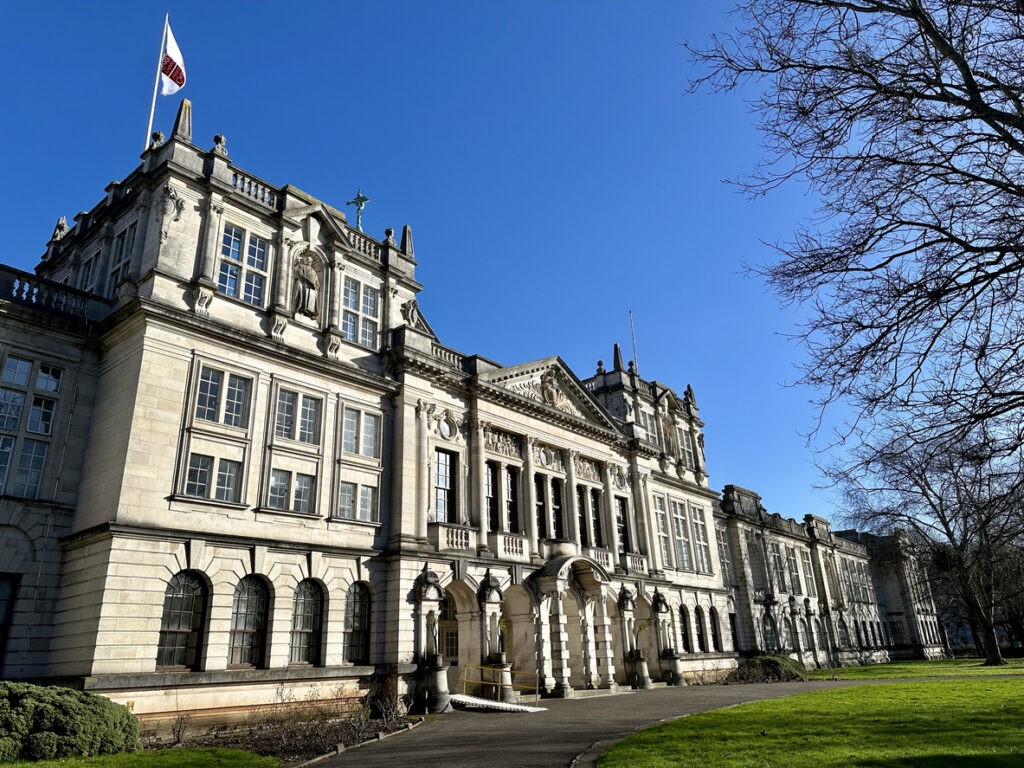
A branch of Cardiff University will open in Astana next year. Cardiff University, in Wales, founded in 1883. It is one of the leading research universities in the UK, and is part of the prestigious Russell Group. Kazakhstan's ministry of science and higher education has reported that 14 branches of global universities have been opened in the country since 2021. Preparatory work is underway on eight other educational projects.

Kazakhstan Intensifies Efforts to Combat Extremism

There appears to be a small, but growing problem with terrorism and extremism in Kazakhstan. More than 30 people from regions around the country have been detained in Kazakhstan so far in 2024, and in March, Russia’s Federal Security Service (FSB) killed two Kazakh citizens who were in Russia, allegedly to carry out a terrorist attack. In response, the country’s Committee for National Security (KNB) had conducted dozens of raids. Kazakhstan’s government gave the KNB additional powers to monitor the internet, and authorities are tightening the law on religion. Kazakhstan’s southern neighbors, Tajikistan, Turkmenistan, and Uzbekistan, border Afghanistan. Tajikistan and Uzbekistan have had problems with the Taliban and other militant groups during the last 25 years. These include domestic terrorist groups, the Islamic Movement of Uzbekistan and the Tajik-led Jamaat Ansarullah, both of which have been based in northern Afghanistan. Kazakhstan has largely avoided problems with Islamic radicals. Citizens from all the Central Asian states have gone to Afghanistan and Middle Eastern countries to join jihadist groups, including a small number of Kazakh citizens. Turkey extradited a 22-year-old Kazakh citizen back to Kazakhstan on January 27, 2024. The Kazakh national, according to the KNB, was a “native of the Turkestan region [who] went to Syria in 2020, where he joined one of the armed groups operating there.” The Islamic State of Iraq and Syria (ISIS) released a propaganda video in November 2014 that showed Kazakh nationals, including children, in a training camp in Syria. The video described them as “some of our newest brothers from the land of Kazakhstan.” A group of some 25 men whom authorities said were Islamic militants staged attacks in the northwestern Kazakh city of Aktobe, near the Russian border in early June 2016. The group robbed two stores that sold hunting rifles and were involved in shoot-outs with the police and soldiers. At least 25 people were killed, most of them the attackers. Deputies in Kazakhstan’s Mazhilis, the lower house of parliament, voiced concerns in October 2023 that radical forms of Islam were spreading in Kazakhstan. Controversial MP Yermurat Bapi said followers of these radical Islamic groups were taking over bazaars in the Atyrau, Aktobe, Mangystau, Ulytau, and Almaty provinces. Bapi and 13 other deputies called on the government and KNB to take measures against these groups and stem extremist and terrorist propaganda from being disseminated inside Kazakhstan. On February 17, 2024, the KNB staged a combined 49 raids on eight unspecified religious extremist groups in the Aktobe, Atyrau, East Kazakhstan, Zhambyl, West Kazakhstan, Turkestan, and Zhetysu provinces. The KNB said it detained 23 people and seized weapons, ammunition, religious literature, narcotics, and cash. On April 1, 2024, the KNB detained a man in the Caspian coastal city of Aktau and found material for making explosives. According to the KNB, the suspect was a follower of a “radical religious ideology,” and was planning to carry out a terrorist attack.” At the start of July, five people were detained in KNB raids in the Atyrau and...