• KGS/USD = 0.01144 0%
  • KZT/USD = 0.00214 0%
  • TJS/USD = 0.10562 0%
  • UZS/USD = 0.00008 0%
  • TMT/USD = 0.28530 0%
  • KGS/USD = 0.01144 0%
  • KZT/USD = 0.00214 0%
  • TJS/USD = 0.10562 0%
  • UZS/USD = 0.00008 0%
  • TMT/USD = 0.28530 0%
  • KGS/USD = 0.01144 0%
  • KZT/USD = 0.00214 0%
  • TJS/USD = 0.10562 0%
  • UZS/USD = 0.00008 0%
  • TMT/USD = 0.28530 0%
  • KGS/USD = 0.01144 0%
  • KZT/USD = 0.00214 0%
  • TJS/USD = 0.10562 0%
  • UZS/USD = 0.00008 0%
  • TMT/USD = 0.28530 0%
  • KGS/USD = 0.01144 0%
  • KZT/USD = 0.00214 0%
  • TJS/USD = 0.10562 0%
  • UZS/USD = 0.00008 0%
  • TMT/USD = 0.28530 0%
  • KGS/USD = 0.01144 0%
  • KZT/USD = 0.00214 0%
  • TJS/USD = 0.10562 0%
  • UZS/USD = 0.00008 0%
  • TMT/USD = 0.28530 0%
  • KGS/USD = 0.01144 0%
  • KZT/USD = 0.00214 0%
  • TJS/USD = 0.10562 0%
  • UZS/USD = 0.00008 0%
  • TMT/USD = 0.28530 0%
  • KGS/USD = 0.01144 0%
  • KZT/USD = 0.00214 0%
  • TJS/USD = 0.10562 0%
  • UZS/USD = 0.00008 0%
  • TMT/USD = 0.28530 0%

Viewing results 2413 - 2418 of 4875

Central Asian Countries Increasing Defense Budgets

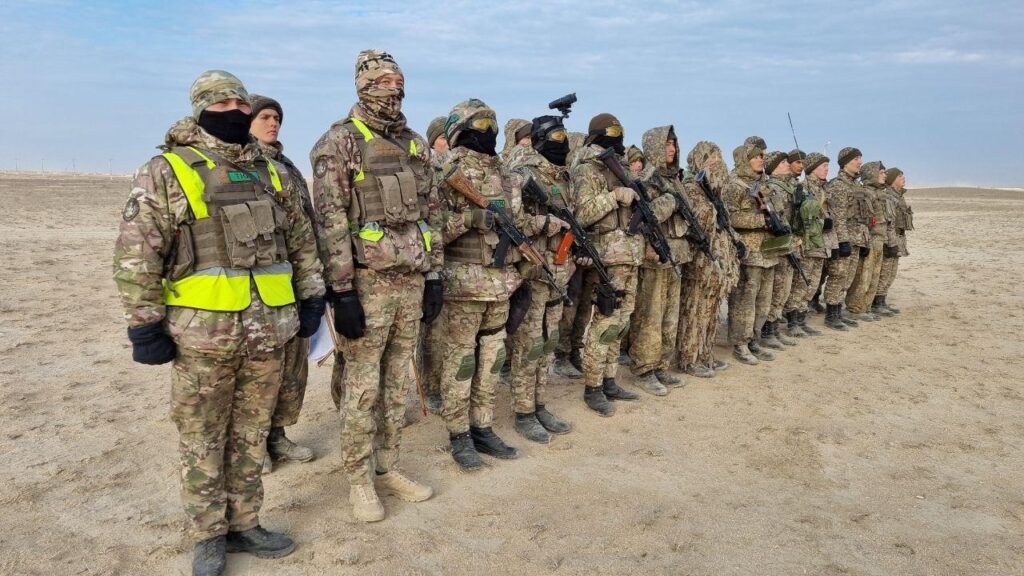
Voice of America has published an article that states that the countries of Central Asia are increasing their spending on defense and military equipment. Turkey, China, and the United States are now challenging Russia as the main suppliers of this equipment. According to analysis by the Stockholm International Peace Research Institute, which studies conflicts worldwide, the defense expenses of Kyrgyzstan, Kazakhstan, and Tajikistan totaled $1.8 billion last year. The institute did not explain Uzbekistan’s failure to disclose its defense expenditures, and there is no information on Turkmenistan. Last year, Kazakhstan’s military budget was 0.5% of its GDP, equal to $259.7 billion. Kyrgyzstan’s military expenditure was 1.5% of its GDP, $13.9 billion, totaling $208.5 million for defense. For Tajikistan, it was 1% of GDP, $12 billion, and $120 million for the military. The report also noted that Kazakhstan’s defense spending increased by 8.8% compared to last year. Uzbekistan, which does not disclose its military budget, reportedly allocated an additional $260 million to its defense budget last year. Officials in the region cite conflicts in the Eurasia region – the war in Ukraine and the war between Armenia and Azerbaijan, plus border disputes in Central Asia, and instability in Afghanistan – as reasons for Central Asian states to beef up their military forces. However, Peter Leonard, a writer specializing in Central Asian affairs, told Voice of America that it was partly a matter of reputation. “Partly, it is a matter of prestige. Authoritarian leaders like to flaunt shiny and expensive weapons. During annual military parades, we see this visually in Turkmenistan, where officials show off their new weapons and vehicles from China, Europe, and elsewhere. We see this trend in all of Central Asia,” he said. "Paradoxically, the intensification of militaries in these countries has not, in fact, exacerbated tensions but has resulted in a different outcome - which is much more cordial and practical dialogue about border demarcation. These countries, which were at a dangerous point, are on the cusp of signing a historic border agreement which will put an end to three decades of conflict."

Can the Aral Sea Be Saved?

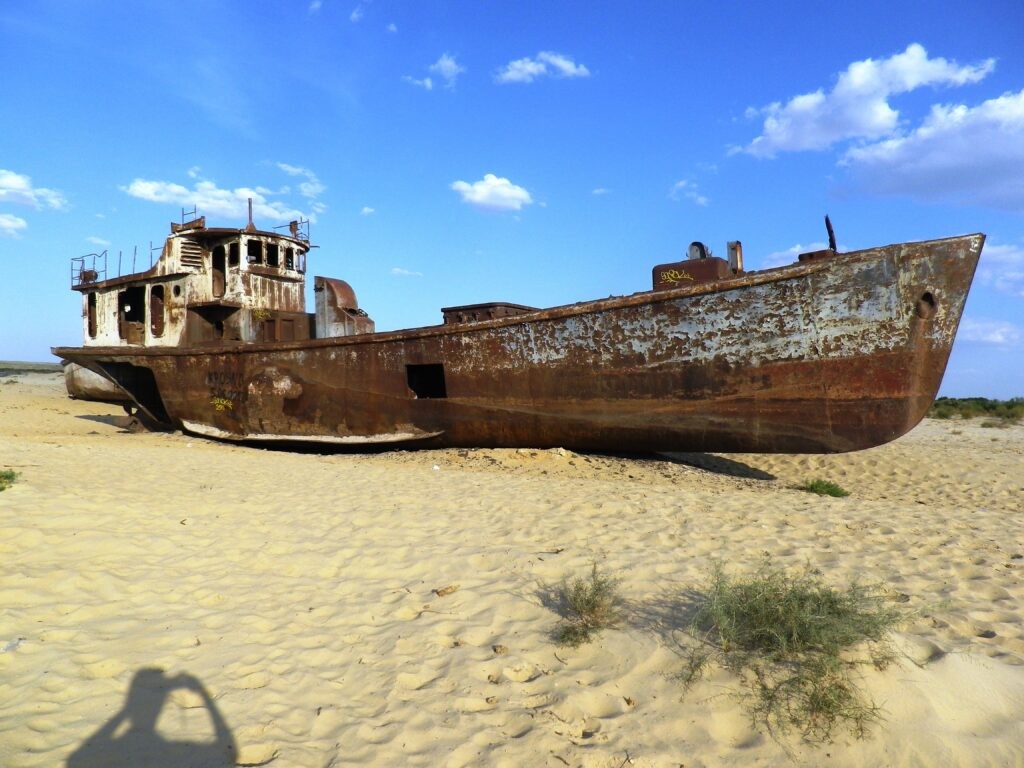
Thanks to cooperation between the Central Asian states, the ultimate demise of the Aral Sea has been prevented. This year, the Northern Aral Sea has significantly replenished its water reserves. The Northern portion of the Aral Sea has received 12.5 times more water this year than the previous year - up to 75 cubic meters per second, the Ministry of Water Resources and Irrigation of Kazakhstan stated in July. The Syr Darya River delivers 650 cubic meters of water per second to the Kyzylorda Oblast. "Joint work has been carried out with Uzbekistan and Kyrgyzstan. In particular, approved water supply schedules are being observed,” Minister of Water Resources and Irrigation, Nurzhan Nurzhigitov explained. Formerly the world's fourth-largest lake covering 68,000 km², the destruction of the Aral Sea first dates back as far as the U.S. Civil War, when, finding his supply of American cotton under threat, the Russian Tsar decided to use the sea’s tributaries to irrigate Central Asia and create his own cotton bowl. With 1.8 million liters of water needed for every bale of cotton, the water soon began to run out. From the 1960s onwards, the sea level began to decline rapidly due to water withdrawal from the main feeder rivers, the Amu Darya and Syr Darya. The local population was growing, and fields needed irrigating. In 1989, the sea split into the Northern (Small) and Southern (Large) Aral reservoirs. [caption id="attachment_21020" align="aligncenter" width="591"] The former port of Zhalanash, Kazakhstan; image: TCA, Stephen M. Bland[/caption] Since independence, the rate of shoaling and desertification have continued to increase. Up until the late-1990s, the land surrounding the Aral Sea was still cotton fields; but today, it’s largely an expanse of salinized grey emptiness. The desiccation of the landscape has led to vast toxic dust-storms that ravage around 1.5 million square kilometers. Spreading nitrates and carcinogens, these storms – visible from space – used to occur once every five years, but now strike ten times a year. By 2007, the Aral had shrunk to one-tenth its original size. In 2014, the eastern part of the Southern Lake dried up completely, and the sea's area reached a historical low of 7,297 km². Over half a century, the volume of water had decreased 30-fold, and the sea's salinity has risen sharply. Nevertheless, Kazakhstan still manages to preserve the remnants of the once colossal lake; the region's fisheries and farms continue, and rare species of birds still inhabit the lands surrounding the shoreline. Today, most scientists say restoring the Aral Sea completely is impossible, but Kazakhstan is attempting to preserve the Northern portion, sometimes referred to as the "Small Aral Sea." In 1993, the International Fund for Saving the Aral Sea (IFSAS) was established, which united Kazakhstan, Uzbekistan, Kyrgyzstan, Turkmenistan, and Tajikistan in this most challenging of tasks. At the time of IFSAS creation, the water area stood at approximately 36,000 km². Over the following decades, it continued to decline, and in 2001 Vozrozhdeniya (Renaissance) Island became connected to the mainland. Vozrozhdeniya contains...

Kazakhstan’s Akims to be Given Appraisals Using KPIs

Kazakhstan's prime minister Olzhas Bektenov has instructed that the country's akims (heads of local government) should have their work evaluated using key performance indicators (KPIs). These KPIs reflect how well they are able to improve their citizens' welfare. The basis for monitoring will be the platform “Digital Family Map,” which tracks the welfare of Kazakh families in five categories, from crisis to prosperity. The work of akims will be evaluated by the dynamics of the families' transition from the lowest to the highest categories. This system has already received positive feedback from the UN and international institutions. The “Digital Family Map” platform, introduced in 2022, stores information from various government agencies, allowing proactive state support. Akims must use this tool to plan and implement measures to reduce poverty, unemployment, and hidden employment. Bektenov emphasized the importance of targeted work with families in crisis. The project “Social Purse,” which ensures transparency and timeliness of state support, was also considered. In the pilot mode, benefits for school meals and medicines are already provided. To compensate for the increase in fuel, lubricants, and commodity gas prices, it plans to launch assistance in purchasing projects on socially significant products, technical rehabilitation equipment for the disabled, and vouchers for socially vulnerable populations. In addition, the project “Voucher Financing of Preschool Organizations” was presented, aiming to improve the quality of educational services. The state order funds will be transferred to kindergartens only after the parents have chosen them, increasing competition and reducing corruption risks. The Ministry of Education is tasked with completing the pilot project in Taraz and Shymkent and scaling it up from January 1, 2025.

Startups from Kazakhstan, Kyrgyzstan, and Uzbekistan to Undergo Training in Silicon Valley

During a visit to the U.S., Kazakhstan’s Minister of Digital Development, Innovation, and Aerospace Industry Zhaslan Madiyev signed four contracts with Alchemist X, Stanford Healthcare Innovation Lab, Draper University, and Silkroad Innovation Hub. Through these contracts, 50 startups from Central Asia will have the opportunity to undergo training and a residency program in Silicon Valley this year. As the Kazakh Ministry of Digital Development reported, Alchemist's five-month intensive program in Silicon Valley is designed for "mature" B2B startups. It aims to help them successfully enter the American market. Program participants will receive comprehensive support, including assistance in concluding first contracts with clients, attracting investment, studying client needs, and interacting with experienced mentors. Ten startups from Kazakhstan, Kyrgyzstan, and Uzbekistan were selected from the 81 applications submitted for the Alchemist X program. More than 20 startups will also participate in the Silicon Valley Residency Program, an online pre-acceleration program. Based on the results of this program, startups will be selected to undergo an offline program at the Silkroad Innovation Hub in California. The minister also signed a letter of intent (LOI) with Draper University to send 10 Kazakhstani startups to participate in this fall’s Hero Training program, designed for early startups. Madiyev also signed a memorandum with Stanford School of Medicine to launch a new six-week program for 10 Kazakhstani startups for technologies in healthcare. The program will be held at the Stanford Healthcare Innovation Lab and is designed for startups working in AI in healthcare, genomics, bioinformatics, biological sciences, precision medicine, neuroscience, and psychology.

Agribusiness Park to be Launched in Kazakhstan’s Akmola Region

The Hungarian company Globalia Ltd is creating agricultural facilities in Kazakhstan’s Akmola region. The new agribusiness park will use industrial technologies developed in Hungary. The eight agribusinesses located at the park will implement sustainable and environmentally friendly technologies, and will allow for products to be traced between the producer and the end consumer. Projects will not require any special funding. The agribusiness park plans to start producing fish farming projects within three years. It will also open a research and development station for growing varieties of various plants. Kazakhstani companies located at the park will have access to new technologies and tools, including the Carbon Farming system, which helps to capture and accumulate CO2 from the soil.

ADB: Central Asia’s Economic Growth and Decreasing Inflation in 2024

The Asian Development Bank has published its latest report, “Asian Development Outlook (ADO) July 2024: Steady Growth, Slowing Inflation,” in which it has increased its forecast for economic growth in Central Asia from 4.3% to 4.5% in 2024. In the first quarter (Q1) of 2024, the Kyrgyz Republic is expected to have grown at a rate of 8.8% thanks to robust service and construction industry output supported by both foreign and domestic investment. Other regional economies have also experienced solid economic activity. As a result of a notable increase in exports, which included gold sales, Tajikistan maintained its robust economic trajectory in Q1 2024, with an 8.2% growth rate. Net gas exports and government investment, meanwhile, are Turkmenistan’s primary sources of growth. The first quarter of 2024 also saw 6.2% growth in Uzbekistan, due to a spike in fixed capital investment. The growth prospects of Kazakhstan, however, the largest economy in the region, remain unchanged. With the main growth drivers being construction, manufacturing, and services, GDP expanded by 3.7% in Q1 2024. This year, manufacturing and construction will continue to be the primary forces behind economic expansion. Strong building growth will be supported by government assistance to victims and restoration of damaged infrastructure following the worst floods in thirty years. Mining is also anticipated to contribute significantly to Kazakhstan’s medium-term growth following the Tengiz oil field expansion project's completion in Q2 2025. The ADB has also lowered inflation forecasts for 2024 and 2025. In May 2024, the Kyrgyz Republic experienced a decrease in inflation from 11.3% to 4.6%, primarily due to fluctuations in the prices of essential commodities. Other regional economies are also experiencing a reduction in inflationary pressures. A steady exchange rate and relatively restrictive monetary policy decreased Kazakhstan's inflation rate to 9.0% from 18.5% from 2023 to January–May 2024. Inflation in Tajikistan for the first four months of 2024 was 3.8%. Inflation in Uzbekistan has also dropped from 11.4% in the previous year to 9.2% in the first five months of 2024.