• KGS/USD = 0.01144 0%
  • KZT/USD = 0.00209 0%
  • TJS/USD = 0.10528 0%
  • UZS/USD = 0.00008 0%
  • TMT/USD = 0.28571 0%
  • KGS/USD = 0.01144 0%
  • KZT/USD = 0.00209 0%
  • TJS/USD = 0.10528 0%
  • UZS/USD = 0.00008 0%
  • TMT/USD = 0.28571 0%
  • KGS/USD = 0.01144 0%
  • KZT/USD = 0.00209 0%
  • TJS/USD = 0.10528 0%
  • UZS/USD = 0.00008 0%
  • TMT/USD = 0.28571 0%
  • KGS/USD = 0.01144 0%
  • KZT/USD = 0.00209 0%
  • TJS/USD = 0.10528 0%
  • UZS/USD = 0.00008 0%
  • TMT/USD = 0.28571 0%
  • KGS/USD = 0.01144 0%
  • KZT/USD = 0.00209 0%
  • TJS/USD = 0.10528 0%
  • UZS/USD = 0.00008 0%
  • TMT/USD = 0.28571 0%
  • KGS/USD = 0.01144 0%
  • KZT/USD = 0.00209 0%
  • TJS/USD = 0.10528 0%
  • UZS/USD = 0.00008 0%
  • TMT/USD = 0.28571 0%
  • KGS/USD = 0.01144 0%
  • KZT/USD = 0.00209 0%
  • TJS/USD = 0.10528 0%
  • UZS/USD = 0.00008 0%
  • TMT/USD = 0.28571 0%
  • KGS/USD = 0.01144 0%
  • KZT/USD = 0.00209 0%
  • TJS/USD = 0.10528 0%
  • UZS/USD = 0.00008 0%
  • TMT/USD = 0.28571 0%

Viewing results 2431 - 2436 of 4722

Central Asian Countries and Azerbaijan Begin Military Exercises in Kazakhstan

On July 8, Kazakhstan’s Ministry of Defense announced the start of joint military exercises - 'Birlestik-2024' (Association-2024) - by Azerbaijan, Kazakhstan, Kyrgyzstan, Tajikistan, and Uzbekistan in the country’s Mangystau region. Until July 17, the states’ military contingents will be modelling and practicing a joint operation to localize an armed conflict in manoeuvres at both the Oimasha training ground and a Caspian Sea site two kilometers from Cape Tokmak. Some four thousand military personnel and up to 700 pieces of military equipment will be involved in the exercise. Tactical episodes will be played out with the participation of ground and air reconnaissance groups, naval special forces, army and front-line aviation crews, warships and boats, artillery crews, assault and tank units. In recent years, there has been talk about increasing military cooperation between Turkic-speaking countries. In November 2023, Azerbaijani President Ilham Aliyev called on leaders of Turkic states to strengthen defense cooperation and at a summit of the Organization of Turkic States (OTS) in Astana, Kazakhstan, stated: "Wars and bloody conflicts break out. In this case, the main guarantor of security, first of all, becomes the defense potential. I believe that cooperation between the member states in areas such as security, defense, and the defense industry should be further increased.” Member countries of the OTS, established in 2009, include Turkey, Azerbaijan, Kazakhstan, Kyrgyzstan, and Uzbekistan, while Hungary, Turkmenistan, and the Turkish Republic of Northern Cyprus have observer status.
Paving the Path Westward: Insights from the Astana and Shusha Summits

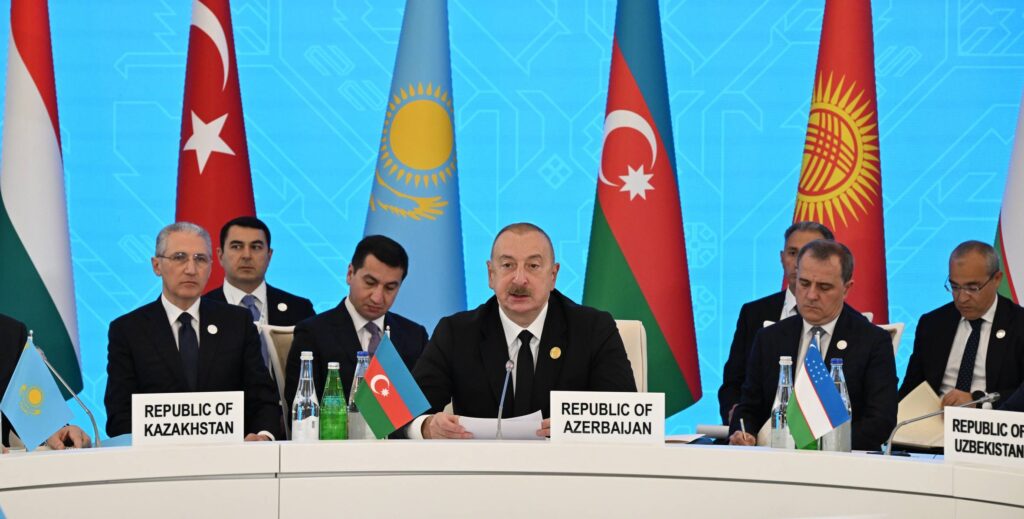
The informal OTS summit in Shusha, hosted at the invitation of Ilham Aliyev, centered on the theme of "Building a Sustainable Future through Transportation, Connectivity and Climate Action." Attendees included Presidents Kassym-Jomart Tokayev of Kazakhstan, Sadyr Japarov of Kyrgyzstan, Shavkat Mirziyoyev of Uzbekistan, Ersin Tatar of the Turkish Republic of Northern Cyprus, Prime Minister Viktor Orban of Hungary, and OTS Secretary General Kubanychbek Omuraliev. In place of Erdoğan, who was in Germany supporting the Turkish national soccer team ahead of a crucial Euro 2024 quarter-final against the Netherlands, Vice President Cevdet Yılmaz attended. Turkmen President Serdar Berdimuhamedov was also absent due to hosting UN Secretary-General António Guterres in Ashgabat. Notably, the Shusha summit occurred just two days after the meeting of SCO leaders in Astana, which drew an exceptional amount of attention from international observers due to the participation of the Russian and Chinese leaders. The intrigue surrounding the SCO summit was linked to its closed session, attended only by the Shanghai Ten. At the summit, only the speech delivered by Tokayev was made available to the press. Speeches made in the subsequent SCO+ format sessions were made public, wherein Russian President Vladimir Putin and Chinese President Xi Jinping underscored the need for a multi-polar world, suggesting that the SCO members had discussed shifting away from Western cooperation towards the Global South. At the Shusha summit Aliyev highlighted Azerbaijan's commitment to strengthening ties within the Turkic world, emphasizing the importance of the political, economic, and military consolidation of Turkic States as a global power center. Aliyev stated that Azerbaijan has consistently sought to unite the Turkic world and enhance its influence on the global stage, stressing that the OTS should seek to emerge as a significant global power. "We cover a large geographical space and positive demographic dynamics are observed in the member countries. Our greatest assets are our rich natural resources, modern infrastructure for their delivery, transportation corridors connecting Central Asia and the Caucasus with Mediterranean and Black Sea ports, and our rich and ancient history and culture. The commitment of our people to traditional values and ethnic commonality closely unites our countries. The 21st century should become the century of prosperity of the Turkic world," the Azerbaijani leader emphasized. Aliyev also addressed the primary tasks which lie ahead for the OTS, referencing the Astana Declaration of the SCO, which designates Central Asian republics as the organization's foundation. Leaders of these republics who attended the summit in Shusha, Tokayev, Shavkat Mirziyoyev, and Sadyr Japarov, endorsed Aliyev's call for the expansion of the East-West transport corridor connecting Central Asia and Eurasia to Europe. Aliyev further highlighted the Digital Silk Road project, which aims to establish a fiber-optic telecommunication route between Europe and Asia via the Caspian Sea through Azerbaijan. Furthermore, when the President of Kazakhstan delivered his speech, he stressed the significance of the Trans-Caspian International Transportation Route. "The potential of the Trans-Caspian International Transport Route should be fully utilized. Today, the volume of container transportation along this corridor has...

SCO Summit: A Battle for Influence in Central Asia

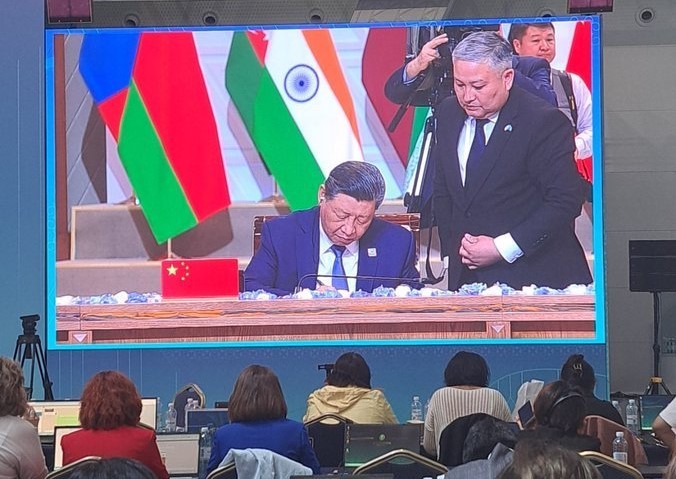
For Central Asian countries, the Shanghai Cooperation Organization (SCO) is a tool that allows them to improve their position in the global arena, and develop closer economic ties with other members of the world’s largest multilateral group. But for Russia and China, the SCO is an instrument that gives them an opportunity to strengthen their influence in the strategically important region of Central Asia. Last week, the SCO (whose members are Russia, China, India, Iran, Kyrgyzstan, Kazakhstan, Pakistan, Tajikistan, Uzbekistan, as well as Belarus, the entrant at the meeting in Astana on July 3-4) held the summit of the Council of Heads of State of the SCO in the Kazakh capital of Astana where its leaders adopted a series of documents – from the Astana Declaration, underscoring the organization’s role in bolstering global peace, security and stability, through the SCO Development Strategy until 2035, to the group’s Economic Development Strategy’s Action Plan until 2030. Prior to the meeting of what is often described as “the world’s least known and least analyzed” multilateral group, Kazakhstan’s President Kassym-Jomart Tokayev repeatedly stated that, over the past 20 years it was not possible to implement a single major economic project under the auspices of the SCO. Indeed, ever since its foundation in 2001, the SCO has mostly been focusing on security issues, and during the summit in Astana security was yet again at the top of the agenda. But as the largest Central Asian nation’s Deputy Foreign Minister Roman Vassilenko told me at the briefing with the foreign journalists on July 4, SCO members still work more on a bilateral rather than on a multilateral basis. In his view, advancing economic cooperation within the organization of very diverse nations is not an easy task. Quite aware of that, China seeks to strengthen its economic presence in Central Asia through other formats such as the Belt and Road Initiative, and the China-plus-Central Asia format. In the past, Beijing was actively pushing for closer economic integration between SCO members, but Russia reportedly blocked Chinese initiatives. As a result, the People’s Republic began to sign bilateral agreements with regional countries, aiming to strengthen its role in Central Asia. Kazakhstan, as the region’s largest economy, is no exception. Despite being a Russian ally in the Collective Security Treaty Organization (CSTO), and a member of the Russian-led Eurasian Economic Union, Astana seems to see Beijing, rather than Moscow, as the de facto leader of the SCO. As Vassilenko stressed, out of 10,000 people who came to Astana for the summit, more than half of them were Chinese, which indicates that the SCO holds a huge importance in Beijing’s foreign policy. Moreover, Chinese President Xi Jinping seems to have received a warmer welcome in the Kazakh capital than Russian leader Vladimir Putin or the heads of states of other SCO members. At the airport, where Xi was welcomed by his Kazakh counterpart Kassym-Jomart Tokayev, a group of Kazakh children sang the song "Ode to the Motherland" in Chinese, while Chinese...

OECD Representative Office May Open in Kazakhstan

An initiative to open a representative office for the Organization for Economic Cooperation and Development (OECD) in Kazakhstan has been announced by Deputy Prime Minister Nurlan Baibazarov and William Thompson, Head of the OECD Eurasia Division, who met earlier this week. To date, OECD regional offices operate in China, Indonesia, Ukraine, and Greece, according to the website of the Government of Kazakhstan. During the meeting, the parties discussed implementing OECD recommendations, implementing the Joint Action Plan of the Government of the Republic of Kazakhstan and the OECD Secretariat until 2025, and cooperation within the framework of the OECD Eurasian Competitiveness Program. William Thompson noted the positive experience of OECD interactions with Kazakhstan. Following recommendations from the OECD, several political and economic reforms have been carried out in the country. In particular, institution of investment ombudsman was introduced, parliamentary control over the use of budgetary funds was strengthened, the Low Carbon Development Strategy of the country until 2060 was developed, and the National Contact Center for Responsible Business Conduct and the Supreme Audit Chamber were established. Direct elections of akims (heads) of districts and cities of regional significance has also been introduced. "Our country has been a stable partner of the OECD for more than 15 years and a Central Asian leader in implementing its recommendations. In 2025, Kazakhstan intends to apply to join this authoritative international organization as a full member. We are confident that further cooperation will have a qualitative impact on the socioeconomic and legal aspects of the development of our state," Nurlan Baybazarov stated.

Nuclear Race: Will Central Asia Build a Nuclear Power Plant?

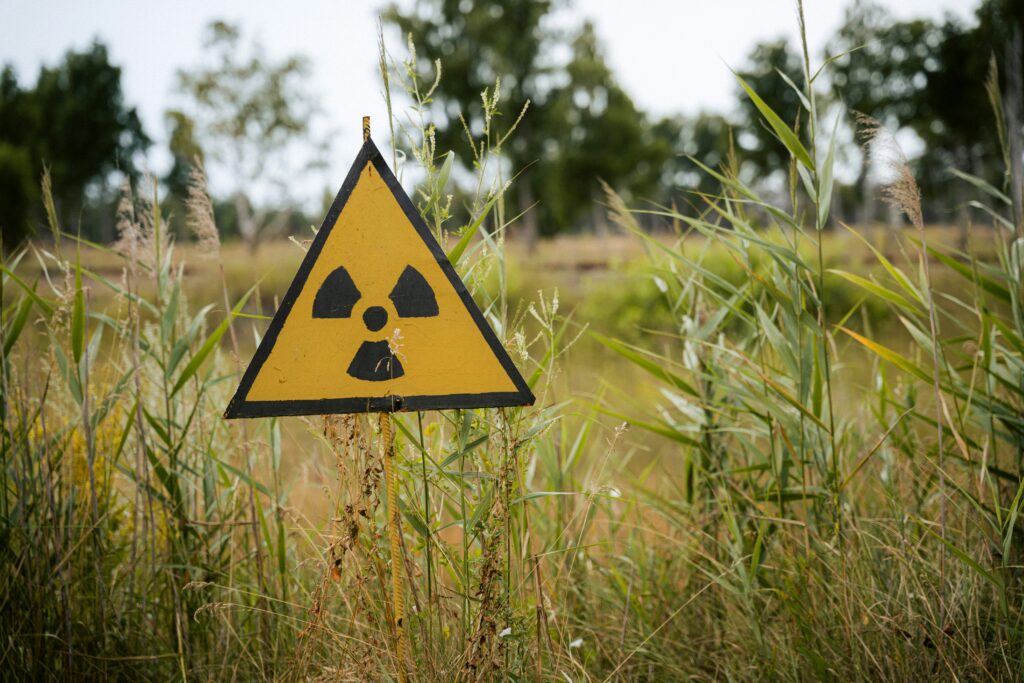
The answer to the question posed in the title remains uncertain. While Uzbekistan has plans to construct a nuclear power plant and Kazakhstan is set to hold a referendum this fall to gauge public opinion on building one, progress is sluggish. Tashkent has postponed the start of construction, and the issue sparks heated debate in Kazakhstan. The First Nuclear Power Plant in Central Asia Historically, Central Asia did host a nuclear facility. Located on the shore of the Caspian Sea in Kazakhstan, this was not a conventional nuclear power plant but a fast neutron reactor known as BN-350. The reactor was the core of the Mangistau Nuclear Power Plant, designed to transform the Mangyshlak Peninsula by providing energy to the city of Aktau (formerly Shevchenko) and powering large-scale desalination plants that supplied drinking water to the arid region. [caption id="attachment_20031" align="aligncenter" width="366"] BN-350[/caption] Operational from 1973 until its shutdown in 1999, the BN-350 reactor was decommissioned due to the allocation of U.S. funds for new desalination and heating equipment and the disposal of its remaining fuel. The extensive maintenance and decommissioning work on the BN-350 have given Kazakhstani nuclear physicists significant experience with such complex and hazardous technology. However, younger generations in Kazakhstan are largely unaware of the BN-350 reactor’s existence. Their knowledge of nuclear physics is often limited to the harrowing stories passed down about nuclear warhead tests at the Semipalatinsk test site and their devastating effects. Fear and Nuclear Power: Kazakhstan's Dilemma The societal fear surrounding nuclear energy in Kazakhstan is deeply intertwined with political concerns. For a long time, the leadership in Kazakhstan has hesitated to move beyond merely discussing the need for a nuclear power plant (NPP) to actually initiating the project. President Kassym-Jomart Tokayev recently announced that a referendum would take place in the fall of 2024. However, Ministry of Energy's officials avoided mentioning the word "referendum" until the last moment, previously asserting it was unnecessary. Public hearings were held last year in the village of Ulken, Zhambyl district, Almaty region, a proposed site for the nuclear plant. The Ministry of Energy’s press release stated that the local populace supported developing nuclear power, highlighting its significance for regional socio-economic growth. However, media reports revealed that the hearings were contentious, with opposing viewpoints almost disrupting the speech of Nurlan Ertas, the head (akim) of the Zhambyl district. Activists even displayed banners and posters against the plant's construction. Certain groups have exploited the population's fear of another disaster like Chernobyl. Additionally, the government has struggled to convince the public that nuclear technologies are becoming safer. In contrast, Europe now includes nuclear power plants in its list of green energy sources, similar to other renewable energy sources (RES). In Kazakhstan, renewable energy accounts for only 5% of the total energy produced. The introduction of NPPs could significantly enhance the country’s position in reducing carbon emissions. The government faces a growing electricity shortage that can be addressed either harmfully or fearfully. The harmful options are coal-fired thermal power plants...

More Invacarriages Added to Kazakhstan’s Trains

As part of a scheme to update its fleet of passenger railway carriages, Kazakhstan is set to increase its volume of ‘Invacarriages’, specially adapted to cater for travellers with special physical needs and impaired mobility. The Kazakh Ministry of Transport has announced that 14 carriages designed for the comfort of passengers in the sector, will be purchased this year, adding to the seven already operating on the Kyzylorda – Semey, Pavlodar – Turkestan, and Aktau – Aktobe routes. In 2023, 11 Invacarriages were commissioned and today, Kazakhstan boasts 110 trains with specialized carriages for passengers with impaired mobility. Manufactured to safety standards in Kazakhstan, the Invacarriages offer more space for the free movement of wheelchairs, lifts, and alarm buttons. In addition to the train carriages, Kazakhstan is also expanding its fleet of Invataxis; specially adapted minivans equipped with wheelchair-friendly hydraulic lifts. This year alone, the number of Invataxis operating in the capital, Astana, has risen by 26 to 145, and a total of 119 Invataxi services with the combined fleet of 760 vehicles, currently operate in the country’s regions.