• KGS/USD = 0.01144 0%
  • KZT/USD = 0.00212 0%
  • TJS/USD = 0.10456 0.19%
  • UZS/USD = 0.00008 0%
  • TMT/USD = 0.28490 0%
  • KGS/USD = 0.01144 0%
  • KZT/USD = 0.00212 0%
  • TJS/USD = 0.10456 0.19%
  • UZS/USD = 0.00008 0%
  • TMT/USD = 0.28490 0%
  • KGS/USD = 0.01144 0%
  • KZT/USD = 0.00212 0%
  • TJS/USD = 0.10456 0.19%
  • UZS/USD = 0.00008 0%
  • TMT/USD = 0.28490 0%
  • KGS/USD = 0.01144 0%
  • KZT/USD = 0.00212 0%
  • TJS/USD = 0.10456 0.19%
  • UZS/USD = 0.00008 0%
  • TMT/USD = 0.28490 0%
  • KGS/USD = 0.01144 0%
  • KZT/USD = 0.00212 0%
  • TJS/USD = 0.10456 0.19%
  • UZS/USD = 0.00008 0%
  • TMT/USD = 0.28490 0%
  • KGS/USD = 0.01144 0%
  • KZT/USD = 0.00212 0%
  • TJS/USD = 0.10456 0.19%
  • UZS/USD = 0.00008 0%
  • TMT/USD = 0.28490 0%
  • KGS/USD = 0.01144 0%
  • KZT/USD = 0.00212 0%
  • TJS/USD = 0.10456 0.19%
  • UZS/USD = 0.00008 0%
  • TMT/USD = 0.28490 0%
  • KGS/USD = 0.01144 0%
  • KZT/USD = 0.00212 0%
  • TJS/USD = 0.10456 0.19%
  • UZS/USD = 0.00008 0%
  • TMT/USD = 0.28490 0%

Viewing results 2515 - 2520 of 4651

PepsiCo to Build Snack Production Plant in Kazakhstan

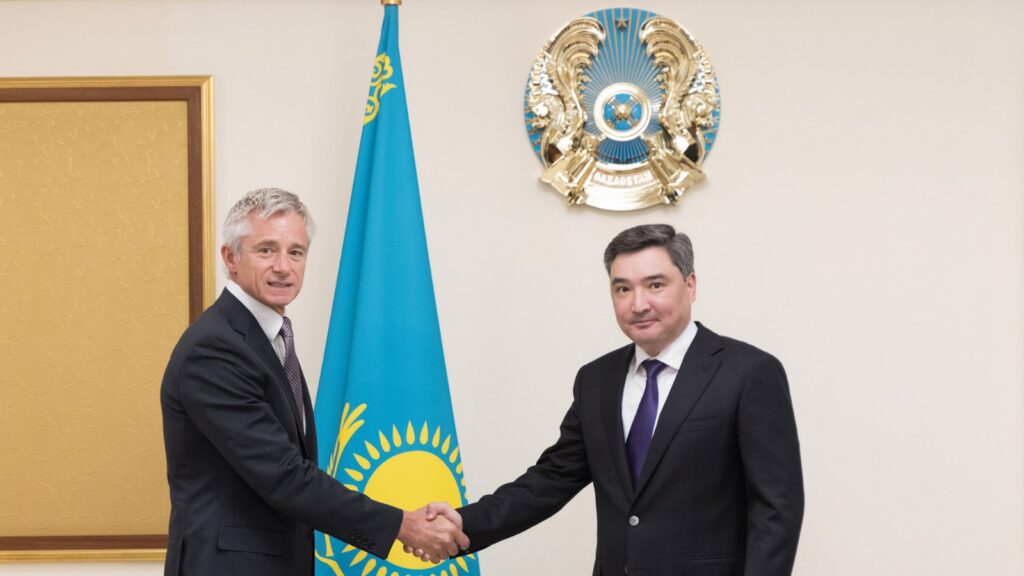
PepsiCo has announced plans to build a full-scale new plant to produce salty snacks, including Lays crisps, in Kazakhstan’s Almaty region. Implementation of the project was discussed at a meeting between Kazakhstan Prime Minister Olzhas Bektenov and David Manzini, President of PepsiCo in Central Asia, Russia, Belarus, and Caucasus. According to the Kazakh prime minister’s press service, the project has already received $160 million in foreign investment. The plant, anticipated as the largest of its kind in Central Asia, is scheduled to open in 2026. Its original capacity of up to 16,000 tons of finished products per year, will increase to 21,000 tons from 2027, for distribution to both the Central Asian market and abroad. Up to a thousand people will be employed during the plant’s construction, with 350 skilled jobs created when it opens. David Manzini stated PepsiCo’s intention to use locally sourced raw materials. The conclusion of contracts with Kazakh farmers on the delivery of test batches of potatoes is ongoing but all going to plan, the company will purchase up to 50-66 thousand tons of potatoes in 2026-2030, and increase the volume in later years. Prime Minister Bektenov emphasized the importance of the project for the development of agriculture, increasing Kazakh farmers’ income and strengthening the economy. He mentioned that besides its positive impact the food industry and agribusiness, the plant will have a multiplier effect on related industries including transport, logistics, packaging, and processing of agricultural products.  

Kazakhstan President Pinpoints Flaws in Tourism Development

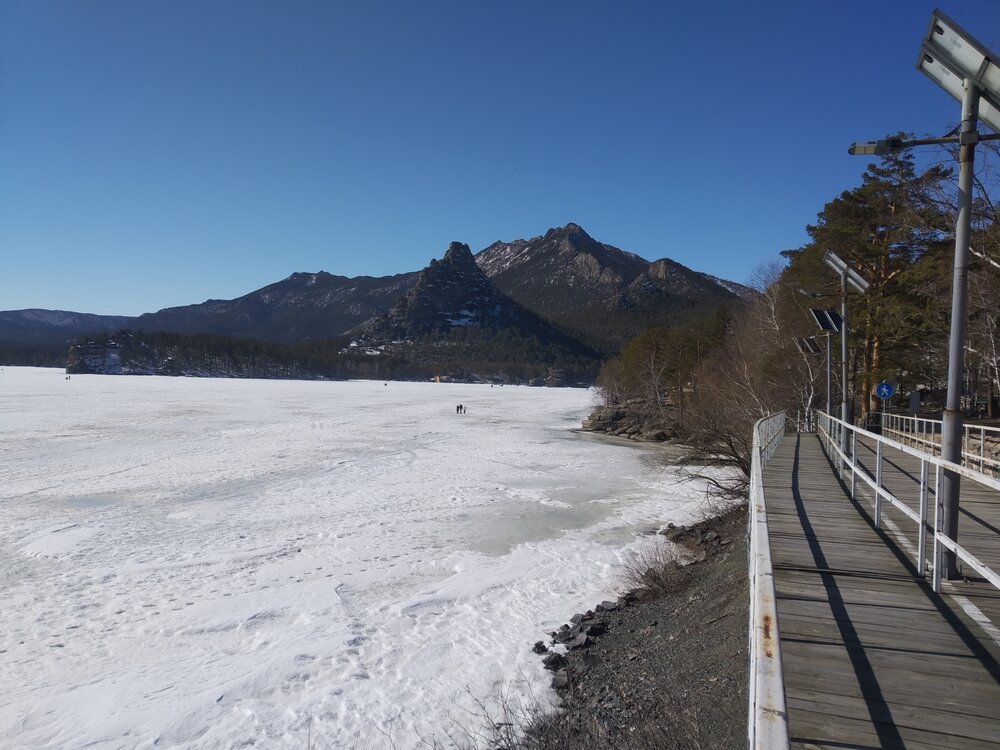
On June 13, Kazakhstan President Kassym-Jomart Tokayev chaired a government meeting on the development of the country’s tourism industry. He opened by noting that despite its favorable geographical location, the diversity of its nature, and its rich historical and cultural heritage, Kazakhstan’s wide-spanning tourism potential remains largely unexploited. “Tourism as an important sector of the economy is not yet effective, which is a big omission of the government. Over the past four years, the share of tourism in the economic structure has decreased from 3.7% to 3.2%, almost threefold lower than the world average. According to this indicator, Kazakhstan falls below neighboring countries with similar climates and culture. It is obvious that a qualitative breakthrough in the development of the tourism industry requires urgent systemic measures,” said the president. Tokayev then outlined areas in need of urgent improvement, beginning with problems posed by the country’s weak transport infrastructure for domestic tourism: “The quality of railway transportation in the country is beyond criticism. Most of the rail carriages are worn out, and some do not even have air conditioning. The government needs to renew the fleet of rail carriages in the next five years. In addition, it is important to improve railway stations. Their appearance and infrastructure must meet international standards. In summer, the flow of railway passengers increases sharply. It is therefore necessary to increase the number of trains with comfortable carriages to the most popular destinations. The quality of our roads also leaves much to be desired, making it very difficult to reach remote recreation areas by car. There are practically no fully serviceable highways. The reconstruction of the Astana-Almaty highway, connecting the south and center of Kazakhstan, has been ongoing since 2021. There are many similar unfinished roads across the country and it is imperative that the government completes these road projects this year.” The President emphasized that the poor logistics connectivity of holiday destinations affects not only domestic tourism, but also the influx of guests from abroad. “Almost 90% of foreign tourists come to Kazakhstan from neighboring CIS [former Soviet] countries. There are still few tourists from non-CIS countries. International studies show that over 70% of travelers prefer to visit vacation destinations within a 4-hour flight, making Kazakhstan  very attractive to tourists from China, India, East Asia, and the Middle East. It is also necessary to consider, specific issues related to the national mentality of foreign tourists, their interests, and requests. Within 5 years we can double and even triple the number of foreign tourists but to do so, we need to develop air transport, firstly by expanding the presence of low-cost airlines on popular air routes. Their current share in passenger air transportation in Kazakhstan is only 21%.” The head of state criticized the Government's plans to simultaneously develop 20 tourist zones across the country, claiming the approach ineffective regarding the dispersion of the state's limited resources. Instead, he recommended that efforts focused on the development of the most promising locations, in the shortest possible time,...

Kazakh Chess Player Wins World Junior Title in India

Kazybek Nogerbek of Kazakhstan has become the FIDE world junior chess champion, winning the title in Gandhinagar, India even though he was only the ninth seed. An emotional Nogerbek, 20, briefly rested his head on his forearm on the table on Thursday after the tournament victory. “It feels very good,” said Nogerbek, who won the rapid and blitz titles in the World Youth U18 Championship. The Kazakh player is an international master (IM), which is the second most difficult title to secure after grandmaster (GM). A number of grandmasters were among those participating in the U20 World Junior Chess Championship, which started at the beginning of June. Divya Deshmukh, the 18-year-old top seed from India, won the girls’ section. Nogerbek’s victory was tight. He scored 8.5/11 points, as did grandmaster Emin Ohanyan of Armenia. But Nogerbek did better under a tiebreak system designed to determine a winner in such a scenario. Grandmaster Kuja Budisavljevic of Serbia won bronze with eight points. “Going into the final round, GM Mamikon Gharibyan from Armenia was in sole lead with eight points, half a point ahead of four players, including Nogerbek,” chess.com reported. “The two faced in the final round, with the Armenian making a crucial mistake in time trouble, while trying to defend a difficult ending.” Chess.com said the world junior championship has a prestigious history but fewer top players are participating because “more attractive tournaments” are available. FIDE is the International Chess Federation, which is the translated name of Federation International des Echecs, founded in Paris in 1924.

How Sanctions Against the Moscow Exchange Will Affect Kazakhstan

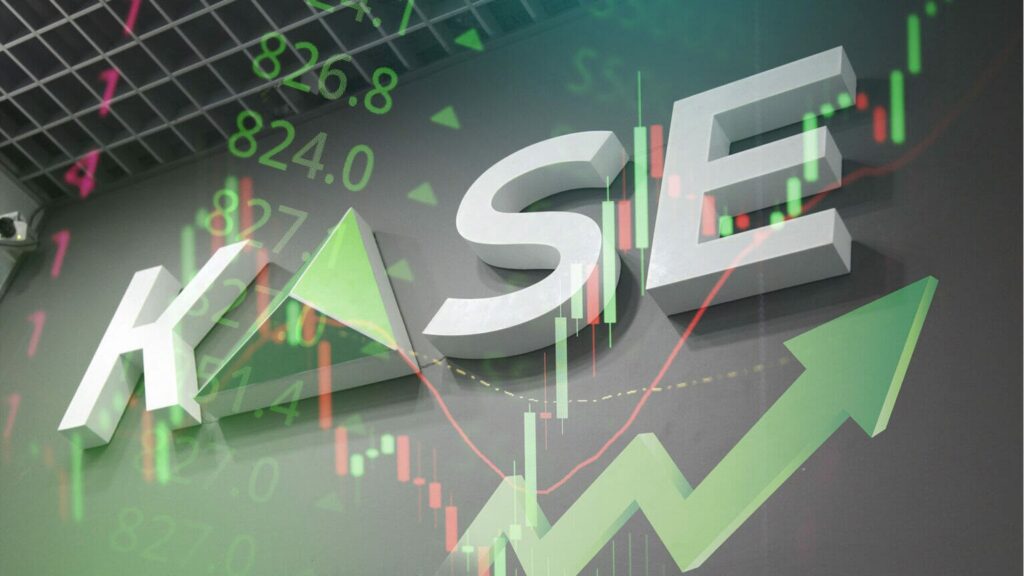
The introduction of U.S. sanctions against the Moscow Exchange (MOEX) will not have legal consequences for the Kazakhstan Stock Exchange (KASE), because the Russian platform's share in Kazakhstan's capital is not large enough, KASE's press service has reported. On June 12th, the Office of Foreign Assets Control (OFAC) of the United States put the Moscow Exchange on the SDN list, which means blocking its accounts in U.S. banks and depositories and banning cooperation for U.S. citizens and residents. The exchange has already announced that it will stop trading in dollars and euros in the foreign exchange section. At the same time, contrary to popular belief, the entry of a company into the SDN list does not automatically lead to the introduction of secondary sanctions against all its partners, including those from third countries. Restrictions may be imposed on the subsidiaries of sub-sanctioned companies if they own at least 50% of their authorized capital. MOEX owns 13.1% of KASE shares, which means the latter is not considered a company under the control of the SDN-list participant. "In this regard, Kazakhstan Stock Exchange and KASE Clearing Center continue to operate normally. Standard regulations will conduct trades, clearing, and settlements. KASE will consider the continuation of business relations with MOEX considering the sanctions restrictions," noted the release from the Kazakhstan Stock Exchange. In November last year, KASE head Alina Aldambergen said that the platform carefully analyzes the risks of sanctions. At the same time, she said that cooperation with the Moscow Exchange has been reduced to providing IT services. Economist Rasul Rysmambetov previously wrote for The Times of Central Asia that he believes sanctions against several financial structures in Russia will not directly affect Kazakhstan. However, there are bound to be consequences for Kazakhstan from the actions of the Russian authorities. "At some point, the Russian financial authorities will see that the pressure of sanctions is aimed not at complicating their operations, but at destroying their financial structure, and they may start taking symmetrical actions," Rysmambetov wrote on social networks. Rysmambetov believes the ruble's depreciation will affect Kazakhstani entrepreneurs producing sugar, milk, and grain.

South Korean Corporation Bank to Open in Kazakhstan

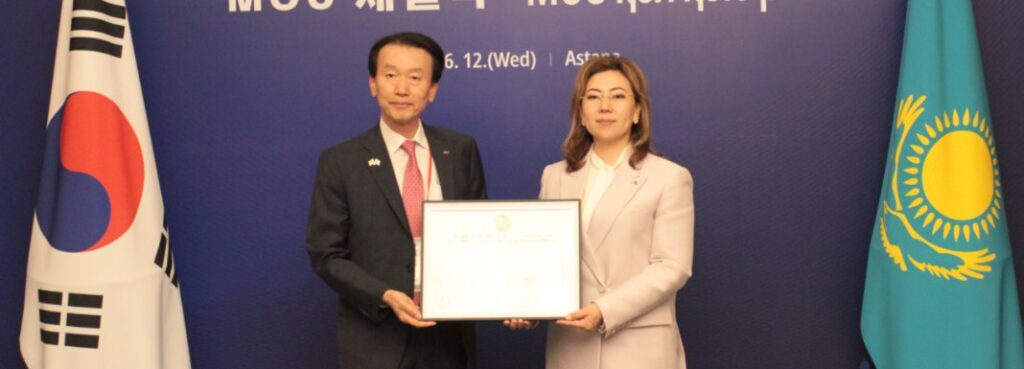
Microfinance organization BNK Finance Kazakhstan, part of the Korean corporation BNK Financial Group Inc., has been granted  permission to transform into a second-tier bank. The news was reported by the Agency of the Republic of Kazakhstan on Regulation and Development of Financial Market's press service (ARFM). BNK Financial Group Inc. is the largest South Korean financial group with assets of $129 billion and a national rating of "AAA." The group has two banks with over 300 branches and "A2" international ratings. In 2021, BNK MFI received a license to carry out microfinance activities. Since then, the company has significantly increased its performance and capabilities and now ranks 13th in terms of assets in Kazakhstan's microfinance organizations sector. The decision by the Agency for Regulation and Development of the Financial Market of Kazakhstan (ARDFM) to issue a permit for BNK's voluntary reorganization into a second-tier bank was approved by a resolution on June 7. As noted by the press service, the appearance of a new foreign bank in Kazakhstan's financial market will strengthen competition in the banking sector and provide clients in Kazakhstan with financial services that adhere to international groups' advanced corporate standards. Earlier this month, during talks with the head of South Korea, Yoon Suk Yeol, Kazakhstan's president  Kassym-Jomart Tokayev, cited Seoul as one of Astana's most important strategic partners in the Asia-Pacific region. Korea ranks fourth in foreign trade turnover and is among Kazakhstan's top ten largest foreign investors.

First Cargo Transported from Pakistan to Azerbaijan via Kazakhstan

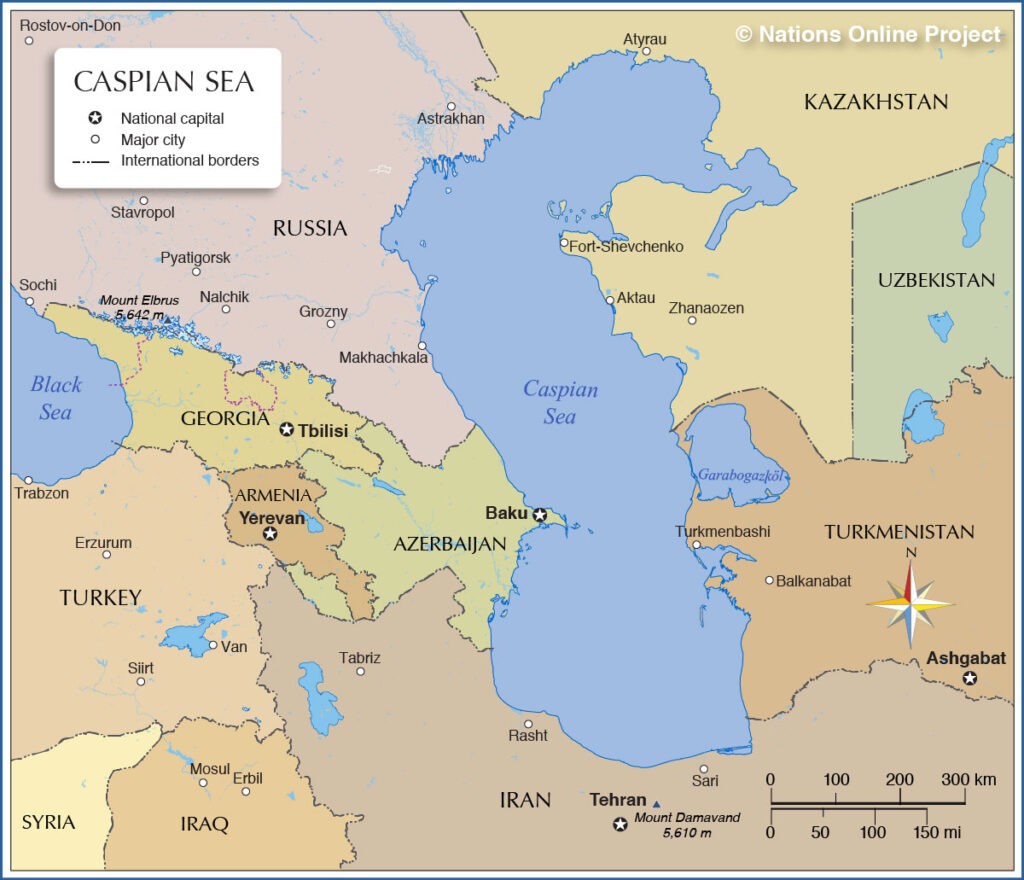
A Pakistani transport and logistics company, TCS, has now completed a pilot delivery of goods from Karachi (Pakistan) to Baku (Azerbaijan) through the Caspian seaport of Aktau in Kazakhstan. The shipment was organized with the assistance of the Embassy of Kazakhstan in Islamabad, in an effort to expand Kazakhstan’s transit transport potential. Kazakhstan’s Foreign Ministry announced that the transportation of Pakistani pharmaceutical products under TIR, along the 4,820 km long route through Afghanistan and Uzbekistan to Aktau and then by sea to Baku, took 21 days. According to Pakistani logistics experts, the Trans-Afghan corridor in tandem with the Karakoram Highway, can provide significant impetus to expanding the transit and transport potential of Kazakhstan and Pakistan, with reference to the Trans-Caspian International Transport Route.