• KGS/USD = 0.01144 0%
  • KZT/USD = 0.00212 0%
  • TJS/USD = 0.10456 0.19%
  • UZS/USD = 0.00008 0%
  • TMT/USD = 0.28490 0%
  • KGS/USD = 0.01144 0%
  • KZT/USD = 0.00212 0%
  • TJS/USD = 0.10456 0.19%
  • UZS/USD = 0.00008 0%
  • TMT/USD = 0.28490 0%
  • KGS/USD = 0.01144 0%
  • KZT/USD = 0.00212 0%
  • TJS/USD = 0.10456 0.19%
  • UZS/USD = 0.00008 0%
  • TMT/USD = 0.28490 0%
  • KGS/USD = 0.01144 0%
  • KZT/USD = 0.00212 0%
  • TJS/USD = 0.10456 0.19%
  • UZS/USD = 0.00008 0%
  • TMT/USD = 0.28490 0%
  • KGS/USD = 0.01144 0%
  • KZT/USD = 0.00212 0%
  • TJS/USD = 0.10456 0.19%
  • UZS/USD = 0.00008 0%
  • TMT/USD = 0.28490 0%
  • KGS/USD = 0.01144 0%
  • KZT/USD = 0.00212 0%
  • TJS/USD = 0.10456 0.19%
  • UZS/USD = 0.00008 0%
  • TMT/USD = 0.28490 0%
  • KGS/USD = 0.01144 0%
  • KZT/USD = 0.00212 0%
  • TJS/USD = 0.10456 0.19%
  • UZS/USD = 0.00008 0%
  • TMT/USD = 0.28490 0%
  • KGS/USD = 0.01144 0%
  • KZT/USD = 0.00212 0%
  • TJS/USD = 0.10456 0.19%
  • UZS/USD = 0.00008 0%
  • TMT/USD = 0.28490 0%

Viewing results 2521 - 2526 of 4651

SPECA Countries’ Digitalization of Multimodal Data Exchange along Trans-Caspian Transport Corridor

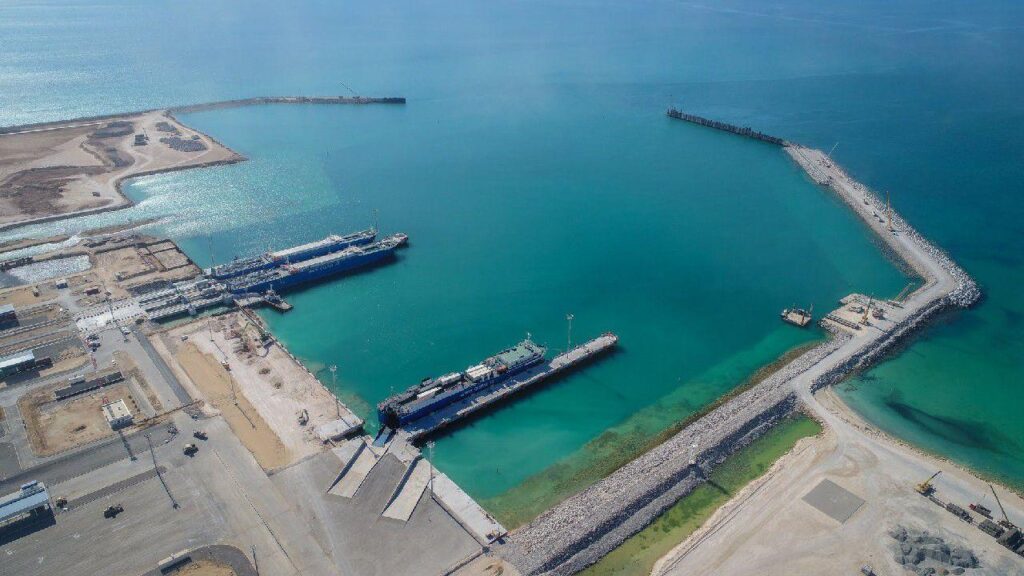
An international seminar on “Trade Facilitation and Digital Transformation of Multimodal Data and Document Exchange along the Trans-Caspian Corridor” was held in Aktau, Kazakhstan on June 11-12. Participants included the Ministry of Trade and Integration of Kazakhstan, the United Nations Economic Commission for Europe (UNECE), the International Association “Trans-Caspian International Transport Route” (TCITR), and partners including the German Society for International Cooperation (GIZ) and the Permanent Secretariat of the Intergovernmental Commission of the Transport Corridor Europe-Caucasus-Central Asia. The seminar followed the adoption of the SPECA Roadmap for Digitalization of Multimodal Exchange of Data and Documents along the Trans-Caspian Transport Corridor, using UN legal instruments and standards, at the Presidential Summit of participating States of the United Nations Special Programme for the Economies of Central Asia (SPECA), back in November 2023, The workshop in Aktau, which brought together experts in trade, transport, and digitalization from fifteen countries, focused on the digitalization of multimodal exchange of data and documents along the Trans-Caspian Transport Corridor, particularly in the ports of Baku (Azerbaijan), Aktau (Kazakhstan), and Turkmenbashi (Turkmenistan). During the event, reports were given on the implementation of UN standards for digitalization of international supply chains, port community systems, interoperability, and multimodal data exchange. A visit to Kuryk, organized by the Kazakh side, included a presentation of the port’s digitized system as well as ongoing work on transhipment and storage of cargo. The United Nations Special Program for the Economies of Central Asia (SPECA) was launched in 1998 to strengthen sub-regional cooperation in Central Asia and its integration into the world economy. SPECA countries include Afghanistan, Azerbaijan, Kazakhstan, Kyrgyzstan, Tajikistan, Turkmenistan, and Uzbekistan. Kazakhstan's trade turnover with SPECA countries in 2023 amounted to $9 billion.    

Kazakhstan and South Korea to Cooperate in Critical Minerals, Oil and Gas

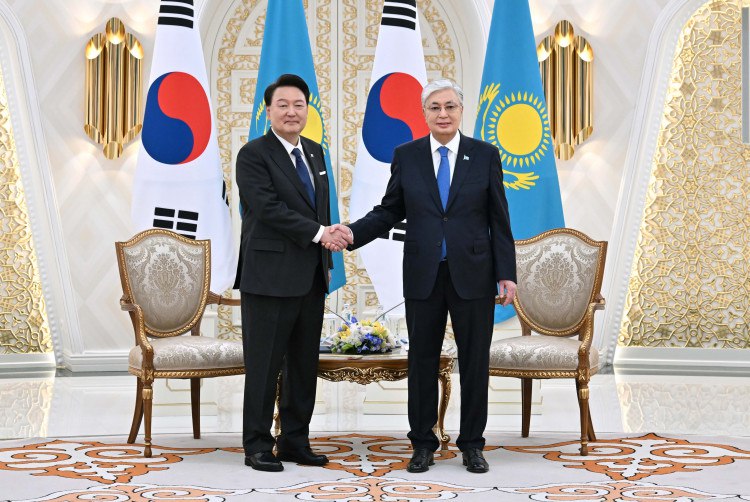
During South Korean President Yoon Suk Yeol’s visit to Kazakhstan on June 12, agreements were made on cooperation in critical minerals and metals, as well as in the oil and gas industry. A Memorandum on partnership on critical minerals and metals was  signed by the Ministry of Trade, Industry and Energy of the Republic of Korea and the Ministry of Industry and Construction of Kazakhstan. The document represents the first step towards the establishment of an international chemical analytical laboratory in Kazakhstan and aims to strengthen cooperation between the two countries in the supply of lithium, nickel, cobalt, tantalum, tungsten, beryllium, niobium, titanium, rhenium, phosphorus, copper, aluminum, chromium, manganese, and rare earth metals. An additional Memorandum on security and development of the critical minerals supply chain was signed by the Korean Institute of Geoscience and Mineral Resources, Korea’s SK Ecoplant Co. Ltd., and the Ministry of Industry and Construction of Kazakhstan. The agreement provides for a comprehensive exchange of information on supply chains for critical minerals and metals, joint geological exploration and production of critical minerals and metals, and the mining and processing of lithium to produce lithium batteries. Kazakhstan’s national oil and gas company KazMunayGas and Hyundai Engineering, South Korean EPC engineering company, signed an agreement on cooperation in the oil, gas and petrochemical industries. Aimed towards exploring opportunities for cooperation in the above, it includes provision for technology exchange, specialist training, and the transfer of technical knowledge and experience.

Women and Girls in Central Asia in Need of Protection from Violence

 Central Asian Countries are seeing a new wave of violence against women and girls, and the fight against their long-standing powerlessness is just beginning. In 2023, the Women, Peace and Security Index (WPS Index), published by the Georgetown Institute for Women, Peace and Security and the PRIO Centre on Gender, Peace and Security, found Kyrgyzstan and Uzbekistan the most dangerous countries in Central Asia for women. Things were deemed slightly better in Kazakhstan, Tajikistan, and Turkmenistan. The challenges faced by women in the region result from a combination of factors: the low number of women in government and law enforcement, women’s lack of financial independence, especially in rural areas, a distorted understanding of traditions across populations, and a mentality in society that often denies or covers up flagrant cases of injustice.   The law is written in blood: the case of Kazakhstan According to WPS experts, Kazakhstan has progressed further than its neighbors toward equality. Still, according to Kazakhstan’s Ministry of Internal Affairs, 69 women and seven children died in 2023 in domestic conflicts alone. It is believed that, on average, at least 80 women die every year at the hands of those they live with; every day, the police receive hundreds of calls, while thousands of women need the help of specialized protection and support centers. According to the Prosecutor General, last year 150 women sustained severe injuries and 200 moderate injuries in marital conflicts, with another 4,000 suffering minor bruises. This year, however, marked a turning point for Kazakhstani society – more and more women are recording videos with marks from beatings, posting the videos on social media, and calling on the police to punish their abusers. Even high-profile domestic abusers can now be exposed. The trigger for these changes was the trial of former Nazarbayev-era Minister of the National Economy, Kuandyk Bishimbayev, who beat his wife, Saltanat Nukenova, to death last November. Following a live-streamed trial, this May, Bishimbayev was sentenced to 24 years in prison for her murder. Even during the Bishimbayev trial, Karina Mamash, the wife of a Kazakh diplomat in the UAE, went public with allegations about systematic abuse, calling on the state to help. The Ministry of Foreign Affairs urgently recalled her husband, Embassy Counselor Saken Mamash, who may be fired. Karina is now at home with her children while a criminal case has been opened against her husband. She has since reported threats from her husband's relatives. Also in May, Akmaral Umbetkalieva, a resident of Atyrau, alleged that her ex-husband, Rinat Ibragimov – the akim (mayor) of Makat District in Atyrau Region – had beaten her for eleven years and taken away their children. Ibragimov called the allegations slander. The month before, former Taldykorgan police chief, Marat Kushtybaev was sentenced to eleven years for raping a girl in his office in November 2023. Another headline from April was that a security guard at an Almaty bar who had been convicted of raping a girl at knifepoint would serve eight years in prison. The...

Kazakhstan and South Korea: “A Golden Bridge of Friendship”

The President of Kazakhstan, Kassym-Jomart Tokayev, held talks with the President of South Korea, Yoon Suk Yeol. According to Tokayev, Seoul is one of Astana’s most important strategic partners in the Asia-Pacific region. Korea ranks fourth in foreign trade turnover, and is among Kazakhstan’s top ten largest foreign investors. South Korea has become a true economic and technological locomotive on a global scale, Tokayev stated. World-renowned Korean corporations seriously support promoting the country’s position in the international arena as a “key global state.” Kazakhstan and Korea have achieved a high level of political dialog, establishing fruitful economic cooperation and strong humanitarian ties. The two countries interact in various spheres, including inter-parliamentary, inter-governmental, and inter-departmental contacts. According to Tokayev, regular contact between businessmen of the two countries plays a very important role in building close ties. More than 700 companies with South Korean capital successfully operate in Kazakhstan. “The 120,000 ethnic Koreans in Kazakhstan fulfill an important role and make an invaluable contribution to strengthening our relations. In turn, more than a thousand Kazakh students studying in Korea are a ‘golden bridge of friendship’ between our countries,” Tokayev stated. During the talks, the presidents discussed prospects for bilateral cooperation in energy, infrastructure and industry, engineering, trade, transport and logistics, digitization and the aerospace industry, the financial sector, education, healthcare and pharmaceuticals, tourism and culture, ecology, and other fields.

Kazakhstan’s National Railway Carrier Under Threat of Default

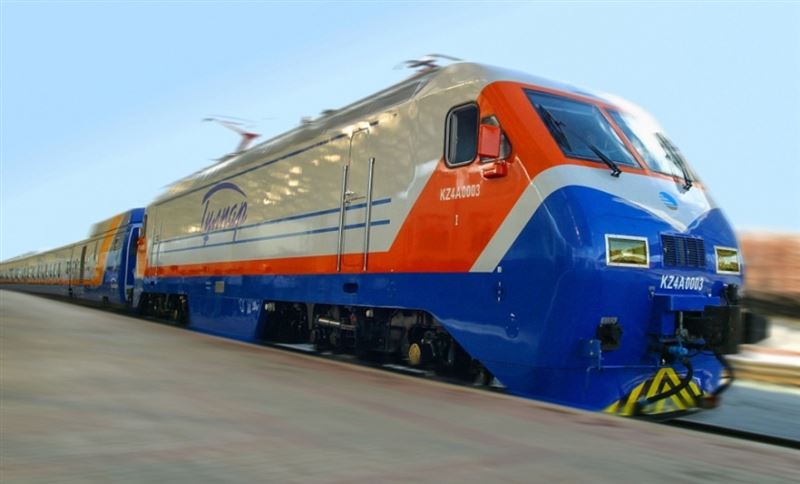
The Chairman of the Supreme Audit Chamber (SAC), Alikhan Smailov, has discussed the possible default of national rail carrier, Kazakhstan Temir Zholy (KTZ). According to Smailov, the company cannot currently fulfill its obligations. "The company is in the ‘red’ zone of credit risk. At the beginning of 2024, its debt amounted to 2.9 trillion tenge ($6 billion) and continues to grow; 45%, or 1.3 trillion tenge ($2 billion), of the total debt is aimed at refinancing previously assumed debt obligations,” said Smailov, answering questions from deputies. According to Smailov, Samruk-Kazyna JSC's existing corporate governance methods and development strategy, which include KTZ, are not able to prevent the crisis the country's national railway company is facing. “Further deterioration of assets, the build-up of debts, and the inability to service them without fundamental management changes will lead to the default of KTZh,” Smailov stated. A large amount of budget funds has been spent on developing the railway industry over the past four years, but it has not been enough. The money invested has yet to meet the nation's needs for freight and passenger transportation, Smailov emphasized.

Kazakhstan’s First Automobile Tunnel and Largest Bridge to be Completed this Year

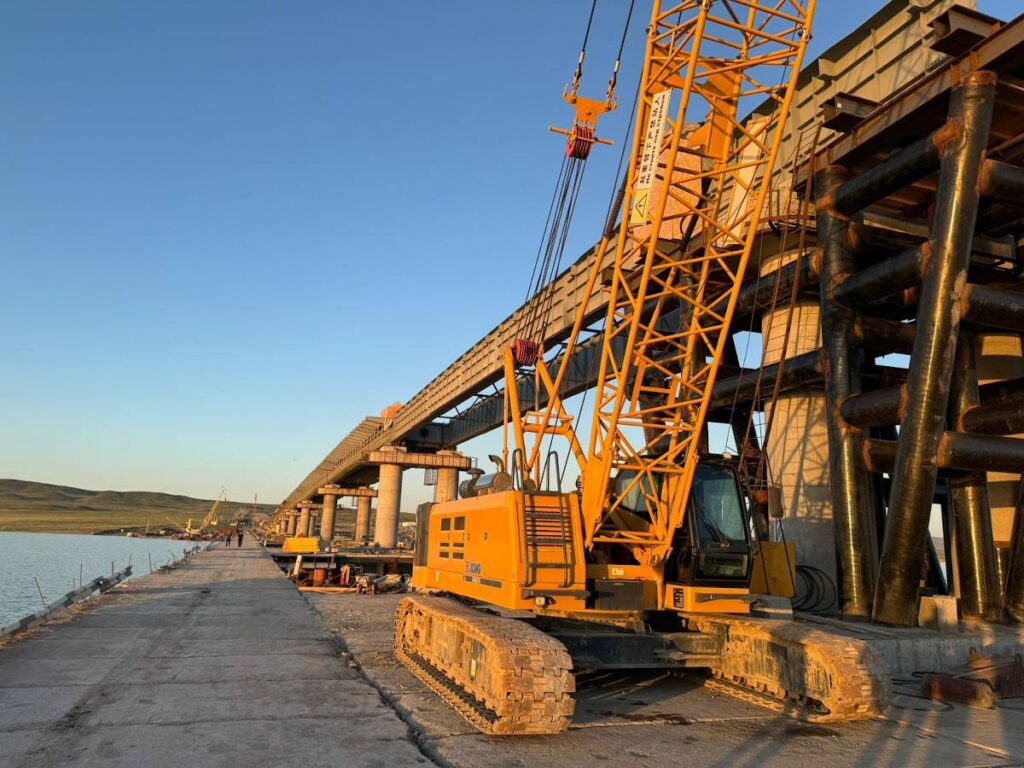
As reported  by the Kazakhstan's Ministry of Transport,  Kazakhstan's first automobile tunnel through the Shakpak Baba Pass and the country's largest bridge over the Bukhtarma Reservoir are due for completion by the end of this year.  All concrete work has been completed and an asphalt road laid  in the Shakpak Baba road tunnel. Lighting has been installed and work is now underway to install video surveillance, lay gas pipes, ventilation, and firefighting equipment. Development of the country's longest bridge is likewise on schedule. Around 81% of  the bridge supports has been erected and 17 of the 21 piers have been built. Regarding progress on both of the ambitious projects, Transport Minister Marat Karabayev announced, "We plan to complete the construction of the country's first automobile tunnel through the Shakpak Baba Pass by the end of this year. Additionally, we aim to complete the construction of the largest bridge in Kazakhstan over the Bukhtarma Reservoir. The total length of the two-lane road bridge across the Bukhtarma reservoir near the village of Kuigan in East Kazakhstan region will be 1,316 meters."