• KGS/USD = 0.01144 0%
  • KZT/USD = 0.00212 0%
  • TJS/USD = 0.10456 0.19%
  • UZS/USD = 0.00008 0%
  • TMT/USD = 0.28490 0%
  • KGS/USD = 0.01144 0%
  • KZT/USD = 0.00212 0%
  • TJS/USD = 0.10456 0.19%
  • UZS/USD = 0.00008 0%
  • TMT/USD = 0.28490 0%
  • KGS/USD = 0.01144 0%
  • KZT/USD = 0.00212 0%
  • TJS/USD = 0.10456 0.19%
  • UZS/USD = 0.00008 0%
  • TMT/USD = 0.28490 0%
  • KGS/USD = 0.01144 0%
  • KZT/USD = 0.00212 0%
  • TJS/USD = 0.10456 0.19%
  • UZS/USD = 0.00008 0%
  • TMT/USD = 0.28490 0%
  • KGS/USD = 0.01144 0%
  • KZT/USD = 0.00212 0%
  • TJS/USD = 0.10456 0.19%
  • UZS/USD = 0.00008 0%
  • TMT/USD = 0.28490 0%
  • KGS/USD = 0.01144 0%
  • KZT/USD = 0.00212 0%
  • TJS/USD = 0.10456 0.19%
  • UZS/USD = 0.00008 0%
  • TMT/USD = 0.28490 0%
  • KGS/USD = 0.01144 0%
  • KZT/USD = 0.00212 0%
  • TJS/USD = 0.10456 0.19%
  • UZS/USD = 0.00008 0%
  • TMT/USD = 0.28490 0%
  • KGS/USD = 0.01144 0%
  • KZT/USD = 0.00212 0%
  • TJS/USD = 0.10456 0.19%
  • UZS/USD = 0.00008 0%
  • TMT/USD = 0.28490 0%

Viewing results 2641 - 2646 of 4651

Uzbek Citizens Warned of New Entry Rules to Kazakhstan

In a statement issued on 8 May, the Ministry of Foreign Affairs of Uzbekistan recommended that citizens of Uzbekistan have all necessary documentation in place in advance of entering Kazakhstan. The new rules will apply to Uzbek citizens wishing to cross the Uzbek-Kazakh border, and in adherence to Russian-Kazakh agreements, onwards to Russia. Uzbek citizens are warned that more rigorous checks will be conducted by Kazakh authorities to ensure that entrants have no prior violations of migration and other legislation of the Russian Federation or unpaid fines. In the absence of sound documentation, the Kazakh authorities will have the right to prevent citizens of Uzbekistan from entering or leaving Kazakhstan. Earlier this month, following the introduction of more stringent security controls at all of Kazakhstan’s airports on 1 May, Tajikistan’s Foreign Ministry likewise recommended its citizens to check their documents prior to leaving for Kazakhstan

Kazakh Pensioner Takes A Trip To Paris — On His Bicycle

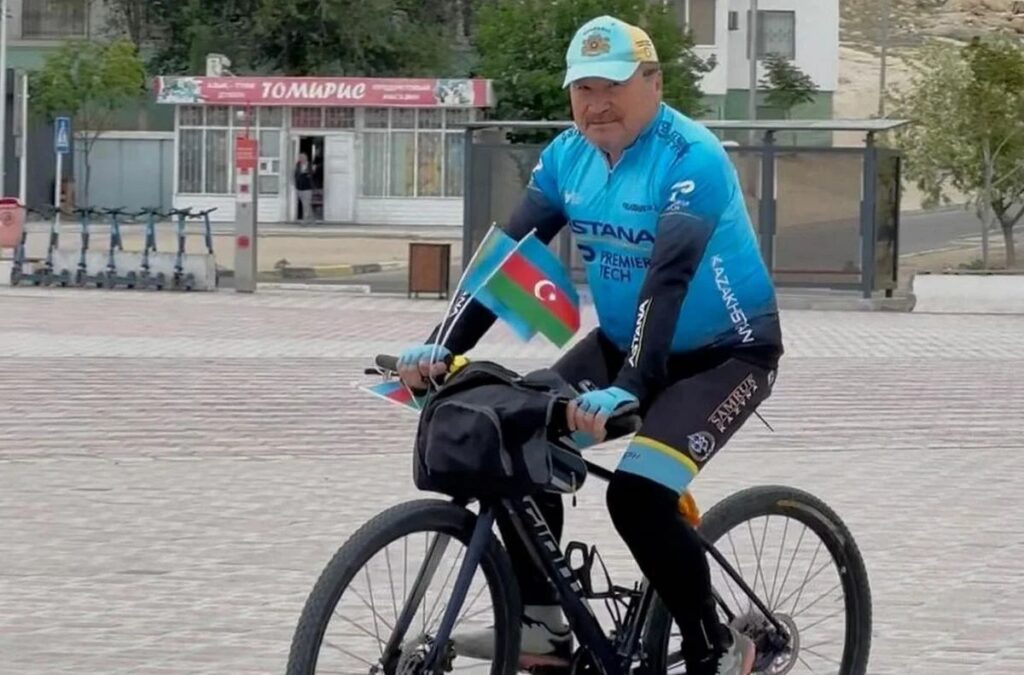
Sixty-four year-old Rabbim Borashev, from the town of Beineu in western Kazakhstan's Mangystau region, has set out to cycle to the Olympic Games in Paris, which begin at the end of July. He plans to cover 5,000 kilometers on his bike, reports Lada.kz. "You could say that traveling to the Olympics is my dream. When I was young there was no chance, but now the time has come. First I will go from Aktau to Baku. Representatives of [Kazakhstan's] Consulate General will be waiting there, and will escort me to the border with Georgia. This is great support for me. Then I will go to Batumi and participate in the Great Steppe Hike project. In June, I will leave for Turkey. I have plans to pass through Hungary, Austria, Germany and reach France," said Borashev. Before retiring, Borashev worked in the construction industry. In recent years he has become interested in cycling, and has taken part in several races.

“This Disaster Has Shown We Are All United”: An Interview with Zakirzhan Kharisovich, Deputy of Petropavlovsk, about the Kazakh Floods

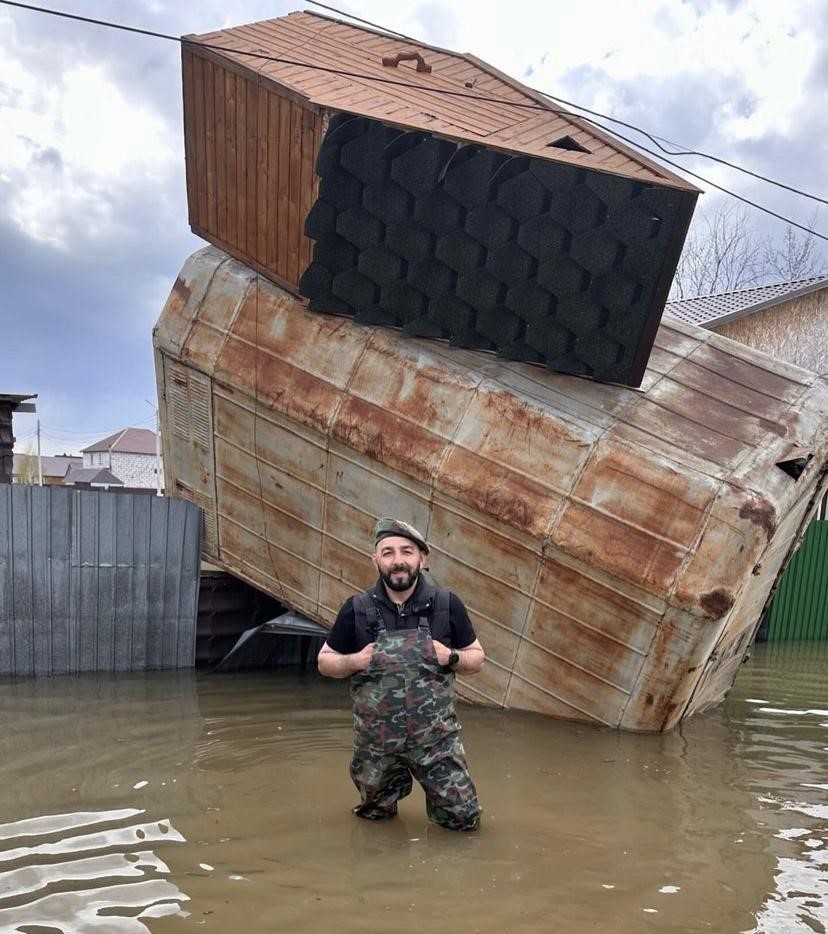
This spring Kazakhstan struggled to contain flooding that displaced upwards of 120,000 people -- described by president Kassym-Jomart Tokayev as the country’s ‘worst natural disaster in 80 years’. With the flooding now contained, and excess water being repurposed, The Times of Central Asia spoke to Zakirzhan Kharisovich, a deputy of the maslikhat (local representative body) of the city of Petropavlovsk, about his experience of the natural disaster. TCA: What were the main challenges you faced during the first months of the floods? ZK: The last time we experienced floods was back in 2017, when my yard was filled with 30-40 centimetres of water. We knew then that if rainfall exceeded the norm, the subsequent rise in the water level in the Sergeevskoye Reservoir, 170 kilometers away, would again pose a threat. This year, alerted by weather forecasts, to combat the problem I joined residents in building embankments and dams. We were assisted by soldiers from Astana, whom we called the "300 Spartans", as well as staff from the Emergency Situations Department in Karaganda. Despite precautionary measures, this time my yard was flooded with three meters of water. I couldn’t access my home for over three weeks, and during that time everything inside -- furniture, household appliances, etc. -- was submerged. TCA: How was aid organized in the first days after the floods? ZK: Due to the collapse of the city’s water tower, we had no access to drinking water for almost a month. In addition to providing the aforementioned help, Kazakhstan’s volunteer movement worked full-pelt in shipping in truckloads of humanitarian aid, including household products, mattresses, clothes, food, cereal, rice and flour, as well as pumps and water-pumping generators. The range of their assistance was enormous. Our compatriots in nearby cities, such as Kurgan and Tyumen, were worried about us and were quick to assist. We also received support from other places, including Dagestan, Tajikistan, Ingushetia, and from Russia and further afield. TCA: How did the akimat, public services and local communities work together, and what support was provided by the central government in addressing issues? ZK: Under the supervision of the deputy akim, the akimat staff were actively involved in building the dam, as well as coordinating and organizing activities in response to the floods. I packed bags with water-absorbent materials. Regarding the actions of the central government, Roman Sklyar, the first deputy prime minister, immediately arrived on site to speak to residents and help supervise measures to both clear the damage and resolve other issues caused by the floods. Following his visit, prime minister Olzhas Bektenov proposed to allocate funds to replace essentials such as furniture, cooking utensils, refrigerators etc. So, in principle, if four million tenge ($9,100) worth of furniture and appliances has been lost, it will be covered by the government. This does however raise many questions. Whilst we have full confidence in the pledge made by the president to restore our property, doubts surround the lower officials’ full understanding of his intentions. TCA: What was...

Victory Day Comes in Central Asian Countries Without Much Pomp, but Plenty of Feeling

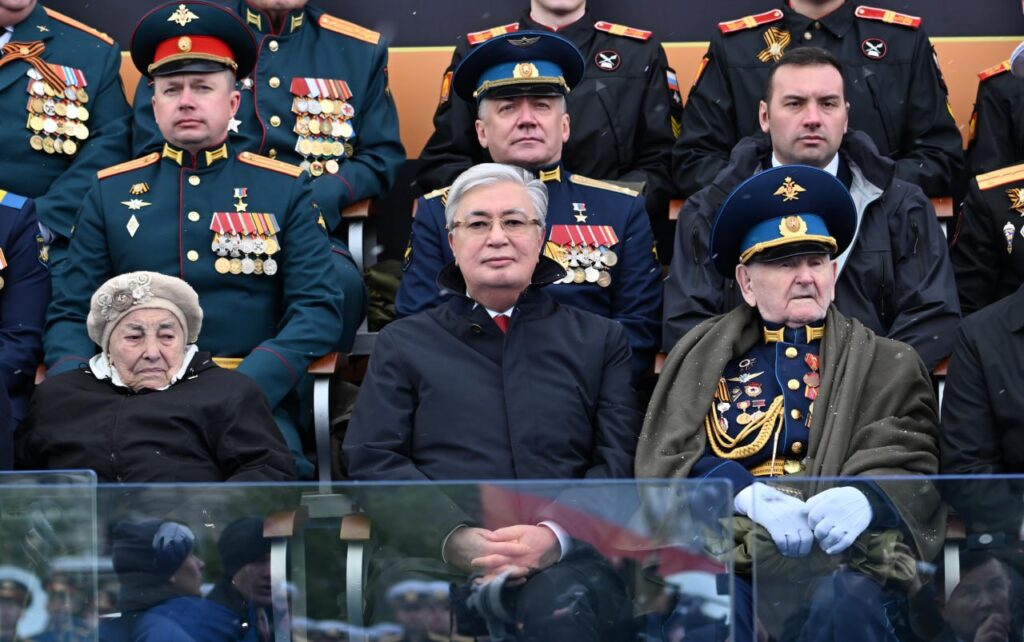
This year, as in previous years, the attitude toward Victory Day celebrations in Central Asian countries serves as an important political marker. The leaders of Kazakhstan, Kyrgyzstan, Tajikistan and Turkmenistan are scheduled to attend the Victory Day parade in Moscow on May 9. The leaders of Belarus, Cuba, Laos and Guinea-Bissau will also take part in the celebrations. The absences of the presidents of Uzbekistan, Armenia and Azerbaijan are particularly noticeable in that list. It's noteworthy that the Russian press is commenting on the different stances taken by the Central Asian countries in an extremely negative way -- deliberately agitating discord between Russia and the region. It's even been stated that Victory Day has been "canceled" in the region. Such are the broadcasts taking place against a backdrop of analysts' opinions: that in the coming decades, Central Asian countries won't be able to break the ties that bind them to their former Soviet master, as the economic dependence on Russia is only growing. This is especially true for Kazakhstan, as the lion's share of Kazakhstan's oil goes through Russian pipelines to Europe. In addition, a project increasing the transshipment of Russian hydrocarbons to China through Kazakhstan is in the works. However, contrary to the opinion of Russian tabloids, the Central Asian countries remain reverent and respectful of the cultural institution that is Victory Day. Most residents of the republics are proud of their fathers and grandfathers who fought on the fronts of World War II. In particular, for several years in a row, Kazakhstan has maintained a leading role in terms of doling out state budget payments to veterans of World War II. According to statistics, the size of a lump-sum social payment commemorating Victory Day in Kazakhstan, where 148 veterans live, averages $3,800. In Tajikistan there are 24 surviving veterans of World War II, and their payments amounted to $2,200-$2,300. Veterans in Uzbekistan received about $1,500, and in Belarus, Azerbaijan and Kyrgyzstan, about $1,100 apiece. Russia's 12,500 surviving veterans in Russia will receive the least -- the equivalent of only $107. To be sure, Kazakhstan has not held military parades in honor of the holiday for a year. That move is explained by the need to save money. This spring, unprecedented floods -- which affected almost half of the country -- have pushed President Kassym-Jomart Tokayev's administration to tend towards being thrifty and instead fund humanitarian aid and reconstruction. According to the Ministry of Defense of Kazakhstan, the parade requires spending about 4 billion tenge ($9 million) -- such a huge sum of money can be spent more impactfully on providing housing for the victims. Along with large-scale, WWII-related festive events in Kazakhstan, other important projects, such as international forums, have been canceled. Nevertheless, in his speech, President Tokayev not only congratulated veterans, but also emphasized the need to prepare for the 80th anniversary of the May 1945 victory, which is scheduled to be widely celebrated next year. In Uzbekistan, May 9 is considered a Day of Remembrance, but...

Kazakhstan, Kyrgyzstan, and Uzbekistan Favor EEU Economic Integration

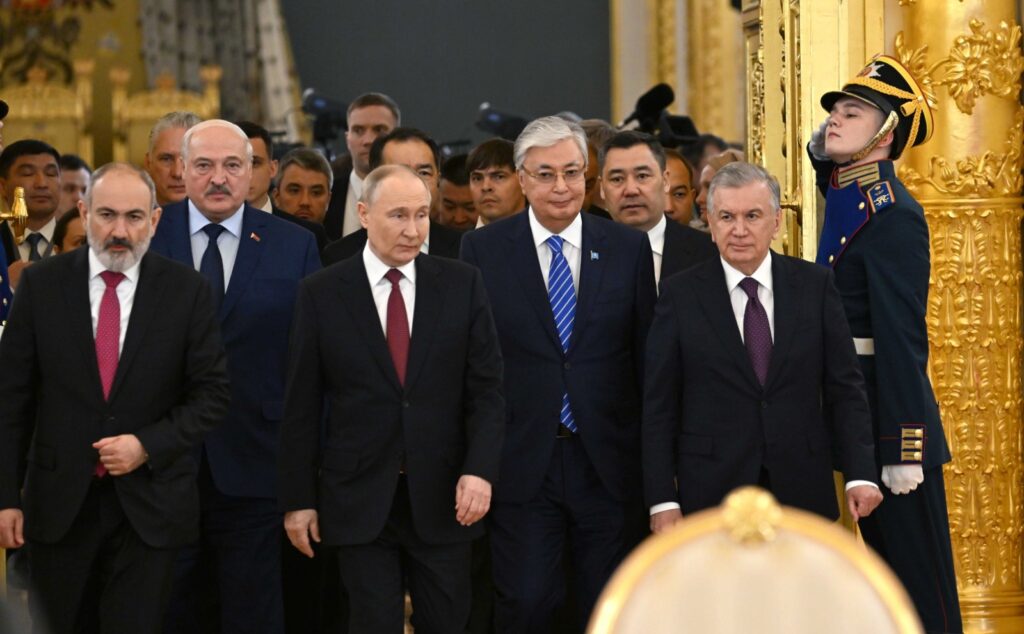
On May 8, Russian President Vladimir Putin, President of Belarus Alexander Lukashenko, President of Kazakhstan Kassym-Jomart Tokayev, President of Kyrgyzstan Sadyr Japarov, and Prime Minister of Armenia Nikol Pashinyan convened in Moscow for a meeting of the Supreme Eurasian Economic Council - the governing body of the Eurasian Economic Union (EEU). The event, which marked the tenth anniversary of the establishment of the Russian-led economic integration bloc, was also attended by heads of the EEU observer states, President of Cuba Miguel Diaz-Canel Bermudez and President of Uzbekistan Shavkat Mirziyoyev. In his address, Kazakhstan President Tokayev remarked that in the relatively short period since the Treaty on the Eurasian Economic Union was signed in Astana ten years ago, cooperation between the parties has contributed greatly to the development of Kazakhstan’s economy, and stated: “The correctness of the chosen vector of development of our association has been confirmed by the macroeconomic results of the past decade. Thus, Kazakhstan’s trade turnover with the EEU member countries has increased 1.7-fold and reached $28.5 billion.” Referencing the positive potential for EEU cooperation with rapidly developing countries in Asia, Africa, and the Middle East, he urged EEU member states to join the Ashgabat Agreement on the creation of an International Transport Corridor to engage with markets in the Persian Gulf. The Kazakh president also emphasized the need for improvements to trade links between Europe and Asia, North and South, and warned that unless renewed, the existing infrastructure in the Eurasian region will continue to deteriorate. Citing the modernization and expansion of transport and logistics infrastructure as a key priority, he stated, “In Kazakhstan, we plan to repair 11,000  and build over 5,000  kilometers of new railways by 2030. As part of the Belt and Road initiative, a Kazakh terminal, built in the Chinese city of Xi’an, accounts for up to 40% of all container traffic on the China-Europe route. There are also plans to launch 5 cross-border transport and logistics hubs on Kazakhstan’s borders with Russia, China, Uzbekistan, and Kyrgyzstan, and on the Caspian Sea.” Kyrgyz President Japarov announced that further development of Eurasian economic integration, including the creation of a single market for goods and services without barriers, a common energy market, and freedom of movement of labor resources, remains a priority for Kyrgyzstan. Regarding benefits afforded by Kyrgyzstan’s membership of the EEU, Japarov said that the country’s trade with EEU member states has grown by 76%, from $2.5 billion to $4.4 billion, its exports to EEU countries have tripled from $410 million to $1.23 billion, and its imports  increased by more than 50%, from $2 billion to $3 billion. Apart from gold, 80% of Kyrgyzstan’s exports go to the EEU countries. The Kyrgyz president also emphasized the importance of linking the EEU and the Chinese Belt and Road initiative. Despite the current observer status of his country and the EEU, Uzbek President Mirziyoyev reported that over the past three years, trade between Uzbekistan and the EEU has grown by 60 percent. Looking ahead, he announced, “Uzbekistan is interested in expanding practical partnership and...

Kazakhstan Set to Reimburse Businesses for Equipment Costs

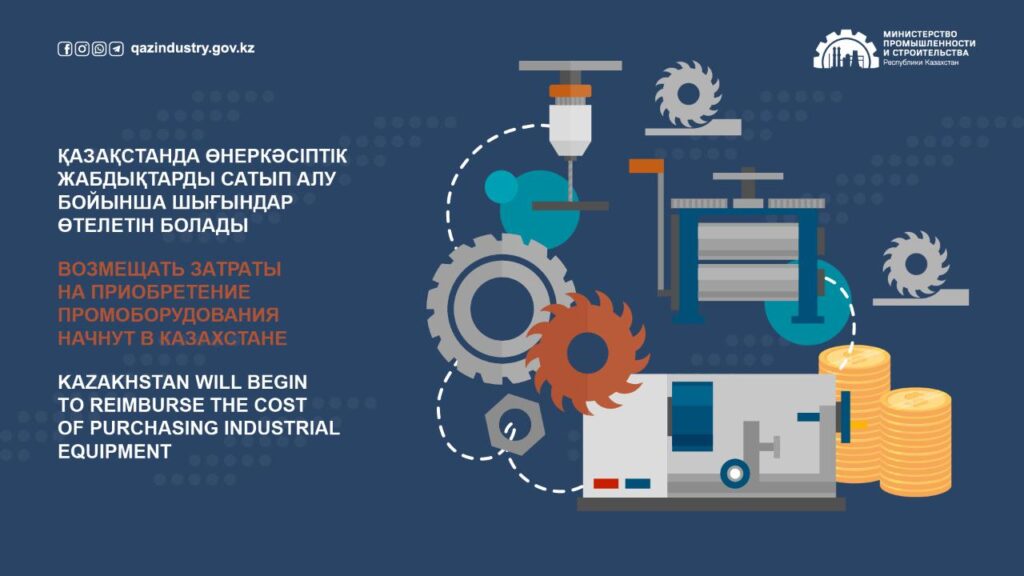
The Ministry of Industry and Construction has announced that from mid-May, the government of Kazakhstan will reimburse small and medium enterprises (SMEs) for costs incurred in the purchase of industrial and technological equipment. The initiative is designed to help entrepreneurs modernize their technological equipment, increase productivity, and expand the range of their products. Arstanbek Sagiev, head of the business stimulation directorate at Kazakhstan’s Center for Industry and Export, QazIndustry JSC, commented that because the purchase of technological equipment accounts for the lion’s share of expenditure of any enterprise, the business community had long requested state support. Outlining the initiative, he reported, “From May 12, 2024, enterprises that manufacture products on the list of priority goods can apply for part reimbursement of costs associated with purchasing equipment. QazIndustry will reimburse up to 40 percent of funds spent on the purchase of technological equipment, but not more than 60 million tenge.” At least 30 percent of equipment currently used by Kazakh manufacturers is past its best and hence, has a negative impact on both productivity and the competitiveness of domestic producers. In the absence of funds to develop production, coupled with financial burdens imposed by costly loans, many small and medium businesses are forced to postpone updating and replacing essential equipment. According to QazIndustry the state’s new reimbursement initiative will prove one of the most effective means of stimulating enterprises to modernize their equipment and therefore, their production.