• KGS/USD = 0.01144 0%
  • KZT/USD = 0.00210 0%
  • TJS/USD = 0.10563 0%
  • UZS/USD = 0.00008 0%
  • TMT/USD = 0.28530 0%
  • KGS/USD = 0.01144 0%
  • KZT/USD = 0.00210 0%
  • TJS/USD = 0.10563 0%
  • UZS/USD = 0.00008 0%
  • TMT/USD = 0.28530 0%
  • KGS/USD = 0.01144 0%
  • KZT/USD = 0.00210 0%
  • TJS/USD = 0.10563 0%
  • UZS/USD = 0.00008 0%
  • TMT/USD = 0.28530 0%
  • KGS/USD = 0.01144 0%
  • KZT/USD = 0.00210 0%
  • TJS/USD = 0.10563 0%
  • UZS/USD = 0.00008 0%
  • TMT/USD = 0.28530 0%
  • KGS/USD = 0.01144 0%
  • KZT/USD = 0.00210 0%
  • TJS/USD = 0.10563 0%
  • UZS/USD = 0.00008 0%
  • TMT/USD = 0.28530 0%
  • KGS/USD = 0.01144 0%
  • KZT/USD = 0.00210 0%
  • TJS/USD = 0.10563 0%
  • UZS/USD = 0.00008 0%
  • TMT/USD = 0.28530 0%
  • KGS/USD = 0.01144 0%
  • KZT/USD = 0.00210 0%
  • TJS/USD = 0.10563 0%
  • UZS/USD = 0.00008 0%
  • TMT/USD = 0.28530 0%
  • KGS/USD = 0.01144 0%
  • KZT/USD = 0.00210 0%
  • TJS/USD = 0.10563 0%
  • UZS/USD = 0.00008 0%
  • TMT/USD = 0.28530 0%

Viewing results 3205 - 3210 of 4778

Head of Constitutional Court Addresses Tokayev’s Reforms

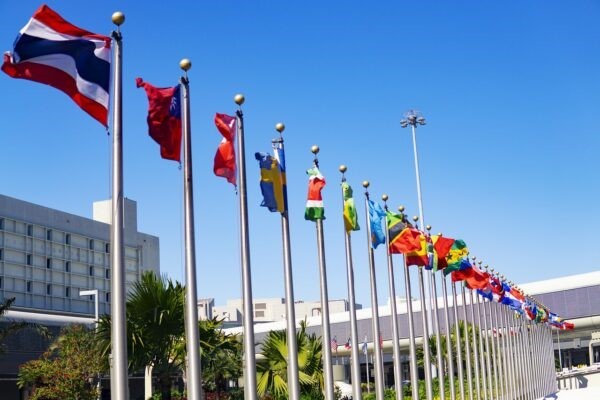
The head of the Constitutional Court of the Republic of Kazakhstan has spoken about the implementation of three packages of President Tokayev’s reforms. A delegation from Kazakhstan took part in UN events dedicated to the 75th anniversary of the adoption of the Universal Declaration on the Protection of Human Rights in Geneva, where they addressed Kazakhstan's experience in carrying out political and human rights reforms. The head of the delegation, Chairman of the Constitutional Court, Elvira Asimova spoke about Kazakhstan's priorities in the human rights sphere, naming these as the protection of children and women, the implementation of the concept of a "listening state," digitization, and increasing the active role of civil society in the field of human rights protection. At a special event hosted by human rights NGOs, Asimova reported on the implementation of three packages of President Tokayev’s reforms and on his Decree "On the Action Plan in the field of human rights and the rule of law." “Today's global challenges require the development of global solutions and the ability to respond correctly to current events. In this regard, it should be noted that almost all the delegations with whom we met on the sidelines of the event highly appreciate the reforms being carried out in Kazakhstan. And they welcome the adoption by the head of state on December 8th of the Action Plan in the field of human rights," Asimova said. The document consists of nine sections containing 41 points, from strengthening gender equality and combating domestic violence, to protecting citizens in the field of criminal justice. For the first time in Kazakhstan, the experience of a human rights organization was included in this list. Zhemis Turmagambetova, Executive Director of the Charter for Human Rights Foundation stated that “This year, I conducted the first part of the project to create a ‘Dialogue Police.’ In times of peaceful gatherings and marches and informal associations of citizens on various issues, the police will conduct a dialogue. It is necessary to involve representatives of government agencies there. This is a great support for the actions of the non-governmental sector and civil society. Because everything at a legislative level and at a practical level should be applied by all legislators and all government agencies.” On the sidelines of the forum, the Commissioner for Human Rights of Kazakhstan, Artur Lastaev, together with the Global Alliance of National Human Rights Institutions and UNDP, held a discussion on the contribution of national human rights institutions to the implementation of UN Sustainable Development Goals. “Over the past few years, very serious steps have been taken to strengthen both the institution of the Commissioner for Human Rights and, in general, regarding the implementation of international standards into national legislation,” Lastaev said. “A lot of people say that these are the reforms of President Tokayev. These reforms have already acquired a household name. In this regard, we really have something to be proud of. There are concrete results. If we take the fight against torture, 42 people...

Central Asia’s Growing Economic and Strategic Importance Comes to Fore

The Central Asian region has experienced a tremendous economic transformation since the beginning of the century. Its aggregate gross domestic product (GDP) now totals $397 billion, growing 8.6-fold since the year 2000. Its share in global GDP in purchasing power parity (PPP) has also increased 1.8 times. The GDP per capita has tripled as the labor pool has grown to almost 80 million, representing a 1.4-fold increase since 2000. The region’s strategic importance, particularly thanks to its geographic position bridging major economies of Europe and Asia, makes it a key player in geopolitical dynamics. Central Asia’s dependence on commodity exports and remittances has so far limited its integration into global value-chains. The Central Asia Regional Economic Co-operation (CAREC) Program, established by the Asian Development Bank (ADB), plays an important role in fostering regional development and co-operation. CAREC includes the five Central Asia countries (namely Kazakhstan, Kyrgyzstan, Uzbekistan, Tajikistan and Turkmenistan) plus Afghanistan, Azerbaijan, China, Georgia, Mongolia and Pakistan. CAREC also partners with five multilateral international institutions in addition to the ADB (which serves as its Secretariat). These are the European Bank for Reconstruction and Development (EBRD), International Monetary Fund (IMF), Islamic Development Bank (IsDB), United Nations Development Program (UNDP) and the World Bank (a.k.a. International Bank for Reconstruction and Development or IBRD). The Program has constructively helped the countries of Central Asia to address challenges in trade governance. Nevertheless, inefficiencies in cross-border transport and customs procedures continue to hinder their commercial exchanges with one another as well as with external partners. CAREC’s current policy-implementation priorities are integration of regional trade, digitization, climate change, regional co-operation, development of financial technologies and financing in the water sector. There is still significant potential for further development given that the region’s trade within itself has been growing faster than its foreign trade. Enhancing Central Asia’s role in the global economy will require the implementation of co-operative initiatives already identified, especially in infrastructure. Such construction of new physical plants, as well as the renovation and building-out of those that already exist, is crucial for enhancing economic growth and sustainability. This strategy will leverage the region’s strengths such as its strategic location and resource endowments. In 2023, Central Asia’s economic growth is projected to remain relatively steady at 3.9 percent, but this may still be affected by the global challenges of weak external demand, rising inflation and supply-chain disruptions. These global economic conditions, along with the uncertainties that they engender, reflect continuing burdens of the ongoing post-COVID recovery as well as the effects of the war in Ukraine, which significantly impacts the region. In addition to the ADB, the IBRD also focuses on various development initiatives in Central Asia that aim to support regional infrastructure development and the strengthening of cross-border co-operation. These are implemented through relatively low-profile initiatives such as the Central Asia Water and Energy Program (CAWEP) to enhance energy and water security and the Central Asia Hydrometeorology Modernization Project (CAHMP) to improve weather, climate and hydrological services. The IBRD thus aims to increase...

Kazakhstan to Intensify Work to Attract Investment in Green Technologies

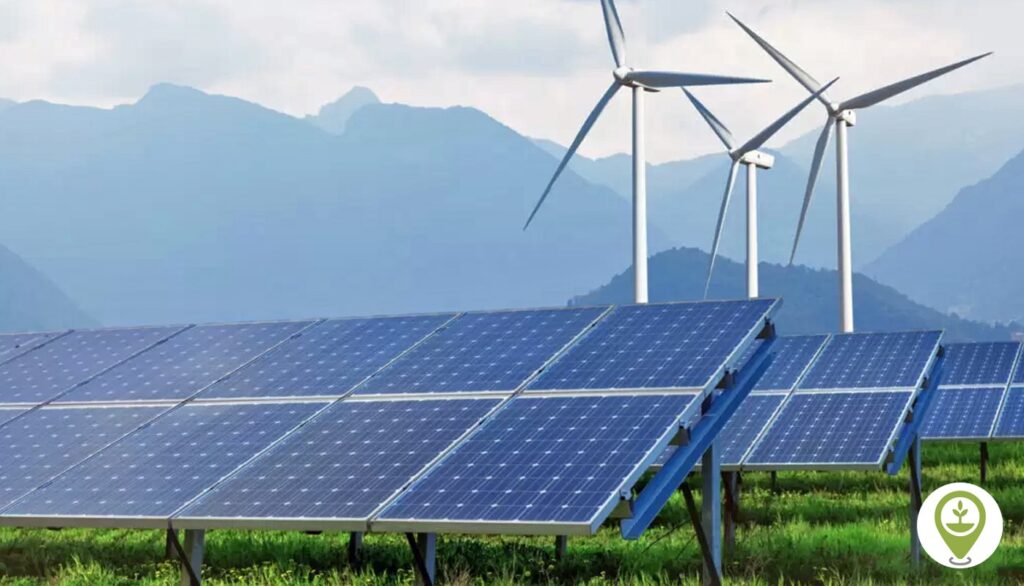
Issues of supporting new projects in the field of renewable energy were discussed on December 14th at a meeting of the Council for the Transition to a Green Economy, chaired by the Prime Minister of Kazakhstan, Alikhan Smailov. At the meeting, Madina Abylkasymova, Chairperson of the Agency of the Republic of Kazakhstan for Regulation and Development of the Financial Market, said that today the necessary legislative framework for the development of “green” finance has been created in Kazakhstan. A new Environmental Code has been adopted, and changes have been made for the issuance and circulation of green bonds and ESG bonds. The Prime Minister emphasized that a large-scale transformation of the economy requires, among other things, an increase in the volume of “green” investments. “To achieve carbon neutrality by 2060, financing in the amount of more than $600 billion is required. Therefore, it is necessary to intensify efforts to attract investments in green technologies,” said Smailov.

EDB Forecasts Economic Growth for Kazakhstan, Kyrgyzstan and Tajikistan in 2024

The Eurasian Development Bank (EDB) has published its macroeconomic outlook for the Bank’s six member states — Armenia, Belarus, Kazakhstan, Kyrgyzstan, Russia, and Tajikistan. Bank analysts anticipate that GDP across the region’s countries will be close to a balanced growth path. Projections indicate a GDP growth in 2024 of 5.7% in Armenia, 2% in Belarus, 5% in Kazakhstan, 4.5% in Kyrgyzstan, 1.5% in Russia, and 7.3% in Tajikistan. According to EDB analysts, following Kazakhstan’s economic growth of 4.8% in 2023, an acceleration in GDP growth is anticipated for 2024, further bolstered by high investment activity. The expected decrease in interest rates is poised to provide an additional impetus. In the medium term, structural transformations are set to improve the quality of economic growth by expanding opportunities in manufacturing and service industries. Economic diversification creates prerequisites for an anticipated acceleration in 2025 and 2026, positioning Kazakhstan as a leader among Eurasian Economic Union member states in terms of growth rates. Strong domestic demand supported high economic activity in Kyrgyzstan and Tajikistan in 2023. EDB analysts project a slight deceleration in these countries in 2024, albeit with GDP growth rates still noticeably higher than the global average.

Kazakhstan Launches Modernized Water Pipeline in Atyrau and Mangystau Regions

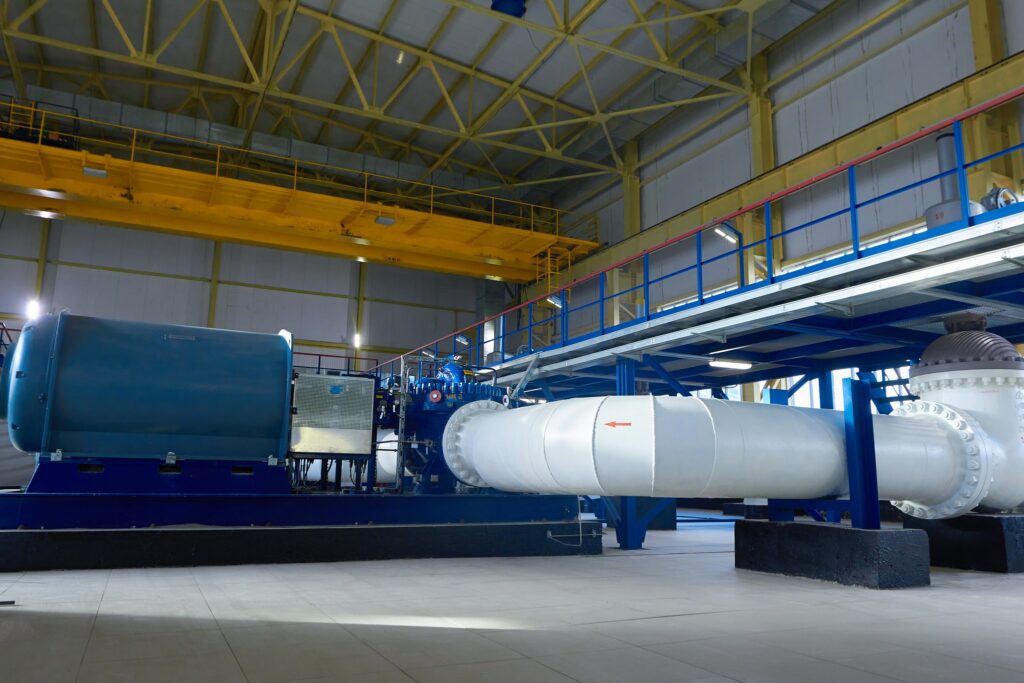
On December 13th, Kazakhstan unveiled the modernized main water pipeline, Astrakhan-Mangyshlak, in its western Atyrau Region. The significant expansion of this facility was a result of comprehensive reconstruction, directed by President Tokayev's under the supervision of Kazakhstan's Prime Minister, Alikhan Smailov. The upgraded Astrakhan-Mangyshlak pipeline will provide an additional 60,000 cubic meters of water to the population, enterprises, and agriculture of Atyrau and Mangystau regions. The project includes the renewal of worn-out equipment and the replacement of two sections of the main pipeline, totaling about 177 km in length. As a result, the throughput capacity of the Astrakhan-Mangyshlak water pipeline increased from 110,000 to 170,000 cubic meters per day. "The reconstruction of the water pipeline was completed a year ahead of schedule due to accurate design solutions and rapid construction rates. This marks just one of many large-scale projects planned for the region," Smailov said. Additionally, a desalination plant capable of producing 50,000 cubic meters of water per day is currently under construction in the village of Kenderli. From this plant, a 105 km long main water pipeline will be built to Zhanaozen. Smailov further stated, "Our goal is not only to provide 100% of settlements with clean drinking water by 2026, but also to create a reliable framework for further sustainable water supply to the population and industries10. For this purpose, projects are being implemented to build new and modernize existing hydraulic structures and water conduits. Branching networks are being brought to settlements, and pumping modules from underground sources are being installed in remote villages. We have a lot of work ahead of us."

EDB and Kazakhstan Join Efforts for Water Investment

EDB and Kazakhstan Join Efforts for Water Investment The Eurasian Development Bank (EDB) has signed a memorandum of cooperation with Kazakhstan’s Ministry of Water Resources and Irrigation (MWRI). Ruslan Dalenov, Vice Chairman of the EDB Management Board, and Bekniyaz Bolat, MWRI First Deputy Minister, formalized this partnership during a ceremony in Astana on December 13th. The memorandum aims to establish long-term, mutually beneficial collaboration focused on mobilizing investment and grants for joint water and irrigation projects. “We are committed to jointly developing sustainable infrastructure solutions that will support important water-related projects and contribute to overall economic growth,” said Dalenov. The parties intend to actively cooperate in financing investment projects and exchange expertise through participation in workshops, conferences, and other events. The EDB is currently implementing the Central Asian Water and Energy Complex mega-project based on research and projections on the most effective ways to comprehensively develop the sector. Bank analysts have conducted studies such as Investment in the Water and Energy Complex of Central Asia, Regulation of the Water and Energy Complex of Central Asia, and Efficient Irrigation and Water Conservation in Central Asia. The latter outlines ten practical steps for preserving irrigated land potential and promoting water conservation, including four recommendations for adoption at a regional level and six at a national level. These measures are designed to conserve enough water annually to support sustainable development. The EDB has also identified projects to cater to the region’s electricity and water needs. The Bank is financing the construction of the 100 MW Kulanak HPP in the Kyrgyz Republic. Additionally, the Bank is evaluating several projects aimed at enhancing the region’s water and energy infrastructure.