• KGS/USD = 0.01144 0%
  • KZT/USD = 0.00205 0%
  • TJS/USD = 0.10441 0.1%
  • UZS/USD = 0.00008 0%
  • TMT/USD = 0.28490 -0.28%
  • KGS/USD = 0.01144 0%
  • KZT/USD = 0.00205 0%
  • TJS/USD = 0.10441 0.1%
  • UZS/USD = 0.00008 0%
  • TMT/USD = 0.28490 -0.28%
  • KGS/USD = 0.01144 0%
  • KZT/USD = 0.00205 0%
  • TJS/USD = 0.10441 0.1%
  • UZS/USD = 0.00008 0%
  • TMT/USD = 0.28490 -0.28%
  • KGS/USD = 0.01144 0%
  • KZT/USD = 0.00205 0%
  • TJS/USD = 0.10441 0.1%
  • UZS/USD = 0.00008 0%
  • TMT/USD = 0.28490 -0.28%
  • KGS/USD = 0.01144 0%
  • KZT/USD = 0.00205 0%
  • TJS/USD = 0.10441 0.1%
  • UZS/USD = 0.00008 0%
  • TMT/USD = 0.28490 -0.28%
  • KGS/USD = 0.01144 0%
  • KZT/USD = 0.00205 0%
  • TJS/USD = 0.10441 0.1%
  • UZS/USD = 0.00008 0%
  • TMT/USD = 0.28490 -0.28%
  • KGS/USD = 0.01144 0%
  • KZT/USD = 0.00205 0%
  • TJS/USD = 0.10441 0.1%
  • UZS/USD = 0.00008 0%
  • TMT/USD = 0.28490 -0.28%
  • KGS/USD = 0.01144 0%
  • KZT/USD = 0.00205 0%
  • TJS/USD = 0.10441 0.1%
  • UZS/USD = 0.00008 0%
  • TMT/USD = 0.28490 -0.28%

Viewing results 595 - 600 of 871

Chinese Company to Establish a Bank in Kyrgyzstan

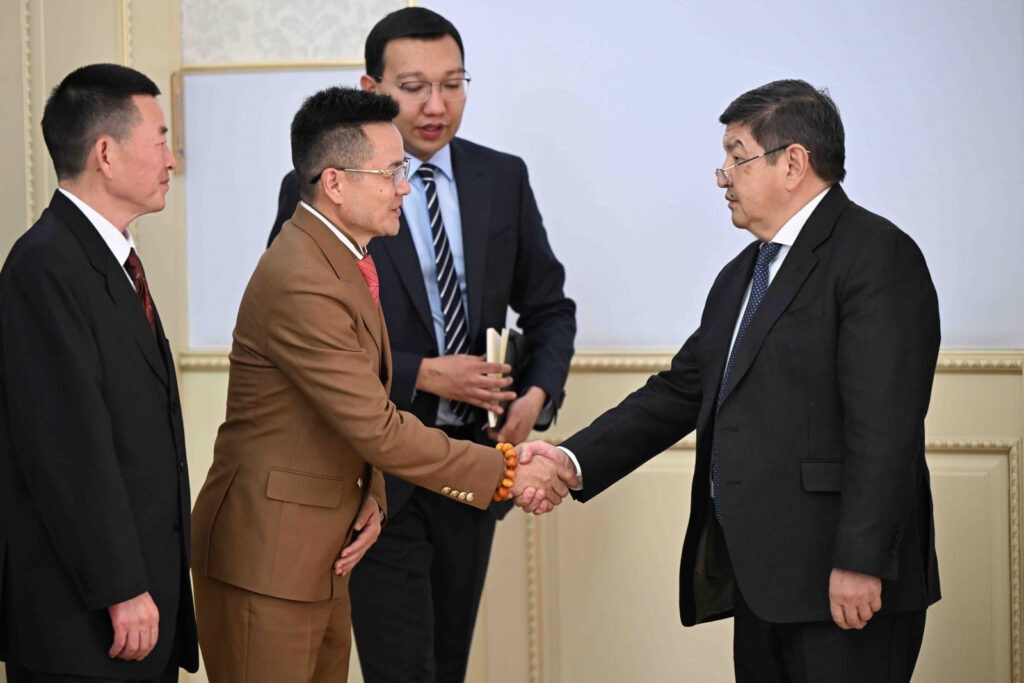
On March 6th, the Chairman of the Cabinet of Ministers of the Kyrgyz Republic, Akylbek Japarov and leadership of the Chinese company Sichuan Hongxinde Equity Investment Fund Management Co. Ltd, met in Bishkek to discuss the establishment of the Post Bank in Kyrgyzstan. In August 2023, a Memorandum of Cooperation was signed by the open joint-stock company Kyrgyz Pochtasy (Kyrgyz Post) and the Chinese company, followed in January 2024 by both parties signing a framework agreement on the joint investment project. The opening of the Post Bank will allow for the modernization of facilities owned by Kyrgyz Pochtasy in tandem with the construction of new facilities. The project includes the introduction of automated and digitalized processing for businesses as well as the creation of socially-oriented multifunctional service centers for both the public and entrepreneurs.

Global Environment Facility to Aid Ecosystem Restoration in Central Asian Countries

The Global Environment Facility (GEF) Trust Fund will provide almost $5.4m to Tajikistan, Turkmenistan and Uzbekistan to support their efforts to strengthen integrated water resources management in the Amu Darya, Zarafshan and Panj river basins. This funding is part of the Central Asia Water-Land Linkages (CAWLN) program, implemented by the United Nations (UN) Food and Agriculture Organization (FAO) and supported by the GEF Trust Fund. Under this initiative, GEF will provide financing for projects totaling over $26m across Central Asia. The project will run until August 2025. The financing will be used to restore 5,350 hectares of land and ecosystems, and also to introduce improved cultivation practices on 1.3 million hectares of land. It also aims to reduce greenhouse gas emissions by over 11 million tons, and improve co-management of shared ecosystems. The program is projected to improve the lives of 487,000 people. Central Asia's complex river systems are the main sources of water for the region's 60 million people, agriculture, and energy production. They also support diverse ecosystems and livelihoods in these countries. However, unsustainable water use and soil degradation have led to water scarcity and upset the ecological balance of the region. The program aimed at addressing these negative impacts consists of seven projects, including individual projects in Kazakhstan, Kyrgyzstan, Turkmenistan and Uzbekistan. They aim to improve agriculture and natural resource management by addressing issues such as tree felling, land degradation and loss of biodiversity. In addition, there is a regional project to coordinate efforts and share knowledge across basins. Although there is no separate program for Tajikistan, the country will be involved in projects on ecosystem restoration and sustainable agriculture. The Central Asia Water and Land Resources Complex Program, recently approved by the GEF council and overseen by FAO, will provide $26m (with co-financing from the World Bank of $335.5m) to restore the ecosystems of the Amu Darya and Syr Darya river basins. It will also aim to improve water security, resilience and livelihoods of rural communities in Kazakhstan, Kyrgyzstan, Tajikistan, Turkmenistan and Uzbekistan. Since 1994 Uzbekistan has participated in the implementation of more than 50 GEF projects at the national, regional and international level.

Plastic Bags, Utensils to Be Met With Fines in Kyrgyzstan’s Issyk-Kul Basin

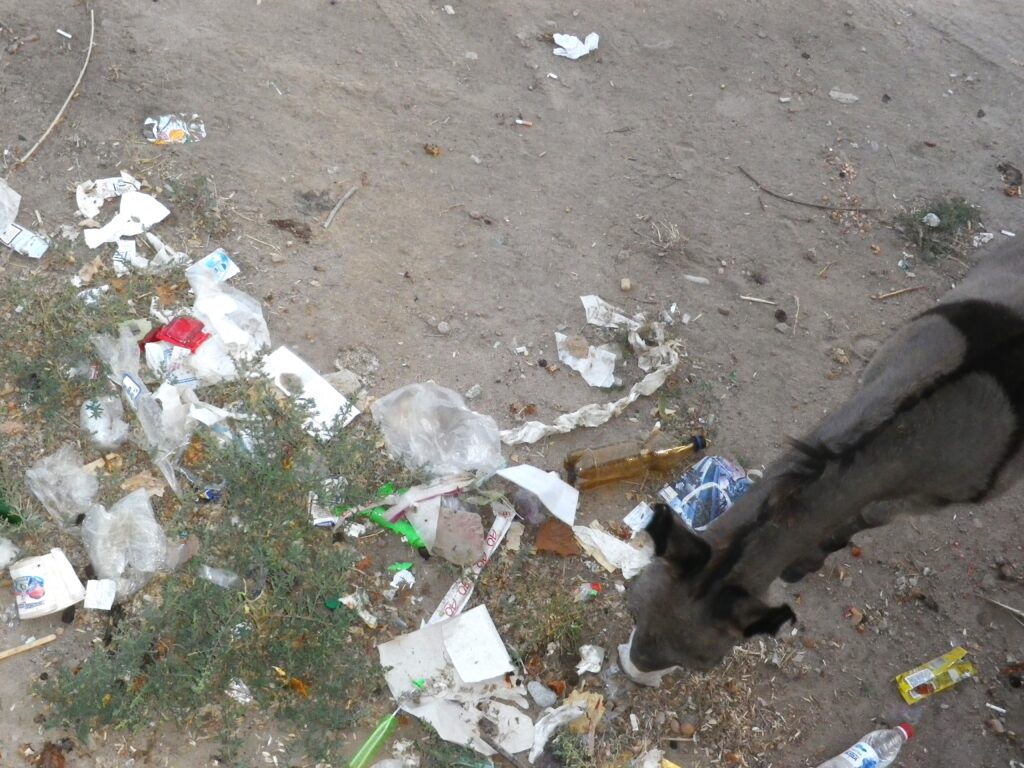
A law imposing fines on the import and sale of plastic bags and utensils is aimed at reducing the harmful effects of polymeric materials on health and the environment in the Kyrgyz Republic, according to the press service of the Ministry of Natural Resources, Ecology and Technical Supervision of Kyrgyzstan. The ban will take effect in the resort and recreational area of Issyk-Kul, as well as in reserves and natural parks of Kyrgyzstan. The ban was signed by President Japarov last year, since when deputies and the Ministry of Natural Resources of have been working on finalizing its details. One sticking point is that the authorities still can't decide whether to ban all plastic or to make an exception for some products. Shashlyk vendor, Issyk-Kul; Photo: TCA "The list of plastic products banned for circulation includes all kinds of disposable plastic utensils, disposable plastic packaging for food, plastic bottles, disposable plastic packaging for eggs, plastic coffee capsules, [and plastic] bags for food," the law states. But, as the Ministry of Natural Resources notes, the law is still being amended and there is a lack of clarity. Meanwhile, food vendors in the Issyk-Kul region say that not all citizens are ready to give up plastic bags and bottles. Therefore, while large stores in Issyk-Kul have stopped selling disposable tableware and replaced them with paper products and Tetra Pak substitutes, the law is poorly enforced in markets and smaller outlets. Lake Issyk-Kul; Photo: TCA According to the Ministry of Natural Resources, Ecology and Technical Supervision, the Supervision Service has not imposed a single fine so far, with only warnings being issued. However, they say that as soon as all of the controversial issues have considered, sellers and producers will be fined. So far, the law applies only to sellers and manufacturers of plastic products. Private individuals can use bags, bottles and disposable tableware. In January of this year, the Issyk-Kul Region became the first in the country where a ban on the circulation of plastic was introduced. From 2027, the law will be expanded to ban the use of plastic containers throughout the country. Businesses are not satisfied, however, complaining that their opinion was not taken into account in drafting the law. In their opinion, it would have been better to prescribe economic incentives for businesses. Currently, they argue, all soft drinks and vegetable oils are bottled in plastic bottles, and it's difficult to find replacements for them. In addition, Kyrgyzstan does not yet have large production facilities for alternative containers such as paperboard-and-foil Tetra Paks or glass bottles. Most plastic goods are imported into Kyrgyzstan from abroad, mainly from countries which are not planning to give up disposable plastic containers and are only increasing their production. Meanwhile, Kyrgyzstan's environmentalists have long been sounding the alarm. The biggest danger to the country's ecology is plastic bottles and cellophane bags, which can be scattered by the wind over a large area. For example, the problem of toxic plastic pollution is particularly acute in...

Kyrgyzstan’s Toktogul Reservoir May Hit “Dead” Level; Blackouts Possible

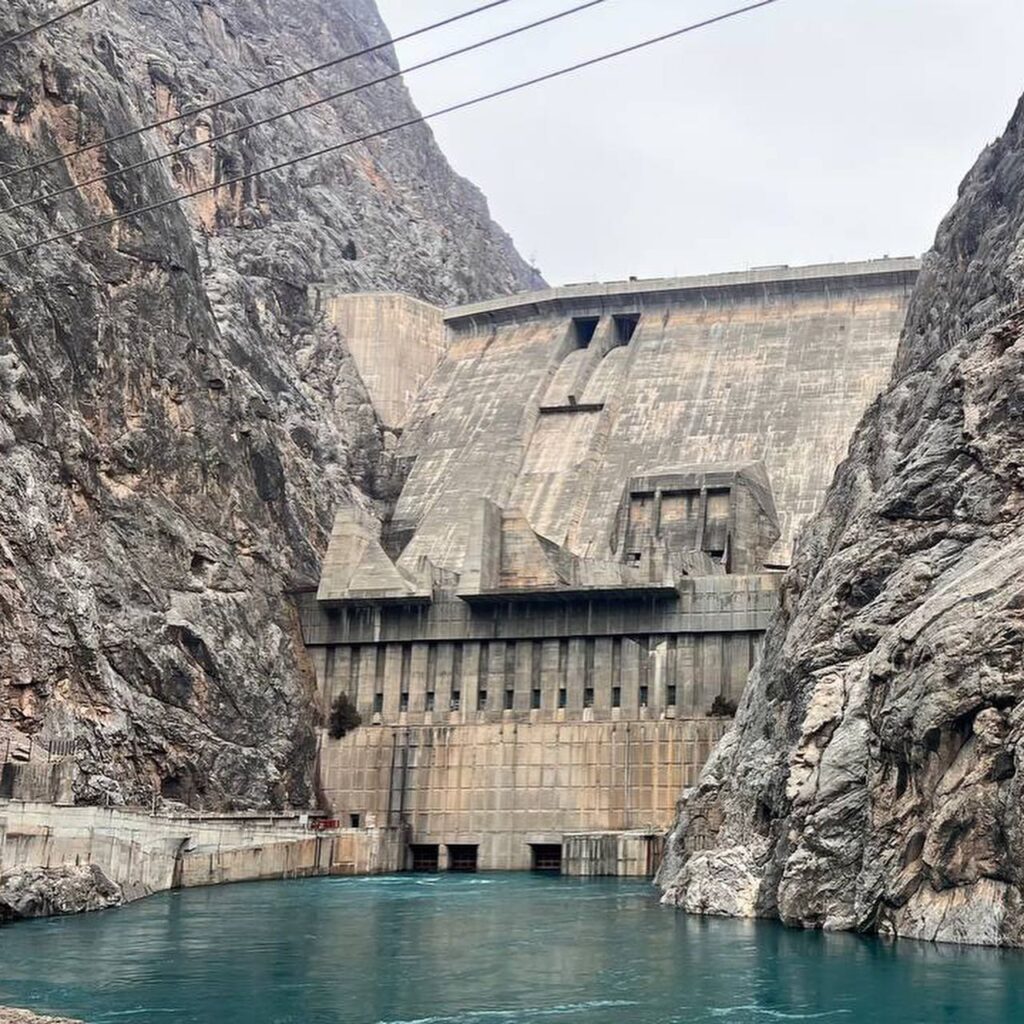
Kyrgyzstan's Energy Ministry has said it will limit electricity consumption "by force" as water in the country's main reservoir becomes increasingly scarce. In addition, major overhauls of the country's main energy facilities are planned for this year, which will also affect power output and consumption. According to official data, the volume of water in the Toktogul Reservoir currently stands at 7.7 billion cubic meters, versus a normal level of 17.3 billion cubic meters. If the water volume decreases by another two billion cubic meters, the Toktogul Hydroelectric Power Plant (HPP) will cease to produce power. "This is a deteriorating indicator. Because of high consumption, the system automation of load limitation is working. This year, due to [demand] imbalance, it is working in the evening peak hours. Therefore, in some areas there may be blackouts. The norm for March is 54 million kilowatt-hours per day, but we are already exceeding this mark. If this rate continues, there is a threat that we will reach the level of "dead water" in the Toktogul Reservoir," said Deputy Energy Minister Talaibek Baigaziyev. The Toktogul HPP cascade includes two hydroelectric power plants: the 1,200 megawatt (MW) Toktogul HPP and the 800MW Kurpsay HPP. Toktogul HPP is the largest plant in Kyrgyzstan, generating 40% of the country's electricity. Starting from March 5th, one of the units of the Toktogul HPP and one units of the Uch-Korgon HPP, located on the Naryn River, will be sent for repair and refurbishment. The Uch-Korgon HPP was commissioned in 1962, and has not had an equipment update since then. According to the Ministry of Energy, the equipment and hydraulic structures of this station are thoroughly outdated and in poor condition. "In such a situation, Kyrgyzstan's energy system will face a power shortage of 290 MW," the Energy Ministry said. Kyrgyzstan is being assisted in repairing the hydropower plants by the Asian Development Bank, which has allocated more than $157 million in loans and grants. It's expected that both hydroelectric units will be repaired by the end of 2024. Just last month an accident occurred at the main thermal power plant of Bishkek, which is also one of the most powerful generating facilities in the country. While the breakdown was remedied reasonably quickly, generation of electricity at the combined heat-power plant (CHPP) was severely curtailed. The authorities have scheduled a major overhaul of the Bishkek CHPP for May-June this year. Regarding the work, engineers released a statement urging consumers to "be careful with electricity and not to turn on several energy-intensive appliances at the same time, especially during peak hours from 06:00 to 09:00 in the morning, as well as from 18:00 to 21:00 in the evening." Due to extremely cold weather and the accident at the CHPP, many people are using more electricity to heat their homes, resulting in increased consumption to 70 million kilowatt-hours per day from a previous level of 54 million.

Kyrgyz Government Speaks About Energy, Transport And Mining

A group of World Bank representatives has visited Kyrgyzstan's presidential office building in Bishkek, where they met with the country's president Sadyr Japarov, followed by a meeting with the head of the Kyrgyz government, Akylbek Japarov. Both meetings discussed economic projects in Kyrgyzstan, as well as prospects for cooperation between the republic and the World Bank. "Over the past two years, high rates of economic growth have been achieved. In 2022 -- 9 percent, in 2023 -- 6.2 percent. These are the highest rates in the last 10 years. Last year, Kyrgyzstan's GDP reached [1.229 trillion som] ($13.7bn) for the first time in history," Sadyr Japarov commented, adding that developing green technologies remains an important task for Kyrgyzstan against the backdrop of global climate change. President Japarov expressed confidence that the World Bank will retain a leading role in promoting the construction of the large hydroelectric power plant (HPP) Kambarata-1 on the Naryn River -- and will help attract sponsors to this project. When completed it will be one of the largest power plants in Central Asia. The World Bank's executive director Dominique Favre assured that his staff , together with Kyrgyz specialists, are preparing an updated version of the feasibility study for the construction of Kambarata-1. The World Bank has agreed to allocate $5m for this study. The Kyrgyz side briefed the World Bank delegates on a major transportation project in Kyrgyzstan -- the construction of the China-Kyrgyzstan-Uzbekistan railroad, which is to begin this year. Mr Favre commented that the authorities attach special importance to the development of road infrastructure. The World Bank made it clear that they are more interested in hydropower, noting their readiness to help find investors for the Kambarata HPP. Kyrgyzstan needs to have a holistic approach to using water resources, the representatives stressed, and energy development is the only way to ensure green development throughout Central Asia. Besides Kambarata, Kyrgyzstan is now actively discussing the construction of a small nuclear power plant. Also recently, Kyrgyz representatives submitted for public discussion the abolition of a ban on developing uranium and thorium deposits in the country. The authorities believe that uranium and thorium mining and exports could become important components of the republic's economy.

Kyrgyzstan Resumes Construction Work on Pakistan Electricity Export Project

As the process of normalizing relations continues between Kyrgyzstan and Tajikistan, representatives of both sides have met in Bishkek to discuss the CASA-1000 (Central Asia-South Asia) power export project. According to Kyrgyzstan's Ministry of Energy, Kyrgyzstan has signed a joint declaration with Pakistan and Tajikistan to resume construction of high-voltage transmission lines in Kyrgyzstan, Tajikistan, Afghanistan and Pakistan, to export electricity to Pakistan. It is reported that construction work on the CASA-1000 project has been resumed in Afghanistan, where it was frozen after the Taliban came to power in 2021.  "This declaration thanks the World Bank for its prompt approval of the resumption of construction work on the CASA-1000 project in Afghanistan. It also reaffirms its readiness to fully support the implementation of the preconditions agreed with the World Bank Board for the resumption of construction in [Afghanistan]. This is a serious step forward in the region's desire for energy cooperation", said the Kyrgyz Ministry of Energy's press service. "Tajikistan is expected to supply 70 percent of the CASA-1000 project [electricity], and Kyrgyzstan the remaining 30 percent. [They'll supply] a total of 1,000-1,300 MW of electricity per year," Elzada Sargashkayeva, head of the public relations department of NENK (National Electricity Networks of Kyrgyzstan), told the Times of Central Asia. In Afghanistan, construction of the power lines was 60% complete, the agency said. Late last year, the World Bank allocated an additional $18.3m for Kyrgyzstan under CASA-1000 -- on top of the $216m previously allocated for the project. "For the Kyrgyz Republic, the CASA-1000 project provides for the construction of A/C power transmission lines (500 kV), with a length of about 456 kilometers. Currently, the project implementation is proceeding at an active pace: 1,243 [transmission towers] have already been installed (100 percent), work on suspension of wires on 287 kilometers of power lines has been completed (63 percent)," said World Bank Senior Energy Specialist Dmitry Glazkov. Work on the project was suspended when the Taliban came to power in Afghanistan -- and also due to the armed border conflict between Kyrgyzstan and Tajikistan, the international institute said. But the scope of work remains the same. The World Bank is allocating the additional support to bridge the funding gap caused by rising prices for goods and transportation after the Covid-19 pandemic and its ensuing broad economic crisis. The money will be given to Kyrgyzstan in the form of an interest-free loan for 50 years, with a 10-year grace period. The project's target completion time is March 2025. According to the World Bank, Central Asia has many renewable energy sources, and is strategically positioned to develop regional trade in electricity, the exchange of which is still limited. "In Kyrgyzstan and Tajikistan, hydropower plants generate more than 80-90 percent of electricity, but these countries use less than five percent of their hydropower potential, which is several times the combined demand of the entire region. At the same time, 90 percent of the energy needs of Uzbekistan, Turkmenistan and Kazakhstan are met by fossil fuels,...