• KGS/USD = 0.01144 0%
  • KZT/USD = 0.00210 0%
  • TJS/USD = 0.10617 1.05%
  • UZS/USD = 0.00008 0%
  • TMT/USD = 0.28490 0%
  • KGS/USD = 0.01144 0%
  • KZT/USD = 0.00210 0%
  • TJS/USD = 0.10617 1.05%
  • UZS/USD = 0.00008 0%
  • TMT/USD = 0.28490 0%
  • KGS/USD = 0.01144 0%
  • KZT/USD = 0.00210 0%
  • TJS/USD = 0.10617 1.05%
  • UZS/USD = 0.00008 0%
  • TMT/USD = 0.28490 0%
  • KGS/USD = 0.01144 0%
  • KZT/USD = 0.00210 0%
  • TJS/USD = 0.10617 1.05%
  • UZS/USD = 0.00008 0%
  • TMT/USD = 0.28490 0%
  • KGS/USD = 0.01144 0%
  • KZT/USD = 0.00210 0%
  • TJS/USD = 0.10617 1.05%
  • UZS/USD = 0.00008 0%
  • TMT/USD = 0.28490 0%
  • KGS/USD = 0.01144 0%
  • KZT/USD = 0.00210 0%
  • TJS/USD = 0.10617 1.05%
  • UZS/USD = 0.00008 0%
  • TMT/USD = 0.28490 0%
  • KGS/USD = 0.01144 0%
  • KZT/USD = 0.00210 0%
  • TJS/USD = 0.10617 1.05%
  • UZS/USD = 0.00008 0%
  • TMT/USD = 0.28490 0%
  • KGS/USD = 0.01144 0%
  • KZT/USD = 0.00210 0%
  • TJS/USD = 0.10617 1.05%
  • UZS/USD = 0.00008 0%
  • TMT/USD = 0.28490 0%

Viewing results 625 - 630 of 940

Kyrgyzstan Becomes an Industrial Producer of Black Caviar

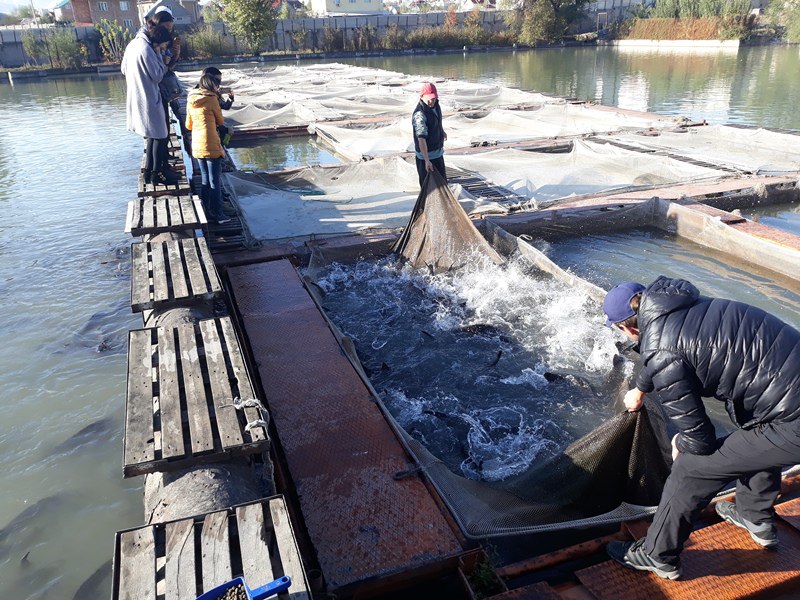
Until recently Kyrgyzstan has not produced or exported black caviar -- but by the end of 2024 the republic will have made several tons of it. Today Kyrgyzstan is breeding different species of sturgeon fish, which produce black caviar. Female fish purchased 4-5 years ago have now reached sexual maturity, and can produce a high volume of black caviar. Fish farm owners believe it is much cheaper to produce caviar in Kyrgyzstan than in Kazakhstan or Russia because of the better climatic conditions. "Sturgeon [reach maturity] in 4-5 years in our country, while in Russia it takes 8-10 years," the Kyrgyz fisheries association commented. One of Kyrgyzstan's fish companies said that as of a week ago, the country was not on the world's black caviar production lists. But today they are already harvesting caviar using the so-called 'lifetime method'. That means the caviar is simply squeezed out of a live fish. Therefore, from one fish it's possible to harvest caviar several times over the fish's lifetime. According to the producers, such caviar is usually larger in size and discernible by taste. "At the moment we are not talking about dozens, but hundreds of kilograms of caviar. By the end of 2024, tons of products will be produced, which will soon be available for sale on the shelves of domestic stores. At the moment, work is underway to produce cans and stickers," said Kyrgyz meat company ichthyologist Alexander Dytynyak. Meanwhile, black caviar exports from Kyrgyzstan to Russia have already begun. According to Russian Customs Service data, black caviar from Kyrgyzstan was not supplied to the Russian market at all until 2022, when 1.7 tons of it were sent. Experts from the food oversight agency Rosselkhoznadzor suspect that the caviar supplied to Russia is not actually produced in Kyrgyzstan, but is re-exported from Europe. To verify these speculations, the Russian inspection body inspected Kyrgyz fish farms last year. However, not all enterprises agreed to let Russian specialists in. "The refusal to participate in the inspection confirms the validity of Rosselkhoznadzor's claims and the possibility of supplying products from third countries under the guise of Kyrgyz products," the Russian agency reported. Last year, representatives of the European Union (EU) also noted the growth of caviar exports from Europe to Kyrgyzstan. According to them, after the introduction of economic sanctions against Russia, exports of the delicacy from Europe to Kyrgyzstan increased many times over.
Rosatom Looks to Promote Small-Scale Nuclear Power in Central Asia

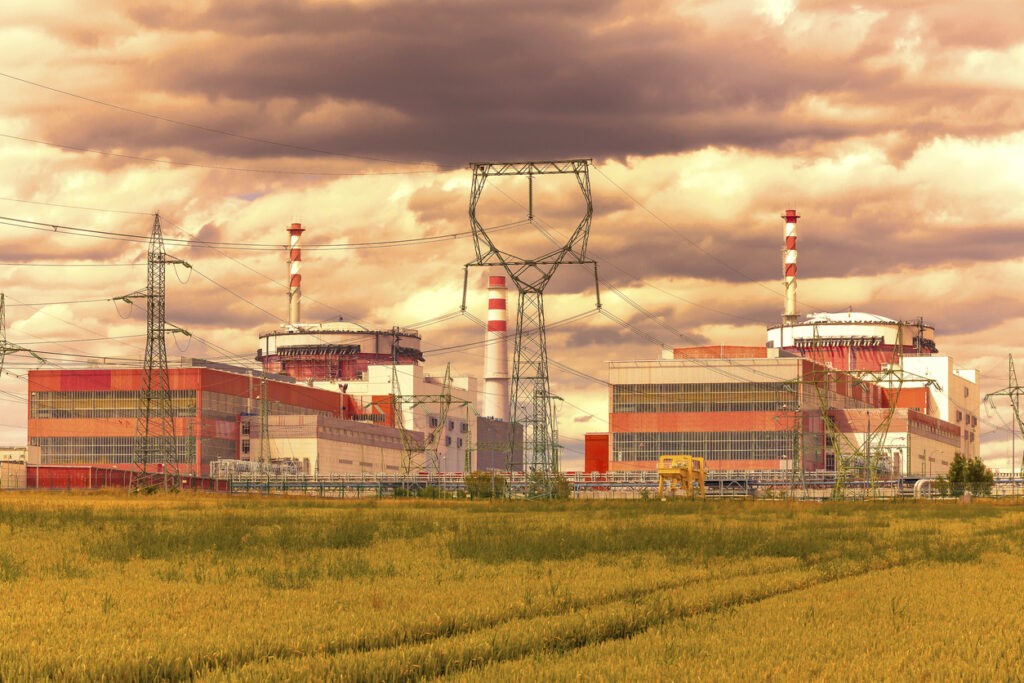
The Russian state corporation Rosatom is discussing the construction of small-capacity nuclear power plants (SCNPPs) with Kyrgyzstan, Uzbekistan, Myanmar and some island nations in East Asia, according to Rosatom's general director Aleksey Likhachev. According to him, demand for small-scale nuclear plants is increasing globally, and, according to Rosatom analysis, in the next 10-15 years up to 30-40 GW of small-capacity reactors will be commissioned. The company is now discussing joint projects on SCNPP with Norilsk Nickel, Gazprom, Lukoil and Russian Platinum. Last December Rosatom and the Mongolian company Mon-Atom signed a memorandum on the construction of a low-capacity nuclear power plant in Mongolia. In early 2023 the parties signed a memorandum on cooperation in the field of peaceful atomic use, and development of a project for the Center for Nuclear Science and Technology. In Uzbekistan, the issue of joint construction of a nuclear plant with Russia has been under discussion since 2018. Under one agreement Rosatom will build two VVER-1200 units with a capacity of 1.2 GW each near Lake Tuzkan in the Jizzakh region. The nuclear plant's potential to compensate for energy shortages and to decarbonize the country's energy sector form a clear rationale for its construction. The project, which should take six years to build, is assessed as promising by both power engineers and environmentalists. Furthermore, considering that Uzbekistan is one of the world's five biggest producers of uranium, it should always be able to fully supply its nuclear reactors with fuel. Rosatom is proposing a "dry cooling tower" design for Uzbekistan -- a technically more complicated option, but, given the growing water shortage in Central Asia, increasingly relevant. South Korea's Hyundai has also expressed interest in building SCNPPs in Uzbekistan. Hyundai is proposing its latest modular reactors based on integrated systems (SMART), where high-pressure water is used for cooling. Such reactors, despite their small size, are capable of generating up to 110 MW of energy, and their compactness and mobility allow them to be installed in the remote mountainous terrain of Central Asia. In addition to Uzbekistan, Rosatom is considering building a nuclear power plant in neighboring Kyrgyzstan. Experts suggest installing two power units of 55 MW each. The corresponding memorandum was signed by Rosatom and Kyrgyzstan in January 2022 during the World Expo-2022 in the UAE. Experts believe that an SCNPP project could appear in Kyrgyzstan no earlier than 2028.

Chinese Company to Build an Automobile Plant in Kyrgyzstan

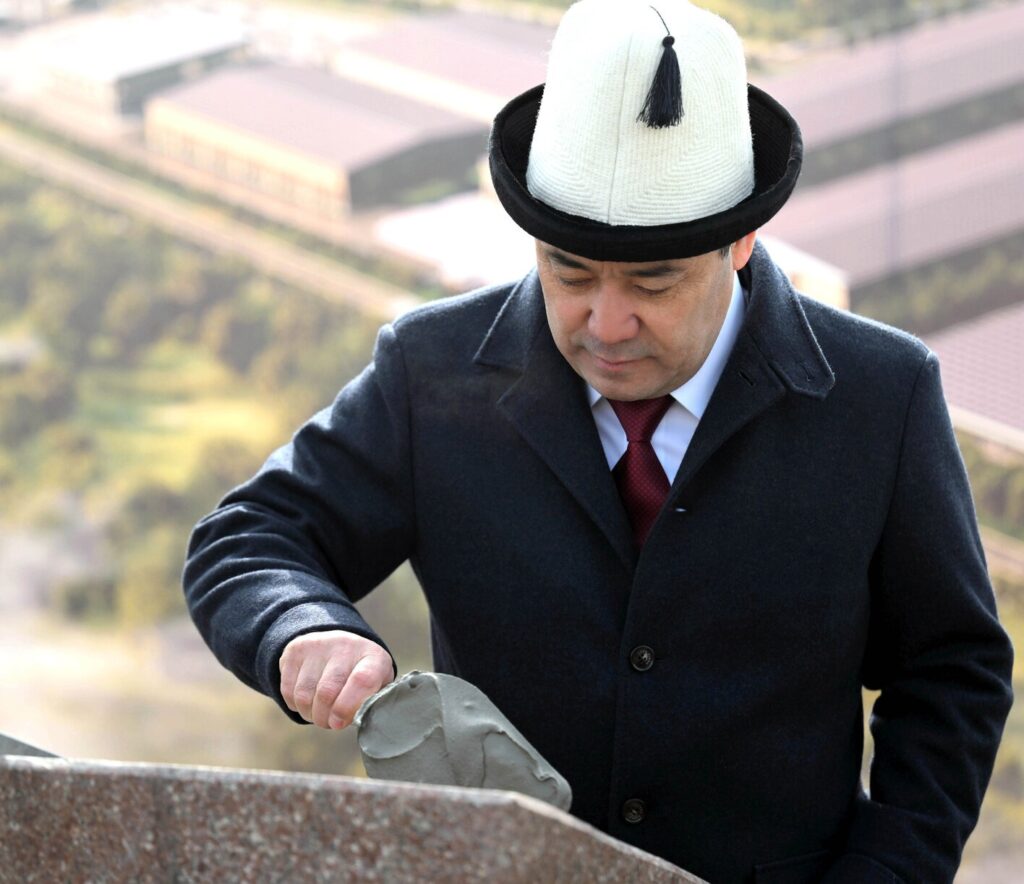
Kyrgyzstan’s President Sadyr Japarov attended a ceremony on February 28th to launch the construction of an automotive assembly plant in the country’s northern Chui region. The plant which will have the capacity to produce over 80,000 vehicles -electric, domestic, and commercial – is due to open in August this year. A joint venture between the Kyrgyz government, local enterprises, and the China Hubei Zhuoyue Group, the first stage of the project has attracted investment of $115 million. In his speech, President Japarov expressed the government’s confidence that the project will provide significant impetus to the development of the automotive industry in Kyrgyzstan and in turn, the creation of new jobs. The Chinese Ambassador to Kyrgyzstan Du Dewen attributed the instigation of the project to a strategic partnership between the two countries. Thanking the Kyrgyz president for his personal attention and support, she expressed her hope that this project will exemplify a deepening interaction between Kyrgyzstan and China.

Kyrgyzstan Makes Strides in Digital Technologies

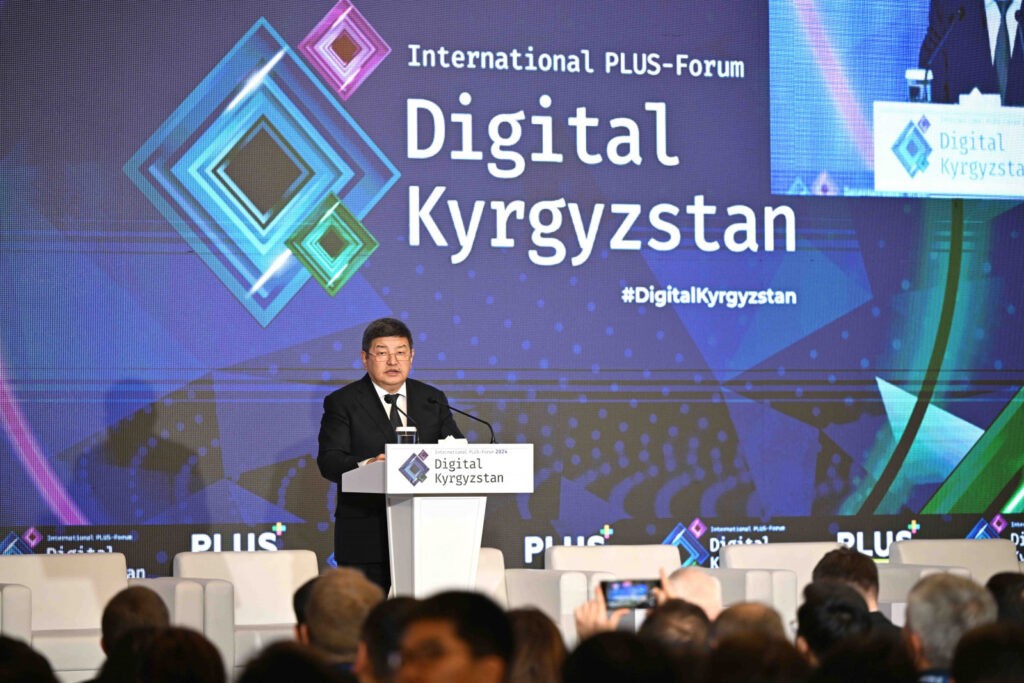
At the International PLUS-Forum ‘Digital Kyrgyzstan’ on 28th February, Akylbek Japarov, Chairman of the Cabinet of Ministers of the Kyrgyz Republic, announced that Kyrgyzstan is to create a Centre for Innovative Technologies. The centre for the advancement of developments in the field, including Artificial Intelligence and quantum computing, will be a non-governmental institution, financed through government subsidies and sponsorship. The prime minister emphasized the government’s commitment to introducing digital technologies and by expanding state provision, provide an open digital society in Kyrgyzstan. This year, the country is set to adopt its first-ever Digital Code. Online registration of motor vehicles, introduced back in September 2023, now allows the sale and purchase of cars through a mobile app. “It is now possible to create, re-register and liquidate a legal entity without leaving your home,” stated Mr Japarov, adding that online purchase and sale of real estate will be launched on March 1st. Touching upon the development of AI in Kyrgyzstan, he referenced the government’s purchase of a supercomputer which able to recognize and synthesize speech, is already being used to broadcast news in the Kyrgyz language on state radio channels.

More Central Asian Companies Added To Russia-Related Sanctions Lists

On February 23 the U.S. government published a new package of sanctions, which this time included not only Russian enterprises, but also companies from Kazakhstan, Uzbekistan and Kyrgyzstan. The Ministry of Trade and Integration (MTI) of Kazakhstan said that the U.S. sanctions lists and a number of European countries included Elem Group LLP and Da Group 22 LLP. Elem Group LLP is registered as a company engaged in wholesale trade in electronic and telecommunications equipment and components. The LLP's goods, such as microchips, analog-to-digital converters, and the like are known to be re-exported. Da Group 22 was founded in 2022 and is a small business. Officially, the organization is engaged in wholesale trade of electronic and telecommunication equipment and its related componentry, and tax deductions for the year on average exceed 173 million tenge (~$385,000). The MTI noted that the companies' entry into the restricted lists was known in advance. "Kazakh companies have previously [been in] dialogue with external partners and expressed their interest in continuing cooperation," said the MTI's press service. It's also been clear that neither Elem Group LLP nor Da Group 22 LLP carried out any import and/or export trade since 2023. Moreover, Elem Group LLP is currently in the process of liquidation. Representatives of the MTI specified that Kazakhstani companies do not apply any sanctions towards Russia, but also try to avoid using their resources to circumvent Western sanctions. A Kyrgyz privately held company, UKON, also found itself on the new U.S. sanctions list. According to the Ministry of Justice of Kyrgyzstan, UKON was registered in August 2022, and its sole founder and manager is Mehti Gafar-Zade (aka Mehti Fikret). This is not the first company from Kyrgyzstan to be blacklisted by the U.S. for helping Russia circumvent sanctions. Last year, the companies Weitmann Handeln Allianz LLC, Tro.Ya, RM Design and Development, GTME Technologies, Progress Leader and Cargoline also fell under sanctions. The State Committee of National Security of Kyrgyzstan stated that neither the state nor any state structures or companies intentionally contribute to the violation of compliance regimes stemming from sanctions imposed on Russia. The special service also noted that private companies on the sanctions lists may not have known who the end users of their products were -- and thus may have been unknowingly involved in the supply of sanctioned goods to Russia. Among others, a company from Uzbekistan, Mvizion, has fallen under the restrictions. In November 2023 it had already fallen under US sanctions, and in December the UK also blacklisted it. Mvizion characterizes its activity as wholesale of electronic and telecommunication equipment and spare parts. It was registered in June 2022 in the name of Igor Ivlev. Last summer, a number of European countries had already imposed sanctions on Uzbek companies Alfa Beta Creative and GFK Logistic Asia. Two months before that, the U.S. Treasury Department imposed restrictions against them for purchasing goods for the Russian defense industry in circumvention of sanctions. The new U.S. sanctions list, which was published on February...

More American Cars Are Being Imported to Kyrgyzstan Via Georgia

Imports of American cars to Kyrgyzstan reached record levels in January 2024, thanks in part to parallel imports from Georgia. Kyrgyzstan has become the leading recipient of Georgian exports for the first time, according to Georgia's National Statistics Service. Almost 17,000 cars worth $618m were imported to Kyrgyzstan. Georgia is a trading hub of sort for cars from the U.S. going to the countries of Central Asia and the Middle East, due to its geographical location, low tax rates and low cost of repair services. As a result, re-exports of cars take up nearly a fifth of Georgia's total exports. The majority of Kyrgyz used-car imports made in the U.S. are either brought directly from America or through Georgia. Since August 1, 2023, the Georgian authorities have imposed restrictions on the export and re-export of American cars to Russia. But, as noted by car exporters, now these cars will be imported to Russia through Kyrgyzstan and Kazakhstan. This ban has had little effect on used-car prices.