• KGS/USD = 0.01144 0%
  • KZT/USD = 0.00213 0%
  • TJS/USD = 0.10699 0%
  • UZS/USD = 0.00008 0%
  • TMT/USD = 0.28571 0%
  • KGS/USD = 0.01144 0%
  • KZT/USD = 0.00213 0%
  • TJS/USD = 0.10699 0%
  • UZS/USD = 0.00008 0%
  • TMT/USD = 0.28571 0%
  • KGS/USD = 0.01144 0%
  • KZT/USD = 0.00213 0%
  • TJS/USD = 0.10699 0%
  • UZS/USD = 0.00008 0%
  • TMT/USD = 0.28571 0%
  • KGS/USD = 0.01144 0%
  • KZT/USD = 0.00213 0%
  • TJS/USD = 0.10699 0%
  • UZS/USD = 0.00008 0%
  • TMT/USD = 0.28571 0%
  • KGS/USD = 0.01144 0%
  • KZT/USD = 0.00213 0%
  • TJS/USD = 0.10699 0%
  • UZS/USD = 0.00008 0%
  • TMT/USD = 0.28571 0%
  • KGS/USD = 0.01144 0%
  • KZT/USD = 0.00213 0%
  • TJS/USD = 0.10699 0%
  • UZS/USD = 0.00008 0%
  • TMT/USD = 0.28571 0%
  • KGS/USD = 0.01144 0%
  • KZT/USD = 0.00213 0%
  • TJS/USD = 0.10699 0%
  • UZS/USD = 0.00008 0%
  • TMT/USD = 0.28571 0%
  • KGS/USD = 0.01144 0%
  • KZT/USD = 0.00213 0%
  • TJS/USD = 0.10699 0%
  • UZS/USD = 0.00008 0%
  • TMT/USD = 0.28571 0%

Viewing results 211 - 216 of 994

Kyrgyzstan Launches Major Gold Exploration at Historic Makmal Deposit

Kyrgyzstan has initiated large-scale geological exploration at the historic Makmal gold deposit in the Jalal-Abad region, marking the first such effort in decades. The announcement was made by Kyrgyzaltyn, the state-owned enterprise responsible for gold and precious metals mining. According to the company, its subsidiary, Makmal Gold Company, has begun exploratory drilling in the southwestern section of the mine, an area previously untouched by mining operations. Soviet-era geological surveys suggest that this zone may hold up to four tons of gold reserves. "Extensive work is underway to extend the life of the Makmal mine," the Kyrgyzaltyn press service stated. "We plan to drill 19 wells at depths ranging from 140 to 400 meters. This will help us better define reserves and create additional employment opportunities." The exploration will proceed in two phases. In the first stage, geologists will drill a total of 3,275 meters. If results are favorable, a one-kilometer tunnel will be constructed to allow for precise reserve estimation, laying the groundwork for future industrial extraction. Kyrgyzaltyn also plans to evaluate other previously unexplored areas of the deposit. Historic and Economic Significance The Makmal deposit, one of Kyrgyzstan’s earliest gold mining sites, began industrial operations in 1986. Originally projected to last ten years, the discovery of new veins has kept the mine active to the present day. Currently, the mine contributes more than 95% of budget revenues for the Toguz-Toro district. Makmalzoloto, the operator, has also invested significantly in regional infrastructure, allocating 54 million Kyrgyz som (approximately $618,000) over the past three years, with an additional 50 million som ($572,000) directed toward charitable initiatives. The company employs more than 500 workers, nearly all of whom are local residents. While the annual output is modest, less than one ton, Makmal remains among the ten largest operational gold mines in the country. Kyrgyzstan has around 2,500 registered mineral deposits, of which 46 are classified as large.
Turkic States Push Digital Integration and Organic Farming in Agriculture Sector

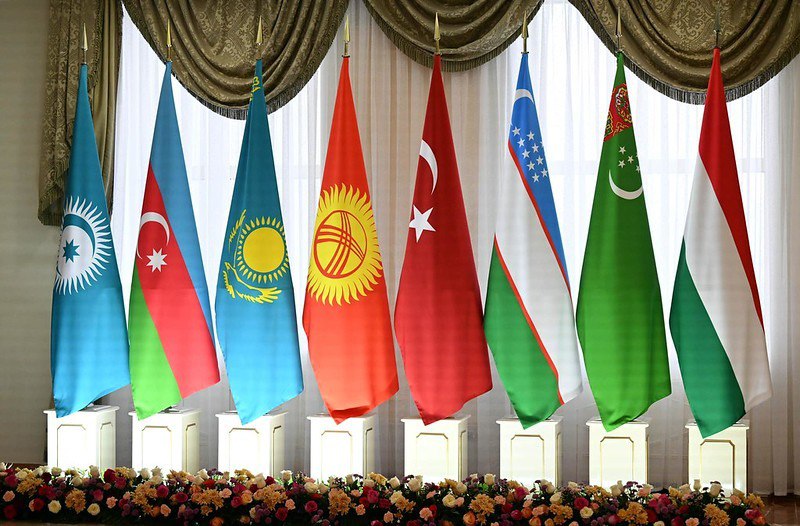
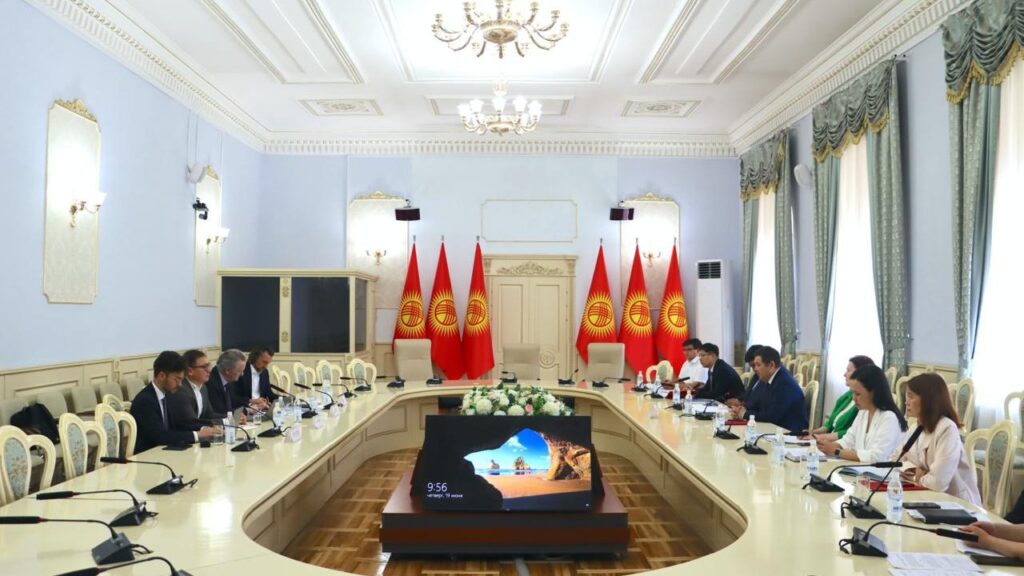
The fourth meeting of agriculture ministers from the Organization of Turkic States (OTS) took place on June 25 in Cholpon-Ata, in Kyrgyzstan’s Issyk-Kul region, with a strong focus on organic agriculture and digital transformation in the sector. Strengthening Regional Agricultural Cooperation Agriculture ministers from Azerbaijan, Kazakhstan, Kyrgyzstan, Turkey, Uzbekistan, and Hungary convened to reaffirm their shared commitment to sustainable agriculture and explore strategies for deepening regional cooperation. Central to the discussions was the promotion of organic farming as a tool for ensuring food security, preserving natural resources, and adapting to climate change. The ministers unanimously supported Kyrgyzstan’s proposal to designate Cholpon-Ata as the “Agricultural Capital of the OTS” for one year, beginning in September 2025. A major outcome of the meeting was the decision to establish a Digital Agro-Platform for OTS member states. This digital initiative is designed to simplify market access for farmers and agribusinesses, reduce trade and customs barriers, and increase transparency in agricultural supply chains. The platform aims to streamline trade within the region and bolster exports. The ministers also endorsed the promotion of a unified regional label, “OTS-Made”, for agricultural and food products originating from member countries, with the goal of strengthening brand identity and consumer trust. Kyrgyzstan’s Organic Agriculture Ambitions During the forum, Kyrgyzstan’s Deputy Chairman of the Cabinet of Ministers and Minister of Water Resources, Agriculture and Processing Industry, Bakyt Torobayev, announced a national organic agriculture development program for 2025-2029. The program sets ambitious targets: expanding certified organic farmland from the current 63,000 hectares (5.25% of arable land) to 200,000 hectares by 2029 and transitioning the Issyk-Kul and Naryn regions entirely to organic farming methods. In addition to increasing the land under organic cultivation, the government aims to raise the share of organic products to 25% of total agricultural output and increase the proportion of organic goods in agricultural exports to 25%. “Kyrgyz agricultural products are environmentally friendly, as they are produced in favorable agro-climatic conditions, on mountain pastures irrigated with clean glacial waters, and on fertile lands,” said Torobayev. By positioning organic agriculture as a regional priority and embracing digital tools, the OTS member countries are taking coordinated steps to modernize their agricultural sectors and ensure long-term food and environmental sustainability.

Kyrgyzstan Seeks Credit Rating Upgrade from Moody’s

Kyrgyzstan is aiming to secure an upgrade to its sovereign credit rating following a visit by a delegation from international ratings agency Moody’s, and meetings with top government officials, including Minister of Economy and Commerce Bakyt Sydykov. During the discussions, Sydykov presented Moody’s analysts with an overview of Kyrgyzstan’s socio-economic performance, ongoing structural reforms, and fiscal priorities. He formally requested that Moody’s consider raising the country’s credit rating. “The Kyrgyz Cabinet is consistently implementing policies aimed at maintaining macroeconomic stability, fostering a competitive environment, and enhancing social protections for our citizens,” Sydykov stated. He noted that these measures are improving the investment climate and strengthening the country's financial position. Moody’s delegation also held separate consultations with representatives from the Ministry of Finance, the National Bank, and other key state institutions. The agency’s analysts focused on Kyrgyzstan’s fiscal policy, public debt sustainability, long-term economic growth prospects, and its investment climate. Government officials said that comprehensive data on macroeconomic indicators and policy initiatives were shared during what they described as a “constructive” dialogue. The consultations are seen as an important step in Kyrgyzstan’s engagement with international financial institutions. Moody’s currently assigns Kyrgyzstan a long-term sovereign credit rating of B3 with a stable outlook. This rating places the country in the speculative category, implying elevated credit risk, but with no immediate threat of default. In 2023, Moody’s revised Kyrgyzstan’s outlook from “negative” to “stable.” The agency at the time cited concerns over the nationalization of the Kumtor gold mine and the potential impact of Western sanctions on Russia, Kyrgyzstan’s primary trading partner. However, the feared capital flight and deterioration in economic indicators did not materialize. Despite this, Moody’s has continued to flag key vulnerabilities, including high levels of state intervention in the economy, lingering risks linked to domestic political instability, and the unpredictability of some government decisions. The next sovereign rating update from Moody’s is expected later this year.

Kyrgyzstan to Introduce Mandatory QR Code Tax Payments

Beginning July 1, 2025, all taxes and insurance contributions in Kyrgyzstan must be paid exclusively using a unique payment code or QR code. The change was announced by the press service of the State Tax Service (GNS) of the Kyrgyz Republic. The new system will apply to taxes, non-tax revenues, and mandatory insurance contributions. Taxpayers will be able to generate a QR code through their account on the State Tax Service website or via a dedicated mobile application. Alternatively, QR codes can be obtained at Business Service Centers or local tax offices. Mirlan Rakhmanov, Deputy Chairman of the State Tax Service, emphasized that the shift to QR code payments is designed to enhance transparency and streamline the payment process. “Payment via QR code enables real-time crediting of funds to the state budget, eliminates manual entry errors at banks, accelerates service delivery, and reduces the need for queuing,” Rakhmanov stated. Banking sector representatives who attended consultations with tax officials expressed readiness to support the transition. The State Tax Service confirmed that banks are technically equipped to implement the new system without disruptions. The announcement comes as part of a broader package of reforms aimed at modernizing tax administration. The agency reported that it has intensified analytical efforts to combat tax evasion, particularly schemes involving the artificial fragmentation of businesses to qualify for tax benefits intended for small enterprises. “The State Tax Service possesses the digital tools necessary to monitor economic activity, including through data-sharing arrangements with other government agencies,” the statement added.

The Battle for Control Over Central Asia’s Digital Future

Central Asia is digitalizing quickly. Governments across the region have invested in smart cities, 5G, and AI-powered platforms. Kazakhstan ranks 24th in the world in global e-government indexes, and in Tashkent and Bishkek, young, tech-savvy populations are pushing for innovation. But such progress is not without risks. A new report from the German Marshall Fund (GMF), a Washington-based think tank, outlines how Central Asia is becoming ever more reliant on Chinese and Russian technology. These two countries, the report argues, are using digital tools not just to supply infrastructure but to shape how governments in the region manage data, surveillance, and speech. Beijing and Moscow’s tech exports act as snares, tying customers into their own economies. “Central Asian governments are aware of these challenges,” Dylan Welch, the author of the report and a China analyst at the GMF, told The Times of Central Asia. But he notes that it can be difficult to convince policymakers to prioritize the dangers of such overexposure. “For the national leaders, their imperative is to deliver economic growth because they have these young, dynamic populations that need jobs… if they don't deliver on that, then they're in for a long period of instability at home,” he said. This makes Chinese and Russian offers to develop their digital industries extremely tempting. An Entrenched Presence The report coincides with a flurry of Russian and Chinese engagement in the region. Over the weekend, Kazakhstan announced that between them, Beijing and Moscow will be responsible for delivering a new generation of nuclear reactors to the country, currently leaving French and Korean alternatives out in the cold. Then came this week’s visit of Chinese President Xi Jinping to Astana for a summit with the five Central Asian leaders. On the digital front, one notable announcement from this summit included a plan to develop an Artificial Intelligence Cooperation Center in Kyrgyzstan. China has used the term “Digital Silk Road” to describe its investments in Central Asia, and it has built much of the physical infrastructure behind the region’s digitization drive. For its part, Russia has exported its software, legal models and surveillance practices. Taken together, these systems are helping local governments tighten control over digital life. “This strategic integration makes it more difficult for regional states to diversify in the future, even though many continue to pursue multi-vector foreign policies aimed at balancing global partnerships,” Yunis Sharifli, Non-Resident Fellow at the China-Global South Project, told TCA. Where the Vulnerabilities Lie The report uses a “technology stack” framework to explain the problem. This framework looks at five layers: network infrastructure, data storage, consumer devices, digital platforms, and government policies. Across these layers, it argues, Central Asia is exposed to Chinese and Russian influence. Take Kazakhstan. It may be the most advanced digital economy in the region, but most of its internet traffic still passes through Russia. Telecom firms across the region are also required to install a Russian-made surveillance technology known as SORM (System for Operative Investigative Activities), which can intercept internet...

From Reform to Roadblocks: The Uneven Evolution of Motor Insurance in Central Asia

Motor insurance markets across Central Asia exhibit contrasting levels of development, from Kazakhstan’s expanding, digitized sector to Kyrgyzstan and Turkmenistan, where the system remains largely ineffective. Beyond compensating for damages, motor insurance is increasingly viewed as a tool for strengthening financial markets, promoting road safety, and easing the fiscal burden during emergencies. Kazakhstan Kazakhstan leads the region in insurance market volume. According to the Agency for Regulation and Development of the Financial Market (ARDFM), compulsory third-party motor insurance (OSGPO) premiums totaled more than KZT 106 billion ($205 million) in 2023, an 18% increase from the previous year. Since 2019, Kazakhstan has operated an electronic OSGPO registration system, streamlining policy purchases and reducing fraud. Integration with the Ministry of Internal Affairs databases now enables more effective monitoring of compliance. In April 2025, the country introduced a revised bonus-malus system with 18 risk classes, ranging from M2 (highest risk, coefficient 3.5) to Class 13 (lowest risk, coefficient 0.5). New drivers are assigned Class A with a coefficient of 1.8. The updated system accounts for accident history, traffic violations, and the duration of accident-free driving. Despite this progress, voluntary comprehensive insurance (CASCO) remains underutilized; fewer than 5% of car owners hold such policies. Barriers include high costs, limited public understanding, and the persistent mistrust of insurers. Nevertheless, demand for CASCO is growing amid rising accident rates and vehicle costs. Once considered a luxury for owners of new cars, CASCO is increasingly popular among middle-income drivers, particularly those buying vehicles on credit or lease. According to Ranking.kz, CASCO premiums reached KZT 13.4 billion ($26 million) in January-February 2025, slightly below the same period in 2024 ($29 million) but still well above pre-pandemic levels. CASCO now covers a broad range of risks, including accidents, theft, vandalism, fire, and natural disasters. For many Kazakhstani drivers, comprehensive coverage is becoming a central part of their financial strategy rather than a discretionary purchase. Kyrgyzstan In Kyrgyzstan, however, the motor insurance system is largely dormant. Although a compulsory insurance law was passed in 2015, only 8-10% of the vehicle fleet is insured. The absence of a unified digital platform, weak interagency coordination, and low public confidence hinder progress. The authorities intend to relaunch reforms in 2025, focusing on digital integration between the Ministry of Internal Affairs and the National Bank. Beginning July 1, 2025, fines will be imposed on uninsured drivers: 3,000 KGS (around $35) for individuals and 13,000 KGS (about $150) for foreign nationals and legal entities. The new penalties are expected to promote compliance and foster a stronger insurance culture. Uzbekistan Uzbekistan, in contrast, has made substantial strides since 2019. Restrictions on foreign insurers have been lifted, and the Insurance Market Development Agency has spearheaded a digital transformation of the sector. In 2023, motor insurance premiums surpassed 250 billion som, largely from OSGPO policies. The government has expanded policy coverage and supports online issuance to increase accessibility and competition. As of September 1, 2024, all compulsory motor insurance policies will be digitized and issued through a centralized...