• KGS/USD = 0.01144 0%
  • KZT/USD = 0.00212 0%
  • TJS/USD = 0.10456 0%
  • UZS/USD = 0.00008 0%
  • TMT/USD = 0.28490 0%
  • KGS/USD = 0.01144 0%
  • KZT/USD = 0.00212 0%
  • TJS/USD = 0.10456 0%
  • UZS/USD = 0.00008 0%
  • TMT/USD = 0.28490 0%
  • KGS/USD = 0.01144 0%
  • KZT/USD = 0.00212 0%
  • TJS/USD = 0.10456 0%
  • UZS/USD = 0.00008 0%
  • TMT/USD = 0.28490 0%
  • KGS/USD = 0.01144 0%
  • KZT/USD = 0.00212 0%
  • TJS/USD = 0.10456 0%
  • UZS/USD = 0.00008 0%
  • TMT/USD = 0.28490 0%
  • KGS/USD = 0.01144 0%
  • KZT/USD = 0.00212 0%
  • TJS/USD = 0.10456 0%
  • UZS/USD = 0.00008 0%
  • TMT/USD = 0.28490 0%
  • KGS/USD = 0.01144 0%
  • KZT/USD = 0.00212 0%
  • TJS/USD = 0.10456 0%
  • UZS/USD = 0.00008 0%
  • TMT/USD = 0.28490 0%
  • KGS/USD = 0.01144 0%
  • KZT/USD = 0.00212 0%
  • TJS/USD = 0.10456 0%
  • UZS/USD = 0.00008 0%
  • TMT/USD = 0.28490 0%
  • KGS/USD = 0.01144 0%
  • KZT/USD = 0.00212 0%
  • TJS/USD = 0.10456 0%
  • UZS/USD = 0.00008 0%
  • TMT/USD = 0.28490 0%

Viewing results 439 - 444 of 928

Central Asia to Forecast Energy Risks

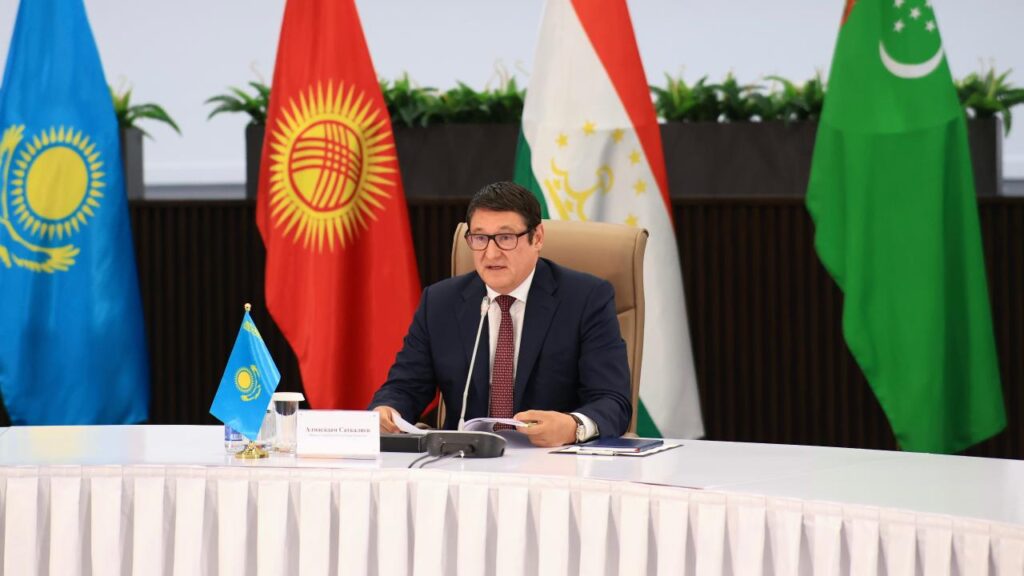
On August 6, Astana hosted the first meeting of energy ministers of Central Asian states, chaired by Kazakhstan’s Minister of Energy Almasadam Satkaliyev. Noting the considerable potential for developing energy cooperation between the five Central Asian countries, Minister Satkaliyev stated that today, the challenges faced by the Central Asian countries include global disruptions of the stability of energy supplies and fluctuations in oil and gas prices. "To ensure the reliability of energy supplies, it is necessary to develop mechanisms for forecasting and managing these challenges and to strengthen cooperation between our countries," ventured Satkaliyev. Calling on his colleagues to strengthen cooperation in energy trade, speed up low-carbon development, and move towards achieving carbon neutrality, the minister stressed, "An important factor in the development of regional cooperation is the comprehensive attraction of investments and the implementation of large joint technological projects in the energy sector to stimulate the development of modern energy infrastructure in Central Asian countries." Satkaliyev added that Kazakhstan is currently progressing the implementation of a large-scale project in the development and transmission of green energy with Azerbaijan and Uzbekistan, as well as continuing discussions on the planned construction of a central hydroelectric power plant, Kambarata HPP-1, with Kyrgyzstan and Uzbekistan. Following the meeting, the Central Asian energy ministers signed a communiqué, laying the foundation for further cooperation in all key energy areas between the countries.

Steel Highways: The State of Central Asia’s Railways

Railways in Central Asia have always played an important political and economic role, but amid the current geopolitical turbulence, they have become a crucial means of  transporting  goods from China to Europe and the Middle East, bypassing sanctioned Russia. But what is the state of  Central Asia's railway industry, and is it up to the new challenges? The history of rail transport in Central Asia dates back to the end of the 19th century. In 1874, a special commission of the Russian Empire recognized the need to construct a line from Orenburg to Tashkent. Later, however, strategic considerations forced a change of plan and to ensure a stable connection between the Turkestan and Caucasus regions, the first steel highway in Central Asia would be built to connect Tashkent with the eastern coast of the Caspian Sea. This was an active period of the so-called Great Game, when Russia and Great Britain competed in Central Asia. Since then, the geopolitical importance of railways in the region, which lacks access to oceans, has not decreased whatsoever. Indeed, amid armed conflicts in the Middle East and between Russia and Ukraine, railways have become even more important given their role in ensuring the movement of goods along the Trans-Caspian International Transport Route (TITR) and the International North-South Transport Corridor (INSTC). Against this backdrop, Kazakhstan's President Kassym-Jomart Tokayev has tasked the national railway company Kazakhstan Temir Zholy (KTZ) with leading the transformation of the country into a transport and logistics hub.   Kazakhstan: A story of steady development The length of Kazakhstan's mainline rail network is over 16,000 km, with over 800 stations and crossing points. The freight car fleet exceeds 120,000 units, while locomotives number more than 1,700. Kazakhstan’s railways account for 70% of freight traffic, and 60% of passenger traffic in the country. Just under 1% of the country’s population is employed in the rail industry. According to the KTZ's annual report in 2023, container transit rose 14% year-over-year to 1.282 million TEU (twenty-foot equivalent units), which drove a 30.6% year-on-year rise in operating income to KZT1.934 trillion, while net profit came in at KZT136.8 billion ($286.8 million). The volume of freight transported between Kazakhstan and China was also up 22% to 28 million tons. In addition, KTZ reported the completion of large-scale track repairs in 2023, with 1,443 km of railway track repaired, double the figure achieved in 2022. The start of large infrastructure projects was also noted. In particular, construction was launched of the Darbaza–Maktaaral and Bakhty–Ayagoz lines (with a third border crossing with China set to be opened in 2027), while construction of the bypass line around Almaty also commenced. Over 300 km of the second track was laid on the Dostyk-Moyynty railway section. Finally, a Kazakh transport and logistics terminal was opened in the Chinese dry port of Xi'an.   Uzbekistan: First high-speed rail in Central Asia O’zbekiston Temir Yo’llari (UTY), Uzbekistan's national rail carrier, was founded on November 7, 1994, taking over the lines of the Soviet-era Middle...

Kyrgyz Stock Exchange Continues to Grow

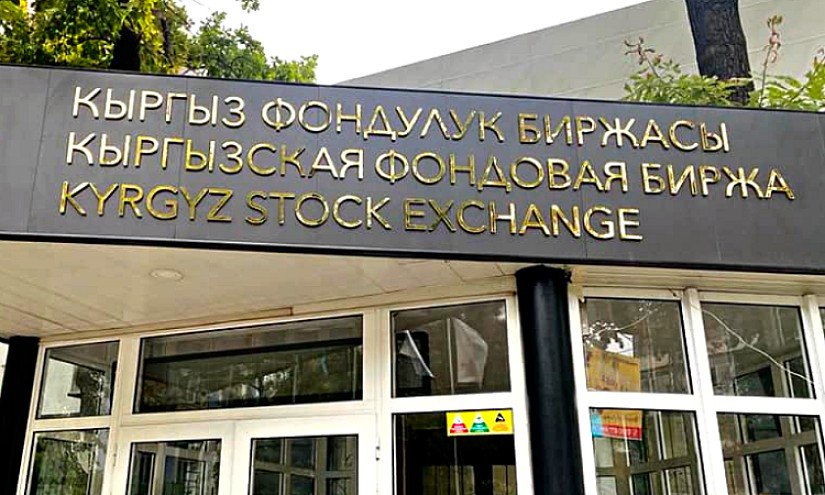
The Kyrgyz Stock Exchange (KSE) is the leader among the countries of the Eurasian Economic Union (Russia, Armenia, Kazakhstan, Kyrgyzstan, Belarus) in terms of trading volume growth. The volume of capitalization for the second quarter of 2024 amounted to $636 million. The indicator increased five times compared to the same period last year. In 2022 the exchange began trading in precious metals, and in 2023 the first trades in government securities took place. "The volumes in 2023 increased because there were very large transactions in the primary market. We hosted such companies as Aiyl Bank - more than 4.8 billion KGS ($56.4 million), State Mortgage Company - 3.8 billion KGS ($44.7 million), Entrepreneurship Development Fund - 503 million KGS ($5.9 million), and the National Electric Grid of Kyrgyzstan conducted a transaction for 5.3 billion KGS ($62.3 million). Banks and companies with state participation carried out additional capitalization,” KSE vice-president Aida Chodulova told The Times of Central Asia. According to Chodulova, all securities transactions (public and private) must now go through the stock exchange. "We are now introducing new software to make the system more modern and accessible. We are developing new areas: IPOs, digitalization, and the development of the commodities sector and the precious metals sector. We will also open a currency pairs trading and crypto exchange sector,” Chodulova said. "At the end of 2023, we held auctions and issued State Treasury Bonds with a two-year circulation term. They were issued in both the national currency and Russian rubles. Commercial banks in Kyrgyzstan and insurance companies participated in the trade. Russian Gazprombank bought some of the securities for Russian investors,” she added. Last year, KSE planned to issue “green” state treasury bonds with a five-year circulation term, with some of these securities to be sold to Russia. However, the project had to be suspended due to the international economic sanctions placed on Russia as a result of its invasion of Ukraine.

High Water in Kyrgyzstan’s Toktogul Reservoir Forecast to Boost Electricity Generation

On August 2, the volume of water in the reservoir of Kyrgyzstan's Toktogul hydroelectric power plant reached 11.922 billion cubic meters, which according to the plant's operator Electric Stations OJSC, is almost one billion cubic meters more than that recorded on August 1, 2023. Located on the Naryn River, which feeds the Syr Darya River that flows to Kazakhstan and Uzbekistan, Toktogul HPP is the largest power plant in Kyrgyzstan and generates some 40% of the country’s electricity. The Toktogul reservoir currently receives 840 cubic meters of water per second and releases 475 cubic meters per second. The released water is used to generate electricity and then flows to downstream countries where it is used for irrigation. The reservoir has a maximum capacity of 19.5 billion cubic meters, with an average volume is 17.3 billion cubic meters, and the "dead" level at which the power plant would stop operating is 5.5 billion cubic meters. As reported by 24.kg news agency, Electric Stations OJSC expects  the volume of water in the Toktogul reservoir to reach 12.5 billion cubic meters at the beginning of the next heating season (October 1, 2024) and at the end of  2024/25 season, fall to around  7.9 billion cubic meters. Toktogul HPP comprises four hydroelectric units with a total generating capacity of 1320 MW and on completion of the modernization of hydroelectric unit #1, later this year, the capacity will increase by 60 MW and reach 1380 MW. In recent years, because Kyrgyzstan has been unable to produce enough electricity to meet the country's growing demand, electricity has been imported from neighbouring states.  

Kyrgyzstan to Ban Plastic Bags

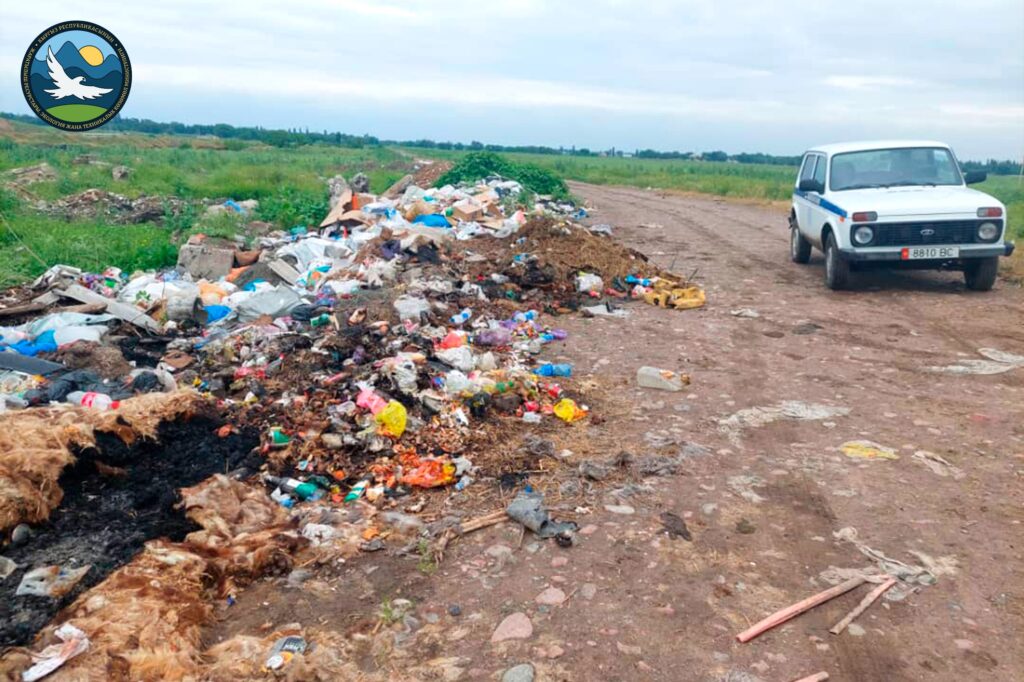
Following a ban of plastic bags in biosphere reserves and natural protected areas on June 1 2024, Kyrgyzstan is to prohibit their production, sale and distribution nationwide, from 2027 onwards. Regarding the move, the Ministry of Natural Resources of the Kyrgyz Republic stated: "Plastic and the pollution it causes, is detrimental to human health. Plastic enters the human body as micro- and nano-particles through food, packaging, water, and air. Plastic waste continues to pollute the environment at the disposal stage, and waste disposal workers suffer, especially from close contact with burning plastic." Asel Raimkulova, Deputy Minister of Natural Resources, Ecology and Technical Supervision of Kyrgyzstan, told the Times of Central Asia that whilst the use of plastic products which can be recycled within the country is under review and likely to continue, the ban on plastic bags throughout the country is absolute. Deputy ministers however, have opposed the use of plastic bottles but said that given the lack of alternatives available to Kyrgyz bottling companies, some exceptions will be made. According to eco-activists, Kyrgyzstan has some 80 plants to recycle plastic but since seven out of ten supermarket products are now fully or partially packaged in plastic, they do not have the capacity to process the ever-increasing volume of waste. "For example, in Kyrgyzstan, tetra paks—multi-layer juice or milk cartons that, at first glance, look like cardboard—are not recyclable. In addition to cardboard, such packaging contains a layer of aluminum and several layers of polyethylene. And separating them from each other is not easy,” stressed activists of the environmental movement Peshcom.

World Bank Supports Community-Driven Development in Kyrgyzstan

On July 31, the World Bank’s Board of Executive Directors approved $27 million for Kyrgyzstan's National Community Initiatives Project (NCIP). The project aims to improve access to socioeconomic infrastructure and increase economic opportunities at a local level, focusing on women and youth. Hugh Riddell, World Bank’s Country Manager for the Kyrgyz Republic, commented, “The National Community Initiatives Project builds on more than a decade of the Government’s successful community-driven development initiatives and aims to scale up, standardize, and deepen their impact. The project will also build the capacity of local governments to work effectively with communities on development priorities, ensuring a more prosperous future for all.” The project will be implemented through 2029 by Kyrgyzstan’s Community Development and Investment Agency. As part of the Village Climate-Resilient Infrastructure Investments component, the project will directly benefit rural populations in 40 Aiyl Aimaks (sub-districts), one per district across the country. Each selected sub-district will receive up to $450,000 for socioeconomic infrastructure identified through a participatory village needs assessment and decision-making process. Eligible infrastructure may include kindergartens, schools, health facilities, water supply systems, and other climate-adaptive investments such as renewable energy sources, energy-efficient street lighting, drip irrigation, and disaster preparedness. Within the Grants for Climate-Smart Local Economic Development and Livelihood Activities component, 15 competitively selected sub-districts will receive grants of $200,000 to $300,000 for local economic development. The objective is to enhance economic opportunities, enabling businesses to launch or expand while creating jobs for women, youth, and vulnerable groups. Economic sub-projects will target agricultural processing, handicrafts, eco-tourism, and green enterprises. The project will also finance comprehensive training for local self-government and communities in participatory needs assessment and planning; selection, management, and monitoring of village investments; climate change; and economic empowerment. The project will also look to engage women and youth in local planning and investment processes, ensuring their priorities for regional infrastructure and livelihood investments (such as medical facilities, schools, and kindergartens) are addressed, and providing tailored training to strengthen women’s leadership in social and economic spheres. Support will also be offered for women's entrepreneurship, the establishment of private childcare facilities, and targeted youth engagement opportunities.