
• KGS/USD = 0.01144 0%
  • KZT/USD = 0.00214 0%
  • TJS/USD = 0.10508 0%
  • UZS/USD = 0.00008 0%
  • TMT/USD = 0.28490 0%
  • KGS/USD = 0.01144 0%
  • KZT/USD = 0.00214 0%
  • TJS/USD = 0.10508 0%
  • UZS/USD = 0.00008 0%
  • TMT/USD = 0.28490 0%
  • KGS/USD = 0.01144 0%
  • KZT/USD = 0.00214 0%
  • TJS/USD = 0.10508 0%
  • UZS/USD = 0.00008 0%
  • TMT/USD = 0.28490 0%
  • KGS/USD = 0.01144 0%
  • KZT/USD = 0.00214 0%
  • TJS/USD = 0.10508 0%
  • UZS/USD = 0.00008 0%
  • TMT/USD = 0.28490 0%
  • KGS/USD = 0.01144 0%
  • KZT/USD = 0.00214 0%
  • TJS/USD = 0.10508 0%
  • UZS/USD = 0.00008 0%
  • TMT/USD = 0.28490 0%
  • KGS/USD = 0.01144 0%
  • KZT/USD = 0.00214 0%
  • TJS/USD = 0.10508 0%
  • UZS/USD = 0.00008 0%
  • TMT/USD = 0.28490 0%
  • KGS/USD = 0.01144 0%
  • KZT/USD = 0.00214 0%
  • TJS/USD = 0.10508 0%
  • UZS/USD = 0.00008 0%
  • TMT/USD = 0.28490 0%
  • KGS/USD = 0.01144 0%
  • KZT/USD = 0.00214 0%
  • TJS/USD = 0.10508 0%
  • UZS/USD = 0.00008 0%
  • TMT/USD = 0.28490 0%

Viewing results 433 - 438 of 940

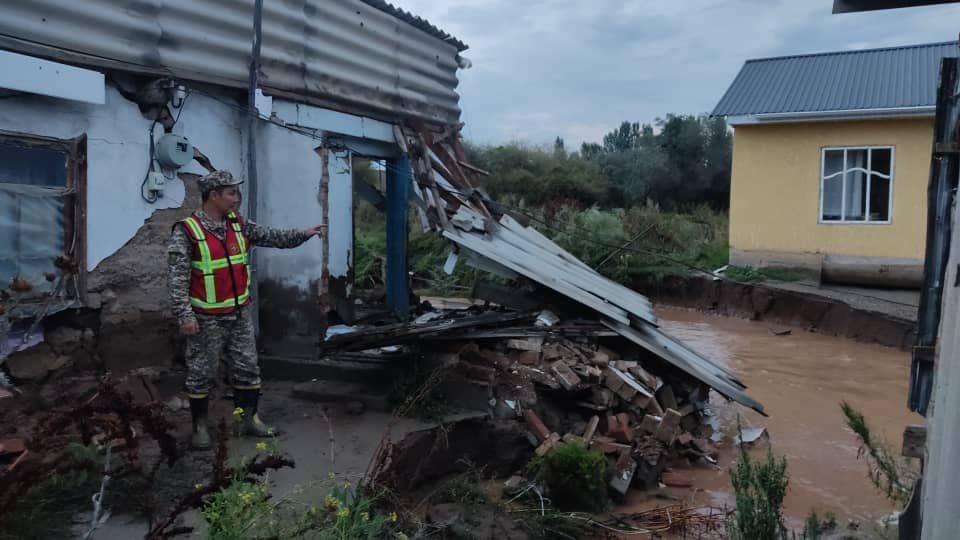
More Mudflows Flood Homes in Kyrgyzstan’s Issyk-Kul Region

Powerful mudslides caused by heavy rains are again causing damage in Kyrgyzstan's northern Issyk-Kul region. A state of emergency has been declared in three districts. The mudflows descended in several locations in the south and north of the Issyk-Kul region, flooding highways and mountain passes. In the town of Cholpon-Ata, water from the canal has reportedly flooded the streets. Several resorts and vacation homes have also been flooded, and there are power outages in the region. Eyewitnesses have reported that Lake Issyk-Kul has turned green. It is known that dozens of people have been evacuated from the flooded areas. Seven hundred fifty-five rescuers and military personnel are clearing up the damage, but heavy rains are still forecast for the coming days. Other parts of Kyrgyzstan, such as Naryn and Jalal-Abad in the center of the country, are also susceptible to mudflows. “We urge citizens to be vigilant and observe precautionary measures,” rescuers have appealed to citizens.

Kyrgyzstan Lacks Cement Amid Booming Construction

Kyrgyzstan is experiencing a cement shortage as new high-rise residential buildings and thousands of one- and two-story houses are being erected nationwide. This booming construction requires a large amount of cement, which has caused huge demand for the product. Local media quoted Syrgak Omorov, a representative of the Anti-monopoly Regulation Service, as saying that domestic producers are not capable of meeting the growing need. The Kant cement plant, the country’s largest cement producer, typically produces 600,000 tons of cement annually, but this year the production volume has already exceeded a million tons. According to Omorov, the Kant cement plant can produce up to 4,000 tons daily, but market demand is 5,000 tons. The official attributes the shortage to the unprecedented scale construction of housing and social facilities, such as schools. Earlier this month, the Chairman of the Cabinet of Ministers of the Kyrgyz Republic, Akylbek Japarov, announced that the number of new schools and residential buildings constructed in Kyrgyzstan has exceeded Soviet-era figures. Japarov cited data from the National Statistical Committee, saying that 1.560 million square meters of residential housing were built in Kyrgyzstan when it was part of the Soviet Union in 1990. In 2023, independent Kyrgyzstan constructed 1.587 million square meters of housing. The highest numbers of secondary schools were built in 1968 and 1987 — 50 in each of those years, while in 2023, Kyrgyzstan built 105 new schools. Last week, TCA reported that Kyrgyzstan is also suffering from a shortage of laborers, with the head of the construction agency in the Kyrgyz Republic stating that the construction industry alone urgently needs at least 10,000 workers.

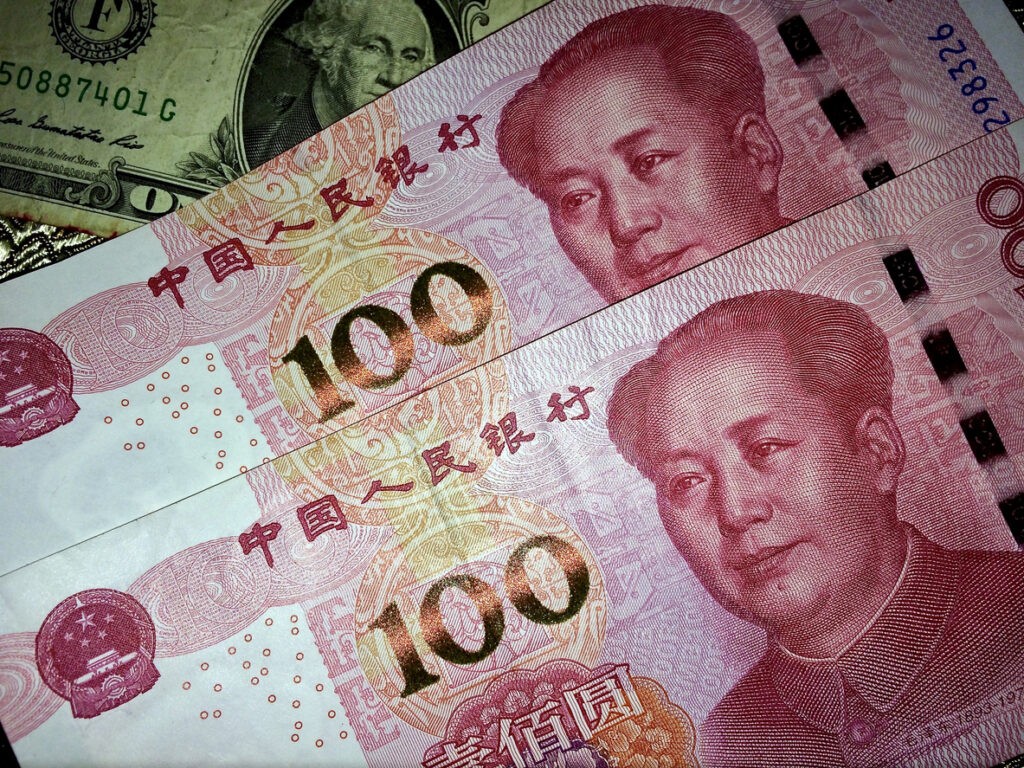
Chinese Yuan to Become Kyrgyzstan’s Fifth Official Currency

The National Bank of the Kyrgyz Republic has announced that from next month the Chinese yuan will be an official currency of Kyrgyzstan. The yuan will join the Kyrgyz sum, the U.S. dollar, the euro, and the Russian ruble as official currencies, and an official exchange rate will be set. This measure aims to facilitate trade transactions and improve economic ties with China, one of Kyrgyzstan's largest trading partners. Introducing the yuan into official circulation will also help stabilize the country's financial system amid global economic uncertainty and allow entrepreneurs and financial institutions to manage their currency risks better. Notably, this initiative is being implemented against the backdrop of the yuan's growing influence in international settlements and its emergence as a global reserve currency. It also opens up new opportunities for Kyrgyzstan to participate in Chinese investment projects, which could positively impact the development of infrastructure and other key sectors of the economy. The change will take effect from September 1, 2024. The Chinese yuan exchange rate to the Kyrgyz sum will be calculated based on the cross rate with the U.S. dollar. This method is based on data from the agencies such as Reuters and Bloomberg.

Kyrgyz Farmers Unite Into Cooperatives To Maximize Export Potential

This year, 47 new agricultural cooperatives appeared in Kyrgyzstan — a total of 741 associations. Experts say that merging into large farms will allow farmers to increase yields and the export potential of their products. In 2023, Kyrgyzstan exported more than 850,000 tons of agricultural products — vegetables, fruits, milk, and meat. More than 40% of these exports went to the countries of the Eurasian Economic Union (EAEU). However, to increase the export potential and the geography of supplies, it is necessary to move away from so-called "small-scale production." When farmers produce goods in small batches, experts believe the way out of this situation can be the cooperation of farms. "The issue of creating cooperatives is a sore point in Kyrgyzstan's farming sector. For over 10 years, we have been saying there is a problem — small-scale commodity production. According to official data, we have more than 460,000 farmers in the country, but, unfortunately, there is no volume of production," Rustam Baltalbayev, Executive Director of the Association of Agroindustrial Complex (AAC), told The Times of Central Asia. Baltabayev said an agricultural co-op is the most convenient form of doing business in agriculture. It solves the problem of wholesale supplies abroad. According to the AAK, agrarians in Kyrgyzstan's southern regions — producers of white rice and bell peppers — are actively joining agricultural cooperatives. "This mechanism, in my opinion, is the most profitable and convenient regarding agricultural development. It is only necessary to finalize the legal forms so that large holdings could join associations," he noted.

Why Kyrgyzstan and China Are Reporting Different Figures on Bilateral Trade

At a press conference in Bishkek, Azamat Jumabekov, a representative of Kyrgyzstan's Chamber of Commerce and Industry, explained the significant difference in Kyrgyzstan-China trade statistics reported by Kyrgyz and Chinese authorities. According to Jumabekov, this happens because significant parts of goods that arrive in Kyrgyzstan from China are intended for further transit to other countries. Still, the owners register their goods as exports to Kyrgyzstan; hence, the Chinese statistics are incorrect. For instance, according to the National Statistical Committee of Kyrgyzstan, the volume of Chinese goods imported to Kyrgyzstan in 2023 was $5.4 billion; the Chinese Customs Administration reported the figure as $19.7 billion. Kyrgyz statistics show that in the first half of this year, Kyrgyzstan imported $3.1 billion worth of Chinese goods, a 42.5% increase compared to the same period last year. According to the Chinese Customs Administration, in the first half of 2024, China exported goods worth $9.4 billion to Kyrgyzstan and imported $95.5 million. According to Chinese statistics, China's trade turnover with Central Asian countries increased by 11.3% in the first half of 2024 compared to the same period in 2023, reaching $44.32 billion. Trade with Kazakhstan increased by 19.4%, amounting to $21.7 billion. Trade with Uzbekistan increased by 2.5%, amounting to $6.25 billion. Trade with Tajikistan decreased by 14.2%, amounting to $1.81 billion. Trade with Turkmenistan decreased by 4.9%, amounting to $5.28 billion. During the first half of 2024, China's exports to Central Asian countries increased by 14.6% to $30.21 billion. Exports from Central Asia to China increased by 4.8% to $14.11 billion. Turkmenistan was the only exception, showing a positive balance in trade with China. Exports to China amounted to $4.82 billion (mainly Turkmen natural gas), while imports from China amounted to $460.2 million.

SCO Opens Foreign Exchange Alliance for Yuan, Tenge, and Ruble

The Shanghai Cooperation Organization (SCO) has instigated an Alliance of Currency Transactions to increase the share of settlements in national currencies—the Kazakh tenge, the Russian ruble, and the Chinese yuan—in mutual trade between SCO member states. The main goal of the initiative, launched in Qingdao based on the Demonstration Zone of Regional Trade and Economic Cooperation within the framework of the SCO Capital Park, is to reduce dependence on the US dollar and the euro in international settlements and in turn, strengthen the economic independence of the organization's member countries and increase the stability of their financial systems. In addition, the Alliance will help simplify currency transactions, accelerate cross-border payments, and create a more transparent and efficient financial infrastructure between the SCO member countries. The initiative reflects the general move towards  strengthening economic cooperation within the organization, including China, Russia, Kazakhstan, Tajikistan, Kyrgyzstan, Uzbekistan, India, Pakistan, Iran, and Belarus. As previously reported, the SCO states are increasing the use of national currencies in mutual settlements. The creation of the Alliance was a step in the development of regional financial integration, and its launch underscores the growing interest of SCO countries in using their currencies in foreign economic activity.
