• KGS/USD = 0.01144 0%
  • KZT/USD = 0.00214 0%
  • TJS/USD = 0.10508 0.48%
  • UZS/USD = 0.00008 0%
  • TMT/USD = 0.28490 -0.28%
  • KGS/USD = 0.01144 0%
  • KZT/USD = 0.00214 0%
  • TJS/USD = 0.10508 0.48%
  • UZS/USD = 0.00008 0%
  • TMT/USD = 0.28490 -0.28%
  • KGS/USD = 0.01144 0%
  • KZT/USD = 0.00214 0%
  • TJS/USD = 0.10508 0.48%
  • UZS/USD = 0.00008 0%
  • TMT/USD = 0.28490 -0.28%
  • KGS/USD = 0.01144 0%
  • KZT/USD = 0.00214 0%
  • TJS/USD = 0.10508 0.48%
  • UZS/USD = 0.00008 0%
  • TMT/USD = 0.28490 -0.28%
  • KGS/USD = 0.01144 0%
  • KZT/USD = 0.00214 0%
  • TJS/USD = 0.10508 0.48%
  • UZS/USD = 0.00008 0%
  • TMT/USD = 0.28490 -0.28%
  • KGS/USD = 0.01144 0%
  • KZT/USD = 0.00214 0%
  • TJS/USD = 0.10508 0.48%
  • UZS/USD = 0.00008 0%
  • TMT/USD = 0.28490 -0.28%
  • KGS/USD = 0.01144 0%
  • KZT/USD = 0.00214 0%
  • TJS/USD = 0.10508 0.48%
  • UZS/USD = 0.00008 0%
  • TMT/USD = 0.28490 -0.28%
  • KGS/USD = 0.01144 0%
  • KZT/USD = 0.00214 0%
  • TJS/USD = 0.10508 0.48%
  • UZS/USD = 0.00008 0%
  • TMT/USD = 0.28490 -0.28%

Viewing results 547 - 552 of 940

UNDP Supports Export Promotion Center in Kyrgyzstan

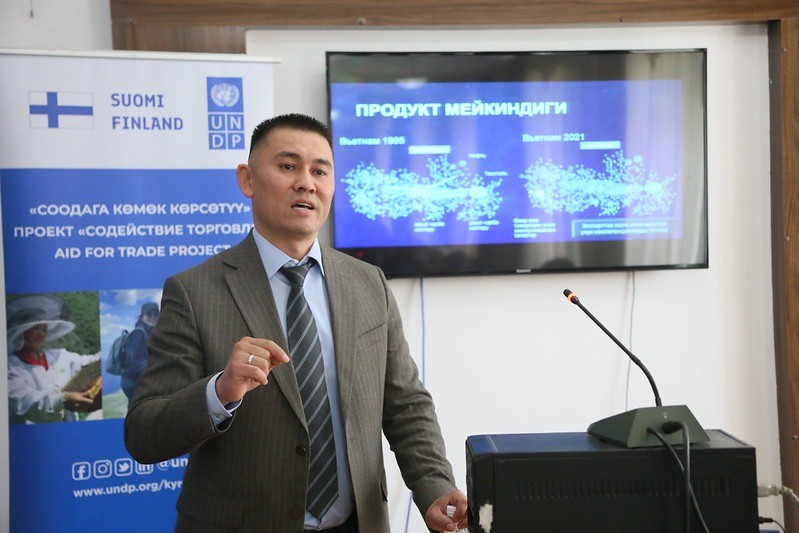
A much welcomed export development and promotion center has been launched in Kyrgyzstan with support from the United Nations Development Programme (UNDP). According to a report by the UNDP in Kyrgyzstan on May 7, the key aim of the Kyrgyz Export Center is to offer advice and equip Kyrgyz companies with skills and knowledge to navigate and succeed in international trade. Local businesses  are promised access to a wide range of beneficial services  including the provision of data and analysis of potential international markets and step-by-step guidance in entering foreign markets. Help will also be available to enable companies to fully exploit their export potential through programs tailored to maximize growth and competitiveness. In addition, local companies will be encouraged and offered support to participate in trade missions and international exhibitions through which they can showcase their products to a global audience. Emphasizing the organization’s commitment to best international practices, Urmat Takirov, director of the Kyrgyz Export Center, stated, “We strive to apply the best practices and approaches adopted in international business to ensure the best results in the development of export-oriented companies in Kyrgyzstan.”

Kazakhstan, Kyrgyzstan, and Uzbekistan Favor EEU Economic Integration

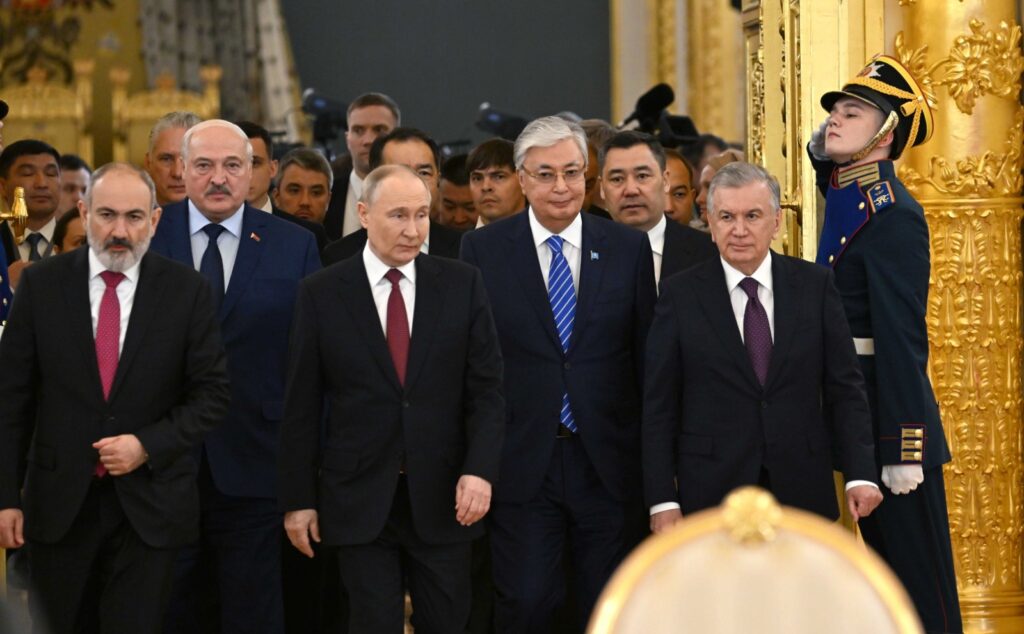
On May 8, Russian President Vladimir Putin, President of Belarus Alexander Lukashenko, President of Kazakhstan Kassym-Jomart Tokayev, President of Kyrgyzstan Sadyr Japarov, and Prime Minister of Armenia Nikol Pashinyan convened in Moscow for a meeting of the Supreme Eurasian Economic Council - the governing body of the Eurasian Economic Union (EEU). The event, which marked the tenth anniversary of the establishment of the Russian-led economic integration bloc, was also attended by heads of the EEU observer states, President of Cuba Miguel Diaz-Canel Bermudez and President of Uzbekistan Shavkat Mirziyoyev. In his address, Kazakhstan President Tokayev remarked that in the relatively short period since the Treaty on the Eurasian Economic Union was signed in Astana ten years ago, cooperation between the parties has contributed greatly to the development of Kazakhstan’s economy, and stated: “The correctness of the chosen vector of development of our association has been confirmed by the macroeconomic results of the past decade. Thus, Kazakhstan’s trade turnover with the EEU member countries has increased 1.7-fold and reached $28.5 billion.” Referencing the positive potential for EEU cooperation with rapidly developing countries in Asia, Africa, and the Middle East, he urged EEU member states to join the Ashgabat Agreement on the creation of an International Transport Corridor to engage with markets in the Persian Gulf. The Kazakh president also emphasized the need for improvements to trade links between Europe and Asia, North and South, and warned that unless renewed, the existing infrastructure in the Eurasian region will continue to deteriorate. Citing the modernization and expansion of transport and logistics infrastructure as a key priority, he stated, “In Kazakhstan, we plan to repair 11,000  and build over 5,000  kilometers of new railways by 2030. As part of the Belt and Road initiative, a Kazakh terminal, built in the Chinese city of Xi’an, accounts for up to 40% of all container traffic on the China-Europe route. There are also plans to launch 5 cross-border transport and logistics hubs on Kazakhstan’s borders with Russia, China, Uzbekistan, and Kyrgyzstan, and on the Caspian Sea.” Kyrgyz President Japarov announced that further development of Eurasian economic integration, including the creation of a single market for goods and services without barriers, a common energy market, and freedom of movement of labor resources, remains a priority for Kyrgyzstan. Regarding benefits afforded by Kyrgyzstan’s membership of the EEU, Japarov said that the country’s trade with EEU member states has grown by 76%, from $2.5 billion to $4.4 billion, its exports to EEU countries have tripled from $410 million to $1.23 billion, and its imports  increased by more than 50%, from $2 billion to $3 billion. Apart from gold, 80% of Kyrgyzstan’s exports go to the EEU countries. The Kyrgyz president also emphasized the importance of linking the EEU and the Chinese Belt and Road initiative. Despite the current observer status of his country and the EEU, Uzbek President Mirziyoyev reported that over the past three years, trade between Uzbekistan and the EEU has grown by 60 percent. Looking ahead, he announced, “Uzbekistan is interested in expanding practical partnership and...

New UN Program to Help Kyrgyz Apiaries Develop Export of Honey

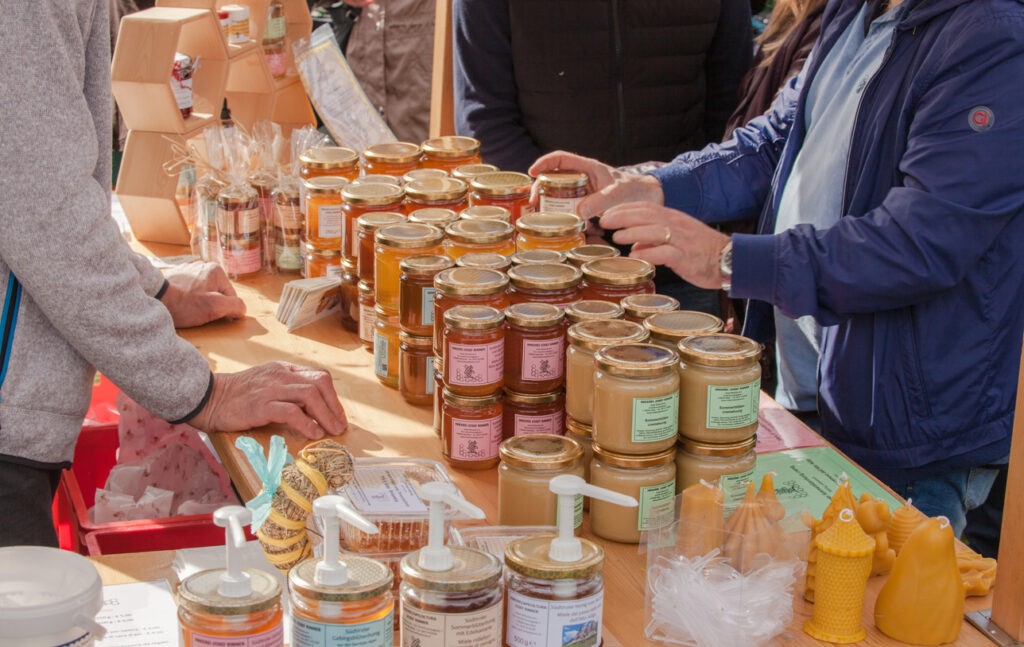
The United Nations Development Program (UNDP) in Kyrgyzstan, in cooperation with the Training and Advisory Services Center (TES-Center) Foundation, is launching an initiative to strengthen the value chain of natural honey for export, according to a report on the official UNDP website. The project will be funded by the Government of Finland and implemented in the Osh, Naryn, and Issyk-Kul regions. The authors of the initiative believe that Kyrgyzstan has significant potential for the production and export of honey. However, this requires a coordinated effort. "We support beekeepers in increasing their productivity and competitiveness of their natural honey, taking into account the introduction of innovative and resource-efficient green technologies, which will stimulate [sustainable] exports and the creation of new green jobs. The program is also aimed at integrating small farmers into the process of value addition," said Aisuluu Mambetkazieva, the UNDP Trade Facilitation Project Coordinator. The project will support beekeepers and their apiaries, exporters, service operators, and the local authorities. Special attention will be paid to the inclusion of women and people with disabilities, as well as environmental sustainability in the sector. The project is expected to generate at least 120 jobs, including those for women, in rural areas. The project will also provide capacity building for honey processing and export enterprises. Participants will be trained in the use of online marketplaces and e-commerce platforms.

Kumtor Gold Boosts Kyrgyzstan Economy

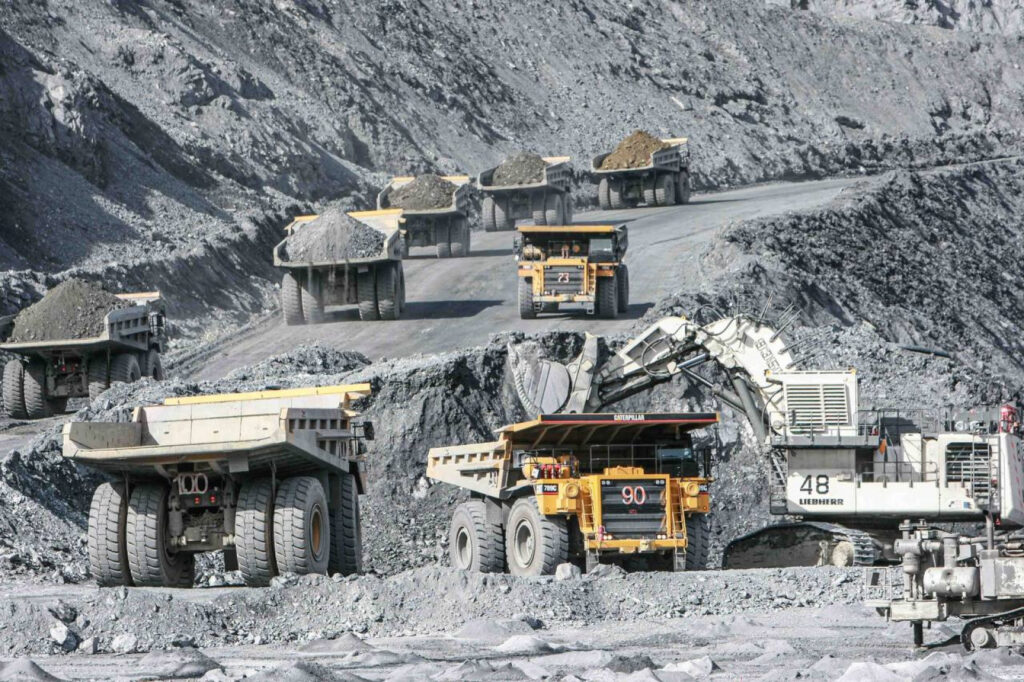
On May 7, Chairman of the Cabinet of Ministers of the Kyrgyz Republic Akylbek Japarov inspected the Kumtor gold mine in the permafrost zone of the Issyk-Kul region. Sitting 4,000 meters above sea level, the mine serves one of the world’s ten largest gold deposits and prior to being nationalized in 2021, was owned by Canadian company, Centerra Gold. The mine now has over 3,000 employees, 99.9% of whom are local specialists, and more than 800 specialist vehicles, machinery and equipment to ensure uninterrupted production. With reference to the significant developments to the site since nationalisation,  the Prime Minister emphasized the importance of the state’s role in maintaining its efficient operation. Last year, the mine generated 17.2 billion soms (over $194 million) in taxes and social payments - equivalent to roughly one-third of Kyrgyzstan’s state budget. Japarov also inspected Kumtor’s underground gold mining project, which launched in February, will enable the further extraction of about 115 tons of gold. At Kumtor’s open-pit mine, it currently takes one ton of processed ore and over 40 tons of extracted waste rock to produce 5-7 grams of gold. Underground mining has the potential to double that yield with less damage to the environment than its open-pit equivalent. Further to the prime minister’s visit, it was reported that from 2026, mining will begin on ore waste stored at the Kumtor mine tailings and according to estimates, will produce an additional 120 tons of gold. In 2023, the Kumtor mine produced 13,567 tons of gold, with a total revenue of $848 million, and net profit of $302.5 million.  

Joint Portfolio of Uzbekistan and Saudi Arabia Projects Exceeds $30 Billion

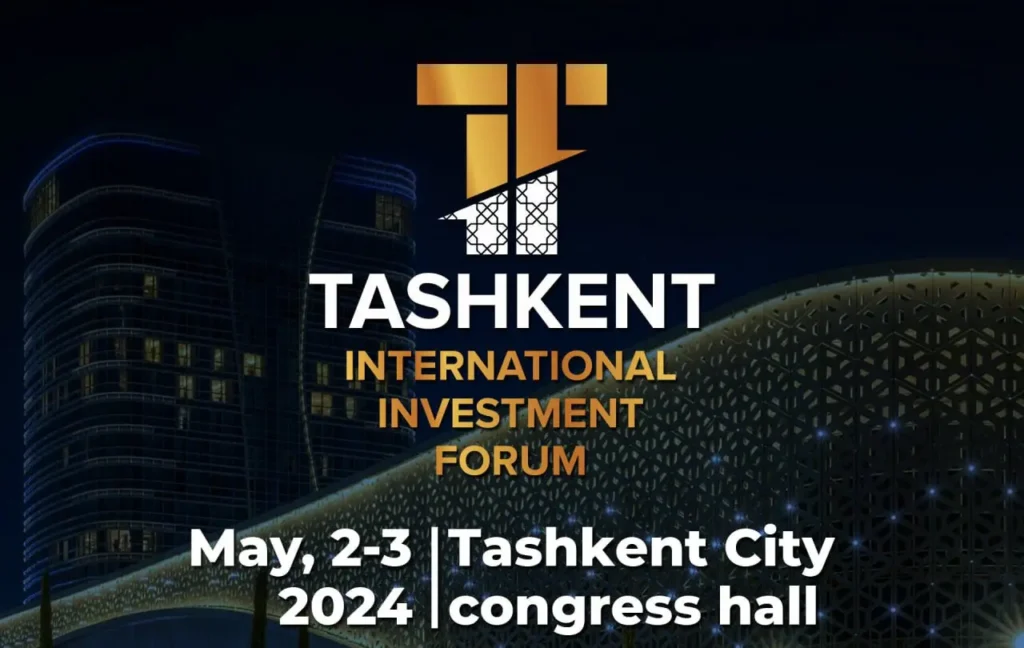
On May 2, Uzbek President Shavkat Mirziyoyev welcomed representatives of several countries to the Tashkent International Investment Forum. In discussion with the Speaker of the Parliament of Singapore, Sia Kian Peng, the two sides focused on cooperation in personnel training, investment, tourism and public safety, and emphasized the importance of joint, effective parliamentary control over their bilateral high-level agreements. During negotiations between Mirziyoyev  and the Chairman of the Cabinet of Ministers of Kyrgyzstan Aqilbek Japarov, the two leaders  concentrated on deepening strategic partnership between Uzbekistan and Kyrgyzstan, expansion of cooperation in various trade sectors such as industrial, energy, transport and logistics, and  marshalling interregional relations and cultural-humanitarian exchange. Special attention was paid to practical issues relating to the Kambarata HPP-1 (hydropower plant) and China-Kyrgyzstan-Uzbekistan railway projects. A delegation led by Prince Abdulaziz bin Salman Al-Saud, Minister of Energy of Saudi Arabia, used the opportunity to discuss the further expansion of practical cooperation, and the implementation of priority investment projects in Uzbekistan. The high level of bilateral trade and investment partnerships already achieved was noted. The portfolio of joint projects currently exceeds $30 billion, with Saudi Arabia's ACWA serving as a keen investor in Uzbek wind power generation. According to data provided by the Uzbek Government, agreements to implement projects worth $18 billion in the fields of green energy, infrastructure, healthcare and pharmaceuticals are set to be signed within the framework of the Tashkent International Investment Forum.

Kyrgyzstan, Uzbekistan to Unite Their National Card Payment Systems

Kyrgyzstan's national payment system, Elkart, and Uzbekistan's Humo payments platform intend to launch a project on mutually acquiring, or guaranteeing payment security and authorizations according to Kyrgyzstan's Interbank Processing Center (IPC). The agreement was reached at a meeting in Tashkent. "We are going to develop payment systems and create an ecosystem in our countries. This project will open new horizons for the development of not only financial infrastructures of Kyrgyzstan and Uzbekistan, but will also give impetus to the development of many spheres of activity of the two states," said Kanykei Zhamangulova, Chair of the Board of the Kyrgyz IPC. Payment organizations of the two countries have been negotiating a mutual acquiring framework since last summer. At the last meeting in Bishkek, the parties agreed on money transfers and internet payments. "An agreement was reached to start a joint project for step-by-step realization of the set goals and mutual exchange of experience in acquiring, issuing and combating fraudulent transactions," Shukhratbek Kurbanov, director of the Humo payment system, said at the time. Citizens of Uzbekistan and Kyrgyzstan will be able to pay with their cards in the other of the two countries without additional commissions, he said. However, the exact launch date of mutual acquiring services wasn't announced. The cross-border payments plan is advancing as relations between Bishkek and Tashkent were further warmed by the demarcation of the two states' international border. This key step put an end to decades of border disputes that had persisted since the end of the Soviet period.