• KGS/USD = 0.01144 0%
  • KZT/USD = 0.00212 0%
  • TJS/USD = 0.10456 0.19%
  • UZS/USD = 0.00008 0%
  • TMT/USD = 0.28490 0%
  • KGS/USD = 0.01144 0%
  • KZT/USD = 0.00212 0%
  • TJS/USD = 0.10456 0.19%
  • UZS/USD = 0.00008 0%
  • TMT/USD = 0.28490 0%
  • KGS/USD = 0.01144 0%
  • KZT/USD = 0.00212 0%
  • TJS/USD = 0.10456 0.19%
  • UZS/USD = 0.00008 0%
  • TMT/USD = 0.28490 0%
  • KGS/USD = 0.01144 0%
  • KZT/USD = 0.00212 0%
  • TJS/USD = 0.10456 0.19%
  • UZS/USD = 0.00008 0%
  • TMT/USD = 0.28490 0%
  • KGS/USD = 0.01144 0%
  • KZT/USD = 0.00212 0%
  • TJS/USD = 0.10456 0.19%
  • UZS/USD = 0.00008 0%
  • TMT/USD = 0.28490 0%
  • KGS/USD = 0.01144 0%
  • KZT/USD = 0.00212 0%
  • TJS/USD = 0.10456 0.19%
  • UZS/USD = 0.00008 0%
  • TMT/USD = 0.28490 0%
  • KGS/USD = 0.01144 0%
  • KZT/USD = 0.00212 0%
  • TJS/USD = 0.10456 0.19%
  • UZS/USD = 0.00008 0%
  • TMT/USD = 0.28490 0%
  • KGS/USD = 0.01144 0%
  • KZT/USD = 0.00212 0%
  • TJS/USD = 0.10456 0.19%
  • UZS/USD = 0.00008 0%
  • TMT/USD = 0.28490 0%

Viewing results 583 - 588 of 928

World Bank Boosts Kyrgyzstan’s Agricultural Productivity and Climate Resilience

The World Bank has announced funding of $30 million to help boost the productivity and climate resilience of Kyrgyzstan’s dairy and horticulture agri-food clusters. The project will be complemented by a $5 million grant from the Global Agriculture and Food Security Program. “Recognizing agriculture as a cornerstone of the Kyrgyz Republic's economy, the World Bank prioritizes the sector alongside energy and water in its new 2024-2028 Country Partnership Framework. The new project marks the beginning of a series of initiatives designed to support the Cabinet of Ministers' vision for a modernized, competitive, and climate-resilient agricultural sector," reported Tatiana Proskuryakova, World Bank Regional Director for Central Asia. Running until 2029, the initiative will help producers, processors, and other value chain participants to improve the quality and volume of their produce, access to markets through investment loans, training and capacity building, seed system enhancement, breeding, and information management. It will also focus on enhancing climate adaptation and mitigation through the promotion of climate-smart technologies as well as the employment of digital technology for accessing market information. The project will directly support 8,000 beneficiaries including individual farmers and producers, producer groups, small and medium processors, and other value chain participants in the agri-food clusters of dairy and horticulture. Indirect beneficiaries, numbering 20,000, will comprise farming communities and households of loan and training recipients, in addition to members of broader rural communities who will be afforded better jobs and opportunities to generate income.


Forthcoming Official Visit of Kyrgyz President to Kazakhstan

On April 9, Kazakh Prime Minister Olzhas Bektenov attended a meeting in Bishkek with the Chairman of the Cabinet of Ministers of Kyrgyzstan, Akylbek Japarov, to discuss an official visit by the President of Kyrgyzstan, Sadyr Japarov to Kazakhstan, on April 18-19. Akylbek Japarov emphasized the existing potential to increase the volume of trade turnover between the two countries which already amounts to $2 billion this year. In 2023, trade between Kazakhstan and Kyrgyzstan amounted to $1.317 billion, an increase of 11.6% compared to 2022. Bektenov, in turn, stated Kazakhstan’s readiness to increase its exports by $260 million. The parties noted that the planned launch of an Industrial Trade and Logistics Complex on the Kazakh-Kyrgyz border promised a multiplier effect and additional impetus to trade, economic, and investment cooperation. As the use of transboundary water resources for irrigation remains a vital issue in bilateral relations, the Kazakh prime minister emphasized the importance of approving operating modes of water management facilities for interstate use for the growing season of 2024. The meeting also addressed the need for collaboration to increase the transit capacity of the Kazakh-Kyrgyz border. The Concept for the Development of the Transit and Transport Potential of Kazakhstan, in place until 2030, covers the construction and reconstruction of checkpoints of Karasu, Besagash, Aukhatty, Sartobe, Aisha Bibi, Sypatai Batyr, and Kegen.

Bishkek Locals Bemoan Corruption Which Yields Terrible Roads

Residents of Bishkek are outraged by the condition of roads in the city. In their opinion, every spring the asphalt literally disappears. President Sadyr Japarov has said he shares the citizens' dissatisfaction. Responding to the criticism, representatives of the Ministry of Transport and Communications said that the presence of potholes and holes on highways is a natural process. "The situation depends on many factors, including weather and climatic conditions and the intensity of road traffic. The Ministry of Transport and Communications makes every effort to repair and properly maintain the roads of international state and local importance on its balance sheet and tries to fulfill the adopted plan for their construction and maintenance as much as possible, even exceeding this plan," the press service of the Ministry of Transport said. The ministry stressed that only 19,000 kilometers of roads are on the balance sheet of the Ministry, whilst the quality of the remainder of Kyrgyzstan's roads is monitored by municipal authorities in cities - and therefore Bishkek residents should complain to the city authorities. The capital's municipal services were also criticized by President Japarov, who said in an interview that it was time to change the system of road construction and maintenance completely. "How did the Ministry of Transport work in road construction for 30 years? If they needed to asphalt a road 100 kilometers long, they attracted private companies, calculated the cost of the work and demanded 10% of that amount from those same companies. Of course, they did not pay this 10% to the ministry, but into their own pockets. And after the private companies completed construction, they gave [more] money in order to put it into operation," Japarov stated. The President instructed the government to change the rules: roads should be repaired not by private companies, but by government agencies. The government is now allocating funds to buy its own equipment to help solve the problem of corruption, he said. Consequently, over the past two years, about 300 units of special equipment have been purchased and distributed to the regions. Another 450 special vehicles are expected to be delivered this year. The quality of roads will improve, though not immediately, Japarov said. Finding qualified personnel and strengthening their technical know-how will take time. "We have not increased funds for asphalting roads. The result is due to the fact that we started to build it ourselves... Of course, there are certain shortcomings in quality. However, as the saying goes, 'everything has its time,' and our transport workers will gradually achieve high quality. I think this process will take three to five years," the President concluded. This year, the capital's municipal authorities have barely reacted to the complaints of citizens; roads in Bishkek are being repaired slowly with the arrival of spring. However, after harsh criticism from the head of state, the situation has changed. Mayor of Bishkek, Aibek Junushaliyev recently went on an inspection to check construction work. "Bishkeksafalt service [has been tasked with] monitoring the quality of...

Experts in Kyrgyzstan Sound Alarm Over Acute Shortage of Medicines

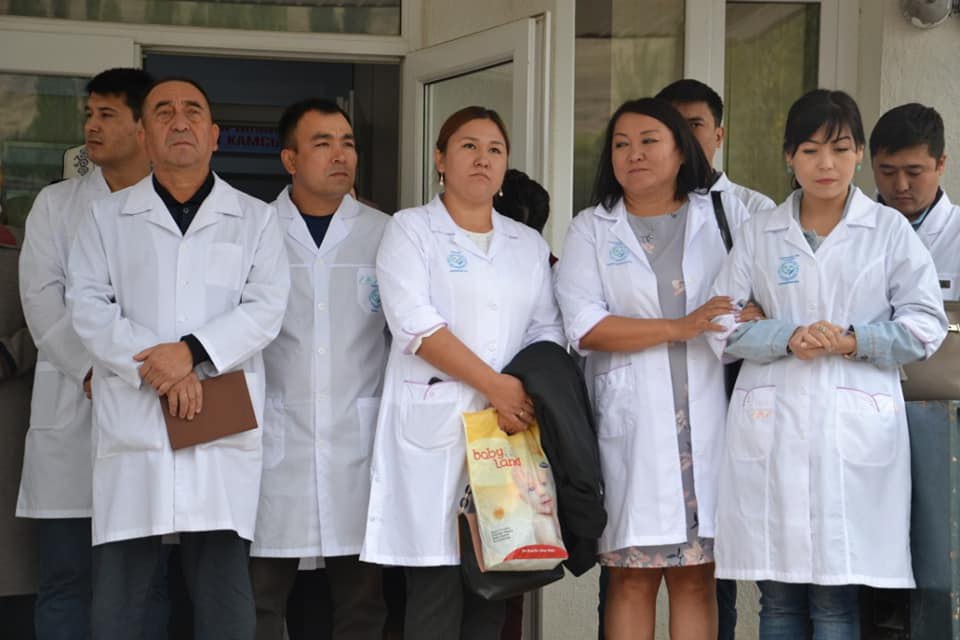
Doctors in the Central Asian republic are saying that medical institutions lack emergency, intensive care, pediatric, and cardio-pulmonary drugs, as well as contraceptives and the supplies needed for safe medical abortions. Kyrgyzstan's hospitals lack basic medicines and basic daily medications, according to Bermet Baryktabasova, head of the Kyrgyz Medical Trade Union. The Health Ministry cannot solve the problem on its own, she said, so resolution of the issue must involve the government, members of parliament (MPs) and national security services - otherwise, there will be a social catastrophe. "There are distress signals from all regions - there are no medicines, or they are running out. Requests to [Kyrgyzpharmacy] for the supply of medicines according to needs have been lying for the second quarter since the beginning of the year... The medicines arrive without accompanying documents (delivery notes, certificates, without specifying the purchase price and other financial and authorization papers)," Baryktabasova posted on social media. In March last year, the Kyrgyz authorities created the state enterprise, Kyrgyzpharmacy, to implement a new approach to providing hospitals with medicines at an affordable price. Later, the Cabinet of Ministers decided that the supply of drugs to public clinics will be handled by a single operator. Kyrgyzpharmacy also controls the quality of medicines, their storage and delivery, adding a 5% mark-up on the cost of goods. "State and municipal health care organizations pay for medicines and medical devices supplied to the state enterprise Kyrgyzpharmacy from the funds provided in the budget of the organizations for the relevant year. They may also purchase medicines not on the list from Kyrgyzpharmacy if supplies are available," the new law states. Problems with drug availability began mainly because of a decree prohibiting the importation of medicines that had not previously passed state registration and were not included in the relevant lists. The document was supposed to reduce the risks of importing low-quality medicines. However, most foreign pharmaceutical companies did not go through the complicated registration procedure; they often aren't interested in Kyrgyzstan's small market. Dastan Bekeshev, a member of the Supreme Council (Jogorku Kenesh), conducted a survey among citizens to find out what medicines are in short supply. As a result, the MP made a list of 50 items. "I decided to find out what is the reason for the shortage of medicines and sent a list of necessary medicines to the Ministry of Health. As it turned out, the geopolitical situation and the lack of registration of many drugs are to blame. The registration procedure should be simplified: if a medicine is registered in the U.S., U.K., Europe, Japan or Russia, we should by default register it in our country. So far, the bureaucratic procedure is more important than the lives of citizens," Bekeshev said. Responding to the deputy, the Ministry of Health explained that 30 "items" from the list are not registered in the Kyrgyz Republic. That means these drugs cannot be imported into the country. "In the absence of a prescribed drug in pharmacy organizations, citizens...

In Fear of Sanctions, Kyrgyz Banks Shun Russian Cards

Kyrgyzstan's Interbank Processing Center (IPC) reports that on April 5 it will stop servicing the Russian payment system 'MIR'. The decision was made "to minimize the risk of secondary sanctions." Interbank is a Kyrgyz company that services the national payment system, called ElCard. In 2019 Interbank entered into a partnership with MIR, so that citizens of both countries could pay with their domestic bank cards while in either Russia or Kyrgyzstan. On February 23 the U.S. Department of the Treasury's Office of Foreign Assets Control (OFAC), which is responsible for controlling foreign assets that involve U.S. dollars and/or the U.S. banking system, imposed sanctions on Russia's MIR. Earlier, the National Bank of the Kyrgyz Republic told The Times of Central Asia that it doesn't interfere in the activities of commercial banks in Kyrgyzstan, but only monitors compliance with the country's legislation on combating the financing of terrorist activities and laundering of criminal proceeds. Therefore, Kyrgyz banks can independently decide whether or not to work with the Russian payment system. Kyrgyz banks that have accounts with western financial organizations ceased working with the MIR system in 2022, after Russia's full-scale invasion of Ukraine. After ElCard severed its ties with the Russians, all financial organizations in Kyrgyzstan also stopped accepting MIR cards. This decision has hit Kyrgyz citizens in Russia as well, because Russian ATMs and POS terminals have stopped accepting their ElCards. But, as the Kyrgyz National Bank has explained, this decision will not affect international transfers. "It should be noted that the possibility of money transfers from the Kyrgyz Republic to the Russian Federation and vice versa with the use of mobile applications of commercial banks in the presence of direct contractual relations between Kyrgyz and Russian commercial banks, as well as through money transfer systems without opening an account, will remain," Kyrgyzstan's financial regulator writes on its website. Banks in several other Central Asian countries have refused to cooperate with MIR, also for fear of falling under U.S. sanctions. Since February 27 banks in Kazakhstan have stopped servicing MIR cards. At the same time, the Central Bank of Kazakhstan emphasizes that each Kazakh bank makes this decision independently. "Our position is as follows: we as a first-tier bank do not interfere in the operating system of second-tier banks... It is their commercial interests, economic expediency. They calculate their own risks and benefits by having compliance services," said the Central Bank's bank's press service at the time. Besides Kyrgyzstan and Kazakhstan, Armenia has refused to cooperate with the MIR system for the same reasons. And now Tajikistan -- and even Moscow's closest ally, Belarus -- are distancing themselves from it. The national payment systems of these countries -- Belarus's Belkart and Tajikistan's Korti Milli -- had agreements with the Russians that are similar to MIR's arrangement with the Kyrgyz. Currently Uzbek banks do not accept the MIR payment system either, as the UZCARD processing center has suspended work with the Russian system. In response, the Russian Central Bank has commented...

Kyrgyz Businesses Make Play to Raise Profile in America

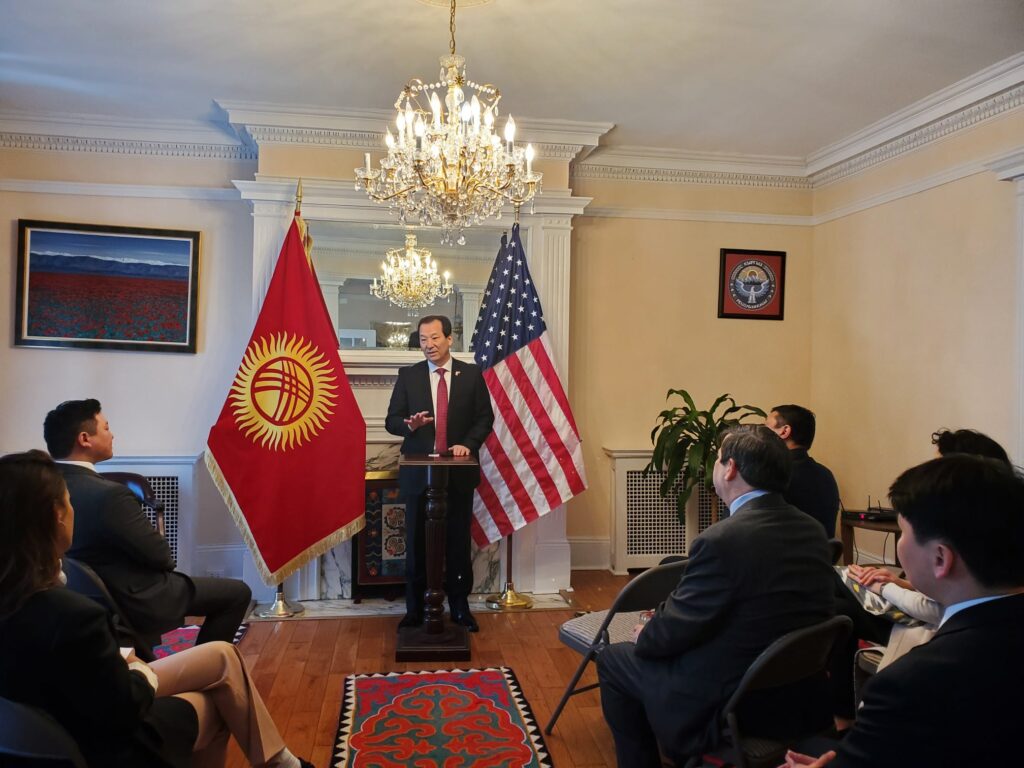
Kyrgyzstan's ambassador to the United States and Canada, Baktybek Amanbaev, recently met with the U.S. Chamber of Commerce's chief representative for Central Asia, Jennifer Miel, to discuss stepping up the nations' trade and economic ties. Kyrgyzstan's foreign ministry reports that ambassador Amanbaev told Ms Miel about the country's resource potential, as well as opportunities for private business development in Kyrgyzstan. According to Amanbaev, Kyrgyzstan is particularly keen to work with American investors on hydropower, mineral development, agriculture and textile projects. American companies already working in Kyrgyzstan include General Electric, Visa, Coca-Cola, Valmont, Medtronic and Borusan. According to Kyrgyzstan's National Statistical Committee, in the first nine months of 2023 Kyrgyzstan imported from the U.S. goods worth more than $300,000, predominantly cars and car parts. Kyrgyzstan also buys spare parts for bulldozers, excavators and trucks from American suppliers. In turn, Kyrgyz businesses export textiles, antiques, wool and animal products to the U.S. Kyrgyz entrepreneurs sell most of their goods in the U.S. through Amazon, Walmart and Ebay. The Kyrgyz Chamber of Commerce has told The Times of Central Asia that local businesses aiming to do more business in America have approached the Chamber to expand their contacts and find potential partners. The Chamber has already begun work on opening Kyrgyz trade missions in major U.S. cities, and negotiations with local authorities are underway. Soon Kyrgyz business will be represented in Los Angeles, Chicago and Miami. A few weeks ago, Kyrgyzstan's North American ambassador Amanbaev met with an executive of the satellite internet provider Starlink, to discuss providing the Kyrgyz public with high-speed internet via American Starlink satellites.