• KGS/USD = 0.01144 0%
  • KZT/USD = 0.00216 0%
  • TJS/USD = 0.10663 0%
  • UZS/USD = 0.00008 0%
  • TMT/USD = 0.28530 0%
  • KGS/USD = 0.01144 0%
  • KZT/USD = 0.00216 0%
  • TJS/USD = 0.10663 0%
  • UZS/USD = 0.00008 0%
  • TMT/USD = 0.28530 0%
  • KGS/USD = 0.01144 0%
  • KZT/USD = 0.00216 0%
  • TJS/USD = 0.10663 0%
  • UZS/USD = 0.00008 0%
  • TMT/USD = 0.28530 0%
  • KGS/USD = 0.01144 0%
  • KZT/USD = 0.00216 0%
  • TJS/USD = 0.10663 0%
  • UZS/USD = 0.00008 0%
  • TMT/USD = 0.28530 0%
  • KGS/USD = 0.01144 0%
  • KZT/USD = 0.00216 0%
  • TJS/USD = 0.10663 0%
  • UZS/USD = 0.00008 0%
  • TMT/USD = 0.28530 0%
  • KGS/USD = 0.01144 0%
  • KZT/USD = 0.00216 0%
  • TJS/USD = 0.10663 0%
  • UZS/USD = 0.00008 0%
  • TMT/USD = 0.28530 0%
  • KGS/USD = 0.01144 0%
  • KZT/USD = 0.00216 0%
  • TJS/USD = 0.10663 0%
  • UZS/USD = 0.00008 0%
  • TMT/USD = 0.28530 0%
  • KGS/USD = 0.01144 0%
  • KZT/USD = 0.00216 0%
  • TJS/USD = 0.10663 0%
  • UZS/USD = 0.00008 0%
  • TMT/USD = 0.28530 0%

Viewing results 313 - 318 of 1056

Astana Gathers the World: Forum Elevates Kazakhstan’s Diplomatic Stature

The Astana International Forum 2025 (AIF2025), themed “Connecting Minds, Shaping the Future,” will take place in Kazakhstan’s capital on May 29-30. World leaders, business executives, investors, and experts will convene to address pressing global challenges and explore avenues for mutually beneficial agreements. Who is Expected in Astana? The AIF2025 aims to serve as a platform for open dialogue and to attract foreign capital. Participants will also seek to forge strategic partnerships and promote economic development initiatives. Approximately 600 international guests are expected, including prominent political figures, heads of international organizations, business leaders, investors, and members of the academic community. Confirmed attendees include Paul Kagame, President of Rwanda; Edi Rama, Prime Minister of Albania; Andrej Plenković, Prime Minister of Croatia, Gordana Siljanovska Davkova, President of the Republic of North Macedonia; and Sheikh Mohammed bin Abdulrahman Al Thani, Prime Minister and Minister of Foreign Affairs of Qatar. Ban Ki-moon, former UN Secretary-General and Chair of the Global Green Growth Institute and the Boao Forum for Asia, will also participate. Other distinguished guests include Alain Berset, Secretary General of the Council of Europe; Qu Dongyu, Director-General of the UN Food and Agriculture Organization (FAO); Amy Pope, Director General of the International Organization for Migration (IOM); Mathias Cormann, Secretary General of the OECD; and Daren Tang, Director General of the World Intellectual Property Organization. Also expected are Antonella Bassani, World Bank Vice President for Europe and Central Asia; Haoliang Xu, UNDP Deputy Secretary-General and Deputy Administrator; Jin Liqun, President of the Asian Infrastructure Investment Bank (AIIB); Jürgen Rigterink, First Vice President of the EBRD; Kubanychbek Omuraliev, Secretary General of the Organization of Turkic States; and Sebastian Kurz, former Federal Chancellor of Austria. This year, the forum will focus on three global themes: politics and international security, energy and climate change, and economics and finance. According to the Kazakh government, AIF2025 takes place amid intensifying global competition for investment and showcases Kazakhstan’s openness to international collaboration. The country continues to solidify its global presence through comprehensive reforms, legal modernization, and a strengthened investment climate. On May 28, two bilateral business forums, Kazakhstan-France and Kazakhstan-Italy will precede the main event. Italian Prime Minister Giorgia Meloni will also attend a Central Asia-Italy summit. As previously reported by The Times of Central Asia, in recent years Italy has emerged as one of the European countries most keen to maintain close relations with the countries of Central Asia. President Kassym-Jomart Tokayev is scheduled to open the forum. Global Anticipation Builds In the run-up to the event, several participants have already shared their expectations, with Maha Al-Kuwari, General Manager of the Doha Forum, saying that it was a privilege to be involved. “Together with the Qatar Development Fund, the Doha Forum will host a session focused on innovative approaches to enhancing global sustainability. Given geopolitical fragmentation, post-pandemic recovery, and disrupted supply chains, this discussion is vital, especially for developing and least developed countries,” she stated. The session will highlight new investment models and successful partnership frameworks spanning from Astana to Doha. Interviews...
Armenia, Azerbaijan Invited to Sign Peace Deal in Kyrgyzstan

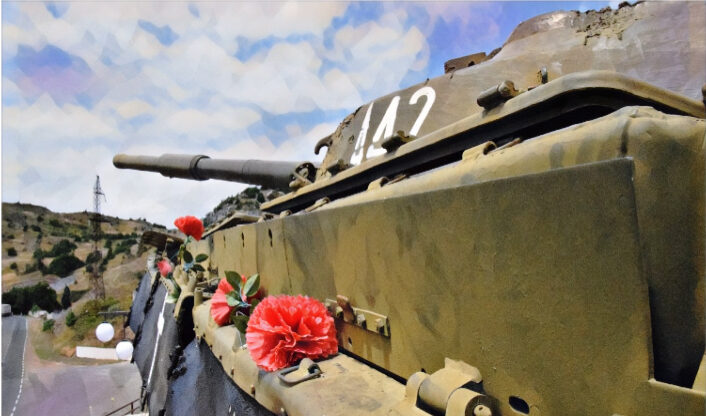
Kyrgyzstan has offered to host the signing of a peace agreement between Armenia and Azerbaijan, though tensions persist between the two longtime adversaries and a date for signing has not been set. Nurlanbek Turgunbek uulu, the parliamentary speaker of Kyrgyzstan, made the offer during a meeting in Armenia with Alen Simonyan, leader of that country’s National Assembly. The news was reported on Monday by Aravot, a publication based in Armenia. “Alen Simonyan touched upon the already completed draft of the Peace Agreement between Armenia and Azerbaijan, mentioning that the Armenian side is ready to sign it,” Aravot reported. “In response to this, the Head of the Kyrgyz Parliament noted that Kyrgyzstan is ready to provide a platform for the signing” of the peace deal. Kyrgyzstan’s parliamentary speaker was accompanied by several other parliamentarians on the May 25-27 trip to Armenia. Armenia and Azerbaijan said in March that they had agreed on the text of a peace deal after decades of conflict and Azerbaijan´s military seizure of the disputed Nagorno-Karabakh region in 2023. However, Azerbaijan says Armenia must change its constitution to remove language that allegedly lays claim to Azerbaijani territory, while Armenia says Azerbaijan is using the issue as an excuse to undermine the peace deal. Kazakhstan has also sought to assist in peace efforts between Armenia and Azerbaijan, hosting a meeting of the foreign ministers of the two rivals in Almaty last year.

Kyrgyzstan to Enforce Mandatory Car Insurance in July 2025

Beginning July 1, 2025, all vehicle owners in Kyrgyzstan will be subject to fines if they fail to obtain mandatory car insurance. Individuals found without coverage will face a penalty of 3,000 Kyrgyz soms (approximately $35), while foreigners and legal entities will be fined 13,000 soms (around $150), according to the State Insurance Organization (SIO). The introduction of penalties is expected to promote greater discipline among drivers and boost overall insurance coverage nationwide. “Compulsory car insurance protects not only car owners but also other road users. It helps reduce social tensions, lowers the number of legal disputes, and eases the financial burden on citizens,” the SIO stated in comments to The Times of Central Asia. Although the law on compulsory Motor Third-Party Liability (MTPL) insurance was passed in 2016, widespread public opposition and a lack of supporting infrastructure led to multiple delays in its enforcement. The most recent postponement, in January 2025, deferred fines for individuals once again. Authorities now affirm that no further delays will be made. The SIO emphasized that the measure aligns Kyrgyzstan with international norms. "In countries with a high culture of insurance, compulsory MTPL insurance is an integral part of road safety systems. Kyrgyzstan is moving steadily in this direction,” representatives said. Data from the National Statistical Committee shows that 7,100 traffic accidents were recorded in Kyrgyzstan in 2024, continuing a yearly upward trend. Some experts have expressed skepticism about the law’s effectiveness, citing the country’s large and growing vehicle fleet. However, the SIO remains confident in its capacity to manage the increased demand. “Our financial model includes calculating potential risks and setting aside funds for payments. This means that even if the accident rate rises, the SIO can still meet its obligations to insured drivers on time and in full,” the organization assured. As enforcement looms, authorities and insurers are urging the public to prepare and comply with the law to help foster a safer and more financially secure road environment in Kyrgyzstan.

Stealing Brides, Ignoring Justice: The Battle Against Forced Marriage in Central Asia

The abduction of girls for forced marriage remains a troubling and persistent practice across Central Asia. While Kazakhstan has been progressively tightening its legal framework to better protect women's rights, bride kidnapping continues to pose a serious human rights challenge throughout the region. Fighting the Middle Ages? Bride kidnapping has long been practiced in Central Asia and the Caucasus. In contemporary times, some instances are consensual, carried out as a form of cultural theatre to reduce the high cost of weddings in traditional societies. However, when carried out without the woman’s explicit permission, the ritual becomes a form of gender-based violence. Efforts to combat non-consensual bride kidnapping have been ongoing since the Soviet era, yet the practice endures. According to some Kazakhstani legislators, the current laws are no longer adequate to address the full scope of the issue. The existing criminal code’s general provisions on abduction, they argue, fall short of tackling the specific dynamics of forced marriage. Mazhilis Deputy Murat Abenov has proposed introducing explicit criminal liability for coercion into marriage. “Over the past three years, 214 complaints have been filed in Kazakhstan from people who were forced into marriage. Only ten of them reached court. Hundreds of criminal cases were simply closed,” Abenov stated. “Even though the girl proved that she had been kidnapped, that she had jumped out of the car, that force had been used against her, nothing could be done.” New legislative amendments have been drafted and are expected to be debated in the Mazhilis, Kazakhstan’s lower house of parliament. The proposed law introduces a scale of penalties based on the severity of the offense. “There is administrative liability, there will be a large fine, and in serious cases where the girl is under 18 or where force is used or by a group of people, there will be more serious liability, up to criminal liability, five to seven years in prison,” Abenov explained. This new law could be enacted by the end of 2025. Kazakhstan's Human Rights Commissioner, Artur Lastaev, addressed the issue in February 2024 in the wake of a high-profile case in Shymkent. “The practice of kidnapping girls for the purpose of marriage is still widespread in our country, especially in the southern regions. In some cases, such actions result in sexual assault, humiliation, unlawful deprivation of liberty, and even suicide,” Lastaev stated. “Saltanat’s Law” Written in Blood In June 2024, Kazakhstan implemented a sweeping new law entitled “On Amendments to Ensure the Rights of Women and the Safety of Children.” Though years in the making, the law is colloquially known as “Saltanat’s Law,” named after Saltanat Nukenova, a young woman who was brutally murdered by her common-law husband, Kuandyk Bishimbayev, a former senior government official. In November 2023, Bishimbayev beat Nukenova over the course of a night in a restaurant in Astana. After she lost consciousness, he attempted to conceal the crime instead of seeking medical help. In May 2024, following a highly publicized trial, Bishimbayev was sentenced to 24 years...

Opinion – The Quiet Competition: How the U.S. Is Losing Ground to China in Central Asia

Over the past decade, China has steadily expanded its presence in Central Asia, not through military force, but by building roads, trade corridors, and digital infrastructure. As the United States scaled back its regional footprint following its withdrawal from Afghanistan, Beijing moved quickly to fill the void. Today, China has positioned itself as the region's dominant external power, while the U.S. risks being left on the sidelines. At the heart of China’s strategy is the Belt and Road Initiative (BRI), which has provided over $1 trillion into infrastructure projects globally since its launch in 2013. This includes $704 billion in construction contracts and $470 billion in non-financial investments. In 2024 alone, BRI engagement reached $121.8 billion – $70.7 billion in construction and $51 billion in investments – and trade between China and the countries of Central Asia hit a record $95 billion, highlighting the depth of China's economic integration. This engagement has also created significant financial dependencies. Central Asian countries owe China roughly $15.7 billion, about 8% of the region's total external debt, and these loans are often opaque and carry terms that provide Beijing with outsized political leverage. Chinese firms are also laying fiber-optic networks and constructing electric vehicle corridors to link western China with its neighbors. In Tajikistan, for example, contractors are upgrading the Pamir Highway to support cross-border EV transport. Huawei and other Chinese tech giants are also expanding the region’s telecommunications infrastructure, raising serious concerns about surveillance, data sovereignty, and long-term digital dependency. China’s economic outreach is reinforced by high-level diplomacy. The China–Central Asia (C+C5) format has become the centerpiece of Beijing’s regional engagement. At the 2025 summit, leaders from across the region gathered to coordinate on connectivity, climate resilience, and trade facilitation. The regularity and substance of these summits stand in sharp contrast to the United States’ more sporadic diplomatic presence. The U.S. maintains the C5+1 platform and launched a promising Critical Minerals Dialogue in 2024. However, these initiatives have yet to match the scale or consistency of China's approach as U.S. infrastructure investment is limited, its commercial footprint is small, and diplomatic engagement is too infrequent to shift the region’s strategic trajectory. This matters. Central Asia is strategically located, resource-rich, and increasingly central to global supply chains and geopolitical competition. Kazakhstan alone supplies more than 40% of the world’s uranium. The region also serves as a testing ground for competing development models, and if the United States fails to become a more engaged and credible partner, China’s infrastructure-heavy, state-centric model may become the default. To remain competitive, Washington should recalibrate its approach in Central Asia. This includes pursuing bilateral deals that deliver real impact, such as deepening ties with Uzbekistan and Kazakhstan through targeted investment packages, trade agreements, and joint-sector initiatives. It also means securing access to critical minerals by expanding private-sector investment in mining, processing, and transport infrastructure aligned with U.S. supply chain needs. Offering digital infrastructure alternatives is equally essential; the United States must support secure, interoperable, and transparent technology networks that...

Russia: Thousands of Central Asia-Born Russians Sent to Ukraine Front Line

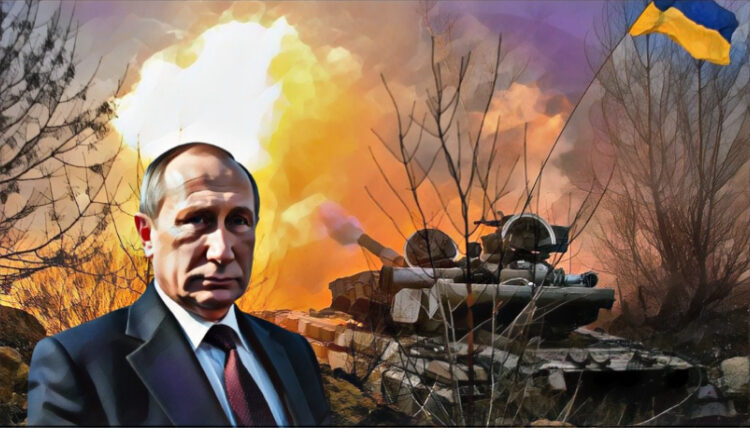
A senior Russian official has said that thousands of migrants from Central Asia who became Russian citizens were sent to fight in Ukraine after they tried to dodge conscription. "Our military investigations directorate conducts regular raids,” Alexander Bastrykin, head of Russia’s Investigative Committee, said on Tuesday in remarks that were reported by the Russian state-run TASS news agency. “So far, we've tracked down 80,000 such Russian citizens who didn't just avoid the front lines — they wouldn’t even show up at military enlistment offices. We’ve registered them for military service, and about 20,000 of these 'new' Russian citizens, who for some reason no longer want to live in Uzbekistan, Tajikistan, or Kyrgyzstan, are now on the front lines," Bastrykin said at the St. Petersburg International Legal Forum. Bastrykin’s comments contributed a piece to the often murky picture of the involvement of people from Central Asia in Russia’s war effort in Ukraine in the last three years. In addition to conscription measures, Russia has also sought to replenish its ranks by offering contracts and other incentives to foreigners willing to fight. Uzbekistan and Kazakhstan are among Central Asian countries that ban their nationals from fighting in foreign conflicts and there have been several high-profile prosecutions of citizens who fought for Russia and returned home. It is a sensitive political matter in Central Asia, a region that seeks to project neutrality in the conflict between Russia and Ukraine. Kazakhstan has said it is reviewing a report by a Ukrainian institution that said about 661 Kazakh citizens have fought for Russia since it launched a full-scale invasion of Ukraine in February 2022. The I Want To Live center, which is run by the Ukrainian security services and assists with surrender requests from soldiers fighting for Russia, published a list of what it said were the Kazakh nationals. Of the 661, at least 78 have been killed, according to the center. Without providing details, it said it received the list from its own sources within the Russian military. Uzbekistan is conducting a similar investigation based on data from the Ukrainian group.