• KGS/USD = 0.01144 0%
  • KZT/USD = 0.00216 0%
  • TJS/USD = 0.10680 0.19%
  • UZS/USD = 0.00008 0%
  • TMT/USD = 0.28530 0%
  • KGS/USD = 0.01144 0%
  • KZT/USD = 0.00216 0%
  • TJS/USD = 0.10680 0.19%
  • UZS/USD = 0.00008 0%
  • TMT/USD = 0.28530 0%
  • KGS/USD = 0.01144 0%
  • KZT/USD = 0.00216 0%
  • TJS/USD = 0.10680 0.19%
  • UZS/USD = 0.00008 0%
  • TMT/USD = 0.28530 0%
  • KGS/USD = 0.01144 0%
  • KZT/USD = 0.00216 0%
  • TJS/USD = 0.10680 0.19%
  • UZS/USD = 0.00008 0%
  • TMT/USD = 0.28530 0%
  • KGS/USD = 0.01144 0%
  • KZT/USD = 0.00216 0%
  • TJS/USD = 0.10680 0.19%
  • UZS/USD = 0.00008 0%
  • TMT/USD = 0.28530 0%
  • KGS/USD = 0.01144 0%
  • KZT/USD = 0.00216 0%
  • TJS/USD = 0.10680 0.19%
  • UZS/USD = 0.00008 0%
  • TMT/USD = 0.28530 0%
  • KGS/USD = 0.01144 0%
  • KZT/USD = 0.00216 0%
  • TJS/USD = 0.10680 0.19%
  • UZS/USD = 0.00008 0%
  • TMT/USD = 0.28530 0%
  • KGS/USD = 0.01144 0%
  • KZT/USD = 0.00216 0%
  • TJS/USD = 0.10680 0.19%
  • UZS/USD = 0.00008 0%
  • TMT/USD = 0.28530 0%

Viewing results 355 - 360 of 1067

After Player’s Death, Kyrgyzstan Debates How to Make Kok Boru Safer

The death last month in Kyrgyzstan of a player of kok boru, a traditional game in which horse riders try to maneuver a headless goat carcass into an opposing team’s goal, has led to discussion in the parliament about whether a rough sport that is a source of regional pride should be made safer for man and horse alike. Mirlan Srazhdinov, a 45-year-old team captain, died during a game of kok boru at an equestrian stadium on the outskirts of Bishkek, Kyrgyzstan’s capital, on March 12. A video that circulated on various online platforms purportedly shows the accident in which Srazhdinov appears to bend down to the side of his horse – and then falls to the ground after another horse and rider crash into him next to a barrier on the side of the sandy playing area. The accident alarmed some lawmakers who view kok boru as an emblem of cultural identity in Kyrgyzstan and elsewhere in Central Asia, acknowledging that the sometimes chaotic scrums on the dusty field have caused harm to contestants but rejecting the idea of banning the game altogether. Kok boru, which is recognized by UNESCO, has a wider following in the region. Kazakhstan, for example, has a variant known as kokpar, and it is known as buzkashi in Afghanistan. The game featured in the World Nomad Games in Kazakhstan last year, using a mould as a modern replacement for the carcass. Srazhdinov had suffered a brain injury and multiple fractures, including one at the base of his skull, the 24.kg news agency reported, citing Bishkek’s Emergency Medicine Center. The player who collided with him was placed in pre-trial detention for two months, and the referee was placed under house arrest. Both have been charged in connection with the death of the team captain. At a parliamentary session, lawmaker Balbak Tulobaev said accidents can happen in any sport and that kok boru should continue to be played with some adjustments to reduce the chance of injury. “There are forces that want to ban the game of kok boru because of this. But we must not allow this," Tulobaev said last week, according to the Kloop news organization. Parliamentarian Ilimbek Kubanychbekov agreed, though he also said changes were necessary because players were getting hurt. Deputy Akkulu Berdiev had concerns about the perils of play near the taikazan, or goal where the goat carcass (or mould) is thrown. He said riders have suffered spinal and other injuries in this area, and horses haven’t been spared either. The taikazan is a raised circular structure with a hollowed out part in the middle. A manual of the rules of kok boru indicates that is very much a contact sport: “To increase interest in the game, forceful techniques are allowed, used by both horses and players, but not violating the rules of the game - player can accidentally hit others by a horse (not strike), players can push each other with their torsos and chests without touching each other’s hands....
Unvaccinated Children Barred from First Grade in Kyrgyzstan

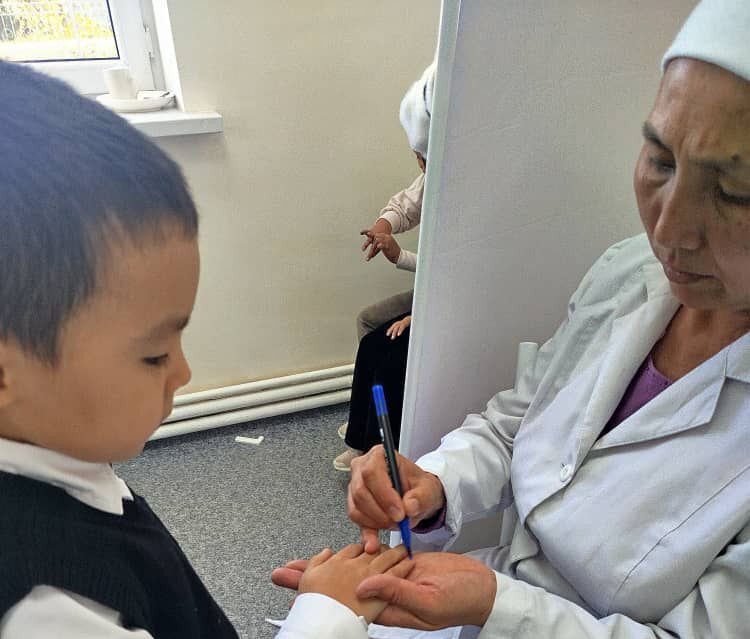
Kyrgyzstan’s Ministry of Education has announced that children who are not vaccinated will not be admitted to first grade, amid a worsening measles outbreak in the country. Deputy Education Minister Lira Samykbayeva stated during a live national radio broadcast that the process of registering children for school has been significantly simplified. Parents no longer need to submit numerous documents such as passports, marriage or birth certificates, and proof of family composition. “This year, the Ministry of Education integrated its database with other government agencies, so there is no longer a need to collect certificates manually,” Samykbayeva explained. However, she emphasized that two medical certificates will remain mandatory: one confirming a general health examination, and another verifying that the child has received preventive vaccinations, including the measles vaccine. “The only thing that must be provided to the school is two medical certificates,” she said. “Including vaccination against measles.” A government decree enforcing the new requirement was adopted just a day earlier. In the future, the Ministries of Education and Health plan to fully integrate their systems, allowing medical records to be accessed automatically by schools. The stricter policy comes as Kyrgyzstan battles a growing measles outbreak. Since the beginning of the year, over 4,000 children have contracted the disease, and eight people have died. According to health officials, 95 percent of those infected were unvaccinated. Speaking to The Times of Central Asia, Gulbara Ishenapysova, Director of the Republican Center for Immunoprophylaxis, said the Ministry of Health is stepping up vaccination efforts. “By decision of the Kyrgyz Cabinet of Ministers, the ministry has revised the national vaccination calendar,” she noted. In an effort to improve public trust, Kyrgyz health authorities have also engaged religious leaders. Clergy across the country are being encouraged to speak with parents about the importance of vaccinating their children.

Samarkand Declaration Paves the Way for a Stronger Central Asia–EU Partnership

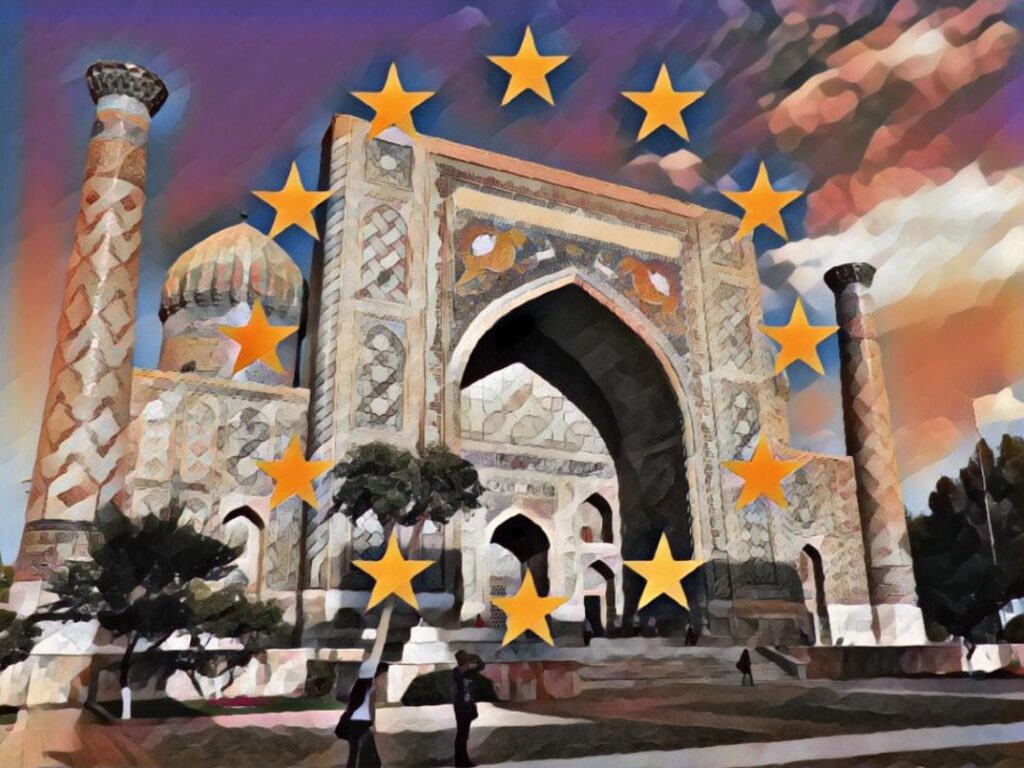
The inaugural Central Asia-European Union Summit, held in Samarkand on April 3-4, marked a significant milestone in strengthening ties between the two regions. According to Sherzod Asadov, press secretary to Uzbekistan's President Shavkat Mirziyoyev, the summit's most significant outcome is the adoption of the Samarkand Declaration, which is expected to provide strong momentum for expanding constructive dialogue and cooperation across all sectors. In a statement, the EU reaffirmed its "commitment to deeper cooperation in an evolving global and regional geopolitical landscape [and] upgrade relations between the European Union and Central Asia to a strategic partnership." The EU declaration also committed the bloc to respect the "sovereignty and territorial integrity of all states within the framework of all international and regional fora" and expressed readiness to "address common security challenges." Strengthening Economic Ties Economic cooperation featured prominently on the agenda. Since 2020, trade between Uzbekistan and the EU has doubled, now exceeding €6 billion. Uzbek exports to the EU have quadrupled, and the number of joint ventures has surpassed a thousand. European investment projects in Uzbekistan, meanwhile, are now valued at over €30 billion. A key development was the agreement to open a regional office of the European Investment Bank (EIB) in Tashkent. Established in 1958, the EIB is the EU’s primary financial institution, and its new office is expected to attract greater investment in green energy, modern infrastructure, and digitalization. The European Bank for Reconstruction and Development (EBRD) has also deepened its engagement in Uzbekistan, investing over €5 billion to date. “We must work together to simplify trade procedures and ensure that Central Asian products gain greater access to European markets. Only through joint efforts can we build a strong and resilient economic partnership,” Mirziyoyev told Euronews. "Over the past seven years, the trade turnover between Central Asian countries and the EU has quadrupled, amounting to 54 billion euros... The signing of the Samarkand Declaration will reflect the common aspiration of the parties to establish a strategic partnership and lay the foundation for deepening ties between our regions." During the summit, Mirziyoyev met with European Commission President Ursula von der Leyen and European Council President António Costa. Discussions focused on trade, investment, green energy, and digital development, with the EU’s "Global Gateway” strategy, a counterpart to China’s Belt and Road Initiative, a central topic. The initiative is seeking to enhance global infrastructure and connectivity while promoting sustainability and transparency. “The EU and Central Asia are becoming closer partners, and this summit marks the beginning of a new phase in our cooperation,” von der Leyen stated. An Enhanced Partnership and Cooperation Agreement between Uzbekistan and the EU is also under negotiation. Regional Dialogue Among Central Asian Leaders The Summit also offered a platform for Central Asian heads of state to hold bilateral discussions. Mirziyoyev met with his counterparts from Kazakhstan, Kyrgyzstan, Tajikistan, and Turkmenistan. Talks centered on increasing trade, improving border security, and advancing major infrastructure projects. A recent landmark border agreement between Uzbekistan and Kyrgyzstan was lauded as a breakthrough. Uzbekistan...

A Historic Gathering: The First Central Asia-European Union Summit in Samarkand

Excitement is building in Samarkand as it gears up to host the inaugural Central Asia-European Union Summit. This landmark event promises to pave the way for significant negotiations and collaboration, bringing together leaders and representatives from both regions. With a rich cultural backdrop and a vibrant atmosphere, Samarkand is poised to play a crucial role in shaping the future of partnerships and cooperation between Central Asia and the European Union.  In recent weeks, Uzbekistan has experienced notable advancements in its foreign policy, signaling a proactive approach to international collaboration. A highlighted event was the fruitful engagement between Uzbekistan's head of state and Kaja Kallas, the High-level Representative of the European Union for Foreign Affairs and Security Policy. Additionally, a delegation led by Josef Sikela, the European Union Commissioner for International Cooperation, participated in discussions to foster deeper ties. A significant milestone on the horizon is the inaugural Central Asia-European Union summit, set to unfold in the historic city of Samarkand on April 3-4. During a pivotal meeting on March 27 with Kallas, President Shavkat Mirziyoyev meticulously explored the preparations for this groundbreaking summit, which has captured global attention due to its potential to reshape regional dynamics. The leaders engaged in a rich exchange of ideas focused on bolstering practical cooperation between their regions and planning future collaborative events that could further strengthen these ties. The significance of fostering mutually beneficial cooperation between the two regions in trade and logistics was emphasized during the meeting. This includes harnessing the potential of the Trans-Caspian Transport Corridor, advancing digitalization, promoting green energy, addressing ecological concerns, modernizing infrastructure, and other priority areas. The introduction of effective mechanisms for implementing initiatives and projects in these fields was also highlighted. Participants exchanged views on enhancing Uzbekistan's relations with European Union organizations, discussing adopting a new agreement for enhanced partnership and cooperation and Uzbekistan's accession to the World Trade Organization. Current international and regional policy issues were also addressed. Additionally, on March 18, President Shavkat Mirziyoyev met with a delegation led by Josef Sikela, the European Union Commissioner for International Cooperation. This meeting discussed critical matters regarding further developing multifaceted relations between Uzbekistan and the European Union. Moreover, plans for organizing the inaugural "Central Asia - EU" summit and the Climate Forum in Samarkand were considered. In recent years, bilateral cooperation with the European Union has accelerated across political, trade, economic, investment, and cultural-humanitarian spheres, presenting extensive opportunities for the continued expansion of these ties. A new Enhanced Partnership and Cooperation Agreement between Uzbekistan and the European Union is anticipated to be signed soon. Both parties have expressed a keen interest in promoting joint projects and programs across transport and logistics, energy, digitalization, agriculture, water management, and other key areas. Kallas conveyed warm greetings and best wishes on behalf of key EU figures, including António Costa, the President of the European Council, and Ursula von der Leyen, the President of the European Commission. The discussions underscored the necessity of cultivating mutually beneficial cooperation across various sectors, including...

Bishkek Activists Demand Comeback for City’s Scrapped Trolleybuses

As Bishkek prepares to introduce its first fleet of electric buses, local activists are mounting a legal campaign to save the city’s trolleybus system from complete dismantlement. Municipality’s Modernization Push The first two electric buses from China’s Anhui Ankai Automobile Co. have already arrived in Bishkek and will soon begin operating on city routes. In total, the city has procured 120 electric buses, with the remaining 118 expected to be delivered by May, according to Daiyrbek Orunbekov, head of information policy at the President’s Office. Orunbekov said the new vehicles will replace outdated public transport and help improve the capital’s environmental conditions. “City streets used to be clogged with shuttle buses, and the roads were in disarray. Now modern buses are replacing minibuses. Last year, the roads were reconstructed and old trolleybus lines dismantled. Some residents were initially unhappy, but electric buses, more spacious and comfortable, are now on the routes,” he explained. A Contested Phase-Out Despite these upgrades, the decision to remove trolleybus lines has sparked a backlash. Bishkek residents and activists have sued the mayor’s office, arguing that officials acted without proper authorization in dismantling the network. All trolleybus lines in Bishkek were removed in a short period. Of the remaining fleet, 100 trolleybuses, many still under loan repayment, were transferred to Osh, six to Naryn, and 42 remain parked on the outskirts of the capital. Meanwhile, Kyrgyz MP Ulan Bishimbayev has announced that the authorities plan to retrofit some of the old trolleybuses with batteries to convert them into electric buses. One pilot project is already underway. “We invited specialists who confirmed it was possible. One trolleybus is being remodeled in pilot mode and should be launched within 10 days,” Bishimbayev said. Legal Battle and Environmental Concerns The next court hearing on the trolleybus issue is scheduled for April 9 at the Bishkek City Court. Activists argue that trolleybuses, powered by a network of 19 existing substations, remain one of the most sustainable forms of transport. “Trolleybus wires are a consumable material that needs replacement every 20 years. The challenge of restoring them is manageable. What matters are the substations, and they are still intact,” activist Bermet Borubayeva told The Times of Central Asia. She also questioned the narrative that the old system was outdated. “A representative from the president’s staff claimed the trolleybuses were outdated and would be replaced with electric buses. But that’s misleading. The trolleybuses bought with a €23.5 million European Bank for Reconstruction and Development (EBRD) loan just six years ago are still modern, with a service life of 20 years,” she said. Borubayeva also pointed out that the batteries used in electric buses typically last only 5-10 years and pose environmental risks when recycled. According to earlier electrification plans approved by European lenders, Bishkek was expected to combine trolleybus and electric bus networks. However, city authorities have opted for a different course.

Controversies and Rejections: What Future Awaits the CSTO?

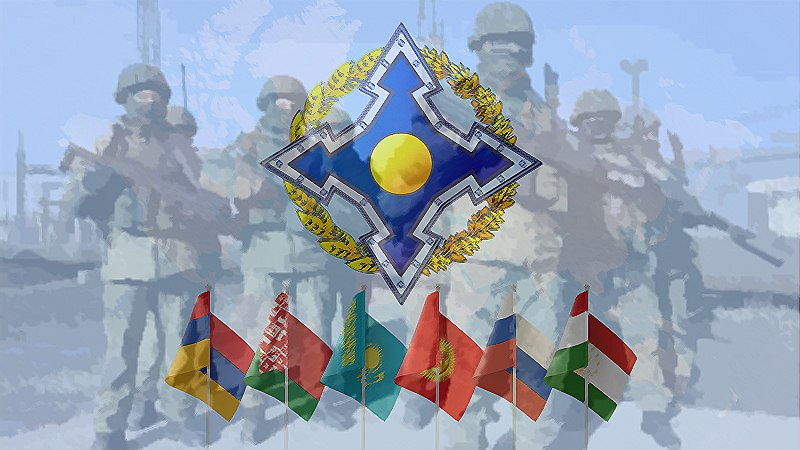
Armenia has officially refused to contribute financially to the Collective Security Treaty Organization (CSTO), a bloc tasked with ensuring the independence, territorial integrity, and sovereignty of its member states. Meanwhile, the organization’s Secretary General, Imangali Tasmagambetov, has come under scrutiny for remarks he made related to the ongoing conflict between Russia and Ukraine. Shifting Alliances and Regional Tensions Founded in 1992, the CSTO comprises Russia, Kazakhstan, Kyrgyzstan, Belarus, Tajikistan, and Armenia. Georgia, Azerbaijan, and Uzbekistan have withdrawn from the organization at various times. While the CSTO regularly conducts joint military exercises and cooperates on counter-terrorism and anti-narcotics efforts, the war in Ukraine has exposed internal divisions and challenged the bloc’s cohesion. Tasmagambetov Responds to Criticism In March, Secretary General Tasmagambetov raised eyebrows in an interview with a Russian outlet, warning that any deployment of EU troops to Ukraine could escalate regional tensions. He stated that the CSTO would be ready to provide assistance “within the framework of the organization’s charter and subject to approval by all member states.” The remarks sparked a backlash, particularly on social media in Kazakhstan, where some users accused Tasmagambetov, the former prime minister, of adopting a pro-Russian stance. Responding in late March, Tasmagambetov recorded a rare video message clarifying his position. “How can one calmly react to baseless claims that I would send my compatriots to war?” he asked. “There will always be those who distort my words. I have always remained loyal to my people; the interests of our country have always come first.” Tasmagambetov went on to urge viewers to think critically about information shared online. This controversy follows an earlier statement by Aibek Smadiarov, spokesperson for Kazakhstan’s Ministry of Foreign Affairs, who said in October 2022 that the CSTO had no plans to involve itself in the Ukraine conflict. “The CSTO's jurisdiction is limited to the internationally recognized territories of its member states,” Smadiarov stated. Kazakhstan, meanwhile, is reviewing a report by a Ukrainian institution that said about 661 Kazakh citizens have fought for Russia since it launched a full-scale invasion of Ukraine in February 2022. The I Want To Live center, which is run by the Ukrainian security services and assists with surrender requests from soldiers fighting for Russia, published a list of what it said were the Kazakh nationals. Of the 661, at least 78 have been killed, according to the center. Without providing details, it said it received the list from its own sources within the Russian military. Kazakh media quoted Igor Lepekha, Kazakhstan’s deputy interior minister of internal affairs, as saying the numbers have to be checked because it is unclear whether they are reliable. Kazakhstan bans mercenary activities in foreign conflicts and has opened a number of related investigations in the last few years. Last year, a court in Kazakhstan sentenced a Kazakh national to more than six years in jail for fighting with Russia’s Wagner Group in Ukraine. Armenia Pulls Back Adding to the bloc’s instability, Armenia recently announced that it would no longer finance the...