• KGS/USD = 0.01144 0%
  • KZT/USD = 0.00216 0%
  • TJS/USD = 0.10663 0%
  • UZS/USD = 0.00008 0%
  • TMT/USD = 0.28530 0%
  • KGS/USD = 0.01144 0%
  • KZT/USD = 0.00216 0%
  • TJS/USD = 0.10663 0%
  • UZS/USD = 0.00008 0%
  • TMT/USD = 0.28530 0%
  • KGS/USD = 0.01144 0%
  • KZT/USD = 0.00216 0%
  • TJS/USD = 0.10663 0%
  • UZS/USD = 0.00008 0%
  • TMT/USD = 0.28530 0%
  • KGS/USD = 0.01144 0%
  • KZT/USD = 0.00216 0%
  • TJS/USD = 0.10663 0%
  • UZS/USD = 0.00008 0%
  • TMT/USD = 0.28530 0%
  • KGS/USD = 0.01144 0%
  • KZT/USD = 0.00216 0%
  • TJS/USD = 0.10663 0%
  • UZS/USD = 0.00008 0%
  • TMT/USD = 0.28530 0%
  • KGS/USD = 0.01144 0%
  • KZT/USD = 0.00216 0%
  • TJS/USD = 0.10663 0%
  • UZS/USD = 0.00008 0%
  • TMT/USD = 0.28530 0%
  • KGS/USD = 0.01144 0%
  • KZT/USD = 0.00216 0%
  • TJS/USD = 0.10663 0%
  • UZS/USD = 0.00008 0%
  • TMT/USD = 0.28530 0%
  • KGS/USD = 0.01144 0%
  • KZT/USD = 0.00216 0%
  • TJS/USD = 0.10663 0%
  • UZS/USD = 0.00008 0%
  • TMT/USD = 0.28530 0%

Viewing results 349 - 354 of 1057

Kyrgyz Authorities Arrest Critic of Kyrgyzstan-Tajikistan Border Agreement

Kyrgyzstan and Tajikistan earned international praise last month when they signed a border agreement ending years of tension that had sometimes spilled into deadly violence. A recent arrest in Kyrgyzstan suggests that authorities are sensitive to any criticism of a deal that was widely hailed as a big step for closer ties among Central Asian countries.  Kanyshai Mamyrkulova, who has been described by Kyrgyz media sources as a journalist and an activist, was arrested on March 20, a week after President Sadyr Japarov of Kyrgyzstan and Emomali Rahmon, Tajikistan’s leader, signed the peace agreement following painstaking negotiations over the delineation of the nearly 1,000-kilometer border between the two countries. This week, a court upheld an earlier ruling that Mamyrkulova be held in pre-trial detention until May 19, in one of the latest cases in Kyrgyzstan that pits advocates of free speech against a government that increasingly views unfettered opinions and alleged disinformation as a threat to national stability. While critics warn that Kyrgyzstan is clamping down on free expression, the environment there is relatively looser than in Tajikistan, where the state exercises tighter controls over the media. Mamyrkulova appears to have fallen foul of the authorities for critical posts on social media rather than any journalistic reports.  She spread “false information regarding the Kyrgyzstan–Tajikistan border issue” on Facebook, the Bishkek city police department said last month. “The individual made calls aimed at destabilizing the socio-political situation in the Kyrgyz Republic by inciting mass disorder and promoting interethnic hatred between citizens of Kyrgyzstan and neighboring countries,” the department said. It added that Mamyrkulova had “previously been held accountable for similar actions — spreading misinformation and escalating tensions during past incidents involving border issues between the Kyrgyz and Uzbek republics.”  A review of some of Mamyrkulova’s Facebook posts reveals a stream of comments and barbs about alleged corruption, official wrongdoing, and prosecutions, often delivered with cheeky humor. Some are indirect or use metaphors to make a point. Several that refer to the border agreement suggest the Kyrgyz government was not transparent enough with its citizens and imply that Tajikistan got the better of the deal.   In a letter released last week, Mamyrkulova said she hadn’t done anything wrong.  “I did not kill anyone, did not steal from the state, and did not take bribes. I’ve only posted about legal, political, economic, and social issues affecting the public. Regarding the criminal charges brought against me under Article 278 (part 3) and Article 330 (part 1) of the Criminal Code of the Kyrgyz Republic — I have never committed, nor will I ever commit such crimes,” she said in the statement, which was posted on the Facebook account of supporter Amanbol Babakulov.   “They spun a criminal case from thin air simply because I wrote what the public was thinking, in a way that struck a nerve. I know this well myself — as do the lawyers, the attorneys, and those who work closely with the justice system,” she said.  The Media Action Platform of...

Trump Tariffs: A Barrier for Kyrgyzstan, or an Opportunity?

Akylbek Japarov, former head of Kyrgyzstan’s Cabinet of Ministers, has described the United States’ newly imposed trade duties as an "economic earthquake" already reshaping global markets. However, he sees an opportunity for Kyrgyzstan, which faces a comparatively low U.S. tariff rate of just 10%. A Regional Advantage Japarov argues that China has been hit hardest by the new U.S. tariffs. “Following the introduction of duties, Chinese goods are 20-35 percent less competitive, not due to the nominal tariff alone, but because of higher overall costs, disrupted logistics, contract renegotiations, and increased risk premiums,” he explained in a Facebook post. “Part of that market is being freed up, for someone else.” Kyrgyzstan, along with Uzbekistan and Tajikistan, faces a 10% U.S. tariff rate. In contrast, Kazakhstan’s goods are subject to 27% duties. Japarov sees this as a competitive edge that Kyrgyzstan could leverage to integrate into new supply chains, especially while global players are adjusting to the new trade landscape. The former prime minister believes the country is well-positioned geographically, situated between China, the Eurasian Economic Union (EAEU), and South Asia, with low production costs and access to regional markets. While Kyrgyzstan’s total trade turnover stands at around $16 billion, the U.S. accounts for only 4% of that figure. Key exports to the U.S. include shoes, tobacco products, animal-derived goods, and pharmaceuticals. Japarov suggests Kyrgyz businesses focus on re-exports, product localization, and packaging. He calls for investments in logistics and customs certification, and for the government to craft a new export strategy. “While some see a threat, others are building export channels. While some are calculating losses, others are increasing production,” he said. An Opening for Business, Not Policy In an interview with The Times of Central Asia, Sergei Ponomarev, president of the Kyrgyz Association of Markets, Trade and Services, said the new tariffs should be viewed as part of a larger negotiation process. “The trade war has begun. China, the European Union, and other countries are already responding. But the duties have also triggered a wave of global inflation. These are high risks but also great opportunities,” he said. Ponomarev noted that Kyrgyzstan’s limited integration with the global economy means it will likely experience only indirect effects. Still, he pointed to past examples of adaptive trade strategies. Before joining the EAEU, Kyrgyz entrepreneurs often re-labeled Chinese products as “Made in Kyrgyzstan” for resale in Russia. In some cases, Chinese producers even falsely labeled their goods as Kyrgyz to benefit from preferential access to the Russian market. He suggested similar tactics could re-emerge under the current trade environment. “Some businesses may exploit the 10% duty. Chinese goods could be repackaged in Kyrgyzstan or processed through joint ventures,” Ponomarev said. “For example, a sweater could arrive from China, sleeves sewn on in Kyrgyzstan, and the product re-exported as local.” Such methods, he noted, may be feasible in low-tech sectors like apparel, but Kyrgyzstan lacks the skilled labor force needed to replicate this in high-tech manufacturing. Ponomarev concluded that while Japarov’s ideas are...

Excitement Mounts After Trio of Central Asian Countries Launch Joint Bid to Host 2031 AFC Cup

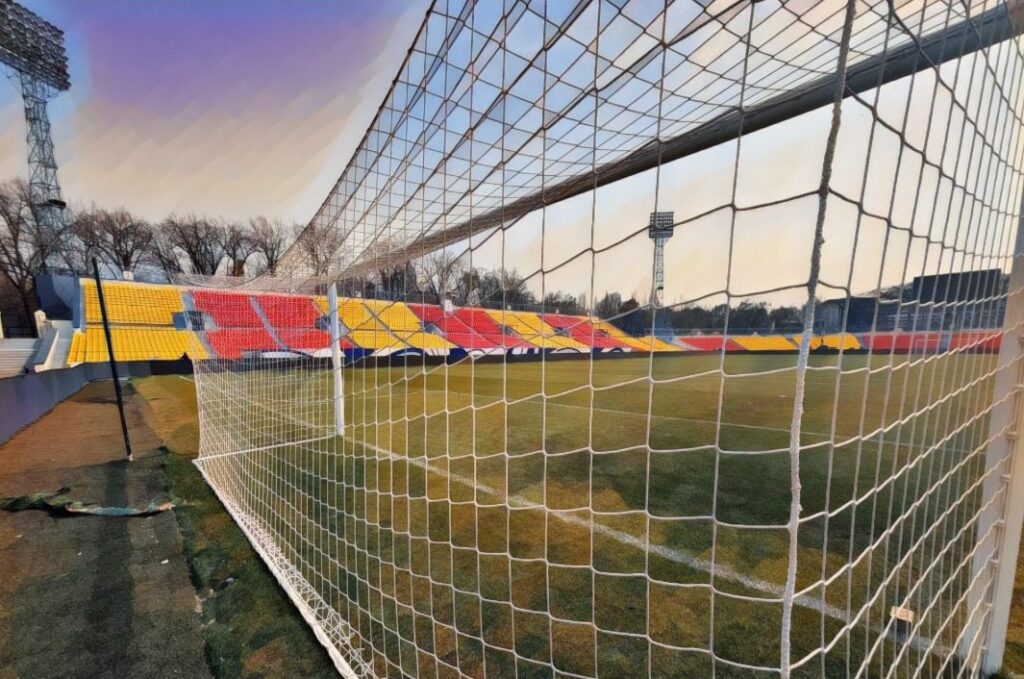
On February 24, Uzbekistan, Kyrgyzstan, and Tajikistan officially submitted a joint bid to host the 2031 AFC Asian Football Cup. If selected, the 2031 tournament would be the first top-level football event hosted in Central Asia. Central Asian Football Association (CAFA) President Rustam Emomali – the eldest son of Tajik President Emomali Rahmon - displayed his enthusiasm following the bid. “Our Central Asian region has never hosted the final part of the Asian Cup. I think the time has come. Our region is represented by very strong teams, and I am confident that together with the fraternal countries, we will host the final part of the Asian Cup at the highest level,” he stated. Whilst a joint bid amongst Central Asia countries has stoked excitement for many in the region, they currently face strong competition to host the event. The UAE, Kuwait, Australia, Indonesia, and South Korea have all signaled their intention to bid to be the tournament’s next host. Whilst none of the three Central Asian nations have hosted a top-level football tournament, Uzbekistan has experience with similar events after hosting the AFC U-20 and U-23 tournaments and the Futsal World Cup in 2024. However, after attending the Futsal World Cup, Uzbek fan Farrukh Irnazarov is nervous that the authorities may not promote the event aggressively enough. “When Uzbekistan hosts an event like this, they’re very serious about it. However, unfortunately their biggest concern is security. [The Futsal World Cup] wasn’t heavily publicized, and many people weren’t aware we were hosting it,” he told The Times of Central Asia. To be considered for the bid, all three countries will need to complete stadium renovations by the time the AFC committee makes its decision in 2026. Uzbekistan is the most prepared of the three, with stadiums already at international tournament capacity in Tashkent, Namangan, Fergana, and Qarshi. A stadium with a minimum capacity of 50,000 seats is required for the final, and Bishkek has already volunteered. Tashkent and Dushanbe are also revamping their respective stadiums, as the host nations must have two cities with 40,000-seat stadiums for the semi-finals in the tournament. [caption id="attachment_30647" align="aligncenter" width="2048"] The Dolon Omurzakov Stadium in Bishkek; image: TCA, Joe Luc Barnes[/caption] What is the AFC Asian Cup? The AFC Asian Cup is an Asian (plus Australia) football competition that has been held every four years since 1956. The previous tournament was held in 2023 in Qatar, which saw the host nation become champions. The tournament started with just four teams: South Korea, Israel, South Vietnam, and Hong Kong, playing a round-robin style tournament before expanding to 24 teams in 2019. Kyrgyzstan and Uzbekistan have already qualified for the next tournament in Saudi Arabia in 2027, whilst Tajikistan and Turkmenistan need to win their group in the final round of qualification to participate. However, for the 2031 tournament, if Kyrgyzstan, Uzbekistan, and Tajikistan see their bid accepted, all three teams will qualify automatically. Central Asia’s best tournament result came with a fourth-place finish by Uzbekistan...

A New Great Game: Multipolar Competition in Central Asia

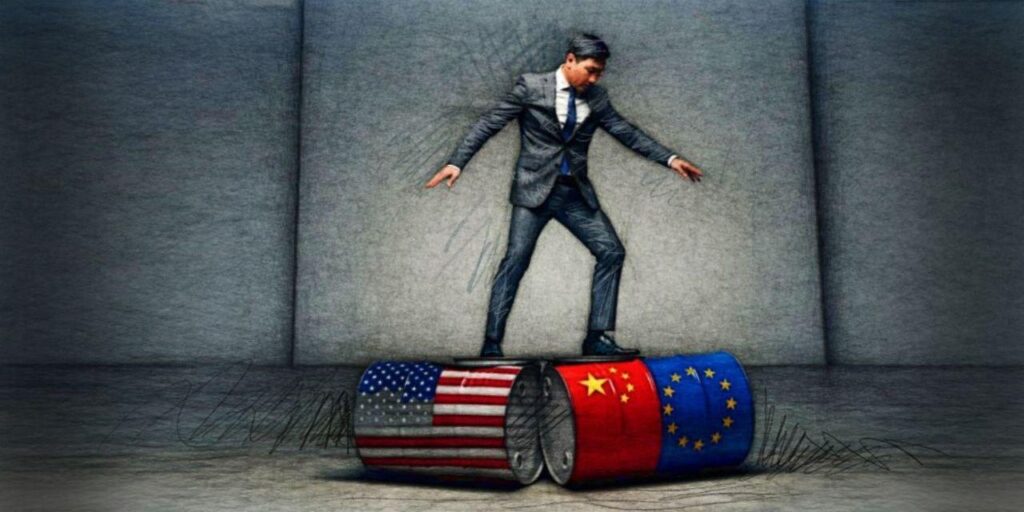
At a time when the European Union, China, and Turkey are seeking to strengthen their presence in Central Asia, the United States administration is consumed with bilaterally implementing a seismic shift in its trade policy with the entire world. Although this region of post-Soviet space is widely seen as a new front of rivalry between Washington and Beijing, in many aspects, American influence in Kazakhstan, Kyrgyzstan, Uzbekistan, Tajikistan, and Turkmenistan lags far behind that of other actors. Culture (soft power) has always played an important role in the foreign policy of every great power. The Soviet Union was no exception. As a result, even today, Russian, rather than English, is still the lingua franca in Central Asia, although Moscow, following its invasion of Ukraine, has had a hard time preserving remnants of its former dominance in the region. Russian cinema, however, maintains a notable presence in most, if not all, Central Asian states. While Hollywood movies have a strong global presence, Russian films in Central Asia often act as a link between Western content and the region's cultural traditions. Millions of Central Asian migrants working in Russia also serve as a bridge between their nations and the Russian Federation, facilitating cultural exchange, economic ties, and the spread of the Russian language. However, Russia’s fiasco in Ukraine has created space for the EU to assert its influence in a region that has traditionally been in Moscow’s geopolitical orbit. Nevertheless, although Kazakhstan, Kyrgyzstan, are Tajikistan are members of the Russian-led Collective Security Treaty Organization, they have remained neutral in the Ukraine conflict. For Central Asian nations, the EU serves as a counterweight they can use to balance their relations with Moscow. The EU, however, faces strong economic competition from China. With a trade volume of $94.8 billion with Central Asian states, Beijing is positioning itself as the major economic power operating in the five regional nations. Although the European Union’s influence in Central Asia is expected to continue to grow in the coming years, if investment trends from recent years persist, the balance in the region will likely tilt towards China, which will increase its presence and influence at the expense of Russia. But where does the United States fit into this dynamic? Even though the U.S. is the largest economy in the world, with which almost everyone wants to engage, American bilateral trade with the region has never been particularly strong, with the exception of Kazakhstan. Interestingly enough, it is Astana that is expected to suffer the most among Central Asian actors due to U.S. President Donald Trump’s decision to impose tariffs – 27% on Kazakhstan compared to 10% on all other nations in the region. Exceptions may be made for Kazakhstan’s critical minerals, however, which are now the third largest in the world based on a recent discovery, with reports suggesting that some goods, including “certain minerals that are not available in the United States,” as well as energy, will not be subject to the tariffs. According to Kazakhstan’s Ministry...

After Player’s Death, Kyrgyzstan Debates How to Make Kok Boru Safer

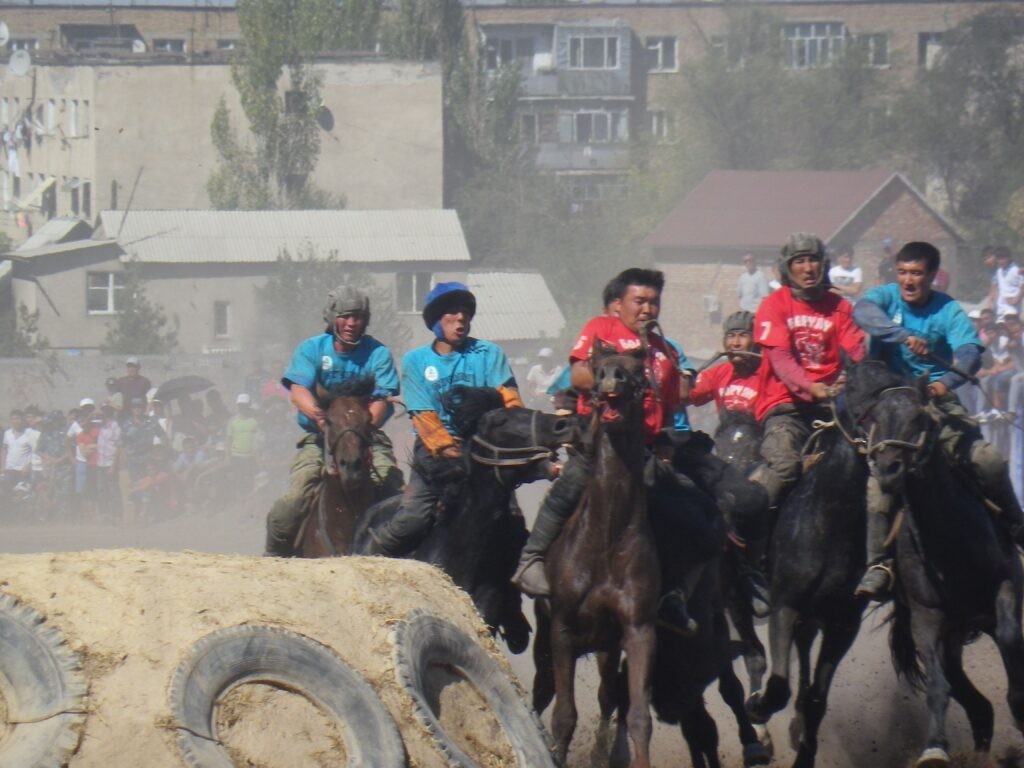
The death last month in Kyrgyzstan of a player of kok boru, a traditional game in which horse riders try to maneuver a headless goat carcass into an opposing team’s goal, has led to discussion in the parliament about whether a rough sport that is a source of regional pride should be made safer for man and horse alike. Mirlan Srazhdinov, a 45-year-old team captain, died during a game of kok boru at an equestrian stadium on the outskirts of Bishkek, Kyrgyzstan’s capital, on March 12. A video that circulated on various online platforms purportedly shows the accident in which Srazhdinov appears to bend down to the side of his horse – and then falls to the ground after another horse and rider crash into him next to a barrier on the side of the sandy playing area. The accident alarmed some lawmakers who view kok boru as an emblem of cultural identity in Kyrgyzstan and elsewhere in Central Asia, acknowledging that the sometimes chaotic scrums on the dusty field have caused harm to contestants but rejecting the idea of banning the game altogether. Kok boru, which is recognized by UNESCO, has a wider following in the region. Kazakhstan, for example, has a variant known as kokpar, and it is known as buzkashi in Afghanistan. The game featured in the World Nomad Games in Kazakhstan last year, using a mould as a modern replacement for the carcass. Srazhdinov had suffered a brain injury and multiple fractures, including one at the base of his skull, the 24.kg news agency reported, citing Bishkek’s Emergency Medicine Center. The player who collided with him was placed in pre-trial detention for two months, and the referee was placed under house arrest. Both have been charged in connection with the death of the team captain. At a parliamentary session, lawmaker Balbak Tulobaev said accidents can happen in any sport and that kok boru should continue to be played with some adjustments to reduce the chance of injury. “There are forces that want to ban the game of kok boru because of this. But we must not allow this," Tulobaev said last week, according to the Kloop news organization. Parliamentarian Ilimbek Kubanychbekov agreed, though he also said changes were necessary because players were getting hurt. Deputy Akkulu Berdiev had concerns about the perils of play near the taikazan, or goal where the goat carcass (or mould) is thrown. He said riders have suffered spinal and other injuries in this area, and horses haven’t been spared either. The taikazan is a raised circular structure with a hollowed out part in the middle. A manual of the rules of kok boru indicates that is very much a contact sport: “To increase interest in the game, forceful techniques are allowed, used by both horses and players, but not violating the rules of the game - player can accidentally hit others by a horse (not strike), players can push each other with their torsos and chests without touching each other’s hands....

Unvaccinated Children Barred from First Grade in Kyrgyzstan

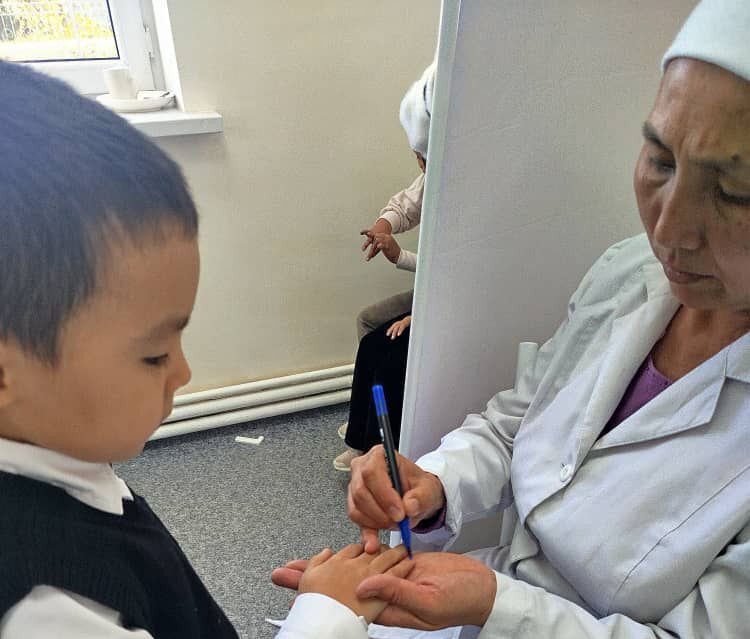
Kyrgyzstan’s Ministry of Education has announced that children who are not vaccinated will not be admitted to first grade, amid a worsening measles outbreak in the country. Deputy Education Minister Lira Samykbayeva stated during a live national radio broadcast that the process of registering children for school has been significantly simplified. Parents no longer need to submit numerous documents such as passports, marriage or birth certificates, and proof of family composition. “This year, the Ministry of Education integrated its database with other government agencies, so there is no longer a need to collect certificates manually,” Samykbayeva explained. However, she emphasized that two medical certificates will remain mandatory: one confirming a general health examination, and another verifying that the child has received preventive vaccinations, including the measles vaccine. “The only thing that must be provided to the school is two medical certificates,” she said. “Including vaccination against measles.” A government decree enforcing the new requirement was adopted just a day earlier. In the future, the Ministries of Education and Health plan to fully integrate their systems, allowing medical records to be accessed automatically by schools. The stricter policy comes as Kyrgyzstan battles a growing measles outbreak. Since the beginning of the year, over 4,000 children have contracted the disease, and eight people have died. According to health officials, 95 percent of those infected were unvaccinated. Speaking to The Times of Central Asia, Gulbara Ishenapysova, Director of the Republican Center for Immunoprophylaxis, said the Ministry of Health is stepping up vaccination efforts. “By decision of the Kyrgyz Cabinet of Ministers, the ministry has revised the national vaccination calendar,” she noted. In an effort to improve public trust, Kyrgyz health authorities have also engaged religious leaders. Clergy across the country are being encouraged to speak with parents about the importance of vaccinating their children.