• KGS/USD = 0.01144 0%
  • KZT/USD = 0.00213 0%
  • TJS/USD = 0.10678 0%
  • UZS/USD = 0.00008 0%
  • TMT/USD = 0.28490 0%
  • KGS/USD = 0.01144 0%
  • KZT/USD = 0.00213 0%
  • TJS/USD = 0.10678 0%
  • UZS/USD = 0.00008 0%
  • TMT/USD = 0.28490 0%
  • KGS/USD = 0.01144 0%
  • KZT/USD = 0.00213 0%
  • TJS/USD = 0.10678 0%
  • UZS/USD = 0.00008 0%
  • TMT/USD = 0.28490 0%
  • KGS/USD = 0.01144 0%
  • KZT/USD = 0.00213 0%
  • TJS/USD = 0.10678 0%
  • UZS/USD = 0.00008 0%
  • TMT/USD = 0.28490 0%
  • KGS/USD = 0.01144 0%
  • KZT/USD = 0.00213 0%
  • TJS/USD = 0.10678 0%
  • UZS/USD = 0.00008 0%
  • TMT/USD = 0.28490 0%
  • KGS/USD = 0.01144 0%
  • KZT/USD = 0.00213 0%
  • TJS/USD = 0.10678 0%
  • UZS/USD = 0.00008 0%
  • TMT/USD = 0.28490 0%
  • KGS/USD = 0.01144 0%
  • KZT/USD = 0.00213 0%
  • TJS/USD = 0.10678 0%
  • UZS/USD = 0.00008 0%
  • TMT/USD = 0.28490 0%
  • KGS/USD = 0.01144 0%
  • KZT/USD = 0.00213 0%
  • TJS/USD = 0.10678 0%
  • UZS/USD = 0.00008 0%
  • TMT/USD = 0.28490 0%

Viewing results 367 - 372 of 1087

Are Innovative Industries One of the Kyrgyz Republic’s Opportunities to Prosper?

The emergence of AI is considered by many to be a major tectonic shift, much like the emergence of the internet in its time. It is hard to overestimate the role innovation plays in our lives, with founders all over the world trying to pioneer our way out of the next problem. At first glance, the Kyrgyz Republic’s tech sector does not represent anything particularly meaningful. The chances of the small landlocked country - the farthest from any ocean in the world, which is the most affordable mode of shipping mode - integrating into innovative global ecosystems on its own seem wholly unrealistic. However, if we look at the dynamics of development in its tech sector, the potential is there. Is there a chance that the Kyrgyz Republic can become a part of the global tech scene? [caption id="attachment_30359" align="aligncenter" width="1440"] Image: The World in Maps[/caption] According to Ashley Vance at Bloomberg, “It’s about a landlocked nation, one with very few natural resources, hoping to gen up a tech industry on the fly.” The Kyrgyz startup ecosystem is clearly in its nascent stages, meaning that you haven’t heard about the Kyrgyz Skype. Yet. The country’s position in the Global Innovation Index in 2024 is 99th, up from 106th in 2023. The Global Startup Ecosystem Index, meanwhile, has the Kyrgyz Republic lower than 100th place in its 2024 ranking, down from 99th in 2023. “The country has maintained second position in Central Asia and seventh in the Central Asia Regional Economic Cooperation Program (CAREC) business region,” according to this index. The Kyrgyz Republic’s VC ranking of 103rd in the Venture Capital & Private Equity Country Attractiveness has barely changed over the last couple of years. When compared to peer group economies, it is obvious that the Kyrgyz Republic needs significant improvements in the depth of the capital market, social environment, entrepreneurial opportunities, and economic activity. [caption id="attachment_30358" align="aligncenter" width="1796"] Image: Venture Capital & Private Equity Country Attractiveness Index 2023[/caption] In terms of the number of venture capital deals, the Kyrgyz Republic is still lagging behind its neighbors. Out of $110+ million of venture capital funding in the region in 2023, the Kyrgyz contribution was only a fraction at $1.1 million. In 2024, this increased to $1.7 million, however, with the country's first venture capital law soon to be adopted. [caption id="attachment_30357" align="aligncenter" width="826"] Image Venture Capital in Central Asia 2024[/caption] The High Technology Park of the Kyrgyz Republic, which is a special tax regime for IT companies targeting exports, is demonstrating a steady growth, with its revenue expanding from under a million in 2013, to a more impressive $130 Million in 2024. The park’s residents are mostly companies providing IT outsourcing for developed markets, but the signs of a turn towards launching their own IT products are there. A separate world-first Creative Industries Park has also been set up to support the country's creative industries, including startups. When it comes to the largest Kyrgyz startups, they are founded by Kyrgyz nationals,...

Exposing the Cracks: Asem Tokayeva on the Decline of RFE/RL and Central Asia’s Media Future

Speaking to The Times of Central Asia, Asem Tokayeva, a seasoned journalist with years of experience at Radio Azattyq - Radio Free Europe/Radio Liberty, offers a compelling critique of RFE/RL's challenges, from internal corruption allegations to its declining relevance in Central Asia's evolving media landscape. Tokayeva started her career with Express K and other publications in Astana before joining Radio Azattyq as a freelancer in 2004 and contributing to the groundbreaking Russian-language program, Паровоз ("locomotive"). In 2008, she played a pivotal role in launching Radio Azattyq’s Russian-language website, a platform recognized for tackling sensitive issues and fostering free discussion. Her work contributed to the site's recognition by the Online News Association in 2009 for "Protecting Citizens' Rights to Information." After nearly 14 years at Azattyq, including over seven at its Prague office, Tokayeva left in late 2017 to further her academic pursuits, earning a Master's degree from Charles University in Prague, where her dissertation focused on Media Framing: Transformation of Nursultan Nazarbayev's Image in the U.S. Media. TCA: How do you feel about the funding cuts to the U.S. Agency for Global Media (USAGM), which oversees projects like RFE/RL and Voice of America? I have always advocated for the reform of Radio Free Europe/Radio Liberty, and now the new U.S. administration has simply cut its funding in one fell swoop. However, I don't see this as just Trump's whim. The work of this media outlet had long been criticized in Washington, and not only during his tenure. During Barack Obama’s and Joe Biden’s presidencies, American media published investigations into abuses, including the infiltration of pro-Kremlin agents, within international broadcasting corporations funded through USAGM. When Hillary Clinton was Secretary of State, she called the entire U.S. international broadcasting structure, which includes Radio Azattyq, "practically defunct." Even during Bill Clinton’s presidency, there were serious discussions in Washington about shutting down these radio stations, as they were considered outdated following the collapse of the USSR and the end of the Cold War. By the 1990s, it was already difficult to claim that Radio Liberty was the sole source of alternative information. During the August 1991 coup in Moscow, other radio stations provided more timely and comprehensive field reports. For instance, Echo of Moscow became one of the most listened-to stations at the time. Today's media landscape has different challenges, such as media literacy and combating fake news, rather than a shortage of news organizations. While the mission and goals of Radio Liberty have renewed significance, given the persistence of authoritarianism in many former Soviet countries, the U.S. administration no longer sees value in its international broadcasting system. They simply decided to shut down another bloated bureaucratic structure, one that had also been plagued by corruption. For example, its parent agency had been overpaying exorbitant amounts for office space in downtown Washington D.C. for 15 years. Radio Azattyq destroyed its uniqueness when it completely shut down shortwave broadcasting in 2012 at the insistence of its then-editor, Yedige Magauin. Yet, in 2011, during the protests...

Inside the EU’s New Power Play in Eurasia

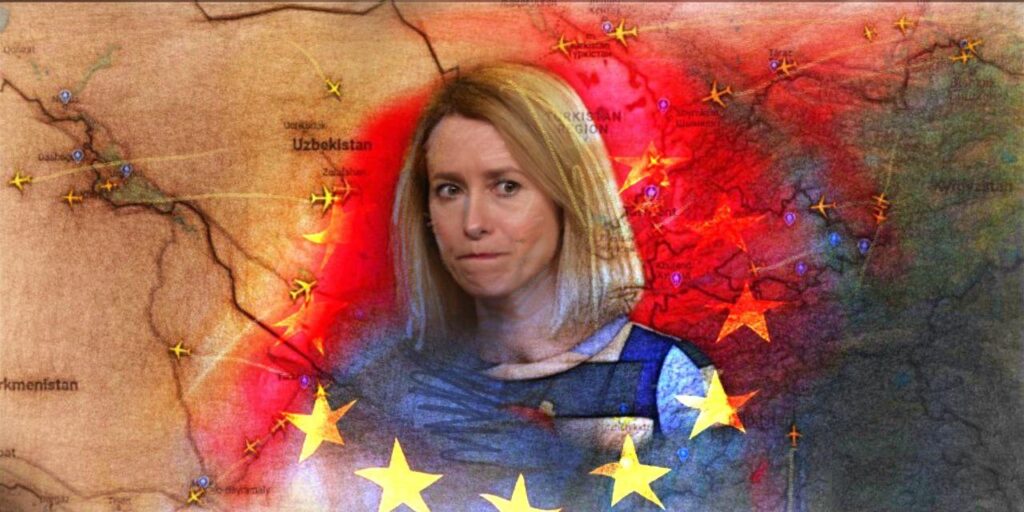
Kaja Kallas’s late-March 2025 tour of Central Asia, in her role as the European Union’s High Representative for Foreign Affairs and Security Policy, was a high-signal intervention in structural terms. It indicates a major re-evaluation of the EU’s posture toward a region historically treated as a far-flung, liminal borderland. As the inaugural EU–Central Asia Summit in Samarkand on April 3–4 approaches, her visible diplomatic activity was less about spectacle than about configuring a new field of co-adaptive engagement. Not only the European Union but also, separately, the United Kingdom are both seeking new regional footholds for building durable alignments. Central Asia, for decades considered through a lens of post-Soviet dependency or one of Chinese infrastructural absorption, is now increasingly recognized as a network node of emergent geopolitical agency. No longer just a space "between" other spaces, it is becoming a strategic space in its own right. Kallas’s mission and the UK’s parallel outreach signify a turn toward a negotiated interdependence that does not dissolve classical interest-based diplomacy but rather "complexifies" it by embedding it in a landscape of developmental trajectories and overlapping power centers. The arc of Kallas’s visit traced a deliberate sequence: Ashgabat, Tashkent, Almaty, Bishkek. In Ashgabat, she chaired the 20th EU–Central Asia Ministerial Meeting, a session nominally bureaucratic but substantively strategic. Discussions reaffirmed the 2023 EU–Central Asia Roadmap and activated the Global Gateway as an organizing frame for infrastructural, digital, and energy cooperation. Bilateral exchanges with officials in Turkmenistan brought the sensitive issue of sanctions circumvention into the open: Turkmenistan, though nominally neutral, remains enmeshed in logistics corridors proximate to Russian interest. From there, Kallas moved to Uzbekistan, where preparations for the April 3–4 Samarkand summit took clearer shape. Talks with President Shavkat Mirziyoyev and Foreign Minister Bakhtiyor Saidov in Tashkent widened the terrain of diplomatic discourse to include the energy transition, educational exchange, and regional transport integration. By hosting summits and fostering cooperation, Uzbekistan is seeking to establish for itself a profile as a key facilitator in Eurasian affairs. In Kazakhstan, her final significant stop, the meetings with President Kassym-Jomart Tokayev and Foreign Minister Murat Nurtleu emphasized macroeconomic diversification and critical raw material supply chains. These are areas in which the EU is not merely a partner but a principal stakeholder. And yet, it is not only the EU that has begun this strategic deepening. The United Kingdom, post-Brexit and still actively reconfiguring its global engagements, has moved in parallel. April 2025 marked the first anniversary of the UK–Kazakhstan Strategic Partnership and Cooperation Agreement. Foreign Office Minister Stephen Doughty’s recent hosting of the Kazakhstan–UK Strategic Dialogue marked 33 years of formal relations. These diplomatic celebrations, beyond their performativity, represent the UK’s recognition that Kazakhstan, and Central Asia more broadly, is a region where its strategic, commercial, and normative interests intersect. In this broader convergence, Kazakhstan plays a central structural role of a balancing nature. It shares long borders with both Russia and China; it hosts a significant Russian-speaking population; and it has maintained a political posture...

Kyrgyzstan’s Gold Reserves Could Last a Century, Says Top Geologist

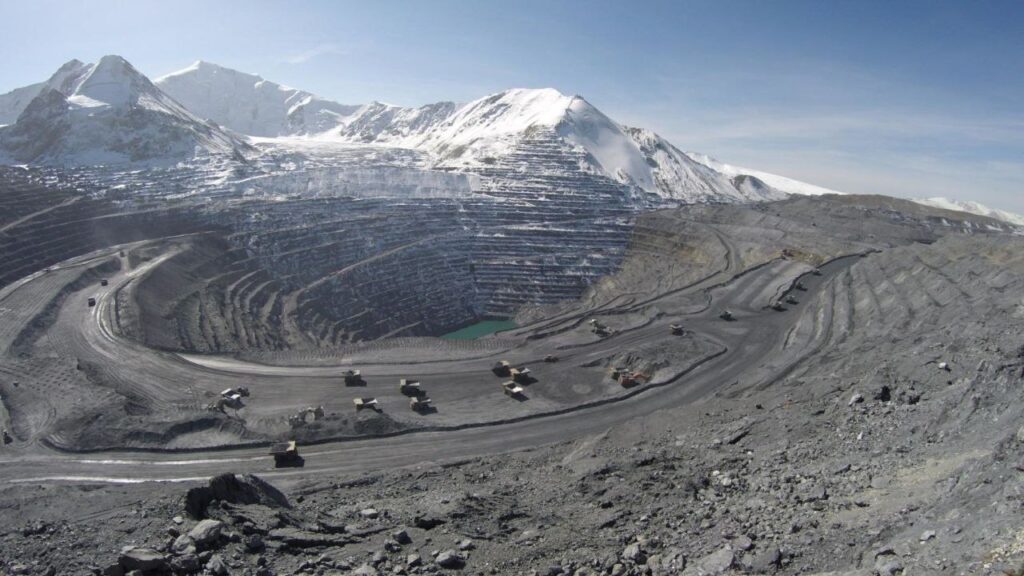
Kyrgyzstan’s largest gold mining operation, Kumtor Gold Company, has identified an additional 147 tons of gold through recent geological exploration. These reserves have now been officially added to the balance sheet of the state-run enterprise, reinforcing expert forecasts that gold extraction in the country can continue for decades to come. The announcement was made by Minister of Natural Resources Meder Mashiev during a press briefing in Bishkek. Mashiev noted that previously unexploited reserves at Kumtor, a key contributor to the national budget, were estimated at 127 tons. Following the new exploration, total reserves now stand at 261 tons. Kumtor Gold Company was nationalized in 2022 after Canadian firm Centerra Gold withdrew from the project. At the time, industry experts predicted the mine would cease operations by 2027 due to depleted reserves at the main open pit. The prospect of investing in new infrastructure at adjacent sites was deemed economically unfeasible. This view was partly supported by production data: in 2015, ore yielded about 5 grams of gold per ton; today, it yields less than one gram. Local experts, however, have described this decline as temporary. According to official figures, Kumtor produced 17.3 tons of gold in 2022, 13.5 tons in 2023, and was projected to produce 12.2 tons in 2024, numbers not seen since 2012, when output fell below 10 tons. Back then, the company cited falling global gold prices and the limited viability of high-volume production. Under the 2022 agreement with Centerra Gold, the Kyrgyz Cabinet of Ministers assumed full management of the Kumtor mine. The Canadian company also agreed to pay over $60 million for environmental protection and transferred control of a $53 million reclamation fund to the Kyrgyz side. In return, it was released from future mine reclamation obligations. In an interview with The Times of Central Asia, Rozalia Djenchuraeva, a geologist at the National Academy of Sciences, stated that with proper management, Kumtor could continue producing gold for another hundred years. “Gold is not running out. There’s still a substantial amount at Kumtor. In the 1980s and 1990s, we recalculated potential reserves in the area and identified over a thousand tons,” Djenchuraeva said. “The entire strip where Kumtor is located is gold-bearing. It stretches along the mountains beneath glaciers, and we have enough gold to last a century. The key is to avoid harming nature.” She emphasized that much of the remaining gold lies beneath glaciers, making extraction without environmental damage particularly challenging. “The high-altitude ecosystem is very sensitive to human interference,” she said. Nonetheless, Djenchuraeva believes that modern exploration and mining technologies offer a path forward. “If we proceed responsibly and with care, gold extraction can continue for many years to come,” she concluded.

Historic Khujand Summit Paves Way for Peace in the Ferghana Valley

The presidents of Kyrgyzstan, Tajikistan, and Uzbekistan gathered in the northern Tajik city of Khujand on March 31 for a meeting that is decades overdue. Among the agreements the three signed were one fixing the border where their three countries meet. Prior to Uzbek President Shavkat Mirziyoyev’s arrival, Kyrgyzstan’s President Sadyr Japarov and Tajikistan’s President Emomali Rahmon exchanged ratified documents of the border agreement between the two countries. Rahmon and Japarov, via video link, also launched the Datka-Sughd power transmission line, a major step in the CASA-1000 project that aims for both their countries to supply electricity to Afghanistan and Pakistan. These agreements might not seem monumental, but they represent a major departure from the troubled past the three governments have had in their border areas. Trouble in Paradise The three countries share the Ferghana Valley, an area roughly the size of Costa Rica that is home to more than 20% of Central Asia’s population. Since the Central Asian states became independent in late 1991, the Ferghana Valley has also been the region’s hotbed of tension. The Ferghana Valley is the cradle of ancient Central Asian civilization. Some living there today say it was the location of the Garden of Eden, and it is not difficult to see why. The Valley is abundant in fruits and vegetables and has extensive arable and grazing land. It is surrounded by mountains to the north, east, and south, and the rivers that flow from these mountains supply ample water. Since independence, the Ferghana Valley has been the most dangerous place in all of Central Asia. The arbitrary borders Soviet mapmakers drew to divide Kyrgyzstan, Tajikistan, and Uzbekistan left many problems for the three after they became independent states. Agreement on where Kyrgyz-Uzbek border is came only in late 2022, and Kyrgyzstan and Tajikistan just signed the agreement on delimitation of their border on March 12. The Islamic Movement of Uzbekistan The roots of Islam lie deep in the Ferghana Valley. There were already calls for Shari’a law in Uzbekistan’s section of the valley just months after Uzbekistan declared its independence. The most serious security threat to Central Asia to date originated in the Ferghana Valley in 1999 and 2000. In early August 1999, a group of some 20 armed militants from the Islamic Movement of Uzbekistan (IMU) appeared in southern Kyrgyzstan, captured a village, and took the villagers and subsequent government negotiators hostage. The IMU leaders were from the eastern Uzbek city of Namangan. They were connected to the protests in Uzbekistan in late 1991 and later joined the Islamic opposition in neighboring Tajikistan’s 1992-1997 civil war. The peace accord that ended the civil war called for opposition fighters to either join the Tajik armed forces or disarm. There was no longer any need for the opposition’s foreign fighters, and the final phase of disarmament was underway by the summer of 1999. In mid-August, the Kyrgyz government paid a ransom for the hostages’ release and the departure of the IMU militants, but this...

Traditional Storytellers in Kyrgyzstan Face Scrutiny From Authorities

Asylbek Maratov is a performer of folk-style poetry in Kyrgyzstan, a form of cultural expression that dates from the time when nomads roamed Central Asia and involves music and improvisation, often delivered at ceremonies and other special events as well as on social media Lately, Maratov and some other akyns, as these oral storytellers are known, have faced pressure in a country where the government is tightening up on expression as a way to ensure what it calls ‘national stability’. The tension points to sensitivities about how freely they can sing or talk about issues that they think are relevant to society as part of a tradition that is steeped in epic tales of the past and has been recognized by UNESCO as intangible cultural heritage. Maratov said he got a warning from the State Committee for National Security for performing songs on political topics at a concert, the Kloop news organization reported this week. It said the performer commented about a caution from the state authorities on Facebook on Wednesday, though a link to the social media post says the content is unavailable. "I received a warning, now may God help me. I don't wish prison on anyone, let the people have joy," Maratov said in the post, according to Kloop. Maratov has previously performed his craft at the World Nomad Games, an event that celebrates culture and sports in Central Asia and is held every two years. He has commented on corruption, a sensitive topic for a government that has promised to curb graft but faces questions about transparency and accountability. Late last year, President Sadyr Japarov signed a new law that toughens punishments and restrictions, for example, barring people convicted of corruption from holding state and municipal jobs. The president has said that his family members won’t get mixed up in state affairs, but reports such as the one last year that his son planned to build the biggest golf course in Central Asia raised some concerns about business ethics. Akyns draw from a tradition that goes back centuries, evoking history, philosophy, and spirituality in their commentaries and sometimes engaging in competitions similar to rap battles. They play instruments such as the Kazakh dombra or Kyrgyz komuz. There is a school for akyns in Kyrgyzstan. They are able to reach a much wider audience than in the past because of YouTube and other social media platforms, and a few in Kyrgyzstan have directed sharp criticism at their country’s leadership. This month, Kyrgyzstan’s Supreme Court upheld a lower court’s sentence of three years in prison for Askat Zhetigen, an akyn who was found guilty of calling for the violent seizure of power, the 24.kg news service reported. Zhetigen had used harsh language while criticizing the authorities on social media. Kloop, the investigative news outlet that reported on the warning against Maratov, was closed under a court order in Kyrgyzstan last year in what media advocates said was a targeting of journalists and a shrinking of free speech in...