• KGS/USD = 0.01144 0%
  • KZT/USD = 0.00212 0%
  • TJS/USD = 0.10454 -0.1%
  • UZS/USD = 0.00008 0%
  • TMT/USD = 0.28571 0.28%
  • KGS/USD = 0.01144 0%
  • KZT/USD = 0.00212 0%
  • TJS/USD = 0.10454 -0.1%
  • UZS/USD = 0.00008 0%
  • TMT/USD = 0.28571 0.28%
  • KGS/USD = 0.01144 0%
  • KZT/USD = 0.00212 0%
  • TJS/USD = 0.10454 -0.1%
  • UZS/USD = 0.00008 0%
  • TMT/USD = 0.28571 0.28%
  • KGS/USD = 0.01144 0%
  • KZT/USD = 0.00212 0%
  • TJS/USD = 0.10454 -0.1%
  • UZS/USD = 0.00008 0%
  • TMT/USD = 0.28571 0.28%
  • KGS/USD = 0.01144 0%
  • KZT/USD = 0.00212 0%
  • TJS/USD = 0.10454 -0.1%
  • UZS/USD = 0.00008 0%
  • TMT/USD = 0.28571 0.28%
  • KGS/USD = 0.01144 0%
  • KZT/USD = 0.00212 0%
  • TJS/USD = 0.10454 -0.1%
  • UZS/USD = 0.00008 0%
  • TMT/USD = 0.28571 0.28%
  • KGS/USD = 0.01144 0%
  • KZT/USD = 0.00212 0%
  • TJS/USD = 0.10454 -0.1%
  • UZS/USD = 0.00008 0%
  • TMT/USD = 0.28571 0.28%
  • KGS/USD = 0.01144 0%
  • KZT/USD = 0.00212 0%
  • TJS/USD = 0.10454 -0.1%
  • UZS/USD = 0.00008 0%
  • TMT/USD = 0.28571 0.28%

Viewing results 391 - 396 of 946

Explosions, Panic, Darkness: Kyrgyz Passenger Describes Azerbaijan Airlines Crash

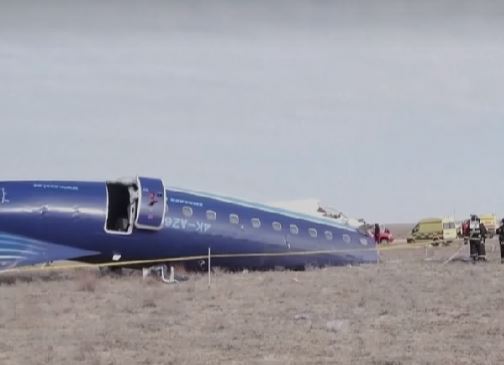
"We are making an emergency landing. Hold on tight, the impact will be strong. After landing, exit the plane quickly.” Rinat Asanov, a passenger from Kyrgyzstan and one of 29 people who survived the Azerbaijan Airlines plane crash in Kazakhstan on December 25, recalled the announcement by a flight attendant shortly before the violent impact that killed 38 others on the aircraft. Asanov, who suffered a severe head injury, fractures and bruises, was recently discharged from a hospital in Bishkek and was interviewed by AKIpress, a news agency based in the Kyrgyz capital. Azerbaijan alleges the Embraer 190 plane diverted from a planned landing in Grozny, Chechnya to Aktau, Kazakhstan after being accidentally hit by Russian ground fire, and Kazakh authorities have said preliminary results of an investigation are expected this month. Most of the 67 people on board, including five crewmembers, were from Azerbaijan, and the second-largest group was from Russia. Six Kazakh citizens died. All three Kyrgyz nationals on the plane survived. Asanov, who was in a coma for three days in a Kazakh hospital before being transferred to intensive care in Kyrgyzstan, described a “good mood” as the flight got underway that morning. He promptly fell asleep on the plane. “Suddenly, a loud sound was heard, similar to an explosion,” he told AKIpress. “I woke up in panic and everyone was crying.” Seconds later, another explosion. “I was confused and didn't understand what was happening. The flight attendants tried to calm down us saying: "Don't panic, everything will be fine, we will land safely."´ Then came the warning about the emergency landing. “It’s difficult to imagine how one should feel at such moments,” Asanov said in the interview, which was published on Tuesday. “First I believed that we could land with no consequences. It was very scary, I felt my vision darken. Later I realized I had lost consciousness. I was sitting in the middle of the cabin, near the wing. As I was later told, passengers in this area and in the tail section of the plane were less injured. However, many in the front part of the plane were severely affected." Other passengers have given similar accounts of events leading to the crash, and small holes in part of the fuselage appear to support the theory that the plane was sprayed with shrapnel. Edil Baisalov, Kyrgyzstan’s deputy Cabinet chairman, visited the Kyrgyz survivors while they were being treated at the National Hospital in Bishkek. He said the country is “incredibly lucky” that they survived and he thanked Kazakhstan for rescue and treatment efforts, according to 24.kg, a Kyrgyz news agency. The two other Kyrgyz survivors were less severely injured than Asanov and were discharged from hospital care before him. Asanov, an IT student at the International University of Kyrgyzstan, previously worked for two years as a surveyor on construction sites in Russia. He is in his 20s. Since the accident, he has found strength in his religious faith and a feeling that he has a...

New U.S. Anti-Russian Sanctions Could Spell Trouble for Central Asian Economies

On January 10, 2025, the U.S. Treasury Department announced a new package of sanctions targeting Russia’s energy sector. The measures, which affect a wide range of organizations and individuals, are set to take effect on February 27. While ostensibly aimed at undermining Russia’s economic interests amid the ongoing conflict in Ukraine, the sanctions are likely to have significant repercussions for Central Asian countries given their close economic ties with Russian energy giants. The sanctions package, viewed by some analysts as a final move by the outgoing Biden administration, could become a potent tool for the incoming administration to exert influence over Russian interests in Central Asia. Sanctions on Gazpromneft Subsidiaries The new sanctions include restrictions on Gazpromneft's subsidiaries operating in Central Asia. Affected entities include Gazpromneft Tajikistan, Gazpromneft Kazakhstan, Gazpromneft Asia (Kyrgyzstan), and Munai Myrza (Kyrgyzstan). According to the U.S. Treasury Department, Gazpromneft and its regional subsidiaries are considered critical sources of revenue that support Russia’s military efforts in Ukraine. In response, Gazpromneft characterized the sanctions as "unfounded, illegitimate and contrary to the principles of free competition." The impact of these sanctions, however, could prove severe for the economies of Central Asia, where Gazpromneft plays a key role in the energy sector. Gazpromneft Asia, for example, is a major supplier of petroleum products in Kyrgyzstan, making it a critical player in the domestic market. Sanctions on the company could disrupt fuel supplies and drive up energy prices in the country. Gazpromneft Kazakhstan LLP, based in Almaty, operates a network of Gazpromneft-branded gas stations in Kazakhstan. While disruptions to fuel supplies in this network might not critically affect Kazakhstan’s economy - the largest in Central Asia - the sanctions carry broader implications. Threats to Joint Projects Beyond direct sanctions on companies, several executives of Russian oil firms actively operating in Kazakhstan have been added to the U.S. sanctions list. Key figures include Vadim Vorobyev, President of Lukoil PJSC and a member of Kazakhstan’s Foreign Investors Council. Lukoil is a strategic partner of KazMunaiGas (KMG) in production and exploration projects; Nail Maganov, CEO of Tatneft, which collaborates with KMG on projects such as Karaton Podsolovaya, Butadiene, and the Saran Tire Plant; Alexander Dyukov, the Chairman of Gazpromneft, and Sergei Kudryashov, CEO of Zarubezhneft, which has signed letters of intent for joint projects with KMG. These sanctions could complicate existing partnerships and delay key projects, undermining Kazakhstan’s energy sector and its broader economic growth. Sanctions on Rosatom and Nuclear Energy Another significant element of the sanctions package is the inclusion of Rosatom executives on the U.S. sanctions list. This development poses challenges to Kazakhstan’s plans to establish an international consortium - including representatives from France, South Korea, China, and Russia - to build a nuclear power plant. With Rosatom facing restrictions, the consortium is now likely to exclude Russia, potentially straining relations between Astana and Moscow. A global leader in nuclear energy, Rosatom was expected to play a central role in the project. Kazakhstan may now explore alternative arrangements, balancing its energy ambitions with the...

The National Bank of Kyrgyzstan Seeks Greater Control Over Commercial Banks

The National Bank of the Kyrgyz Republic (NBKR) has proposed a draft law aimed at regulating tariffs and commissions for banking and payment services provided by commercial banks. The proposal has been published for public discussion on the official government portal Koomtalkuu. The NBKR argues that the regulation is necessary to improve the accessibility of banking services for Kyrgyz citizens. While the current system of free pricing for banking services fosters competition, encourages better customer service and allows for economic flexibility, the regulator is concerned that it also creates barriers for certain segments of the population. “Under competition, some financial organizations may use hidden fees or complex tariff structures, which make it difficult for customers to understand the true cost of services. This also complicates the ability to compare offers and select the most favorable option,” the bill’s background brief states. The National Bank told The Times of Central Asia that interest rates on loans from banks and microfinance institutions in Kyrgyzstan can reach 33–34% per annum. Such high rates significantly increase the financial strain on citizens, reducing the availability of credit. “High tariffs also increase financial burdens on businesses, driving up operational costs. This can lead to higher prices for goods and services, dampened business activity, and reduced consumer demand. In turn, this creates additional risks for banks and the economy as a whole,” the NBKR explained. The central bank also expressed concerns about the potential for market abuse by large financial players. It noted that dominant institutions could inflate fees to suppress competition, discouraging innovation and slowing the development of more affordable financial products. The NBKR argues that Kyrgyzstan needs fair, transparent, and economically justified tariffs for banking services to mitigate these issues. The regulator believes such measures would reduce financial strain on consumers and businesses while fostering a more competitive and innovative banking sector. As of October 1, 2024, Kyrgyzstan's financial sector comprised: 21 banks; 194 non-bank financial and credit institutions; 3 credit bureaus; 1 guarantee fund; 41 payment organizations; and 40 payment system operators. This diverse and growing financial ecosystem underscores the importance of effective regulation to ensure broad accessibility and equitable practices in the banking sector.

Former Kyrgyz Presidential Aide Detained in Moldova

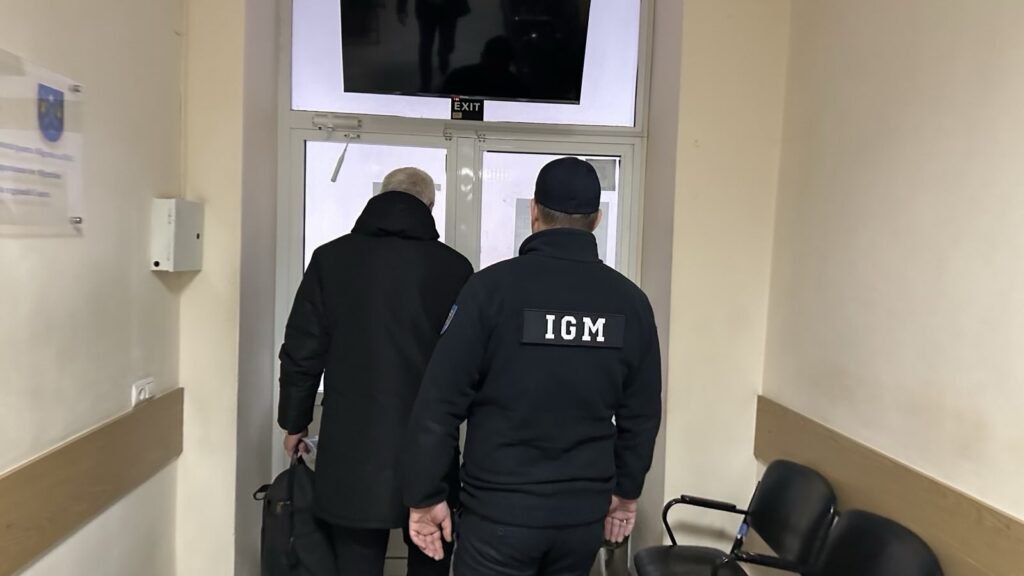
Aidar Khalikov, a former public aide to the president of Kyrgyzstan, has been detained in Moldova under an Interpol warrant on charges of large-scale fraud. Investigative journalist Bolot Temirov was the first to report Khalikov's detention, raising the possibility of his extradition to Kyrgyzstan. The report was later confirmed by the General Inspectorate for Migration under Moldova’s Ministry of Internal Affairs. According to their statement, the detention was carried out as part of efforts to locate individuals wanted internationally for evading criminal responsibility. Charges Against Khalikov The Kyrgyz Ministry of Internal Affairs stated that Khalikov, born in 1965, is being prosecuted under Article 209 of the Kyrgyz Criminal Code, which pertains to fraud. He is accused of stealing a significant sum of money from a Kyrgyz citizen identified solely as S.D. Investigators suspect Khalikov may also be involved in other similar crimes. The General Prosecutor’s Office of Kyrgyzstan is now working on his extradition. Background Khalikov was a prominent member of the "Mekenchil" party and played an active role in Kyrgyzstan's political landscape, particularly during the political upheavals of 2020. Following those events, he was appointed as an aide to President Sadyr Japarov. However, in 2024, Khalikov left Kyrgyzstan and began publicly criticizing Japarov and his inner circle. Khalikov’s arrest in Moldova underscores ongoing efforts by the Kyrgyz authorities to track and prosecute high-profile individuals facing criminal charges. His extradition process will likely attract significant attention in both Kyrgyzstan and Moldova in the coming weeks.

In Doha, Central Asian Artists Dismantle Orientalism

Completely covered by a huge textile patchwork piece, softly moved by the wind, the façade of the Mathaf Museum in Doha promises visitors something fascinating and alluring. Coming closer, attendees could read a series of statements in various languages on the fabric. The effect of familiarity and estrangement at once was the purpose of Azerbaijani artist Babi Badalov, who realized the piece. By layering phrases in Arabic, Cyrillic, and Latin with calligraffiti and employing disjointed grammar and syntax, the artist meant to visually disrupt “linguistic imperialism” and show how Europe’s modern civilization owes much to Arab civilization. [caption id="attachment_27513" align="aligncenter" width="2560"] The Mathaf Museum in Doha; image: TCA, Naima Morelli[/caption] This specially commissioned work, called Text Still (2024), is nothing but an appetizer for the show Seeing is Believing: The Art and Influence of Gérôme. Organized by the forthcoming Lusail Museum — an institution under development in northern Doha that will house the largest collection of the so-called Orientalist art — the exhibition features loans from institutions such as the Metropolitan Museum of Art in New York and the Islamic Arts Museum in Malaysia. The main part of the show is dedicated to French artist Jean-Léon Gérôme, who lived and worked in the 19th century and was profoundly influential in his depictions of the Middle East, North Africa, and South Asia. His works shaped Western perceptions of these regions during an era when colonialism and “Oriental Studies” were cementing global power dynamics. The show included a historical and biographical exploration of Gérôme’s life, timed to celebrate the 200th anniversary of his birth, as well as a photographic section curated by Giles Hudson dedicated to visions of the Orient from Gérôme’s time to today. But it is in the third section, centered on contemporary art and called “I Swear I saw That”, that Central Asian artist really enter into a close dialogue with Gérôme’s Orientalism, turning it on its head. Sara Raza, curator of this section, takes Badalov’s textile work as a case in point: “Badalov inverts Edward Said’s mission of examining Western perceptions of the Orient, focusing instead on Eastern perceptions of the Occident, and vice versa,” she told The Times of Central Asia. Edward Said’s concept of Orientalism, as detailed in his groundbreaking 1978 work of the same name, is an institutionalized program of Western knowledge, based mostly on projections, mystification, and imagination - and includes works of art as well as the academy - which is directed to justify a supposed Western superiority and imperialism over Eastern populations. “I Swear I Saw That” interrogates Jean-Leon Gerome’s way of seeing, which Sara Raza recognizes as a “fantastical and highly mythologized vision of the East,” and looks at how artists from both the Middle East, the Arab world and Central Asia fought back. A Central Asia and Caucasus expert who works extensively in the Middle East, Raza has examined the process of the exoticization of Eastern populations for a long time. She coined the term “Punk Orientalism,” which also became the...

Kyrgyzstan Announces Tax Amnesty

The Kyrgyz government has introduced a tax amnesty as part of its efforts to ease the financial burden on citizens and stimulate economic activity. President Sadyr Japarov directed the government to draft the necessary legislation and submit it to the country's Parliament, the Jogorku Kenesh, for approval​. One key measure is the abolition of the annual tax on movable property, previously ranging from $10 to $20 depending on vehicle engine capacity. Instead, this tax will now be incorporated into the price of gasoline, resulting in a one som (KGS) increase in fuel costs. “The Cabinet of Ministers of the Kyrgyz Republic is instructed to submit within two months a proposal to exempt vehicle owners from tax obligations unfulfilled as of January 1, 2025, provided there is no judicial act of recovery,” states the presidential decree. Tax Relief for Farmers and Entrepreneurs Farmers will benefit from a suspension of the agricultural land tax until 2030. Additionally, Japarov has prohibited tax authorities from conducting inspections of businesses except for unscheduled checks in cases where an organization or entrepreneur ceases operations. Citizens with tax debts as of January 1, 2022, will also be exempted from repaying those amounts. While the move has been welcomed by many Kyrgyz entrepreneurs, who see it as a step toward fostering business growth, it has also sparked mixed reactions. Some citizens who have already paid their taxes expressed frustration on social media, questioning the fairness of the amnesty. Changes to Tax Administration In a related development, Japarov instructed the Cabinet of Ministers to revise the system of electronic delivery notes used for monitoring business turnover and tax compliance. The updated system will retain electronic invoicing for a limited list of goods, with all other products exempt from such requirements. The recent reforms build on efforts initiated under Almambet Shykmamatov, the new head of the State Tax Service, to streamline Kyrgyzstan’s tax system and reduce administrative burdens on businesses​​.