• KGS/USD = 0.01143 0%
  • KZT/USD = 0.00205 0%
  • TJS/USD = 0.10433 0.1%
  • UZS/USD = 0.00008 0%
  • TMT/USD = 0.28577 0%
  • KGS/USD = 0.01143 0%
  • KZT/USD = 0.00205 0%
  • TJS/USD = 0.10433 0.1%
  • UZS/USD = 0.00008 0%
  • TMT/USD = 0.28577 0%
  • KGS/USD = 0.01143 0%
  • KZT/USD = 0.00205 0%
  • TJS/USD = 0.10433 0.1%
  • UZS/USD = 0.00008 0%
  • TMT/USD = 0.28577 0%
  • KGS/USD = 0.01143 0%
  • KZT/USD = 0.00205 0%
  • TJS/USD = 0.10433 0.1%
  • UZS/USD = 0.00008 0%
  • TMT/USD = 0.28577 0%
  • KGS/USD = 0.01143 0%
  • KZT/USD = 0.00205 0%
  • TJS/USD = 0.10433 0.1%
  • UZS/USD = 0.00008 0%
  • TMT/USD = 0.28577 0%
  • KGS/USD = 0.01143 0%
  • KZT/USD = 0.00205 0%
  • TJS/USD = 0.10433 0.1%
  • UZS/USD = 0.00008 0%
  • TMT/USD = 0.28577 0%
  • KGS/USD = 0.01143 0%
  • KZT/USD = 0.00205 0%
  • TJS/USD = 0.10433 0.1%
  • UZS/USD = 0.00008 0%
  • TMT/USD = 0.28577 0%
  • KGS/USD = 0.01143 0%
  • KZT/USD = 0.00205 0%
  • TJS/USD = 0.10433 0.1%
  • UZS/USD = 0.00008 0%
  • TMT/USD = 0.28577 0%

Viewing results 241 - 246 of 652

Central Asia Endures Record-Breaking March Heatwave Attributed to Climate Change

Central Asia experienced an unprecedented heatwave in March 2025, with temperatures soaring to levels typically seen in late spring or summer. According to a new study by World Weather Attribution (WWA), cities across Uzbekistan, Kazakhstan, Kyrgyzstan, and Turkmenistan recorded daytime highs near or above 30°C, far above the seasonal norm. In Kyrgyzstan's Jalalabad, the temperature peaked at 30.8°C, while Uzbekistan's Namangan and Fergana registered 29.4°C and 29.1°C, respectively. Kazakhstan’s Shahdara witnessed a nighttime low of 18.3°C, the hottest March night ever recorded in the country. Researchers from the Netherlands, Sweden, Denmark, the United States, and the United Kingdom examined the five hottest days and nights in March across the region. Their findings indicate that human-induced climate change made the heatwave approximately 4°C hotter and nearly three times more likely. They also noted that climate models tend to underestimate early-season heat, particularly in March. Economic and Agricultural Risks The timing of the heatwave posed serious challenges for agriculture. In Kazakhstan, the spike in temperatures coincided with the start of spring wheat planting, while in neighboring countries, fruit trees were already in bloom, raising concerns about yield losses. Agriculture remains a critical sector in the region, employing up to 50% of the workforce in some countries and contributing between 5% and 24% to GDP. The region also depends heavily on glacier-fed irrigation systems. Unseasonably warm weather can accelerate snowmelt, depleting water reserves needed during peak agricultural demand later in the season. In response to declining glacier volumes, seven artificial glaciers were built in southern Kyrgyzstan's Batken region in late autumn 2024 to support future water needs. A Warming Future The WWA study warns that without significant emissions reductions, such heatwaves will become increasingly frequent and intense. If global warming reaches 2.6°C, events like March 2025 could become far more common. Governments in Central Asia are beginning to take action. Kazakhstan and Tajikistan, for example, have integrated heat-related risks into their national climate adaptation plans. Still, experts urge a broader, more coordinated regional response, calling for the use of heat-tolerant crops, enhanced early warning systems, and climate-conscious urban planning.


Trump Tariffs: A Barrier for Kyrgyzstan, or an Opportunity?

Akylbek Japarov, former head of Kyrgyzstan’s Cabinet of Ministers, has described the United States’ newly imposed trade duties as an "economic earthquake" already reshaping global markets. However, he sees an opportunity for Kyrgyzstan, which faces a comparatively low U.S. tariff rate of just 10%. A Regional Advantage Japarov argues that China has been hit hardest by the new U.S. tariffs. “Following the introduction of duties, Chinese goods are 20-35 percent less competitive, not due to the nominal tariff alone, but because of higher overall costs, disrupted logistics, contract renegotiations, and increased risk premiums,” he explained in a Facebook post. “Part of that market is being freed up, for someone else.” Kyrgyzstan, along with Uzbekistan and Tajikistan, faces a 10% U.S. tariff rate. In contrast, Kazakhstan’s goods are subject to 27% duties. Japarov sees this as a competitive edge that Kyrgyzstan could leverage to integrate into new supply chains, especially while global players are adjusting to the new trade landscape. The former prime minister believes the country is well-positioned geographically, situated between China, the Eurasian Economic Union (EAEU), and South Asia, with low production costs and access to regional markets. While Kyrgyzstan’s total trade turnover stands at around $16 billion, the U.S. accounts for only 4% of that figure. Key exports to the U.S. include shoes, tobacco products, animal-derived goods, and pharmaceuticals. Japarov suggests Kyrgyz businesses focus on re-exports, product localization, and packaging. He calls for investments in logistics and customs certification, and for the government to craft a new export strategy. “While some see a threat, others are building export channels. While some are calculating losses, others are increasing production,” he said. An Opening for Business, Not Policy In an interview with The Times of Central Asia, Sergei Ponomarev, president of the Kyrgyz Association of Markets, Trade and Services, said the new tariffs should be viewed as part of a larger negotiation process. “The trade war has begun. China, the European Union, and other countries are already responding. But the duties have also triggered a wave of global inflation. These are high risks but also great opportunities,” he said. Ponomarev noted that Kyrgyzstan’s limited integration with the global economy means it will likely experience only indirect effects. Still, he pointed to past examples of adaptive trade strategies. Before joining the EAEU, Kyrgyz entrepreneurs often re-labeled Chinese products as “Made in Kyrgyzstan” for resale in Russia. In some cases, Chinese producers even falsely labeled their goods as Kyrgyz to benefit from preferential access to the Russian market. He suggested similar tactics could re-emerge under the current trade environment. “Some businesses may exploit the 10% duty. Chinese goods could be repackaged in Kyrgyzstan or processed through joint ventures,” Ponomarev said. “For example, a sweater could arrive from China, sleeves sewn on in Kyrgyzstan, and the product re-exported as local.” Such methods, he noted, may be feasible in low-tech sectors like apparel, but Kyrgyzstan lacks the skilled labor force needed to replicate this in high-tech manufacturing. Ponomarev concluded that while Japarov’s ideas are...

Unpacking the Effects of Trump’s Tariffs on Central Asia

Trade analysts across Central Asia generally agree that the immediate impact of the United States' tariff policy on the export dynamics of their nations will likely be minimal, as observed in past experiences, except for Kazakhstan. However, there is a palpable concern regarding potential unforeseen consequences arising from a broader global trade conflict. Notably, the timing of the Trump administration's announcement regarding global tariffs on imports coincides with a period when Central Asian countries are actively working to enhance their regional trade relationships. This new tariff policy raises significant doubts about the authenticity of recent U.S. efforts to promote increased trade and investment in the region. The mixed signals coming from Washington may lead Central Asian leaders to re-evaluate their current trade partnerships, especially as they consider the benefits of strengthening ties with China and Russia against the attractiveness of expanding commerce with the United States. Similarly, the European Union may find an opportunity to improve its position, while India could leverage the Chabahar route (a multi-modal transportation route connecting India, Iran, Afghanistan, and potentially Central Asia and Europe). It is worth noting that the market is primarily situated in Asia, and this alternative could have adverse long-term effects on the United States. Kazakhstan, acknowledged as the United States’ largest trading partner in Central Asia, is poised to face significant repercussions from introducing new tariffs set at 27%. In 2024, trade relations between the U.S. and Kazakhstan reached an impressive total of $3.4 billion, with $1.1 billion in U.S. exports to Kazakhstan and $2.3 billion in imports from Kazakhstan to the U.S. However, a statement from the Kazakh Trade Ministry indicates that exports to the U.S. primarily consist of crude oil, uranium, silver, and other raw materials, all exempt from these tariffs. In 2024, Kazakhstan exported only $95.2 million worth of goods, which will now incur surcharges – a relatively modest figure compared to the country’s overall foreign trade turnover of $141.4 billion. Trade analysts suggest that Kazakhstan has little cause for concern, viewing this situation more as a psychological impact than a serious economic threat. Resource-driven Central Asian economies, such as Kazakhstan, may even find enhanced opportunities in the expanding Asian market. Trade dynamics in Central Asia reveal a complex landscape, especially concerning the United States. In 2024, Uzbekistan managed to export a modest $42.4 million worth of goods to the US, a small fraction considering its total foreign trade turnover, which reached an impressive $66 billion for that year. This stark contrast highlights the limited engagement of Uzbekistan in the American market. With its total trade turnover of $16 billion in 2024, Kyrgyzstan similarly struggled with exports to the US, which amounted to merely $16.7 million. This reflects a broader trend where Central Asian economies exhibit low volume exports to the US, suggesting significant barriers or challenges in establishing a foothold in this lucrative market. Tajikistan's economic performance presented an even more sobering picture. Recording a total trade turnover of $8.9 billion, the country achieved only $4.6 million...

European Investment Bank Commits €365 Million to Environmental Projects in Central Asia

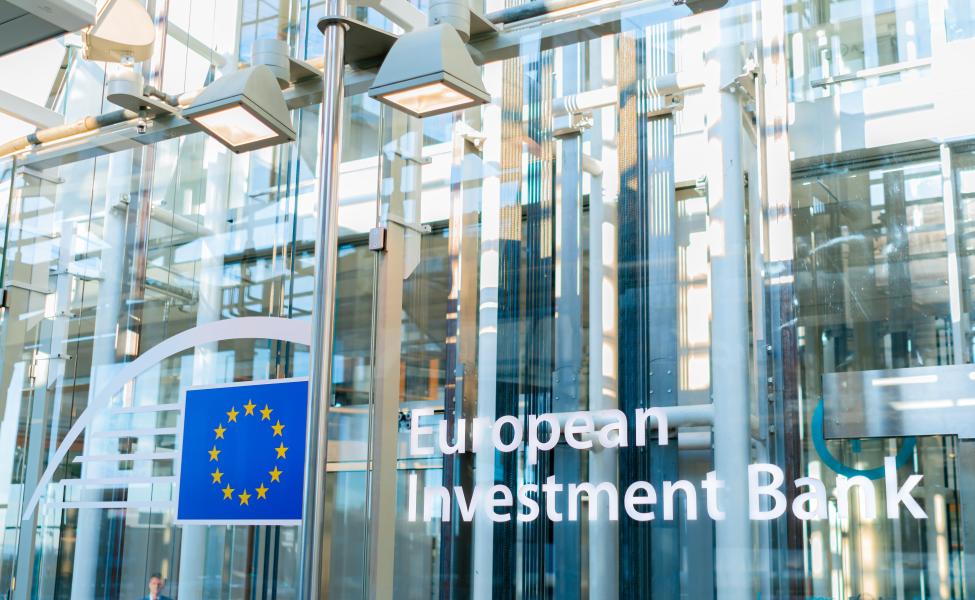
At the first EU-Central Asia Summit, held in Samarkand, Uzbekistan, on April 4, European Investment Bank (EIB) Vice-President Kyriacos Kakouris signed four memorandums of understanding with partners in Kyrgyzstan, Tajikistan, and Uzbekistan. The agreements will direct €365 million in funding and are expected to unlock up to €1 billion in investment for sustainable transport, water management, and climate resilience initiatives across the region. The EIB is the long-term lending institution of the European Union. These agreements support the EU’s Global Gateway strategy, which aims to boost private sector development, improve transport and logistics infrastructure, and strengthen water management and environmental sustainability throughout Central Asia. In Kyrgyzstan, the EIB will provide €50 million through the Kyrgyzstan State Development Bank to support infrastructure investments via the National Promotional Bank. Tajikistan will receive €100 million to develop sustainable transport infrastructure along the Trans-Caspian Transport Corridor. In Uzbekistan, €175 million will be allocated to the Uzbekistan Water Implementation Center for water management and environmental sustainability projects, particularly under the Aral Sea Project, in collaboration with the French Development Agency (AFD). Additionally, Uzbekistan’s JSCB Microcredit bank will receive €40 million to bolster private sector development and to enable local financing for projects that contribute to sustainable transport and logistics connectivity. During the summit, Kakouris also signed a Host Country Agreement with Uzbekistan, establishing an EIB Regional Representation in the country to enhance the Bank’s presence in Central Asia. The EIB further announced the launch of negotiations for a framework agreement with Turkmenistan, signaling plans to begin operations there. “These agreements underscore the European Union and Central Asia’s shared commitment to deepening mutually beneficial cooperation,” said Kakouris. “As the EU’s bank, the EIB will continue playing a pivotal role in strengthening economic ties, promoting sustainability and private sector development, and enhancing infrastructure across the region. The memorandums of understanding pave the way for future financing in the transport and water sectors. Moreover, the Host Country Agreement with Uzbekistan and the launch of negotiations with Turkmenistan mark important milestones for the EU’s growing engagement in Central Asia.”

Central Asia Launches Joint Initiative to Eliminate Tuberculosis by 2030

All five Central Asian nations have launched a regional campaign titled “Central Asia Free of Tuberculosis” with the ambitious goal of eliminating tuberculosis (TB), including drug-resistant strains, across the region by 2030, according to Turkmenportal. The initiative is led by the WHO Regional Office for Europe and supported by international health organizations. Health ministers and senior officials from Kazakhstan, Kyrgyzstan, Tajikistan, Turkmenistan, and Uzbekistan convened in Astana to formally launch the campaign and sign a joint declaration. The agreement outlines commitments to work closely with the World Health Organization (WHO), the Stop TB Partnership, the Global Fund, civil society organizations, and other partners. Over the past decade, the five countries have made significant strides in combating TB through the introduction of new treatments and improved disease surveillance systems. The new initiative aims to accelerate these efforts toward total eradication. Key Objectives of the Initiative Include: Testing Coverage: Ensure that at least 95% of all new and recurrent TB cases are diagnosed using rapid WHO-recommended diagnostic tools, which are already in place across the region. Treatment Expansion: Broaden access to shorter, injection-free treatments for drug-resistant TB, which have demonstrated success rates of over 85%. Vaccine Preparedness: Prepare national health systems for the rollout of new TB vaccines once they become available. Primary Healthcare Integration: Incorporate TB diagnosis and treatment into each country’s primary healthcare system, with support from WHO’s Primary Health Care Centre in Almaty. WHO Regional Director Dr. Hans Kluge commended the political leadership demonstrated by the Central Asian governments. He emphasized that the region is now closer than ever to achieving TB elimination but must sustain its commitment through continued investments and stigma-reduction efforts to ensure equitable access to care. The regional strategy is expected to yield significant results by 2027 and will serve as a framework for monitoring and accelerating progress toward TB elimination in Central Asia.

Unvaccinated Children Barred from First Grade in Kyrgyzstan

Kyrgyzstan’s Ministry of Education has announced that children who are not vaccinated will not be admitted to first grade, amid a worsening measles outbreak in the country. Deputy Education Minister Lira Samykbayeva stated during a live national radio broadcast that the process of registering children for school has been significantly simplified. Parents no longer need to submit numerous documents such as passports, marriage or birth certificates, and proof of family composition. “This year, the Ministry of Education integrated its database with other government agencies, so there is no longer a need to collect certificates manually,” Samykbayeva explained. However, she emphasized that two medical certificates will remain mandatory: one confirming a general health examination, and another verifying that the child has received preventive vaccinations, including the measles vaccine. “The only thing that must be provided to the school is two medical certificates,” she said. “Including vaccination against measles.” A government decree enforcing the new requirement was adopted just a day earlier. In the future, the Ministries of Education and Health plan to fully integrate their systems, allowing medical records to be accessed automatically by schools. The stricter policy comes as Kyrgyzstan battles a growing measles outbreak. Since the beginning of the year, over 4,000 children have contracted the disease, and eight people have died. According to health officials, 95 percent of those infected were unvaccinated. Speaking to The Times of Central Asia, Gulbara Ishenapysova, Director of the Republican Center for Immunoprophylaxis, said the Ministry of Health is stepping up vaccination efforts. “By decision of the Kyrgyz Cabinet of Ministers, the ministry has revised the national vaccination calendar,” she noted. In an effort to improve public trust, Kyrgyz health authorities have also engaged religious leaders. Clergy across the country are being encouraged to speak with parents about the importance of vaccinating their children.