• KGS/USD = 0.01143 0%
  • KZT/USD = 0.00205 0%
  • TJS/USD = 0.10433 0.1%
  • UZS/USD = 0.00008 0%
  • TMT/USD = 0.28577 0%
  • KGS/USD = 0.01143 0%
  • KZT/USD = 0.00205 0%
  • TJS/USD = 0.10433 0.1%
  • UZS/USD = 0.00008 0%
  • TMT/USD = 0.28577 0%
  • KGS/USD = 0.01143 0%
  • KZT/USD = 0.00205 0%
  • TJS/USD = 0.10433 0.1%
  • UZS/USD = 0.00008 0%
  • TMT/USD = 0.28577 0%
  • KGS/USD = 0.01143 0%
  • KZT/USD = 0.00205 0%
  • TJS/USD = 0.10433 0.1%
  • UZS/USD = 0.00008 0%
  • TMT/USD = 0.28577 0%
  • KGS/USD = 0.01143 0%
  • KZT/USD = 0.00205 0%
  • TJS/USD = 0.10433 0.1%
  • UZS/USD = 0.00008 0%
  • TMT/USD = 0.28577 0%
  • KGS/USD = 0.01143 0%
  • KZT/USD = 0.00205 0%
  • TJS/USD = 0.10433 0.1%
  • UZS/USD = 0.00008 0%
  • TMT/USD = 0.28577 0%
  • KGS/USD = 0.01143 0%
  • KZT/USD = 0.00205 0%
  • TJS/USD = 0.10433 0.1%
  • UZS/USD = 0.00008 0%
  • TMT/USD = 0.28577 0%
  • KGS/USD = 0.01143 0%
  • KZT/USD = 0.00205 0%
  • TJS/USD = 0.10433 0.1%
  • UZS/USD = 0.00008 0%
  • TMT/USD = 0.28577 0%

Viewing results 247 - 252 of 361

Preserving Heritage: How the Manas Epic Inspires Kyrgyzstan’s Youth

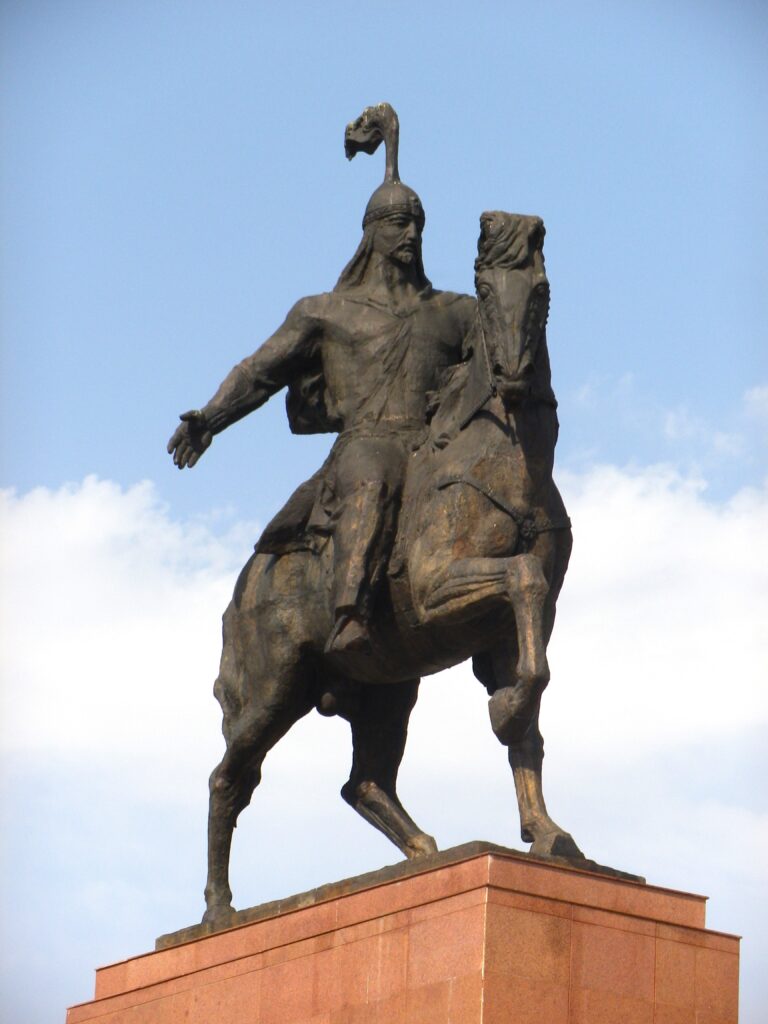
A nation steeped in cultural heritage, Kyrgyzstan continues to be proud of its unique attractions, and among them, the epic work "Manas" occupies a special place. The Manas epic is of special importance because it contains rich information on history, ethnography, philosophy, language, diplomacy, military affairs, folk pedagogy, and other aspects of life of the Kyrgyz people. Another distinctive feature of Manas is its huge volume - more than half a million lines of verse - which makes it the longest epic in the world. The relevance of Manas continues, today. Theatrical productions based on the work and competitions to display knowledge of it underscore the continuing interest in this great literary heritage. An observer of these contests, Zhanara believes that Manas still has a profound impact on the people of the regions, especially on schoolchildren who participate in these competitions. "Such events are conducted with a very careful selection process, which implies the serious preparation of the participants. At the end of the day, their efforts yield results and well-deserved prizes," she told TCA. However, journalist Aigerim from Bishkek believes the Manas epic still has a profound effect even on urban youth. "I think the epic plays a significant role for the whole country. Although not everyone knows it in full, key plot points are known to almost everyone and are often reflected in everyday life. For example, 'Kokotay's wake,' which lasted for several weeks and was very lavish. Also, the main characters can be called role models to a certain extent: brave and fair Manas, wise Bakai and weak, vain Bokmurun, whose name literally translates as ‘snotty nose’,” she told TCA. The epic also contributes to the development of young people's creative abilities. "In almost every classroom, scenes from the epic are staged and students study its lines. Manaschi (bards), who continue to be the performers and custodians of this epic, still enjoy respect and popularity. I recently became aware of a case where a young boy was given a stallion in recognition for his outstanding performance. Mairam, a blogger from Osh, sees Manas as an integral part of Kyrgyz culture and traditions. She notes the epic serves as a key cultural code for the Kyrgyz people. "'Manas is a kind of portrait of the Kyrgyz nation as heroic and brave,” she told TCA. “It also reflects Kyrgyz culture in detail, and I, along with many of my friends, turn to it as a cultural touchstone so that we don't forget who we are."
Kyrgyzstan Makes Strides in Digital Technologies

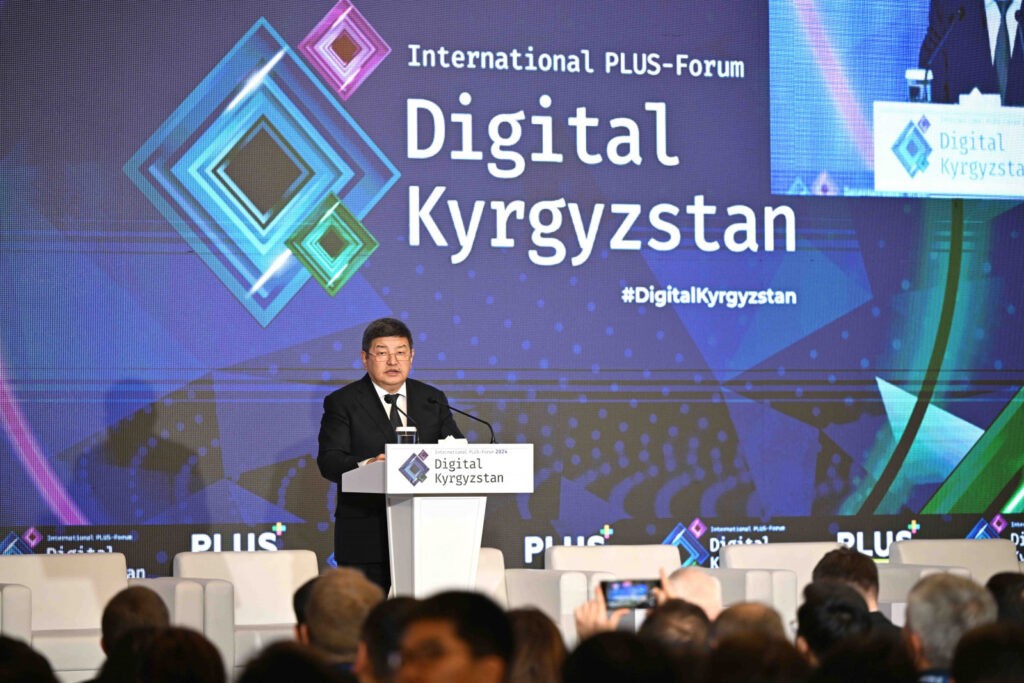
At the International PLUS-Forum ‘Digital Kyrgyzstan’ on 28th February, Akylbek Japarov, Chairman of the Cabinet of Ministers of the Kyrgyz Republic, announced that Kyrgyzstan is to create a Centre for Innovative Technologies. The centre for the advancement of developments in the field, including Artificial Intelligence and quantum computing, will be a non-governmental institution, financed through government subsidies and sponsorship. The prime minister emphasized the government’s commitment to introducing digital technologies and by expanding state provision, provide an open digital society in Kyrgyzstan. This year, the country is set to adopt its first-ever Digital Code. Online registration of motor vehicles, introduced back in September 2023, now allows the sale and purchase of cars through a mobile app. “It is now possible to create, re-register and liquidate a legal entity without leaving your home,” stated Mr Japarov, adding that online purchase and sale of real estate will be launched on March 1st. Touching upon the development of AI in Kyrgyzstan, he referenced the government’s purchase of a supercomputer which able to recognize and synthesize speech, is already being used to broadcast news in the Kyrgyz language on state radio channels.

Kyrgyzstan Offers Eye Operations to Premature Babies

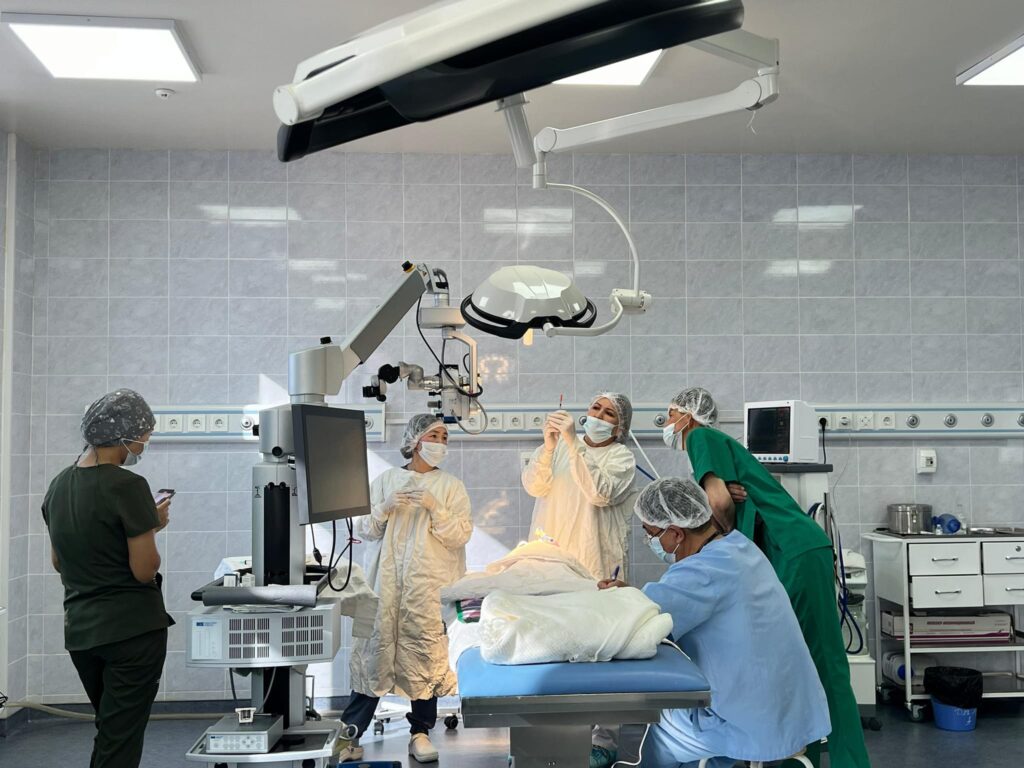
Doctors in Bishkek yesterday conducted two successful surgeries on premature babies, performing laser coagulation of the retina on infants with retinopathy. According to the National Center for Maternal and Child Health of Kyrgyzstan, Kyrgyz doctors were assisted in these operations by the chief retinologist of Almaty. The Kyrgyz Health Ministry describes retinopathy as an eye anomaly that is detected in children born prematurely. In 2023 in Kyrgyzstan there were 1,280 cases of premature babies born with retinopathy. Most of these babies, including those who could not get treatment abroad, went blind. According to reports, Kyrgyz doctors have mastered a new type of eye surgery thanks to colleagues from Kazakhstan, where Kyrgyz specialists were previously trained. "Earlier, with the active support of the National Red Crescent Society, the Swiss Red Cross and the L'Occitane Foundation, two doctors from the ophthalmology department of the National Center for Maternal Health successfully completed training on screening retinopathy in premature babies in Almaty," the Center said. The Kyrgyz Ministry of Health commented: "Rare eye surgeries have become possible thanks to the equipment that Kyrgyz doctors last year bought from the United States; a specialized laser for iridotomy. This [device] has become an invaluable tool in the fight against retinopathy in children." The National Center for Maternal and Child Health also said that such operations will soon begin to take place not only in Bishkek, but also in the country's regions. Doctors from other Kyrgyz cities have already been trained by Kazakhstani specialists.

Bishkek Cable Car Plan Gets Mixed Reaction

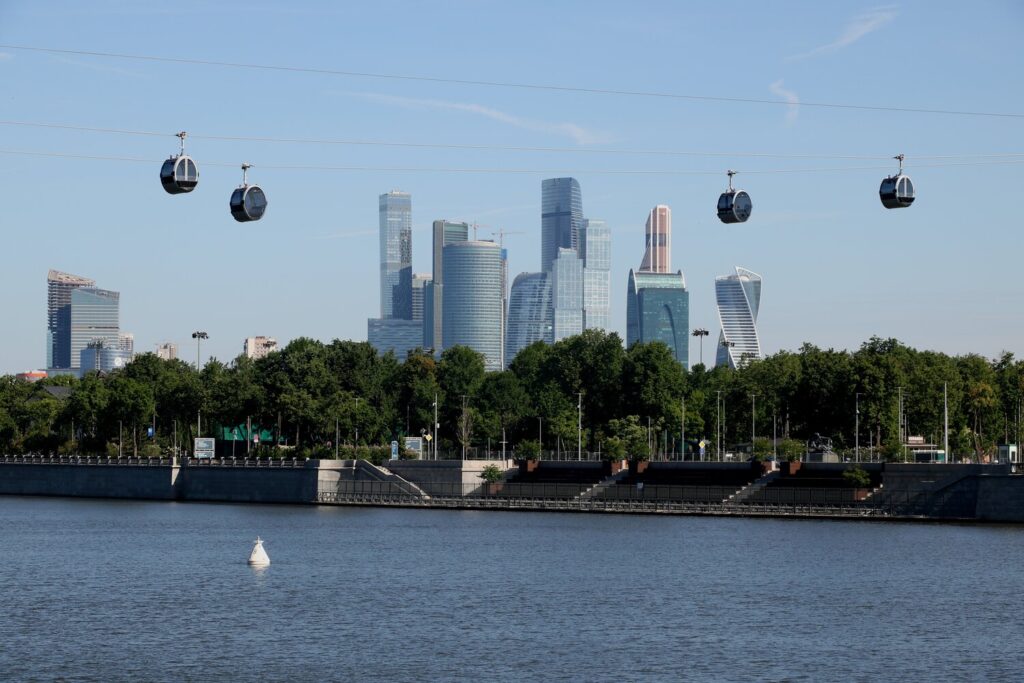
The Bishkek municipality’s plan to build a cable car line to solve transport problems in Kyrgyzstan’s capital has received a mixed response from the city residents. Many believe the proposed project is too expensive and will not achieve the declared goal of providing comfortable transport options. In January, the Mayor of Bishkek, Aibek Junushaliev visited Switzerland to meet with Roland Bartholet, CEO of the engineering company, Bartholet Maschinenbau AG, with the parties signing an agreement and approving a plan to build a cable car line in Bishkek. Bishkek’s Deputy Mayor, Maksatbek Sazykulov said this week that the project’s designer is expected to arrive from Switzerland late in February, that construction may begin in May or June, and the line could be in operation in the third quarter of 2025. According to the deputy mayor, the line is planned to stretch for six kilometers from north to south along a major central avenue, have five stations and 65 cars, and a daily capacity of up to 100,000 passengers. The approximate cost of the project is $50m-$60m. Bishkek City Council member, Kadyrbek Atambayev, believes the project to build a cable car line leaves many unanswered questions. “Cable cars are usually used in areas with very rough terrain, where other modes of transport cannot function effectively. In our case, in the absence of significant natural obstacles or large water barriers inside the city, the use of a cable car line does not provide significant advantages over existing types of urban transport,” Atambayev wrote on Facebook. Atambayev stated that the cost of construction and maintenance of the cable car line significantly exceeds the cost for city buses. “Six kilometers of cable line [would] cost of up to $60m… $100m allowed Bishkek to purchase 1,000 buses last year,” he stated. The city of Bishkek’s press service earlier called the cable line project an important step in the modernization of urban infrastructure aimed at providing comfortable transport options for the people of the city.

Artificial Intelligence in Central Asia: Applications and Regulation

The debate on the need for worldwide regulation of artificial intelligence (AI) is gaining momentum, given that over the past year AI has become a key tool for millions of people. With a growing number of organizations applying AI in various fields, including medicine, politics and judicial decisions, the urgent question is how to integrate AI into legislation. In Central Asia, in 2020 the National Bank of Kyrgyzstan authorized remote identification of individuals at banks using AI, machine learning and other predictive algorithms to process customer biometric data. Bishkek also introduced a facial recognition system based on artificial intelligence which allows data about wanted persons to be entered, and cameras to automatically identify them and transmit information to law enforcement. Artificial intelligence has also found its application in the political process. In 2020, the Mekenim Kyrgyzstan Party used a digital bot farm during the elections which generated approximately 150 profiles a day, automatically wrote comments and then self-liquidated. In Tajikistan, where the use of AI is not widespread, MegaFon stands out for its introduction of the Dono chatbot in 2019. This artificial interlocutor interacts with around 14,000 subscribers per day, freeing humans from routine tasks and allowing them to deal with more complex issues. In Uzbekistan, meanwhile, the government is taking active measures to stimulate the development of AI technologies. A presidential decree has established comprehensive steps towards the digitization of the economy and the social sphere. Digitization of government data in various sectors, such as justice, communications, finance, education and healthcare are becoming an integral part of the development strategy. The application of AI technologies, starting with image recognition and navigation systems, has already become a tangible part of task-solving in large enterprises, and the country is actively working to create an enabling environment to further expand the use of AI. In Kazakhstan, AI is being actively introduced in the judicial system, and over the past two years AI systems have been used to analyze court cases and predict their outcomes. The authorities believe that this approach helps minimize errors and improves the quality of justice. In the field of healthcare, since 2022 Kazakhstan has been successfully operating the PneumoNet program based on artificial intelligence. This program makes it possible to detect 17 of the most pathogenic lung diseases, including pneumonia, tuberculosis, and cancer. Currently, Kazakhstan, Kyrgyzstan and Tajikistan do not have specific laws regulating the creation and use of AI. Despite this, the Strategy for the Development of Artificial Intelligence in the Republic of Tajikistan until 2040 notes that during the implementation of the first and second stages of said strategy, legal, institutional and infrastructural frameworks will be developed, and the necessary specialists will be trained. Unlike its neighbors, Uzbekistan adopted a presidential decree "On measures to create conditions for the accelerated introduction of artificial intelligence technologies" as early as 2021. This document has become the legal foundation for the further development of AI in the country, defining its main directions. The resolution emphasizes the need to develop...

Kyrgyzstan’s Migrant Workers Remitted $2.7 Billion in 2023

Net remittances sent by migrants back to Kyrgyzstan reached record levels at the end of 2023, according to the National Bank of the Kyrgyz Republic (NBKR). The bank's data shows that the record was achieved mostly due to a decrease in the outflow of money from the country. Migrant workers transferred $2.7 billion to Kyrgyzstan in 2023. According to statistics maintained by the NBKR, this is 12%, or $380 million less than a year earlier. However, the outflow of money from Kyrgyzstan in 2023 amounted to only $561 million - half as much as in 2022. That put the net inflow of funds remitted back into the country at $2.145 billion -- an all-time record. At the beginning of 2024, the NBKR included in its statistics separate information on transfers made through bank cards and electronic wallets. According to the regulator, these methods of sending and receiving money to and from abroad are now actively used along with traditional money-transfer systems. The NBKR report says that in 2023, the region from which Kyrgyz people transferred the most money was Russia, with $2.531 billion in remittances. The remaining $200 million came from a combination of the United States, Kazakhstan, Turkey, Germany, the United Kingdom and other countries. Russia accounts for more than 90% of all remittances to Kyrgyzstan. The lion's share is comprised of migrant workers providing for their families at home. In 2021, remittances accounted for over 30% of the GDP, making Kyrgyzstan one of most remittance-based economy in the world. Approximately one-fifth of the Kyrgyz labor force works abroad, almost exclusively in Russia. It should be noted that remittances to Commonwealth of Independent States (CIS) countries from the Russian Federation increased after the so-called anti-war emigration. According to the Russian media, the volume of remittances by individuals from Russia to CIS countries after the Kremlin's attack on Ukraine in 2022 increased 2.5 times to $24.5 billion. The money was mainly transferred to Kyrgyzstan, Kazakhstan, Armenia and Georgia. However, in 2023 the volume of remittances decreased by 1.4%. Meanwhile, the leader among Central Asian countries in terms of remittances is Uzbekistan. Labor migrants working in different foreign countries (mainly Russia) transferred more than $16 billion to this country in 2023. In Tajikistan, according to statistics, $5.7 billion was transferred last year - which is almost half of the republic's GDP. The volume of remittances to Kazakhstan for the 2023 reporting period amounted to $670 million dollars, declining by more than half on the previous year. At the same time, Kazakhs withdrew three times more money from the country than they received from abroad in 2023.