• KGS/USD = 0.01144 0%
  • KZT/USD = 0.00194 -0%
  • TJS/USD = 0.10822 -0.18%
  • UZS/USD = 0.00008 0%
  • TMT/USD = 0.28490 -0.28%
  • KGS/USD = 0.01144 0%
  • KZT/USD = 0.00194 -0%
  • TJS/USD = 0.10822 -0.18%
  • UZS/USD = 0.00008 0%
  • TMT/USD = 0.28490 -0.28%
  • KGS/USD = 0.01144 0%
  • KZT/USD = 0.00194 -0%
  • TJS/USD = 0.10822 -0.18%
  • UZS/USD = 0.00008 0%
  • TMT/USD = 0.28490 -0.28%
  • KGS/USD = 0.01144 0%
  • KZT/USD = 0.00194 -0%
  • TJS/USD = 0.10822 -0.18%
  • UZS/USD = 0.00008 0%
  • TMT/USD = 0.28490 -0.28%
  • KGS/USD = 0.01144 0%
  • KZT/USD = 0.00194 -0%
  • TJS/USD = 0.10822 -0.18%
  • UZS/USD = 0.00008 0%
  • TMT/USD = 0.28490 -0.28%
  • KGS/USD = 0.01144 0%
  • KZT/USD = 0.00194 -0%
  • TJS/USD = 0.10822 -0.18%
  • UZS/USD = 0.00008 0%
  • TMT/USD = 0.28490 -0.28%
  • KGS/USD = 0.01144 0%
  • KZT/USD = 0.00194 -0%
  • TJS/USD = 0.10822 -0.18%
  • UZS/USD = 0.00008 0%
  • TMT/USD = 0.28490 -0.28%
  • KGS/USD = 0.01144 0%
  • KZT/USD = 0.00194 -0%
  • TJS/USD = 0.10822 -0.18%
  • UZS/USD = 0.00008 0%
  • TMT/USD = 0.28490 -0.28%
18 December 2025

Viewing results 1351 - 1356 of 1846

Kyrgyz Parliament Developing a Russian-Kyrgyz Legislative Dictionary

Last summer, the Kyrgyz Republic adopted a law on the official state language, according to which all civil servants must speak Kyrgyz, and speak only the state language in Parliament and the ministries. As one of the members of the working group in Parliament notes, a lot of international terms have appeared in legal practice today, and civil servants - sometimes not knowing their exact meaning in Kyrgyz - use the terms in their work, often incorrectly, causing potentially grave misunderstandings. "The main purpose of the initiative is to eliminate confusion in the terms used in the application of legal acts - bringing them into a unified system," said Nurlan Azygaliev, Deputy Speaker of the Parliament. Another member of the working group, the Chairman of the State Commission on Language, said the initiative would have a positive impact on the development of the Kyrgyz language as a whole. After officials develop a dictionary for legislative acts, they will work on creating an explanatory Russian-Kyrgyz dictionary of legal terms. "These issues should have been given attention since the first years of independence. We all need to work together in this direction," said State Language Commission Chairman, Melis Murataliyev. Several years ago, Kyrgyz President Sadyr Japarov urged officials to switch to Kyrgyz language documents. As the president noted, if officials remain indifferent, the Kyrgyz language will not develop. The head of the republic cited statistics that indicate ministries and agencies of Kyrgyzstan use Kyrgyz language only in 10-15% of the documents in circulation. The rest of the documents are printed in Russian. "These indicators should not be less than 50%," Japarov emphasized. According to the law adopted by the president, the Kyrgyz language should be used also for administrative dealings such as court proceedings, concluding international agreements, and conducting elections. It should also be used in more common communication in education, science and culture, as well as in the media and other areas. Today, Kyrgyzstan's mass media must publish more than half of all their publications in the state language. According to the republic's constitution, the authorities are also obliged to support the development of other languages spoken in the country. "Kyrgyzstan adheres to the principle of the free use of languages of representatives of all ethnic groups living on the territory of the country, and guarantees the creation of conditions for the development of these languages. Every citizen has the right to create conditions for the preservation, study and development of his or her native language," the law stipulates. Currently, most state orders, decrees and administrative legal acts, especially in the capital, Bishkek, are issued in Kyrgyzstan's de jure official language - Russian.

Launch of a Clinker Line for Kyrgyzstan’s Largest Cement Plant

On March 20th, First Deputy Chairman of the Cabinet of Ministers of the Kyrgyz Republic, Adylbek Kasymaliev attended a ceremony to launch the construction of a new clinker line at the cement plant in Kant. Kasymaliev reported that in 2023, the plant received $8.5 million from the Kyrgyz-Russian Development Fund for an export-oriented aerated concrete line. This year, thanks to a loan of $50 million from the Eurasian Development Bank and $20 million of internal investments, the construction of a new clinker line has begun. Clinker is essential for cement production and its versatility allows it to be stored and transported globally without risk of degrading. With the completion of the new line, the production of high-quality clinker will total 800 thousand tons per year. Located 20km east of Bishkek, Kyrgyzstan’s largest cement plant currently produces over 1.1 million tons of cement per year and since it cooperates with 45 companies – from manufacturers of bags for cement to end consumers – the plant’s activities have a widespread impact on Kyrgyzstan’s economy.

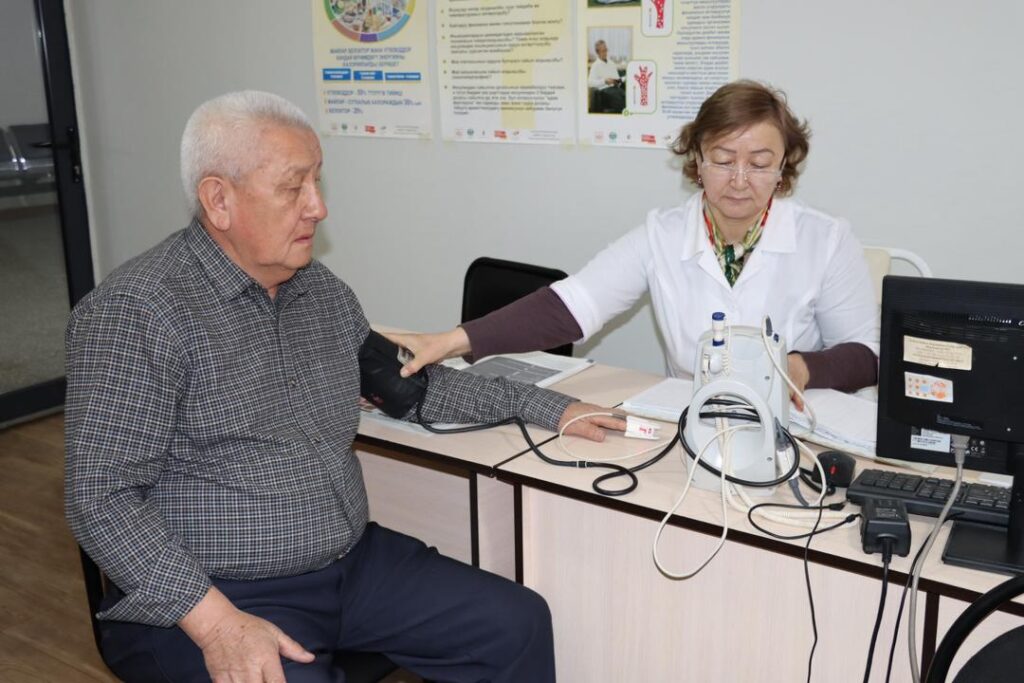
Kyrgyzstan’s ‘Be Responsible!’ Health Program Screens 680,000 Men

The key aim of Kyrgyzstan's 'Be Responsible!' program is to encourage men to attend primary health care institutions for check-ups and specifically, the early detection of non-communicable and chronic diseases. According to a new report by the country's Ministry of Health, in just under a month, more than 680,000 men visited family doctors. For 149,000, it was either their first ever visit or the first in two years. The Ministry of Health's press centre hailed the success of the widespread campaign to attract attendances saying, "More than 44,000 men were categorized as having a high risk of cardiovascular diseases, and almost 33,000, a high risk of diabetes. The total number of men who visited medical institutions amounted to 47 percent of those over 18 years of age living in the country." Cardiovascular disease, cancer, lung disease and diabetes are categorized as chronic diseases. Data collected by the ministry indicates that in 2022, 52.1% of the mortality rate in men was caused by cardiovascular disease; 12.2% by cancer, and 5.5% by respiratory diseases. Doctors also drew attention to poor nutrition including a high salt intake and insufficient consumption of fruits and vegetables; the use of tobacco, alcohol abuse, and low levels of physical activity as contributing factors to poor health. With financial support from the Swiss government, the first screening campaign for Kyrgyz men was conducted in 2019. In response to doctors' reports of the rising number of men taking better care of their health, the Ministry of Health issued an order for the program to be conducted nationwide, on an annual basis, from 2023 onwards.

Tajikistan and Kyrgyzstan Agree to Further Border-Demarcation Protocol

From 12 - 17 March, Tajik and Kyrgyz topographic working groups and legal groups serving under the respective government delegations convened to in Tajikistan's Sughd region. According to a report by the Tajik State Committee for National Security, discussion in Buston focused on the demarcation and delimitation of Tajikistan’s and Kyrgyzstan’s state borders. During the meeting, an agreement was signed by topographical working groups to codify 10.76 kilometres of the Tajikistan-Kyrgyzstan state border. The two parties then voted to continue working on defining the remaining portions of the common state border at a subsequent meeting to be held in Kyrgyzstan. Back in February, the Minister of Foreign Affairs of Tajikistan Sirojiddin Mukhriddin said that almost 200 kilometres of the common line of the Tajikistan-Kyrgyz state border had been agreed upon, leaving roughly 100 kilometres of the area under dispute.

Montana Farmer Pleads Guilty to Cloning Endangered Kyrgyz Argali Sheep

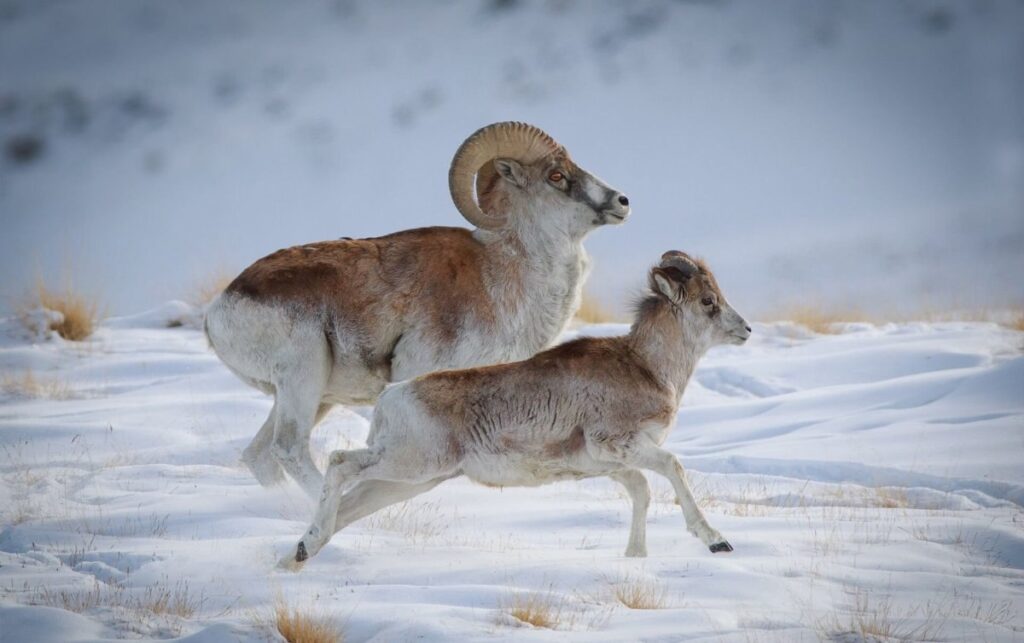
As reported by the Daily Montanan an 80-year-old farmer from Montana, Arthur "Jack" Schubarth, has pleaded guilty to federal charges for violating the Lacey Act, which prohibits the sale, transportation and purchase of wild animals between American states. In 2013, Schubarth illegally brought part of an argali sheep which had been killed in the Kyrgyz mountains into the U.S. and paid a laboratory to create cloned embryos from the animal's DNA. The embryos were then implanted into sheep on his farm and in time, he succeeded in raising a genetically pure argali, which he named Montana's Mountain King. Used to impregnate other sheep, the ram's sperm produced fairly large hybrids. In a statement to the paper, assistant U.S. Attorney General Todd Kim said, "It was a bold plan to create large hybrids of sheep for sale and hunting as trophies... By implementing this scheme, Schubarth violated international law and the Lacey Act, which protect the viability and health of local animal populations," According to investigators, Schubarth conspired with five individuals to sell hybrid offspring to Texas and Minnesota under the guise of domestic sheep from New Mexico. The sheep hybrids led to healthy profits in the field of hunting. In 2020, a farmer sold one of Mountain King's sons and 11 sheep containing a quarter of his genetics for $23,000 after obtaining a fake export license. The plea agreement states that the market value of all such sheep sold by Schubarth reached half a million dollars. The Argali, also known as a Marco Polo, is the largest ram on earth. Reaching up to two meters in length, with a height at the withers of 120 centimetres, an adult can weigh 180 kilograms. The breed is also valued for its large, curled horns and in Kyrgyzstan, is protected as an endangered species. However, once a year, authorities issue about 70-80 licenses to cull the population; an activity popular with foreign hunters and a lucrative source of income for the state. Whilst the fine for illegal killing of an argali is around $15,000, the official rate charged to licenced hunters is around $10,000. Speaking to the Times of Central Asia, Askar Davletbayev, an ecologist with the Kyrgyz National Academy of Sciences, stated, "According to the law, one percent of the total argali population can be shot but we try to shoot no more than 0.5 percent. According to the data, there are now about 19,000 of these animals in the country. Since the situation isn't critical, the current level of hunting can be maintained." During the autumn hunting season, many argali living on the Sarychat-Ertash Nature Reserve in the Issyk-Kul region migrate to areas around the nearby Kumtor gold mine. Scientists explain this as a way in which the animals try to protect themselves from both hunters and predators. Because the gold mine's territory cannot be accessed without approval, hunting is forbidden. Furthermore, since the local dump provides ample food for predators, the argali are left in peace. On more than one...

US Helps Kyrgyzstan Prepare for Future Pandemics

A Global Health Security and Pandemic Preparedness Program was launched last week. The joint initiative between the United States, the Kyrgyz Republic, the Food and Agriculture Organization, the World Health Organization, and a consortium of other organizations, aims to improve Kyrgyzstan’s resilience against public health emergencies and coordinates with the United Nation’s ‘One Health’ policy linking human, animal, and environmental health. As reported by the U.S. Embassy in Bishkek, the program will target seven key areas in Kyrgyzstan: tracking and reducing antimicrobial resistance; monitoring zoonotic diseases transmissible between animals and humans; strengthening national laboratory systems; disease surveillance; building capacity within the healthcare workforce; developing risk communication and community engagement strategies; and bolstering health emergency management. U.S. Ambassador to the Kyrgyz Republic Lesslie Viguerie stated, “The United States Government ranks global health security among its top five priorities. Today’s event marks the next chapter in our long collaboration for improving Kyrgyz health care. We worked side-by-side during the COVID-19 pandemic and continued to do so in the pandemic recovery phase. We have made tremendous advancements in detecting and treating tuberculosis and HIV/AIDS. Many lives have been saved thanks to the collaborative efforts between our governments. With the timely launch of the National Action Plan for Health Security last year, the Kyrgyz Republic is taking a lead role to prepare its health systems for any future pandemics.” The Deputy Minister of Health of the Kyrgyz Republic Bubuzhan Arykbaeva further endorsed the initiative saying, “We are confident that with USAID funding this program will play a critical role in supporting key technical areas of the National Action Plan for Health Security. The implementation of the Global Health Security program in the Kyrgyz Republic will allow our country to create a more stable foundation for future response to threats in the field of public health.”