• KGS/USD = 0.01144 0%
  • KZT/USD = 0.00215 0%
  • TJS/USD = 0.10641 0%
  • UZS/USD = 0.00008 0%
  • TMT/USD = 0.28530 0%
  • KGS/USD = 0.01144 0%
  • KZT/USD = 0.00215 0%
  • TJS/USD = 0.10641 0%
  • UZS/USD = 0.00008 0%
  • TMT/USD = 0.28530 0%
  • KGS/USD = 0.01144 0%
  • KZT/USD = 0.00215 0%
  • TJS/USD = 0.10641 0%
  • UZS/USD = 0.00008 0%
  • TMT/USD = 0.28530 0%
  • KGS/USD = 0.01144 0%
  • KZT/USD = 0.00215 0%
  • TJS/USD = 0.10641 0%
  • UZS/USD = 0.00008 0%
  • TMT/USD = 0.28530 0%
  • KGS/USD = 0.01144 0%
  • KZT/USD = 0.00215 0%
  • TJS/USD = 0.10641 0%
  • UZS/USD = 0.00008 0%
  • TMT/USD = 0.28530 0%
  • KGS/USD = 0.01144 0%
  • KZT/USD = 0.00215 0%
  • TJS/USD = 0.10641 0%
  • UZS/USD = 0.00008 0%
  • TMT/USD = 0.28530 0%
  • KGS/USD = 0.01144 0%
  • KZT/USD = 0.00215 0%
  • TJS/USD = 0.10641 0%
  • UZS/USD = 0.00008 0%
  • TMT/USD = 0.28530 0%
  • KGS/USD = 0.01144 0%
  • KZT/USD = 0.00215 0%
  • TJS/USD = 0.10641 0%
  • UZS/USD = 0.00008 0%
  • TMT/USD = 0.28530 0%

Viewing results 991 - 996 of 1644

Preserving Heritage: How the Manas Epic Inspires Kyrgyzstan’s Youth

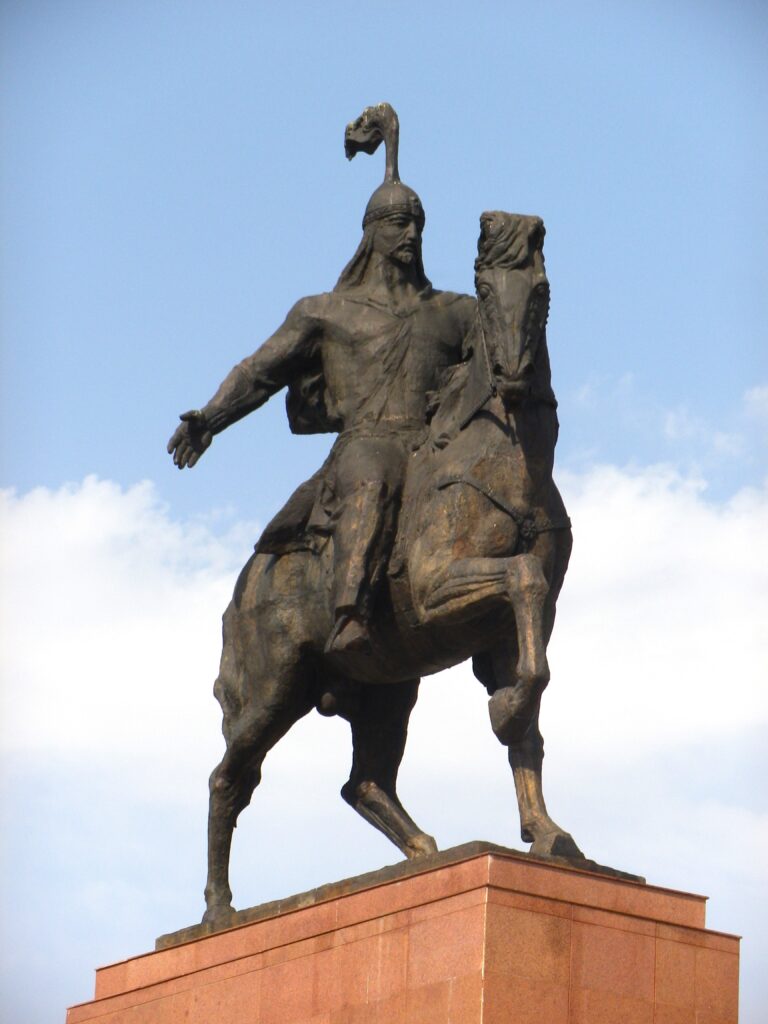
A nation steeped in cultural heritage, Kyrgyzstan continues to be proud of its unique attractions, and among them, the epic work "Manas" occupies a special place. The Manas epic is of special importance because it contains rich information on history, ethnography, philosophy, language, diplomacy, military affairs, folk pedagogy, and other aspects of life of the Kyrgyz people. Another distinctive feature of Manas is its huge volume - more than half a million lines of verse - which makes it the longest epic in the world. The relevance of Manas continues, today. Theatrical productions based on the work and competitions to display knowledge of it underscore the continuing interest in this great literary heritage. An observer of these contests, Zhanara believes that Manas still has a profound impact on the people of the regions, especially on schoolchildren who participate in these competitions. "Such events are conducted with a very careful selection process, which implies the serious preparation of the participants. At the end of the day, their efforts yield results and well-deserved prizes," she told TCA. However, journalist Aigerim from Bishkek believes the Manas epic still has a profound effect even on urban youth. "I think the epic plays a significant role for the whole country. Although not everyone knows it in full, key plot points are known to almost everyone and are often reflected in everyday life. For example, 'Kokotay's wake,' which lasted for several weeks and was very lavish. Also, the main characters can be called role models to a certain extent: brave and fair Manas, wise Bakai and weak, vain Bokmurun, whose name literally translates as ‘snotty nose’,” she told TCA. The epic also contributes to the development of young people's creative abilities. "In almost every classroom, scenes from the epic are staged and students study its lines. Manaschi (bards), who continue to be the performers and custodians of this epic, still enjoy respect and popularity. I recently became aware of a case where a young boy was given a stallion in recognition for his outstanding performance. Mairam, a blogger from Osh, sees Manas as an integral part of Kyrgyz culture and traditions. She notes the epic serves as a key cultural code for the Kyrgyz people. "'Manas is a kind of portrait of the Kyrgyz nation as heroic and brave,” she told TCA. “It also reflects Kyrgyz culture in detail, and I, along with many of my friends, turn to it as a cultural touchstone so that we don't forget who we are."
Kyrgyzstan Makes Strides in Digital Technologies

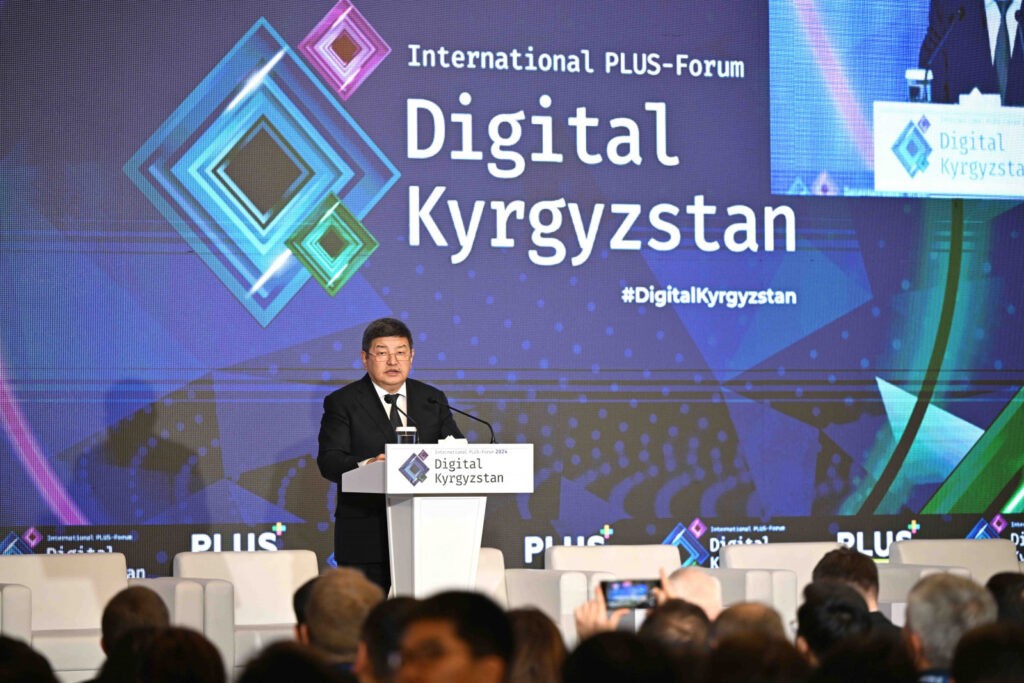
At the International PLUS-Forum ‘Digital Kyrgyzstan’ on 28th February, Akylbek Japarov, Chairman of the Cabinet of Ministers of the Kyrgyz Republic, announced that Kyrgyzstan is to create a Centre for Innovative Technologies. The centre for the advancement of developments in the field, including Artificial Intelligence and quantum computing, will be a non-governmental institution, financed through government subsidies and sponsorship. The prime minister emphasized the government’s commitment to introducing digital technologies and by expanding state provision, provide an open digital society in Kyrgyzstan. This year, the country is set to adopt its first-ever Digital Code. Online registration of motor vehicles, introduced back in September 2023, now allows the sale and purchase of cars through a mobile app. “It is now possible to create, re-register and liquidate a legal entity without leaving your home,” stated Mr Japarov, adding that online purchase and sale of real estate will be launched on March 1st. Touching upon the development of AI in Kyrgyzstan, he referenced the government’s purchase of a supercomputer which able to recognize and synthesize speech, is already being used to broadcast news in the Kyrgyz language on state radio channels.

Nearly 750,000 Students in Kazakhstan to Get a New School

Three hundred and sixty-nine new schools, accommodating 740,000 students, will open in Kazakhstan in 2024 and 2025, the minister for education Gani Beisembayev said at a February 20th government meeting about the “Comfortable School” project.  The minister added that 163 of these schools will be built in rural areas, and 217 of them will open their doors this year. The new schools will be constructed using only domestically produced building materials, and all furniture will be purchased from Kazakh companies.  The schools will be equipped with modern equipment, and increased security will be ensured with advanced technical means. They will also provide a barrier-free environment for children with special educational needs. Prime minister Olzhas Bektenov, who chaired the meeting, emphasized that the “Comfortable School” project should resolve the problem of overcrowded schools, and replace old schools that have fallen into disrepair.

Uzbekistan Ranks First in Central Asia in Number of Marriages and Last in Divorces

The Commonwealth of Independent States (CIS) Interstate Statistical Committee has published its compendium for 2022 on its website. Getting acquainted with the statistics of marriages and divorces of the collection, one sees that in 2022, there were 8.4 marriages and 1.4 divorces for every 1,000 people in Uzbekistan. The marriage indicator is 6.5 in Kazakhstan, and there were 2.3 divorces per 1,000; in Kyrgyzstan the data indicates 7.0 marriages and 1.8 divorces. Also of note was data on the intensity of internal migration, with Kazakhstan leading in this category with 41.3 per 1,000 people moving internally in 2022. In Kyrgyzstan and Uzbekistan, the indicator was 6.0, respectively. Tajikistan's data for 2021-2022 is not provided; the country showed 3.7 results per 1,000 people for 2020. At the same time, the State Statistics Committee of Uzbekistan reports that in 2023, there were 283,800 marriages and 49,200 divorces in the nation. In Kazakhstan, 90,300 marriages were registered between January and September of 2023, an 8.1% decrease from the same period in 2022. Based on the data that was submitted, there were 12,400 divorces in the first nine months of last year, and also an 8.1% decrease in divorces year-on-year. In Kyrgyzstan, 12,552 couples filed for divorce in 2023, while 45,495 marriages were registered before the law. Statistics for Tajikistan in 2021 (data for 2022 isn't yet available) showed that there were 7.6 marriages and 1.4 divorces per thousand. In 2023, 76,444 marriages and 10,298 divorces were officially registered. The statistical collection also includes data on these nations' populations, rates of illness and disability, educational attainment and cultural practices, economic activity, the material and housing circumstances of the populace, the environment, and crime.

Problems and Prospects for Development: Raushan Yeschanova on Art in Kazakhstan

It is said that art can open doors to the depths of the human soul, transport one to other worlds and allow one to see and experience things from a new perspective. The history of Almaty is rich in culture and creativity, and today, Almaty-based art historian Raushan Yeschanova shares her thoughts on contemporary art in Kazakhstan, the problems of its development, and the role that will be played by the new Museum of Contemporary Art, which is scheduled to open this year.   TCA: Tell us how you came to study art? Traveling has always made me think about how mankind was able to create such masterpieces and what moved them. And it's not just about the Renaissance, Art Nouveau and or contemporary art; it’s also about ancient Egyptian art and artifacts from lost civilizations. In addition, I worked as an interior designer, and this required a good knowledge of interior styles. After all, art is not only paintings and sculptures, but also architecture, and I always wanted to immerse myself in it.   TCA: How do you assess the influence of the national culture of Kazakhstan on the development of contemporary art in the country? If we talk about the present time, at the moment our country is experiencing, I would say, "a period of revival in art". Since the formation of the fine arts school in Kazakhstan occurred during the accession of Kazakhstan to Russia, our art developed under the influence of Russian painting, which in turn looked to Western European art. After all, before the period of annexation there was only decorative applied art, and to engage in painting was forbidden due to religious traditions. After a century of development, once ideological principles became less strict, artists have returned to their "nomadic" past in which they find more and more sacred knowledge about life   TCA: What themes and motifs from history and culture most often inspire contemporary artists? They are inspired by rock art, symbols, mythological subjects… Kazakhstan is first of all a steppe, it is a yurt - and this universe is a source of inspiration for many. Artists use different styles, for example, combining ancient techniques with painting or, for example, placing the meaning of human existence into the national female headdress, the "saukele".   TCA: What problems do contemporary artists face in Kazakhstan? The main problem facing contemporary artists is the underdeveloped art market within the country. Many established artists live and work outside of Kazakhstan. As for young artists, it is the lack of quality institutions aimed at the realization of their creativity. There is no opportunity to participate in exhibitions, and the basis for promotion is social networks. Despite the presence of galleries in the cities, not all artists have the opportunity to display their works, as the issue of selling work is often controversial. Also, many talented artists have second jobs where their labor is better paid; for example, in the field of interior design, wall painting or creating...

Kazakhstan’s Dimash Kudaibergen becomes UN Ambassador

The Kazakhstani musician, singer and composer Dimash Kudaibergen has been named a United Nations Goodwill Ambassador for Migration, according to a post by Kudaibergen on his Instagram page. The UN's International Organization for Migration (IOM) called Dimash "an extremely popular singer in Central Asia and beyond".  The 29-year-old singer is originally from Aktobe, and became a global celebrity after participating in the Chinese musical competition The Singer in 2017. "Our new regional and national Goodwill Ambassadors are inspiring people around the world. With IOM, they will contribute to improving people's lives. We welcome you to IOM!" the organization said in a statement. The United Nations International Organization for Migration is an intergovernmental organization in the field of migration. It was founded in 1951 and is committed to the principle that humane and orderly migration benefits migrants and society. The organization has 175 member states and eight observer states.