• KGS/USD = 0.01144 0%
  • KZT/USD = 0.00212 0%
  • TJS/USD = 0.10543 -0.09%
  • UZS/USD = 0.00008 0%
  • TMT/USD = 0.28530 0%
  • KGS/USD = 0.01144 0%
  • KZT/USD = 0.00212 0%
  • TJS/USD = 0.10543 -0.09%
  • UZS/USD = 0.00008 0%
  • TMT/USD = 0.28530 0%
  • KGS/USD = 0.01144 0%
  • KZT/USD = 0.00212 0%
  • TJS/USD = 0.10543 -0.09%
  • UZS/USD = 0.00008 0%
  • TMT/USD = 0.28530 0%
  • KGS/USD = 0.01144 0%
  • KZT/USD = 0.00212 0%
  • TJS/USD = 0.10543 -0.09%
  • UZS/USD = 0.00008 0%
  • TMT/USD = 0.28530 0%
  • KGS/USD = 0.01144 0%
  • KZT/USD = 0.00212 0%
  • TJS/USD = 0.10543 -0.09%
  • UZS/USD = 0.00008 0%
  • TMT/USD = 0.28530 0%
  • KGS/USD = 0.01144 0%
  • KZT/USD = 0.00212 0%
  • TJS/USD = 0.10543 -0.09%
  • UZS/USD = 0.00008 0%
  • TMT/USD = 0.28530 0%
  • KGS/USD = 0.01144 0%
  • KZT/USD = 0.00212 0%
  • TJS/USD = 0.10543 -0.09%
  • UZS/USD = 0.00008 0%
  • TMT/USD = 0.28530 0%
  • KGS/USD = 0.01144 0%
  • KZT/USD = 0.00212 0%
  • TJS/USD = 0.10543 -0.09%
  • UZS/USD = 0.00008 0%
  • TMT/USD = 0.28530 0%

Viewing results 115 - 120 of 1606

Kyrgyzstan Tightens Traffic Enforcement, Mandates Retesting for Repeat Offenders

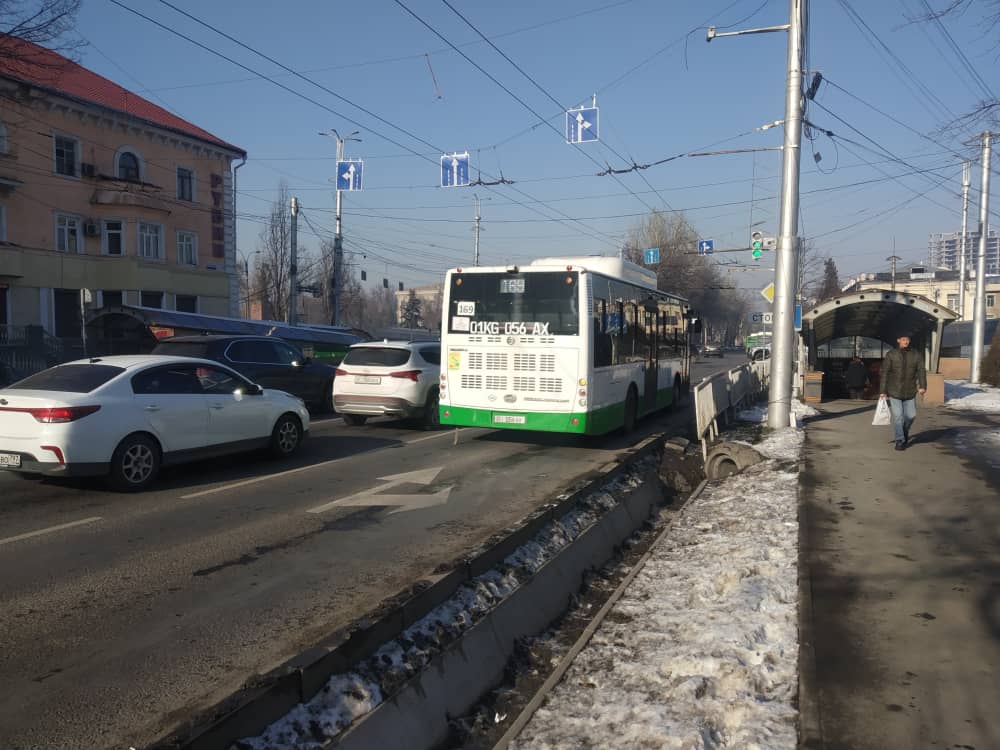
Kyrgyzstan has implemented stricter traffic enforcement measures aimed at curbing repeat violations and improving road safety. Under the new rules, drivers who commit three serious traffic violations within a 12-month period will be required to retake the traffic rules exam. Offenses triggering mandatory retesting include driving without license plates, failing to stop at the request of traffic police, exceeding the speed limit by more than 40 km/h, failing to yield to emergency vehicles, entering the oncoming lane while overtaking, damaging road infrastructure, causing injury, and permitting an intoxicated or unlicensed individual to drive. The initiative is part of a broader set of reforms designed to enhance driver education and reduce accident rates. In a related move, Kyrgyz authorities have suspended all private driving schools until August 30, 2026. During this period, driver training will be limited to state-run institutions. The length of training has also been extended from 2.5 months to 10 months. Officials say the reforms are intended to eliminate corruption and ensure that drivers are properly prepared before receiving licenses. President Sadyr Japarov has been a vocal proponent of the reforms. On February 3, he visited the State Center for Registration of Vehicles and Drivers to observe the new testing procedures. He criticized the former system, noting that over 90% of students at private driving schools previously passed licensing exams despite inadequate knowledge. Since the introduction of more rigorous exams, the pass rate has dropped to 18-20%, a figure authorities say better reflects actual preparedness. Japarov emphasized the human toll of traffic accidents, stating that over 75,000 accidents in the past decade have claimed more than 9,000 lives in Kyrgyzstan. The president also spoke candidly about personal losses caused by reckless driving. In 2019, his eldest son was killed when a vehicle illegally crossed a double line and struck his motorcycle. Years earlier, his brother and sister-in-law died in an accident caused by a drunk driver. “There are thousands of such stories,” Japarov said, underscoring the urgent need for stronger enforcement and reform in the country’s road safety system.
From Alatau to Almaty by Air: How Kazakhstan’s First Air Taxi Service Will Operate

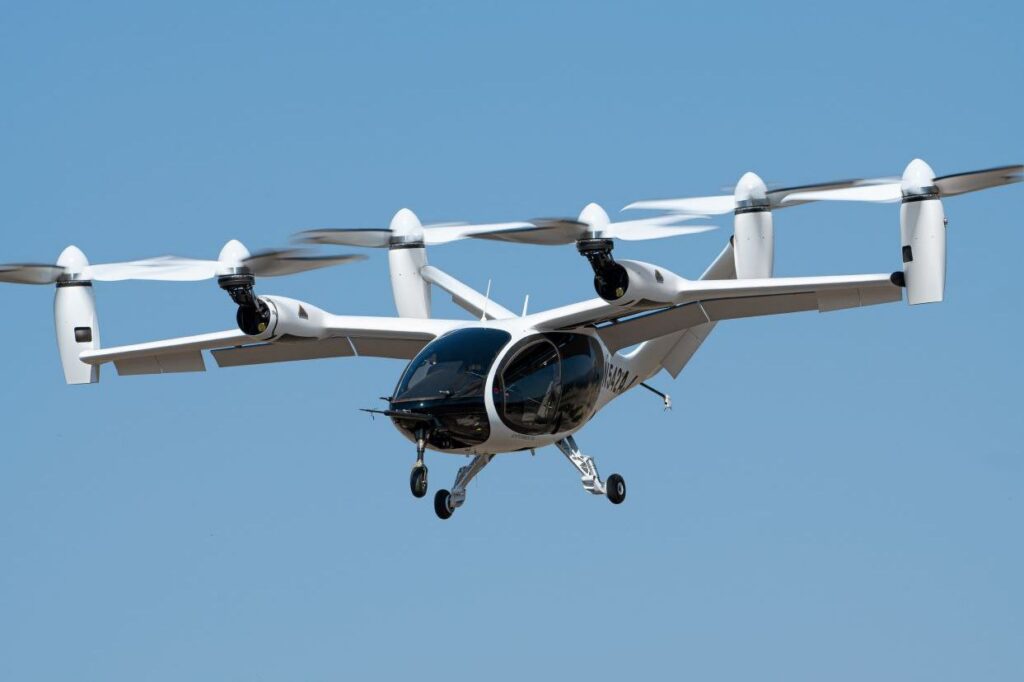
The Almaty region is preparing to introduce a groundbreaking new mode of transport for Kazakhstan: electric air taxis. While the project remains in the development and testing phase, key details about routes, aircraft, and the projected launch timeline have already been outlined. The first air taxi routes are expected to connect the newly developing city of Alatau with Almaty and other settlements across the region. The aircraft under consideration for this initiative is the Joby Aviation S4, an electric vertical take-off and landing (eVTOL) model developed by U.S.-based Joby Aviation. Test flights are scheduled for 2026. Alatau Advance Air Group, a private company, has been designated as the air mobility operator for the Alatau region. In collaboration with partners from the U.S., South Korea, China, and Italy, the company is working on aircraft research, infrastructure planning, and building a testing ecosystem to support future operations. Joby Aviation, one of the global leaders in eVTOL technology, has been named a strategic partner. The selected S4 model is in the final stages of certification by the U.S. Federal Aviation Administration (FAA) and has already undergone real-world testing. The aircraft is designed to carry four passengers and one pilot. These capabilities will allow the air taxi service to cover both urban routes within the Almaty agglomeration and longer intercity routes across the wider region. To accommodate operations, a network of vertiports, dedicated airfields for vertical take-off aircraft, is planned for Alatau, Almaty, and other key regional locations. The project is currently in the design phase, with testing sites under consideration. Demonstration flights are slated for 2026, with commercial services expected to launch once aircraft certification by the FAA is finalized and validated by Kazakhstan’s aviation authorities. “Air taxis will become an innovative form of transport that will provide fast connections between Alatau, Almaty, and other cities in the region,” the Almaty mayor’s office commented. Flight pricing is expected to be announced following testing and preparations for the commercial rollout. The air taxi concept was first introduced in October 2024 at a development forum in South Korea focused on the Alatau project. The initiative is being led by Alatau Advance Air Group, founded in March 2025. The company is connected via Caspian Integrity to entrepreneur and former senator Yuri Tskhai, one of the key investors behind Alatau City. In November, a strategic agreement was signed in the U.S. between Kazakhstan’s Ministry of Digital Development and AI, Joby Aero, Alatau Advance Air Group, and entrepreneur Vyacheslav Kim. The deal includes the purchase of eVTOL aircraft valued at approximately $300 million. Joby Aviation continues to be a major player in the global eVTOL industry, competing with major aerospace and automotive firms including Airbus, Boeing, Embraer, Honda, Hyundai, and Toyota.

Almaty to Host 2029 Asian Winter Games

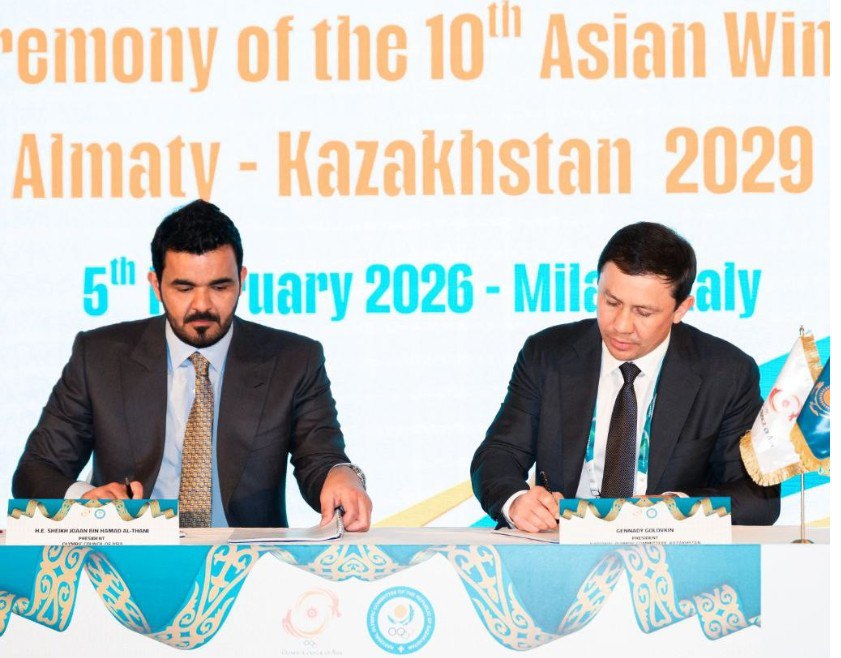
Almaty, Kazakhstan’s largest city nestled in the foothills of the Alatau Mountains, has been selected to host the 2029 Asian Winter Games, the country’s National Olympic Committee (NOC) has announced. The agreement was signed on February 6 in Milan, coinciding with the opening of the Winter Olympics. Almaty’s selection is credited largely to its robust existing sports infrastructure, much of which was developed for the 2011 Asian Winter Games, co-hosted by Almaty and Astana. Almaty also hosted the 2017 Winter Universiade, further demonstrating its capacity to stage major international sporting events. Kazakhstan’s Ministry of Tourism and Sports emphasized that the 2029 Games will rely on current facilities, avoiding the need for large-scale new construction. “The existing sports complexes allow competitions to be held in all sports included in the program of the Winter Asian Games,” the ministry said. The NOC of Kazakhstan noted that leveraging existing infrastructure and prior experience will ensure a cost-effective and efficient approach to hosting. Organizing a second edition of the Winter Asian Games is viewed as a strategic move to further develop Olympic sports in the country. “Hosting major international competitions, including the Asian Games, is of strategic importance for the country. It reflects the high level of trust placed in us by the international sports community and recognizes Kazakhstan’s potential,” said Gennady Golovkin, the head of the National Olympic Committee. He added that Almaty possesses all the necessary sports and urban infrastructure, eliminating the need for additional construction. Saudi Arabia had previously been awarded hosting rights for the 2029 Asian Winter Games but later postponed the event due to large-scale infrastructure developments and extended preparation timelines. As previously reported by The Times of Central Asia, Kazakhstan placed fourth among 34 countries in the medal tally at the 2025 Asian Winter Games, securing 20 medals.

Facing Restrictions, Russian Skater Joins Uzbekistan´s Winter Olympics Team

Short track speed skater Daniil Eybog competed for Russia at the 2022 Winter Olympics in Beijing, just before Russia’s full-scale invasion of Ukraine. This year, Eybog will represent Uzbekistan at the games in Italy, switching countries because of international restrictions that were placed on Russian athletes because of the war. Eybog will race the 500-meter distance for the Central Asian country at the games in Milan and other locations in northern Italy. Medet Nazarov, an alpine skier from Chimgan in Uzbekistan, will compete in the slalom and giant slalom events. Uzbekistan planned to send pair figure skaters, Dmitry Chigirev and Ekaterina Geynish, to Italy as well, but Chigirev suffered an injury that forced their withdrawal. “Good night or good morning, whichever you prefer. I'm off to the Olympic Games!” 28-year-old Eybog said this week on social media. “The route is a bit crazy. I'm flying via Tashkent. First stop. Then to Istanbul and from there to Milan. Let's go.” Eybog came seventh in the 500 meters while competing for Uzbekistan at the Asian Winter Games in Harbin, China, last year. Before switching his sporting nationality, he was part of the winning team in the 5,000-meter relay at the 2020 European Championships in Hungary. The executive board of the International Olympic Committee can approve a change in the country that an athlete represents, under certain conditions, and has done so for a number of competitors in this year’s winter games. In an interview last year with Russian outlet Tverisport.ru, Eybog described his experience at the Beijing Olympics as “chaotic,” saying he had been an alternate and then made the Russian team virtually at the last minute. “Since then, given my experience, I've developed a strong desire to compete in the Olympics again and this time try to fight for a medal,” Eybog said. “But, as you know, due to the political situation, the eligibility of Russian speed skaters and short track speed skaters for the 2026 Games in Italy is in question. Without serious motivation, maintaining high-level athletic fitness is quite difficult. Currently, the only way to qualify for international competitions, including the Olympic Games, is to compete for another country.” He said there were several countries that might have accepted him into their teams, but “the historical and geographical proximity of the countries played a role, including the familiarity of the Uzbek people with the Russian language." Eybog said short track speed skating is just starting to develop in Uzbekistan, whose Olympic committee has funded his training in Russia. Another Russian skater, Denis Ayrapetyan, also transferred to Uzbekistan at the same time, though he is not competing at the Winter Olympics. Some Russians, as well as competitors from Belarus, a close ally of Russia, are participating in the games under the designation of Individual Neutral Athletes. They must meet requirements to take part, including, for example, not actively supporting the war in Ukraine. The flags of Russia and Belarus won’t be displayed at the games, and their anthems won’t be...

Seventeenth-Century Gilded Vessel Joins Permanent Exhibition at Uzbekistan’s Islamic Civilization Center

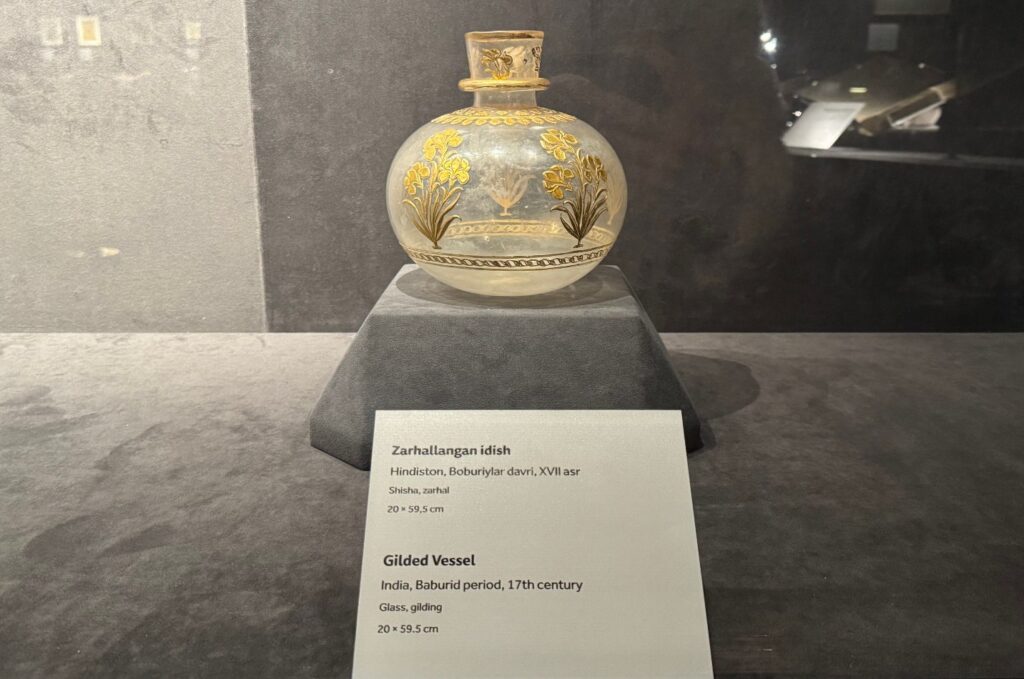
A rare gilded decorative vessel dating to the seventeenth century has been added to the permanent exhibition of the Islamic Civilization Center in Uzbekistan, the Center announced. Acquired from the British auction house Christie’s at the initiative of the president, the artifact is being presented to the public for the first time in Tashkent. According to the Islamic Civilization Center, the vessel is notable for its refined form, gold-leaf ornamentation, and exceptional craftsmanship, offering insight into the aesthetic sensibilities of its time. Experts describe it as a rare luxury object intended for elite or courtly use, rather than for everyday function. Rustam Jabborov, Scientific Secretary of the Center, said the vessel is approximately 400 years old and features a carefully balanced design. “The object has a spherical body with cylindrical workmanship. The lower section is adorned with a braided floral ornamental band, while five blooming yellow lotus flowers are arranged above it in a circular pattern to create compositional unity,” Jabborov explained. He noted that the surface of the vessel was polished and gilded, with gold-leaf decorations that have retained their artistic appeal over centuries. “The gilding enhances both the sense of splendor and the impression of antiquity. The yellow lotus flower, used as the central decorative motif, adds both symbolic and aesthetic meaning to the overall composition,” he said. According to Jabborov, the manufacturing technique, ornamental style, and state of preservation all attest to the object’s historical significance. The Islamic Civilization Center stated that the inclusion of the vessel in its exhibition reinforces its status as a rare cultural artifact recognized at the international level. In February last year, the Center announced plans to host an international exhibition in Tashkent featuring Uzbek cultural masterpieces housed in Italian museums and private collections. The event is scheduled to coincide with the opening of the Center for Islamic Civilization. As part of those preparations, a delegation led by the Center’s director, Firdavs Abdukhalikov, visited Italy, where they held talks with museum representatives and private collectors who expressed support for the project. Elmira Gul, scientific coordinator of the Cultural Heritage of Uzbekistan in the Collections of the World project, noted that collections of Uzbek artifacts in Italian museums have already been documented in published volumes, reflecting the global reach of Uzbekistan’s cultural legacy.

Uzbekistan Probes Alleged Personal Data Leak from State Information Systems

Reports circulating on social media and Reddit have raised concerns that the personal data of Uzbek citizens may have been leaked from government information systems and shared on darknet forums. In response, several state agencies have issued statements confirming that investigations are underway, and that their systems remain secure. According to posts shared on Reddit, links were posted to online platforms, including darknet sites, allegedly containing data from Uzbek state institutions. Some users claimed the leak could involve personal information on as many as 15 million citizens. These claims quickly gained traction across social media, prompting official responses. On February 3, Uzbekistan’s Cybersecurity Center acknowledged the reports and confirmed that it had launched an investigation. “In recent days, messages have been observed on social networks about the alleged dissemination of personal data of Uzbek citizens from certain state information systems,” the Center said in a statement. It added that a comprehensive review is ongoing and that further details would be shared upon completion of the inquiry. The Center also issued guidance to the public, urging citizens not to disclose personal information to third parties, to use complex usernames and passwords when accessing state and other digital systems, and to avoid entering data through suspicious links. In response to public speculation that information from the recent population and agricultural census may have been compromised, the Statistics Agency also issued a statement. It affirmed that all data collected during the online census, conducted between January 15 and 31, is securely stored. “All collected data are kept in encrypted form on a separate server. There is no reason for concern regarding the safety of census-related information,” the agency said. The State Tax Committee similarly denied any breach involving its systems. Addressing claims circulating on social media and various websites, the committee said it had implemented all necessary cybersecurity measures and that its interactive services and systems were functioning normally and without interruption. The Ministry of Internal Affairs echoed these reassurances, stating that the integrity of its information systems is fully intact. The ministry confirmed that no unauthorized access to personal data under its control had been detected. Authorities emphasized that investigations are ongoing and urged the public to rely on official sources for updates as checks continue.