• KGS/USD = 0.01144 0%
  • KZT/USD = 0.00205 0%
  • TJS/USD = 0.10486 0.48%
  • UZS/USD = 0.00008 0%
  • TMT/USD = 0.28571 0%
  • KGS/USD = 0.01144 0%
  • KZT/USD = 0.00205 0%
  • TJS/USD = 0.10486 0.48%
  • UZS/USD = 0.00008 0%
  • TMT/USD = 0.28571 0%
  • KGS/USD = 0.01144 0%
  • KZT/USD = 0.00205 0%
  • TJS/USD = 0.10486 0.48%
  • UZS/USD = 0.00008 0%
  • TMT/USD = 0.28571 0%
  • KGS/USD = 0.01144 0%
  • KZT/USD = 0.00205 0%
  • TJS/USD = 0.10486 0.48%
  • UZS/USD = 0.00008 0%
  • TMT/USD = 0.28571 0%
  • KGS/USD = 0.01144 0%
  • KZT/USD = 0.00205 0%
  • TJS/USD = 0.10486 0.48%
  • UZS/USD = 0.00008 0%
  • TMT/USD = 0.28571 0%
  • KGS/USD = 0.01144 0%
  • KZT/USD = 0.00205 0%
  • TJS/USD = 0.10486 0.48%
  • UZS/USD = 0.00008 0%
  • TMT/USD = 0.28571 0%
  • KGS/USD = 0.01144 0%
  • KZT/USD = 0.00205 0%
  • TJS/USD = 0.10486 0.48%
  • UZS/USD = 0.00008 0%
  • TMT/USD = 0.28571 0%
  • KGS/USD = 0.01144 0%
  • KZT/USD = 0.00205 0%
  • TJS/USD = 0.10486 0.48%
  • UZS/USD = 0.00008 0%
  • TMT/USD = 0.28571 0%

Viewing results 679 - 684 of 1241

Kazakhstan: Tokayev Delivers Address to the Nation

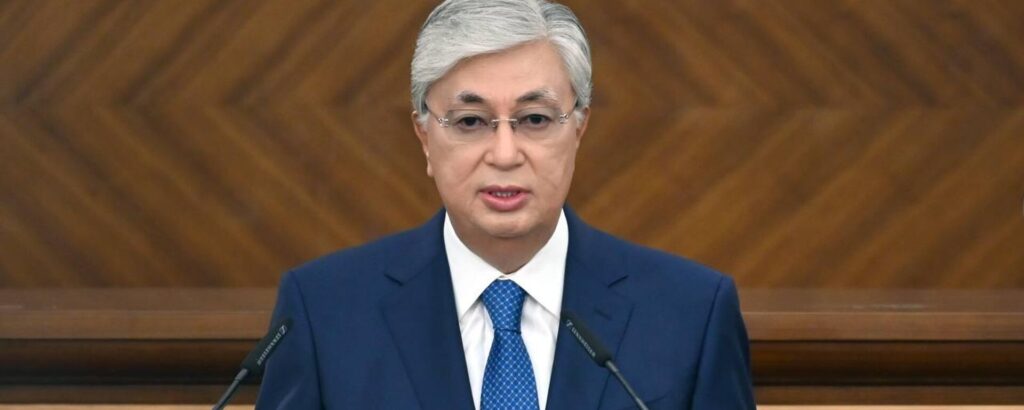
A new political season has started in Kazakhstan. Following tradition, it opened with a joint session of the chambers of Kazakhstan's parliament, at which the head of state, Kassym-Jomart Tokayev, delivered his regular Address to the Nation, this year entitled: Fair Kazakhstan: Law and Order, Economic Growth, Social Optimism. As predicted by State Counselor, Yerlan Karin, the president's new address contained over a hundred initiatives, instructions, and proposals that “develop the line of reforms laid out in his previous messages and election platform.” Tokayev began his address by mentioning the parliament's adoption of 102 laws in the previous session, including norms on public control, countering human trafficking, science and technology policy, heat and energy, etc. Social issues, especially child protection, remain a top priority and whilst many systematic steps have been taken to improve people's welfare, the president emphasized that much work lay ahead. “The people of Kazakhstan today live in a completely new political reality," he stated. "Over the past five years, large-scale reforms have been implemented; the political system has radically transformed. Fundamental changes are taking place in public consciousness; the level of legal culture of citizens is increasing, and new models of behavior and new values are taking root in society. The renewal of political and public life, as well as the mentality and cultural norms of the nation, has begun. The construction of "Fair Kazakhstan" is underway, and what is especially important is that all this fully corresponds to the people's aspirations. Therefore, we will continue to follow our course steadfastly and not turn off the path." Expanding on how the past five years have changed the country, Tokayev explained, "Since 2021, about 2.5 thousand akims of villages have been elected, which is ninety percent of the total number of heads of rural settlements. In the remaining villages, elections will be held after the expiration of the terms of office of their akims. The average age of newly elected akims is 46 years. Sixty percent will have no previous experience of working in public service, and their number includes entrepreneurs and members of various parties. The corps of akims elected by the people has been largely renewed." The head of state recalled that in the fall of last year, Kazakhstan began to hold elections for the first time for akims of districts and cities of regional significance. Under the new rules, 45 akims were elected in all oblasts. According to the president, the latest election system will go even further. “After a comprehensive study of the election results and analysis of the work of elected akims, it was decided to finally switch to the new system from next year. In the future, akims of districts and regional cities will be elected only through direct elections, which will be held as the powers (i.e., rotation terms) of incumbent akims expire,” Tokayev emphasized, calling it another essential step in the transformation of the political system and stressing that if required for the development of the state, reforms will...
Uzbekistan Adopts Law to Protect Prisoners’ Rights

Uzbekistan has introduced a new law to protect prisoners' rights. The new piece of legislation is formally called the law “On amendments and supplements to the Criminal-Executive Code of Uzbekistan aimed at ensuring the rights and legal interests of prisoners.” The Criminal Executive Code defines prisoners' rights to appeal to the ombudsman through the appeals box. Appeal boxes to the ombudsman will be installed in each residential sector of the Uzbekistan penal institutions, industrial zones, and buildings intended for holding short- and long-term meetings, where it is convenient for prisoners to leave appeals. In addition, appeal boxes for the children's ombudsmen will be installed in the educational colonies. It is reported that the boxes are opened only by the ombudsman, the children’s ombudsman, or the staff of their secretariats.

Kazakhstan to Hold Nuclear Plant Referendum on October 6

A popular vote on the need to build a nuclear power plant in Kazakhstan will be held on October 6. President Kassym-Jomart Tokayev announced this during his annual address to the nation. “Given the growing global energy deficit, we need reliable and environmentally friendly energy sources. Therefore, I believe it is necessary to pay close attention to the development of nuclear energy. This type of generation can largely meet the rapidly growing needs of our economy. About 200 nuclear power plants are operating in 30 developed and developing countries,” the head of state said. Discussions on constructing a nuclear power plant in Kazakhstan have been ongoing for many years. The idea of the need for a nuclear power plant first appeared after the closure of the Soviet reactor in Aktau in 1999. Since then, the country has repeatedly raised questions about the development of nuclear power, especially in the context of improving energy security and climate change resilience. However, public opinion is divided: many people in the country remember the consequences of nuclear tests at the Semipalatinsk test site and fear environmental risks. In 2021, discussions about constructing a nuclear power plant intensified when a possible site for Kazakhstan's first atomic power plant began to be considered in Almaty region, near the village of Ulken. These plans sparked lively public debate and protests among residents and environmentalists. According to Tokayev, Kazakhstan should consider the future, taking into account long-term national interests and the country's specifics. “Every step important for the country's life should be made with the support of the people. So, it should be done by referendum on the nuclear power plant; this topic has been on the public agenda for a year. I believe this is the time for citizens to make an informed decision. The upcoming referendum will be another manifestation of a broad national dialog and a vivid example of realizing the concept of a 'listening state.' In fact, with such steps, we form a new socio-political culture and lay new standards for making key state decisions,” he said.

First ‘Comfortable’ Schools Open in Kazakhstan

On September 1, over 3.9 million pupils returned or newly enrolled in secondary schools across Kazakhstan. The date also marked the opening of seventy new schools in the country, including several built as part of the nationwide project ‘Comfortable School.’ Speaking at the opening of one such school in the capital, Astana, Kazakh Minister of Education Gani Beisembayev announced that almost 90,000 schoolchildren are starting the new academic year in brand new schools,  and over 200,000 pupils will study in schools that have undergone significant repairs. Initiated by President Kassym-Jomart Tokayev, the national project ‘Comfortable School’ aims to solve the shortage of student places and level the difference in the quality of education between rural and urban areas. Aimed to improve the educational environment, the new schools provide separate blocks for elementary and high school students, technology for teaching contemporary subjects, specially equipped classrooms to ensure pupils' safety, and a barrier-free environment for children with special educational needs. Kazakhstan plans to build 369 ‘Comfortable’ secondary schools by 2026, accommodating 740,000 pupils; 217 schools of which will be built in the 2024-2025 academic year.

Tajikistan to Launch Foreign Language TV Channel

On September 1, in a speech dedicated to "Knowledge Day,' Tajik President Emomali Rahmon ordered the creation of a TV channel specializing in teaching children foreign languages. In his emphasis on the the need for  a comprehensive approach to children's development, the president  highlighted the importance of studying sciences, crafts, moral values, modern technologies, and mastering foreign languages. With regard to the latter, special attention will be paid to Russian and English, as well as other foreign languages, to better prepare young people for the modern challenges and demands of both domestic and foreign labor markets. The President also noted the importance of adapting educational programs to meet the current and future needs of these markets. The creation of a TV channel dedicated to teaching foreign languages is part of a broader government strategy to improve the country's educational standards and integration into the global community. Several languages are spoken in Tajikistan. Tajik (a form of Persian) is recognized as the official language, while Russian is recognized as an interethnic language. Uzbek is the third most commonly spoken language and  minority languages include Kyrgyz, Yagnob, Parya, and various forms of Pamiri. The most popular foreign languages amongst students include English and Chinese.

Kyrgyzstan Celebrates Independence Day

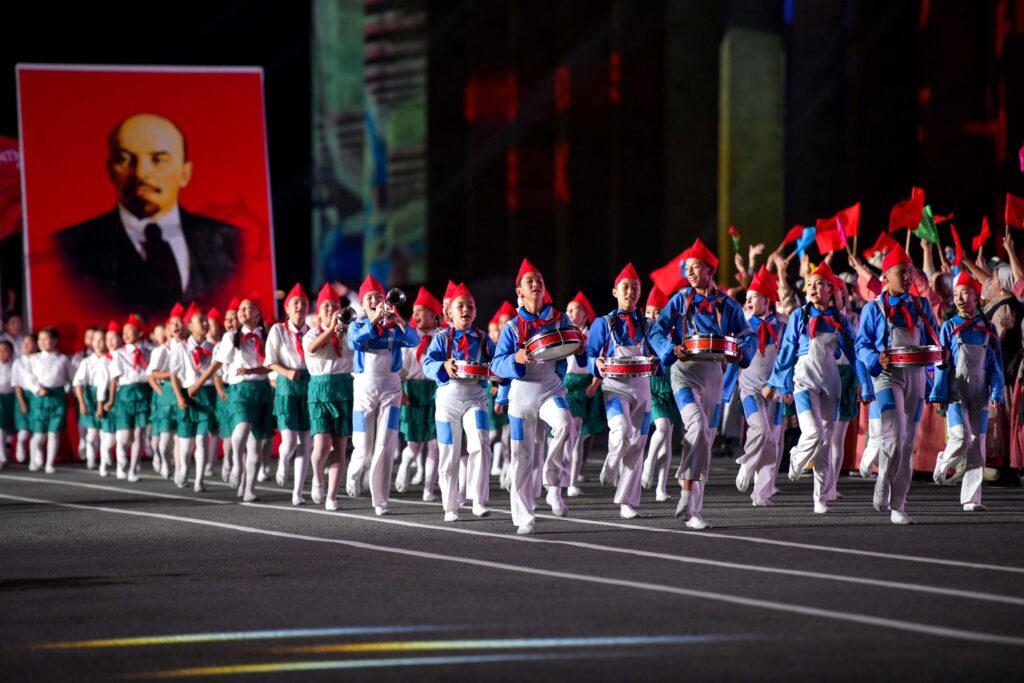
On August 31 Kyrgyzstan celebrated the 33rd anniversary of its independence. Ala-Too Square in Bishkek hosted a gala concert featuring famous Kyrgyz and foreign artists, while President Sadyr Japarov addressed the nation. “We are a great nation with a strong spirit!", Japarov said. "That is why, on this day, we raise our flag high. Let our country reach new heights, and let the flag wave highly. May our independence never be threatened. I congratulate all of you on our Independence Day!” Japarov also played the komuz, a Kyrgyz string instrument. The centerpiece of the Independence Day celebrations was a drone show. In the sky above Ala-Too Square, drones created images of Kyrgyzstan, and portraits of national heroes and athletes. On August 31 festivities took place throughout the country. [caption id="attachment_22518" align="aligncenter" width="2048"] @president.kg[/caption] On August 31, 1991, Kyrgyzstan officially withdrew from the USSR and declared its independence. Economist Nurgul Akimova said Independence Day is not just a national holiday but a symbol of economic and political independence: “On this day, I reflect on how our country, having become independent, began to build its economic policy, focusing on the needs and opportunities of its people. Economic independence is not just freedom from external control but the ability to independently determine the trajectory of development. In the context of globalization, when small economies often face pressure from more powerful players, preserving sovereignty and independence requires competent management and a deep understanding of how to integrate into the global economic system profitably. This day reminds me of the importance of economic policies aimed at social equity and sustainable development. It prompts reflection on how our country can use its resources and potential to improve the lives of all citizens. Economic independence is not an end but a means to create a just society where everyone can realize their potential. Independence Day reminds us that economic stability and prosperity are impossible without responsible governance and transparent institutions. It is also a reason to consider integrating into global markets. Still, on terms that will contribute to Kyrgyzstan's long-term development, not just short-term gain". [caption id="attachment_22519" align="aligncenter" width="2048"] @president.kg[/caption] Civic activist Mars Cherikchiyev told The Times of Central Asia that Independence Day is about family security and confidence in the future of children. “I liked President Japarov's speech, which talked about Kyrgyzstan's achievements and plans for the future. Good work is being done in all sectors of the economy, and foreign investors see this. We are creating our infrastructure, opening regional airports, building internal roads, and cooperating with neighbors. We are gaining confidence for the future. Improving economic terms and general welfare for citizens is independence,” Cherikchiyev said. [caption id="attachment_22520" align="aligncenter" width="2048"] @president.kg[/caption]