• KGS/USD = 0.01144 0%
  • KZT/USD = 0.00193 -0%
  • TJS/USD = 0.10851 0%
  • UZS/USD = 0.00008 0%
  • TMT/USD = 0.28571 0%
  • KGS/USD = 0.01144 0%
  • KZT/USD = 0.00193 -0%
  • TJS/USD = 0.10851 0%
  • UZS/USD = 0.00008 0%
  • TMT/USD = 0.28571 0%
  • KGS/USD = 0.01144 0%
  • KZT/USD = 0.00193 -0%
  • TJS/USD = 0.10851 0%
  • UZS/USD = 0.00008 0%
  • TMT/USD = 0.28571 0%
  • KGS/USD = 0.01144 0%
  • KZT/USD = 0.00193 -0%
  • TJS/USD = 0.10851 0%
  • UZS/USD = 0.00008 0%
  • TMT/USD = 0.28571 0%
  • KGS/USD = 0.01144 0%
  • KZT/USD = 0.00193 -0%
  • TJS/USD = 0.10851 0%
  • UZS/USD = 0.00008 0%
  • TMT/USD = 0.28571 0%
  • KGS/USD = 0.01144 0%
  • KZT/USD = 0.00193 -0%
  • TJS/USD = 0.10851 0%
  • UZS/USD = 0.00008 0%
  • TMT/USD = 0.28571 0%
  • KGS/USD = 0.01144 0%
  • KZT/USD = 0.00193 -0%
  • TJS/USD = 0.10851 0%
  • UZS/USD = 0.00008 0%
  • TMT/USD = 0.28571 0%
  • KGS/USD = 0.01144 0%
  • KZT/USD = 0.00193 -0%
  • TJS/USD = 0.10851 0%
  • UZS/USD = 0.00008 0%
  • TMT/USD = 0.28571 0%
21 December 2025

Viewing results 721 - 726 of 1075

Uzbekistan: Bukhara Administration Denies Relocation of “Eternal Bukhara”

Previously, The Times of Central Asia reported in an article titled "Land Cleared for Tourism next to Old Bukhara; UNESCO Urges Pause" that the construction of "Eternal Bukhara," a tourist facility in the Bukhara region of Uzbekistan, had sparked protests from locals and UNESCO alike. Recently, rumors spread on social media claiming that the "Eternal Bukhara" project is proceeding on the city's outskirts despite public objections. However, the Bukhara city administration has now provided official information to clarify the situation. According to the regional administration, these reports are false. They assert that the construction of the cultural ethnographic park "Eternal Bukhara" is progressing systematically. Most of the old and dilapidated buildings in the area have been dismantled, and the construction site is now 90% ready. Additionally, the Bukhara regional administration have stated that previous dismantling work was completed without affecting the population or surrounding structures, whilst adhering to technical safety regulations. Nearly 70% of the work has reportedly already been completed. The administration also noted that the project documents for "Eternal Bukhara" are being finalized in collaboration with renowned historians, scientists, cultural heritage experts, and international project organizations.
Turkmen Watermelons Struggle to Compete with Iranian Imports

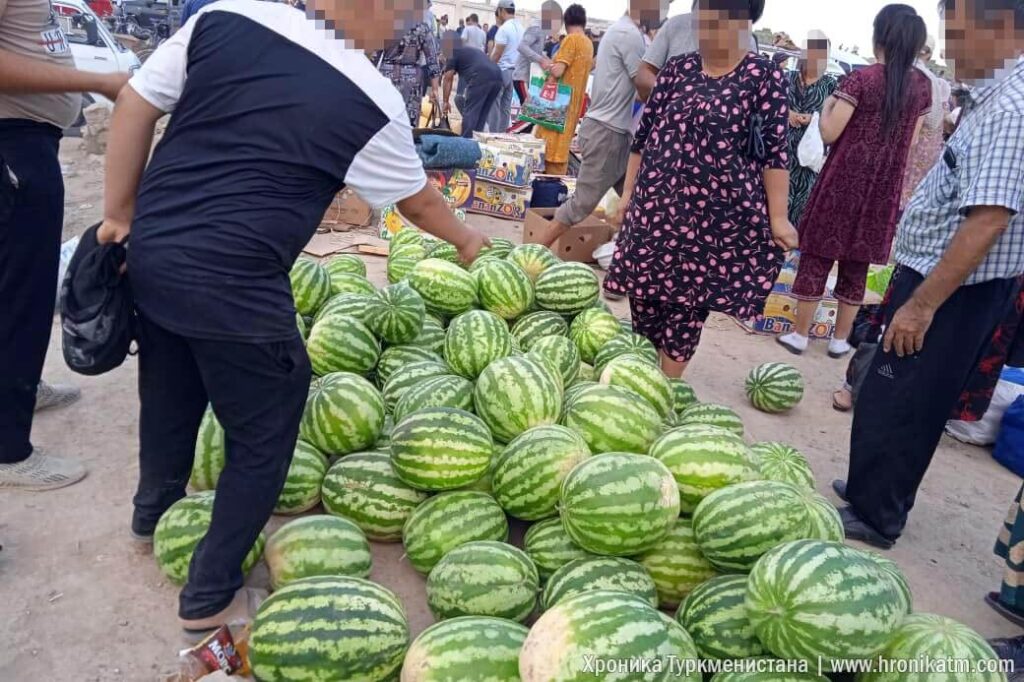
Chronicles Turkmenistan reports that Iranian watermelons are now cheaper than those produced locally. Turkmen farmers were encouraged to plant watermelons on leased lands on the assurance that the crops would be irrigated at the state's expense. However, given the high volume of water required to cultivate the fruit and the need for farmers to irrigate their crops twice per season, only those with the means, could afford to pay for their own pumps. As stated in the publication's report, “-That- was not enough to get a good harvest. Also, the cost of production, including irrigation and other costs, was higher than expected." The vast stocks watermelons imported from Iran to markets  in Meri and Lebap Velayats are significantly cheaper than local produce, selling at  4–5 manats (TMT) ($1.14–1.43) per 6 to 9 kilogram compared to  1.50 TMT ($0.43) per kilogram or an average of  7-8 TMT ($2– 2.29) per Turkmen melon. As a result, Turkmen farmers struggle to sell their produce and are suffering significant losses.

Kyrgyz Council Deputy Arrested for Calling for Riots

An unnamed member of the city council in Kyrgyzstan's Jalal-Abad region has been detained for calling for the organization of mass riots and a violent seizure of power, 24.kg reports. Kyrgyzstan's State Committee for National Security (SCNS) announced in a statement: "[An] investigation has established that [a] deputy of Kerben city council from the 'Ata-Jurt Kyrgyzstan' political party systematically published provocative materials and calls for the organization of mass disorder and violent seizure of power on Facebook." The suspect was taken to the security committee's detention center. The investigation is ongoing. According to the security committee, the attempt was scheduled for August 31, which is Kyrgyzstan's Independence Day. "The suspects, under the influence of certain destructive political forces, hatched plans for a violent seizure of power by destabilizing the socio-political situation in the country and organizing mass riots in Bishkek, including the death of citizens. They planned to organize a sporting event near Bishkek on Independence Day to gather young people from all around the country," the SCNS said. On the eve of Independence Day, special services detained five Kyrgyz men who were planning an armed seizure of power. A search of their homes revealed a large cache of weapons, explosives, and police uniforms. A total of 50 weapons (20 pistols and 255,238 rounds of ammunition), 200 sets of law enforcement uniforms, 150 pieces of police and 100 pieces of military headgear, 38 sets of body armor, two drones, radios, homemade explosives, and extremist literature were seized from them. It has also been established that the detainees are involved in organizing rallies against foreign citizens.

Foreign Political Parties Banned in Uzbekistan

Uzbekistan has added to the law "On Political Parties," prohibiting the establishment and operation of foreign political parties and their subdivisions in Uzbekistan. The corresponding amendments were signed by President Shavkat Mirziyoyev, Kun.uz reports. Furthermore, the amendments broadened the conditions under which the powers of a deputy of the lower house and a senator could be terminated early. Elected representatives are prohibited from engaging in other paid activities (except for scientific, creative, and pedagogical work) and holding their positions if they have a permanent residence permit abroad. Additionally, parliamentarians will lose their mandate if they fail to participate for 30 days without a valid reason in the activities of their respective chamber, political party faction, committee, or commission. Similar measures are envisaged for deputies of regional, district, and city councils of people's deputies (local parliament). Five political parties are registered in Uzbekistan: the Liberal Democratic Party, the Milliy Tiklanish (National Revival) Democratic Party, the Adolat (Justice) Social Democratic Party, the People's Democratic Party, and the Ecological Party.

Nuclear Race: Will Central Asia Build a Nuclear Power Plant?

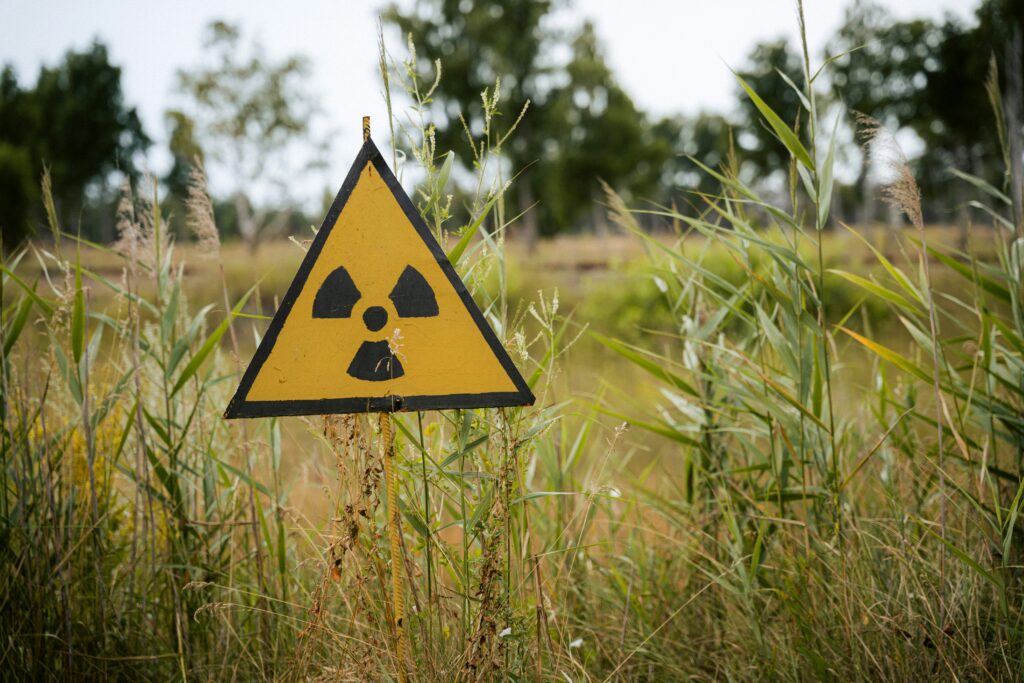
The answer to the question posed in the title remains uncertain. While Uzbekistan has plans to construct a nuclear power plant and Kazakhstan is set to hold a referendum this fall to gauge public opinion on building one, progress is sluggish. Tashkent has postponed the start of construction, and the issue sparks heated debate in Kazakhstan. The First Nuclear Power Plant in Central Asia Historically, Central Asia did host a nuclear facility. Located on the shore of the Caspian Sea in Kazakhstan, this was not a conventional nuclear power plant but a fast neutron reactor known as BN-350. The reactor was the core of the Mangistau Nuclear Power Plant, designed to transform the Mangyshlak Peninsula by providing energy to the city of Aktau (formerly Shevchenko) and powering large-scale desalination plants that supplied drinking water to the arid region. [caption id="attachment_20031" align="aligncenter" width="366"] BN-350[/caption] Operational from 1973 until its shutdown in 1999, the BN-350 reactor was decommissioned due to the allocation of U.S. funds for new desalination and heating equipment and the disposal of its remaining fuel. The extensive maintenance and decommissioning work on the BN-350 have given Kazakhstani nuclear physicists significant experience with such complex and hazardous technology. However, younger generations in Kazakhstan are largely unaware of the BN-350 reactor’s existence. Their knowledge of nuclear physics is often limited to the harrowing stories passed down about nuclear warhead tests at the Semipalatinsk test site and their devastating effects. Fear and Nuclear Power: Kazakhstan's Dilemma The societal fear surrounding nuclear energy in Kazakhstan is deeply intertwined with political concerns. For a long time, the leadership in Kazakhstan has hesitated to move beyond merely discussing the need for a nuclear power plant (NPP) to actually initiating the project. President Kassym-Jomart Tokayev recently announced that a referendum would take place in the fall of 2024. However, Ministry of Energy's officials avoided mentioning the word "referendum" until the last moment, previously asserting it was unnecessary. Public hearings were held last year in the village of Ulken, Zhambyl district, Almaty region, a proposed site for the nuclear plant. The Ministry of Energy’s press release stated that the local populace supported developing nuclear power, highlighting its significance for regional socio-economic growth. However, media reports revealed that the hearings were contentious, with opposing viewpoints almost disrupting the speech of Nurlan Ertas, the head (akim) of the Zhambyl district. Activists even displayed banners and posters against the plant's construction. Certain groups have exploited the population's fear of another disaster like Chernobyl. Additionally, the government has struggled to convince the public that nuclear technologies are becoming safer. In contrast, Europe now includes nuclear power plants in its list of green energy sources, similar to other renewable energy sources (RES). In Kazakhstan, renewable energy accounts for only 5% of the total energy produced. The introduction of NPPs could significantly enhance the country’s position in reducing carbon emissions. The government faces a growing electricity shortage that can be addressed either harmfully or fearfully. The harmful options are coal-fired thermal power plants...

Kyrgyzstan to Support Female Entrepreneurship

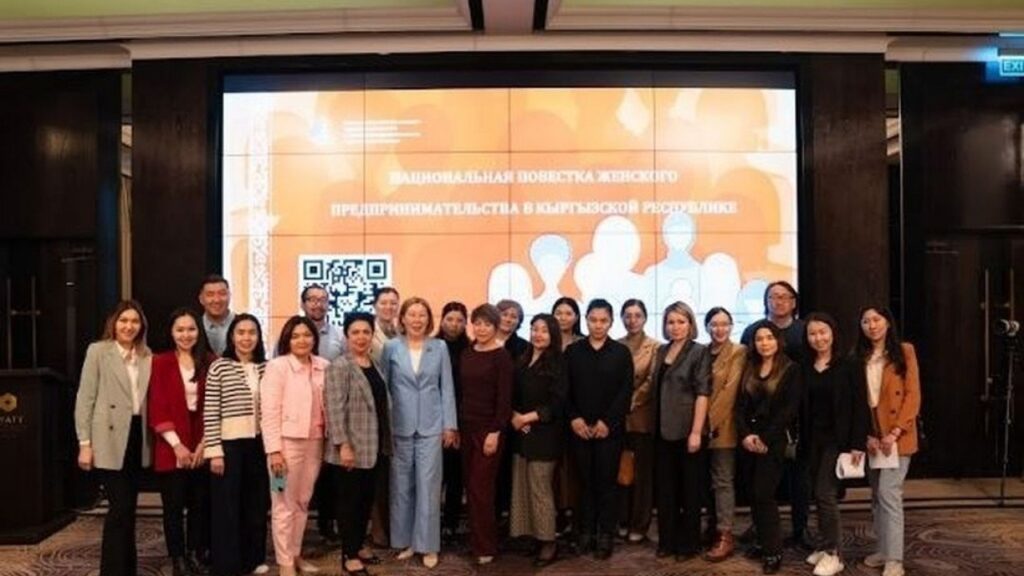
A group of Kyrgyz parliamentary deputies have initiated amendments to the draft law "On the Protection of Entrepreneurs' Rights," which will bow be supplemented with the words "women's entrepreneurship." The amendment states that women make up half of Kyrgyzstan's population, but their contribution to the economy is far less significant. Citing IMF data, the authors of the amendment stated that female entrepreneurship can contribute up to 27% to the republic's GDP. "As experience shows, the level of income from small businesses does not exceed the officially established subsistence minimum, which, unfortunately, does not leave additional funds available for further business development. The data also shows that women entrepreneurs who have better access to assets and can make independent decisions can help reduce poverty," the bill states. Representatives of the women's forum "Kurak," who contributed to drafting the amendments, proposed introducing the term "woman entrepreneur" into the law and defining this as a legal entity wherein a woman owns at least 51% of the shares. They believe this will enable women to receive preferential financing and access state support. "Women entrepreneurs often need more time to run a business. After all, they often raise children and run a household in parallel. It is also tough for a woman to get a loan from a bank because the collateral property belongs to men. Moral support from our patriarchal society and the state is also lacking," human rights activist Ainura Sarynbayeva told The Times of Central Asia. The legislative introduction of the word "woman" and "women's entrepreneurship" will help further develop women's businesses, believes Sarynbayeva, adding that commercial banks and international development institutions are already prepared to provide preferential lending. "Today, there are no countries in Central Asia where the concept of "women's entrepreneurship" is enshrined in the law. The draft law being promoted in Kyrgyzstan is largely similar to the Azerbaijani law. The authorities there support women businessmen at the state level," said Sarynbayeva. According to the latest census, Kyrgyzstan is home to 3.3 million women - half of the country's population. However, despite various training sessions and courses, only a small percentage of Kyrgyz women participate in economic activities. Human rights activists attribute this state of affairs to the haphazard nature of government support. The average Kyrgyz businesswoman is 40-50 years old, has a secondary education, is an individual entrepreneur or manages a small or medium-sized business, and has a family and children.