• KGS/USD = 0.01144 0%
  • KZT/USD = 0.00212 0%
  • TJS/USD = 0.10456 0.19%
  • UZS/USD = 0.00008 0%
  • TMT/USD = 0.28490 0%
  • KGS/USD = 0.01144 0%
  • KZT/USD = 0.00212 0%
  • TJS/USD = 0.10456 0.19%
  • UZS/USD = 0.00008 0%
  • TMT/USD = 0.28490 0%
  • KGS/USD = 0.01144 0%
  • KZT/USD = 0.00212 0%
  • TJS/USD = 0.10456 0.19%
  • UZS/USD = 0.00008 0%
  • TMT/USD = 0.28490 0%
  • KGS/USD = 0.01144 0%
  • KZT/USD = 0.00212 0%
  • TJS/USD = 0.10456 0.19%
  • UZS/USD = 0.00008 0%
  • TMT/USD = 0.28490 0%
  • KGS/USD = 0.01144 0%
  • KZT/USD = 0.00212 0%
  • TJS/USD = 0.10456 0.19%
  • UZS/USD = 0.00008 0%
  • TMT/USD = 0.28490 0%
  • KGS/USD = 0.01144 0%
  • KZT/USD = 0.00212 0%
  • TJS/USD = 0.10456 0.19%
  • UZS/USD = 0.00008 0%
  • TMT/USD = 0.28490 0%
  • KGS/USD = 0.01144 0%
  • KZT/USD = 0.00212 0%
  • TJS/USD = 0.10456 0.19%
  • UZS/USD = 0.00008 0%
  • TMT/USD = 0.28490 0%
  • KGS/USD = 0.01144 0%
  • KZT/USD = 0.00212 0%
  • TJS/USD = 0.10456 0.19%
  • UZS/USD = 0.00008 0%
  • TMT/USD = 0.28490 0%

Viewing results 109 - 114 of 266

Kazakhstan and Taliban Afghanistan: An Overview of Relations

Diplomatic relations between Kazakhstan and Afghanistan began more than 30 years ago, on February 12, 1992. However, in April of that year, the republican regime in Kabul fell, and the country plunged into the abyss of civil war after becoming the Islamic State of Afghanistan. Such chaos had never been seen before. The first Taliban Emirate was established and then overthrown by the US-led coalition, after which the Islamic Republic of Afghanistan was proclaimed Politics Kazakhstan's first diplomatic mission in Kabul was opened in September 2002, less than a year after America launched Operation Enduring Freedom. In 2003, it was transformed into an embassy. From then on, the relationship between the countries became operational. The new starting point of the Kazakh-Afghan relationship was August 15, 2021, when the Taliban seized power in Kabul. Kazakhstan's foreign policy was put to a test, but Astana demonstrated foresight and pragmatism. The Kazakh embassy, unlike most other countries, was not evacuated, diplomats continued to work in the new conditions and began to establish the first contacts with the Taliban authorities. From the very beginning, Kazakhstan took a clear and understandable position and began to promote it at various levels. A month after the Taliban seized Kabul, Kazakhstan's President Kassym-Jomart Tokayev drew attention to the situation in Afghanistan at the SCO meeting in Dushanbe (September 17). As he stated, "Kazakhstan sees future Afghanistan as a truly independent and united state living in peace with itself and its neighbors. At this crucial historical moment, the multinational people of Afghanistan should not be left alone in the face of unprecedented difficulties". A few days later, on September 22, during the UN General Assembly, the Kazakh president detailed the position of his country and was one of the first politicians to point out the current problem of “inclusiveness.” Tokayev reaffirmed that Kazakhstan supports the UN Security Council's call for the formation through negotiations of a new government that would be inclusive and representative. In his words, “It is necessary to create a consensus-based system in which groups with different values or ethnic, religious and gender backgrounds can coexist in one country.” For a better understanding and retrospective assessment of Astana's actions on the “Afghan track,” it is worth citing other theses mentioned by the president in New York at a time when most of the world was still doubting the success of the Taliban campaign. "Afghanistan must continue to fulfill its international obligations and ensure that its territory does not become a springboard for terrorists, drug trafficking, and human traffickers. Regardless of our political or personal convictions, we must not abandon the people of Afghanistan to their fate now. The acute humanitarian situation must be our top priority. UN agencies and other humanitarian organizations must have immediate, safe, and unimpeded humanitarian access. Kazakhstan has provided for the temporary relocation of the UN Assistance Mission in Afghanistan (UNAMA) and other UN offices in Afghanistan. We are ready to provide a logistical platform for the delivery of humanitarian aid to Afghanistan...
Who Will Build Kazakhstan’s Nuclear Power Plant?

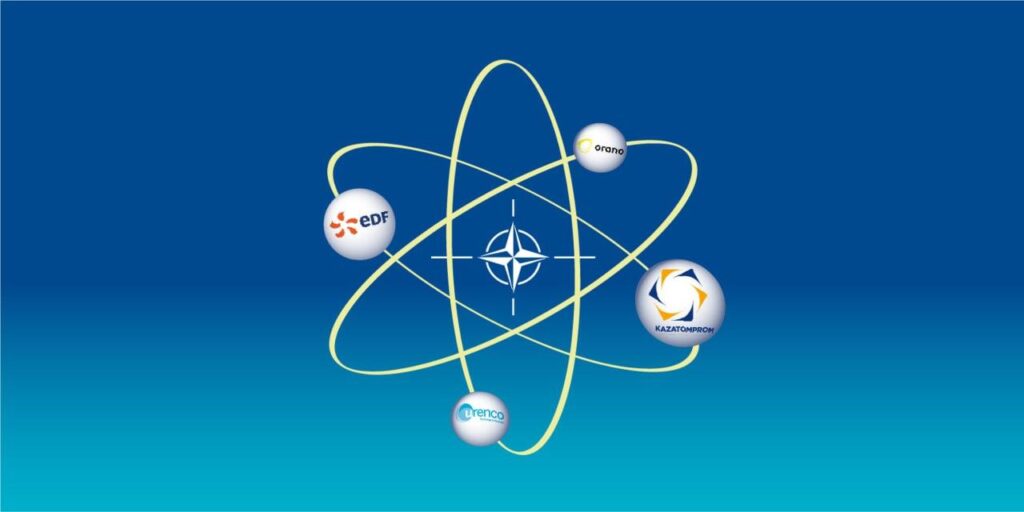
There are three generally discussed possibilities for construction of Kazakhstan’s newly approved nuclear power plant (NPP). One is that Russia is sole contractor. Another is that China is sole contractor. Each of these choices has its own rationale yet also geo-economic and geopolitical drawbacks for Kazakhstan. Third, Kazakhstan’s President Kassym-Jomart Tokayev has publicly stated that he favors an international consortium with participation by companies from China, France, Russia, and South Korea. This option, however, faces logistical challenges, particularly in dividing responsibilities among consortium members and determining the sourcing of critical components. Tokayev has already discussed with France’s President Emmanuel Macron the possible participation of the French companies Orano and EDF in particular. Orano focuses on various aspects of the nuclear fuel cycle, including uranium mining, enrichment, and waste management. EDF specializes in design, construction, and operational management. This opens the door to a fourth possibility. Orano, EDF and the British-German firm Urenco together can provide all the NPP construction and management services necessary to realize the project. But Kazatomprom, which focuses on mainly on mining and processing, has not been mentioned in any of these schemes. Such an alternative approach, involving Western companies like Orano, EDF, and Urenco, could ensure comprehensive services with strong Western involvement, possibly including Kazatomprom, thus boosting local capacity and creating a "demonstration project" for broader natural resource collaboration within NATO frameworks. This kind of partnership could help Kazakhstan reduce its dependency on single external actors, thereby enhancing its strategic autonomy. Moreover, by involving Kazatomprom, the project could focus on knowledge transfer and capacity building, fostering local expertise and reducing external dependencies over time. It is reasonable that an offer to take Kazatomprom into a Western consortium and to make capacity building in Kazakhstan, at Kazatomprom and elsewhere, an explicit goal of the project, would be welcome in Astana. Cooperation via NATO platforms could likewise offer Kazakhstan access not only to technical specialists from NATO countries but also to more joint training exercises and workshops, to complement an exchange of knowledge on best practices in nuclear safety and energy resilience. And that would be only a “demonstration project” for the constructive expansion of the energy component of NATO’s Partnership for Peace (PfP) into broader natural-resource and rare-earth domains. Indeed, there is no reason even to wait for the NPP project. Central Asia, especially Kazakhstan, is a periodic table of the elements, especially rare-earth elements, and their exploration and development has been under way for some time. Building upon the energy-security successes through NATO's PfP, this proposal suggests expanding cooperation with Caspian region Partner countries into the mining sector, specifically for rare-earth elements critical to defense. Extending PfP to include these resources aligns with NATO's and Partners' core security goals, offering broader opportunities to secure the supply chain and enhance collective defense capabilities. This extension also presents a strategic avenue to mitigate risks associated with supply disruptions and geopolitical tensions. Leveraging the extensive experience of partnership in energy security, NATO and its Partner countries could begin with...

Kazakhstan and Serbia Strengthen Ties Despite Different Geopolitical Paths

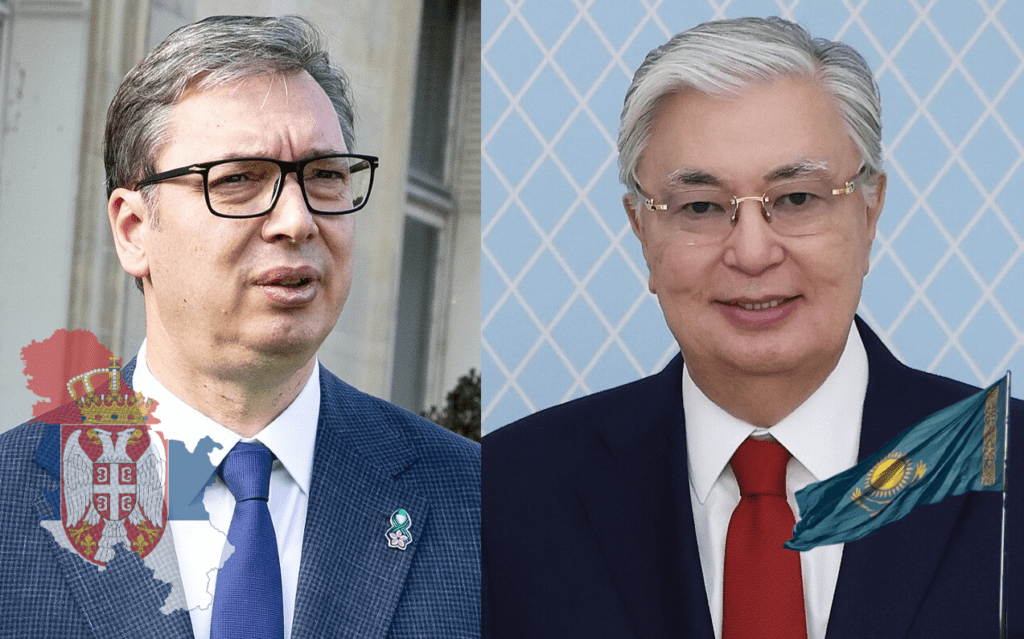
Serbian President Vucic (54) might physically resemble Kazakh leader Kassym-Jomart Tokayev (71), but the geopolitical positions of Sebia and Kazakhstan could not be more different. While the Balkan nation – a European Union candidate since 2012 – remains in the EU’s “eternal waiting room”, the Central Asian country – a member of the Russian-led Eurasian Economic Union – seems to have found a delicate balance between Russia, China, and the West. Those differences, however, have not prevented Serbia and Kazakhstan from strengthening their bilateral ties. Over the past six months, the two countries have been actively preparing for Tokayev’s trip to Serbia. This year, he spoke by phone with Vucic twice, while various Serbian and Kazakh officials held several meetings. On November 18-19, Tokayev finally visited the Southeastern European nation, where he met with his Serbian counterpart. According to the Kazakh leader, they discussed strengthening trade and economic relations and bilateral partnerships between the two nations. “It is essential that we develop cooperation. We had constructive talks and reached important deals,” Tokayev stressed. During his visit to the Balkan country, Serbian and Kazakh ministers signed several bilateral agreements. One of them is a 2025 plan on military cooperation. It is, therefore, no surprise that, following the talks in Belgrade, Vucic and Tokayev attended an exhibition of arms and military equipment at the Batajnica military airport near the Serbian capital. Indeed, military ties seem to be an important aspect of the Serbian-Kazakh relationship. Back in 2017, the two nations signed a memorandum of understanding in the field of military-technical collaboration. Six years later, in November 2023, Kazakhstan and Serbia inked intergovernmental agreements on military-technical cooperation, while in June of this year Serbian and Kazakh defense ministers discussed in Astana military relations between the two countries. Also, in September, Roman Vassilenko, Kazakhstan’s Deputy Foreign Minister, announced that Belgrade and Astana plan то expand cooperation in the defense industry. It remains to be seen how Moscow – Astana’s nominal ally in the Collective Security Treaty Organization (CSTO) – will react to Kazakhstan’s ambitions to deepen military ties with Serbia – a nominally neutral country that has indirectly supplied Ukraine with $885 million worth of weapons. Despite being in different geopolitical positions, Serbia and Kazakhstan seem to share the same approach regarding Ukraine. Both nations support the Eastern European country’s territorial integrity, while trying to preserve relatively good relations with the Kremlin. At the same time, they support each other’s territorial integrity, which is particularly important for Serbia given that Kazakhstan does not recognize the 2008 unilateral independence of Kosovo. In 2022, sitting next to Russian President Vladimir Putin, Tokayev said that if the right to self-determination is put into practice worldwide, then there will be over 600 countries instead of the 193 states which are currently members of the United Nations. “For this reason, we do not recognize either Taiwan, or Kosovo, or South Ossetia, or Abkhazia… This principle will also be applied to quasi-state territories, which, in our opinion, are Lugansk and...

Harnessing AI for Inclusive Education: Transforming Learning Experiences in Kazakhstan

Artificial Intelligence continues to revolutionize every major industry, and its impact on education is especially transformative and promising. Many countries around the world face numerous problems in their education systems, and AI offers solutions to many of them. Kazakhstan is one of the nations that embrace the AI revolution by making efforts to integrate AI into its education system.   Current State of AI in Kazakhstan In Kazakhstan, the government is investing heavily to integrate AI into its education system. It plans to spend 650 billion tenge on research initiatives including offering AI literacy courses in universities starting in 2024. This reflects a national strategy aimed at modernizing education and preparing a workforce skilled in AI technologies. Kazakhstan's universities are beginning to adopt AI technologies to stay current with technological advancements. Institutions like Al-Farabi Kazakh National University and L.N. Gumilyov Eurasian National University are introducing AI-focused programs that include training on intelligent tutoring systems. Korkyt Ata Kyzylorda State University has also initiated a School of Artificial Intelligence in collaboration with SeoulTech. This program aims to facilitate the exchange of knowledge among professors in artificial intelligence and VR/AR technologies. Such initiatives exemplify how targeted training can prepare students for future job markets while addressing regional skill gaps. Additionally, interviews with educators involved in these programs reveal a growing enthusiasm for integrating technology into teaching practices. One educator noted how adaptive learning platforms have allowed her to tailor lessons more effectively to meet her students' varying needs.   Accessibility and Inclusivity AI technologies also play a crucial role in enhancing accessibility for students with disabilities. Tools like speech recognition software and language translation applications can significantly improve learning experiences for diverse learners. For instance, platforms like Duolingo employ AI-driven language translation tools to assist students who may struggle with language barriers. Moreover, applications such as Seeing AI and Voiceitt are revolutionizing education by providing real-time support for visually impaired and speech-impaired students, respectively. These technologies not only facilitate communication but also empower students to engage more fully in their educational experiences. In alignment with these advancements, organizations such as UNICEF are leveraging AI to provide quality education in underserved regions. In Kazakhstan, efforts are underway to ensure that all students, regardless of their backgrounds or abilities, can benefit from these advancements. A recent initiative launched by UNICEF and the Nazarbayev University Research and Innovation System focuses on integrating artificial intelligence into secondary education, aiming to enhance the quality of learning for all students. This project emphasizes the importance of equipping teachers with the necessary skills and tools to effectively utilize AI technologies in their classrooms. By fostering an inclusive educational environment that incorporates adaptive learning technologies, these efforts seek to bridge gaps and ensure equitable access to quality education across the country, aligning with global trends in educational innovation.   Data-Driven Insights for Educators AI analytics offer educators valuable insights into student progress and performance. By monitoring data trends, teachers can identify at-risk learners and facilitate timely interventions. For example, platforms like...

Risk and Reward: Why Savvy Investors Should Dive into Central Asia-Caspian Region

Central Asia-Caspian basin has long been a geopolitical chessboard — fragmented by conflict but dependent on cooperation. In an era of shifting alliances, political instability, and economic uncertainty, multinational corporations (MNCs) must reassess their strategies. While the region's challenges remain considerable, it also presents unique investment opportunities that should not be overlooked. Since the 1990s, operating in post-Soviet Eurasia has been synonymous with political risks. The Central Asian states have sought foreign direct investment (FDI) but face significant obstacles, including weak rule-of-law, inconsistent regulatory frameworks, and entrenched corruption. Yet despite these barriers, the region continues to attract international capital, signaling its long-term potential. Traditionally reliant on oil and gas exports, these countries are now pivoting toward diversification. Nations like Azerbaijan, Kazakhstan, and Turkmenistan are strengthening ties with the European Union (EU) to balance their historical reliance on Russia’s energy network. This shift is opening new frontiers for investment, particularly in green energy, infrastructure, and technology. However, geopolitical instability remains a critical risk. The war in Ukraine has intensified uncertainties, with Russia, China, the EU, and the U.S. vying for influence. Energy security, once an afterthought, has become a central issue. The closure of the Novorossiysk terminal in early 2023, halting Kazakh oil exports, underscored how quickly geopolitical disruptions can affect supply chains, prompting companies like ExxonMobil to reassess their regional strategies. Yet this volatility also creates opportunities. The region’s economic shift away from resource dependence toward a knowledge-based economy offers fertile ground for businesses willing to invest in infrastructure, technology, and renewable energy. The Caspian basin’s strategic location, as a transit hub for energy to Europe, only heightens its importance in the EU’s efforts to reduce dependency on Russian supplies. For international businesses, this means new markets, sectors, and investment channels are emerging. The post-Covid landscape adds complexity, with digital transformation accelerating across industries. Countries in the Central Asia-Caspian basin are under pressure to adopt these technologies, which could drive long-term economic growth. Yet the gap between ambitious reform plans and their implementation remains wide. Regulatory inefficiencies and bureaucratic hurdles continue to hamper progress, presenting a challenge for foreign investors looking for stability. For multinational corporations, the region presents both risks and significant upsides. On one hand, border disputes, political unpredictability, and regulatory uncertainty create barriers. On the other, the region’s growing role as an energy transit hub and its emerging sectors, from green energy to infrastructure, offer promising avenues for investment. Azerbaijan and Kazakhstan, in particular, have been proactive in bolstering energy exports to Europe, positioning themselves as critical players in the global energy transition. If the conflict in Ukraine continues to escalate, the region’s geopolitical risks will undoubtedly increase. However, external actors — particularly the U.S., the EU, and China — are also likely to deepen their involvement, further reshaping the region’s economic and political landscape. The rise of Sino-American tensions only adds another layer of complexity to an already volatile environment. Yet, for companies that can navigate these complexities, the rewards are significant. Central Asia-Caspian basin remains...

How Can Central Asian Countries Advance Democratization Efforts Amid Geopolitical Uncertainty?

On October 27, Uzbekistan held parliamentary elections, which, along with the referendum in Kazakhstan and upcoming local council elections in Kyrgyzstan, contributed to a global election year. In the elections in Uzbekistan, the ruling Liberal Democratic Party emerged victorious, participating for the first time in elections held under a mixed majoritarian-proportional system. As a result of the vote, the Liberal Democratic Party received 42,7% of the votes, securing 64 out of 150 seats in parliament. Voter turnout was 74.72%, and observers noted the organization and conduct of the elections. Leaders in Central Asia frequently cite the region’s volatile geopolitical landscape as a basis for more cautious internal reforms. This reflects a need to maintain stability in the face of external pressures. Historically and currently, Central Asian countries do not represent homogeneous societies. Additionally, increasing political divisions within society and among political elites are observed in almost all five countries of the region. Against this backdrop, escalating geopolitical conflicts on the global stage may further hinder the realization of major political reforms.   Political Reforms and an Unstable World Order It's challenging to definitively assess political reforms in Kazakhstan and Uzbekistan as either negative or positive, as both perspectives exist. European and American leaders often note the countries' aspirations for reforms and express readiness to support them. Therefore, Kazakhstan and Uzbekistan effectively act as locomotives of political reforms in Central Asia at this stage. Under the leadership of President Kassym-Jomart Tokayev, Kazakhstan has undertaken political reforms aimed at modernizing the political system and strengthening democratic institutions. A significant step was limiting presidential powers by introducing a single seven-year presidential term without the right to re-election, which should promote regular changes in political leadership. Kazakh authorities argue that the role of parliament has also been strengthened to increase its influence and accountability to the government, providing a more balanced system of checks and balances. Liberalization of the party system included simplifying the registration of political parties and introducing elections based on single-member districts, which should foster political pluralism. Steps were taken to increase citizen participation in governance, including the introduction of direct elections for village and district mayors and creating mechanisms for open citizen feedback. Additionally, a 30% quota for women, youth, and people with disabilities was introduced in party lists, contributing to strengthening gender equality. Under President Shavkat Mirziyoyev, Uzbekistan is also conducting significant reforms aimed at democratizing the political system. These elections were noteworthy for the introduction of a mixed electoral system, representing a significant departure from past practices. Under this system, 150 seats in the Legislative Chamber of the Oliy Majlis should be filled by two methods: 75 seats were elected through single-member districts (majoritarian system), and the remaining 75 were allocated proportionally based on party results (proportional system). This approach aims to enhance political pluralism by allowing both individual candidates and political parties to gain representation. The majoritarian component allows voters to directly elect representatives from their constituencies, fostering a closer connection between elected officials and their constituents....