• KGS/USD = 0.01144 0%
  • KZT/USD = 0.00213 0%
  • TJS/USD = 0.10607 0.57%
  • UZS/USD = 0.00008 0%
  • TMT/USD = 0.28530 0%
  • KGS/USD = 0.01144 0%
  • KZT/USD = 0.00213 0%
  • TJS/USD = 0.10607 0.57%
  • UZS/USD = 0.00008 0%
  • TMT/USD = 0.28530 0%
  • KGS/USD = 0.01144 0%
  • KZT/USD = 0.00213 0%
  • TJS/USD = 0.10607 0.57%
  • UZS/USD = 0.00008 0%
  • TMT/USD = 0.28530 0%
  • KGS/USD = 0.01144 0%
  • KZT/USD = 0.00213 0%
  • TJS/USD = 0.10607 0.57%
  • UZS/USD = 0.00008 0%
  • TMT/USD = 0.28530 0%
  • KGS/USD = 0.01144 0%
  • KZT/USD = 0.00213 0%
  • TJS/USD = 0.10607 0.57%
  • UZS/USD = 0.00008 0%
  • TMT/USD = 0.28530 0%
  • KGS/USD = 0.01144 0%
  • KZT/USD = 0.00213 0%
  • TJS/USD = 0.10607 0.57%
  • UZS/USD = 0.00008 0%
  • TMT/USD = 0.28530 0%
  • KGS/USD = 0.01144 0%
  • KZT/USD = 0.00213 0%
  • TJS/USD = 0.10607 0.57%
  • UZS/USD = 0.00008 0%
  • TMT/USD = 0.28530 0%
  • KGS/USD = 0.01144 0%
  • KZT/USD = 0.00213 0%
  • TJS/USD = 0.10607 0.57%
  • UZS/USD = 0.00008 0%
  • TMT/USD = 0.28530 0%

Viewing results 487 - 492 of 1564

EU’s Kallas Tours Central Asia Ahead of Landmark Samarkand Summit

Last week, Kaja Kallas, the European Union's High Representative for Foreign Affairs and Security Policy and Vice-President of the European Commission, toured Central Asia in advance of the first-ever EU-Central Asia Summit. The notable meeting is set to take place in the ancient Uzbek city of Samarkand on April 3-4. EU-Central Asia Summit Samarkand, a city increasingly popular among international travelers, has hosted high-level gatherings before, including the Shanghai Cooperation Organization Summit in September 2022. However, the upcoming summit marks the first time the top leadership of all five post-Soviet Central Asian republics will convene with the EU at this level. Key topics on the agenda include energy cooperation, trade corridors, and climate change. The summit is expected to produce several agreements that will outline the progress of EU-Central Asia relations and establish strategic policy directions for the future. Visit to Turkmenistan Kallas began her tour in Ashgabat, where she chaired the 20th EU-Central Asia Foreign Ministers’ Meeting. There, she addressed the implications of EU sanctions on Russia. “The European Union has enacted 16 sanctions packages and is currently preparing the 17th. I understand these measures impact the region’s economies, but Russian companies must not be allowed to use Central Asia to circumvent them,” Kallas warned. The meeting also focused on the EU-Central Asia roadmap adopted in Luxembourg in October 2023. Discussions centered on deepening trade, economic, and transport ties, along with expanding digital connectivity as part of the EU's Global Gateway initiative. Kallas also met with Turkmen President Serdar Berdimuhamedov, praising Turkmenistan’s development and expressing appreciation for bilateral cooperation. Her remarks drew criticism from some observers. Belarusian political analyst Dzmitry Balkunets criticized Kallas on social media, accusing the EU of compromising its values by praising authoritarian regimes. Uzbekistan Visit In Tashkent, Kallas met with President Shavkat Mirziyoyev. Discussions highlighted the upcoming Samarkand summit and stressed the importance of deepening EU-Uzbek cooperation in trade, logistics, digitalization, green energy, and infrastructure. Both sides also explored steps toward a new enhanced partnership agreement and Uzbekistan’s accession to the World Trade Organization. Visit to Kazakhstan Kallas concluded her tour in Astana, where she met with President Kassym-Jomart Tokayev on March 28. A statement from Tokayev’s office underlined Kazakhstan’s cautious diplomatic approach to global tensions. "President Tokayev emphasized the importance of restraint and responsibility in evaluating complex global developments. Kazakhstan remains committed to resolving international conflicts through diplomacy," the statement read. Analysts suggest Kallas may have encouraged Tokayev to distance Astana from both Moscow and Washington, as Brussels often diverges from Washington on issues like the war in Ukraine. However, Tokayev reiterated Kazakhstan’s multi-vector foreign policy, which avoids aligning with any single global power. In a notable development, Tokayev met with Uzbek President Mirziyoyev last weekend in Almaty. Though unannounced, the working visit suggests that the two leaders were coordinating positions ahead of the Samarkand summit. Whether their joint stance aligns with Brussels' expectations remains to be seen.

Tajikistan to Chronicle Soccer Legacy with New Museum and Landmark Book

A museum dedicated to the history of Tajik soccer will be inaugurated in a new stadium currently under construction in Dushanbe. The project was initiated by Rustami Emomali, Mayor of Dushanbe and President of the Tajikistan Football Federation​. A People's Archive of Soccer Heritage The Tajikistan Football Federation has called on fans, athletes, and sports veterans to contribute memorabilia related to the country's soccer history. Sought-after items include match jerseys, medals, trophies, certificates, books, and any other artifacts that reflect the evolution of soccer in Tajikistan. “The owners of valuable items and objects, as well as the authors of significant materials, will be recognized and encouraged,” the federation said in a public appeal. In parallel with the museum, the federation is preparing to publish The History of Tajik Soccer, the first comprehensive volume covering all major milestones in the sport’s national development. From the First Matches to the Soviet Leagues Soccer began to gain popularity in Tajikistan in the early 1920s. In 1936, the Tajikistan Football Federation was formally established, and a year later, the first championship of the Tajik SSR took place. Dinamo, a club from Stalinobod (now Dushanbe), emerged as the inaugural champion. In 1947, Dinamo debuted in the USSR championship, marking the beginning of Tajikistan’s participation in Soviet leagues. A defining moment came in 1989 when Dushanbe's Pamir club competed in the Supreme League of the Soviet Union, a peak achievement during the Soviet soccer era that remains a point of pride for the country. A New Era After Independence With the dissolution of the Soviet Union in 1991, Tajik soccer entered a new chapter. The Tajikistan Football Federation became a member of FIFA and the Asian Football Confederation in 1994, enabling the country to participate in global and regional competitions. Today, Tajikistan is investing in soccer infrastructure, focusing on youth training and international performance. The upcoming museum and book aim to celebrate the sport’s rich past while inspiring future generations of players and fans.

Historic Khujand Summit Paves Way for Peace in the Ferghana Valley

The presidents of Kyrgyzstan, Tajikistan, and Uzbekistan gathered in the northern Tajik city of Khujand on March 31 for a meeting that is decades overdue. Among the agreements the three signed were one fixing the border where their three countries meet. Prior to Uzbek President Shavkat Mirziyoyev’s arrival, Kyrgyzstan’s President Sadyr Japarov and Tajikistan’s President Emomali Rahmon exchanged ratified documents of the border agreement between the two countries. Rahmon and Japarov, via video link, also launched the Datka-Sughd power transmission line, a major step in the CASA-1000 project that aims for both their countries to supply electricity to Afghanistan and Pakistan. These agreements might not seem monumental, but they represent a major departure from the troubled past the three governments have had in their border areas. Trouble in Paradise The three countries share the Ferghana Valley, an area roughly the size of Costa Rica that is home to more than 20% of Central Asia’s population. Since the Central Asian states became independent in late 1991, the Ferghana Valley has also been the region’s hotbed of tension. The Ferghana Valley is the cradle of ancient Central Asian civilization. Some living there today say it was the location of the Garden of Eden, and it is not difficult to see why. The Valley is abundant in fruits and vegetables and has extensive arable and grazing land. It is surrounded by mountains to the north, east, and south, and the rivers that flow from these mountains supply ample water. Since independence, the Ferghana Valley has been the most dangerous place in all of Central Asia. The arbitrary borders Soviet mapmakers drew to divide Kyrgyzstan, Tajikistan, and Uzbekistan left many problems for the three after they became independent states. Agreement on where Kyrgyz-Uzbek border is came only in late 2022, and Kyrgyzstan and Tajikistan just signed the agreement on delimitation of their border on March 12. The Islamic Movement of Uzbekistan The roots of Islam lie deep in the Ferghana Valley. There were already calls for Shari’a law in Uzbekistan’s section of the valley just months after Uzbekistan declared its independence. The most serious security threat to Central Asia to date originated in the Ferghana Valley in 1999 and 2000. In early August 1999, a group of some 20 armed militants from the Islamic Movement of Uzbekistan (IMU) appeared in southern Kyrgyzstan, captured a village, and took the villagers and subsequent government negotiators hostage. The IMU leaders were from the eastern Uzbek city of Namangan. They were connected to the protests in Uzbekistan in late 1991 and later joined the Islamic opposition in neighboring Tajikistan’s 1992-1997 civil war. The peace accord that ended the civil war called for opposition fighters to either join the Tajik armed forces or disarm. There was no longer any need for the opposition’s foreign fighters, and the final phase of disarmament was underway by the summer of 1999. In mid-August, the Kyrgyz government paid a ransom for the hostages’ release and the departure of the IMU militants, but this...

Scientists of Ancient Central Asia Still Relevant in the Modern World; The Idea of the Averaged Turkic Language

There is a debate on social media between Uzbek and Tajik communities about the medieval scholar Ibn Sina. The discussion revolves around the question of nationality — was Ibn Sina Tajik, Uzbek, or something else? Similar debates have emerged about other medieval scholars, including Al-Farabi. Ibn Sina (commonly known in the West as Avicenna) and Al-Farabi were two of the most influential scholars of the Islamic Golden Age. Ibn Sina, known for his contributions to medicine, philosophy, and science, wrote The Canon of Medicine, a foundational text in medical education for centuries. First published in 1025, his work stood as the standard medical textbook in Europe from its translation into Latin in the twelfth century through to the 1650s. Al-Farabi, often called the Second Greatest Teacher after Aristotle, made significant contributions to philosophy, logic, and political theory, shaping intellectual thought in the Islamic world and beyond. To explore this further, TCA spoke with two scholars — Fakhriddin Ibragimov, PhD, and Dr. Bakhtiyor Karimov — who have studied the lives and works of Ibn Sina and Al-Farabi extensively. [caption id="attachment_30258" align="aligncenter" width="1280"] Fakhriddin Ibragimov; image courtesy of the subject.[/caption] Fakhriddin Ibragimov, a researcher at the Abu Rayhan Biruni Institute of Oriental Studies, has spent nearly 15 years studying Ibn Sina. According to Ibragimov, historical sources provide no direct evidence of Ibn Sina’s nationality. “Ibn Sina (980 – 1037) was born in the village of Afshona, near Bukhara. Nowhere in his works or those written by his contemporaries is his nationality mentioned,” Ibragimov told TCA. “However, he is identified as a Muslim, like most people in Central Asia at the time. Also, many manuscript sources indicate that he was from Bukhara.” Ibragimov explains. Ibragimov also highlights that Ibn Sina himself wrote about his upbringing, describing how he was raised in an intellectual environment where philosophical and religious discussions were common: “We had a lot of scientific discussions, debates, and gatherings at home. Issues of faith were also raised there. My father and brother adhered to the Ismaili faith [one of the religious movements in Islam that was widespread in the Near and Middle East in the 10th and 11th centuries], but I did not join them,” Ibn Sina wrote. However, he did not mention any ethnic identity in his works or in those written by his contemporaries. [caption id="attachment_30260" align="aligncenter" width="575"] Avicenna at the sickbed, miniature by Walenty z Pilzna, Kraków (ca 1479–1480); image: jbc.bj.uj.edu.pl[/caption] The claim over Ibn Sina’s legacy is widespread. While Uzbeks and Tajiks both regard him as one of their own, Iranians also consider him Persian due to the language of his writings. In 2018, a bust of Abu Ali Ibn Sina was installed in front of the campus of the Autonomous University of Madrid as a gift from the Iranian embassy. The inscription on the bust reads, “Persian physician and philosopher.” Even Jewish scholars have cited him as part of their intellectual heritage. However, Ibragimov argues that Ibn Sina should be seen as a global figure rather...

Tajik Authorities Urge Migrants in Russia to Legalize Status Ahead of Deadline

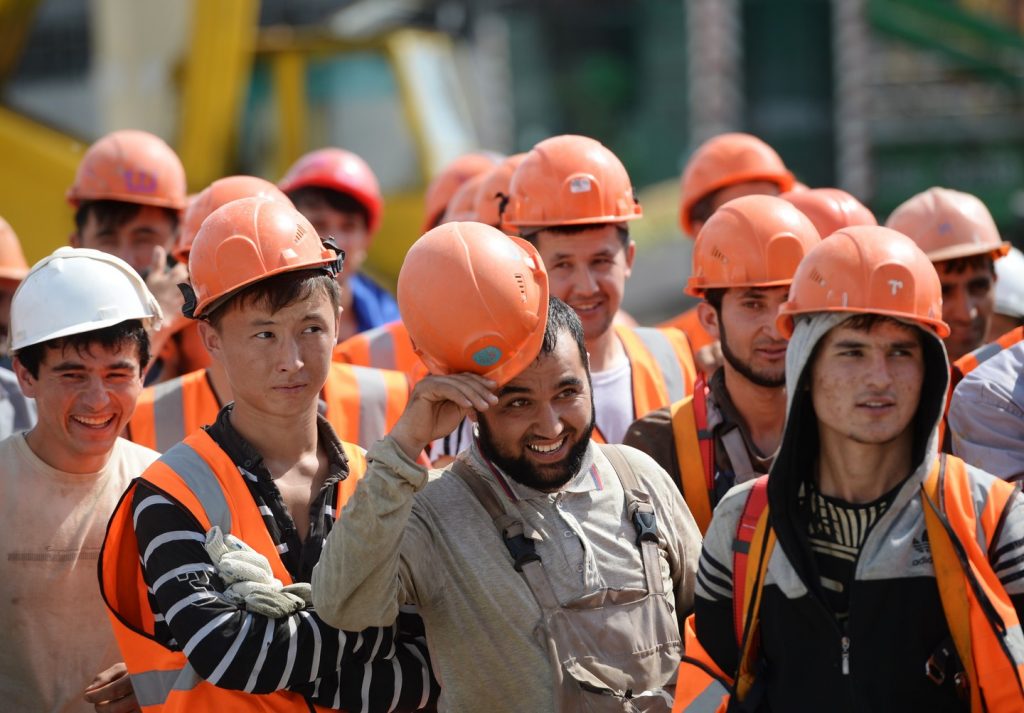
Tajik authorities are urging citizens working in Russia to legalize their status before the April 30 deadline, as new Russian immigration regulations come into force. The Ministry of Internal Affairs of Tajikistan has reminded labor migrants to update their documents to remain employed legally. “Foreign citizens in the Russian Federation who are not registered at their place of residence, do not possess a valid work patent, or have failed to make monthly payments, as well as those listed in the register of controlled persons, can legalize their documents without leaving Russia,” the ministry stated. Starting June 30, Russia will implement a digital profile system for migrants. Russian Prime Minister Mikhail Mishustin announced that the new system will replace the current paper-based work patent with a digital profile containing a unique identifier. Authorities say this transition is aimed at improving administrative efficiency and reducing fraud. “To ensure a smooth transition, all necessary preparations are being made,” Mishustin said. In addition to the digital transition, Russia began testing a new border control system in December 2024. Migrants entering via Moscow airports are now required to submit biometric data, enabling authorities to track entries and identify individuals banned from entering the country. In February 2025, Russian authorities activated a national register of controlled persons. The list includes over 640,000 foreign nationals residing in Russia without proper documentation. Those listed must legalize their stay by April 30 or face potential deportation. The new rules also affect migrant families. Since February, children of migrants must pass a Russian language proficiency test. If they fail, they are required to attend a three-month language course at their parents’ expense. Noncompliance may trigger investigations into the family’s living conditions and result in penalties.

EU Pledges Steady Support for Tajikistan Ahead of Historic Central Asia Summit

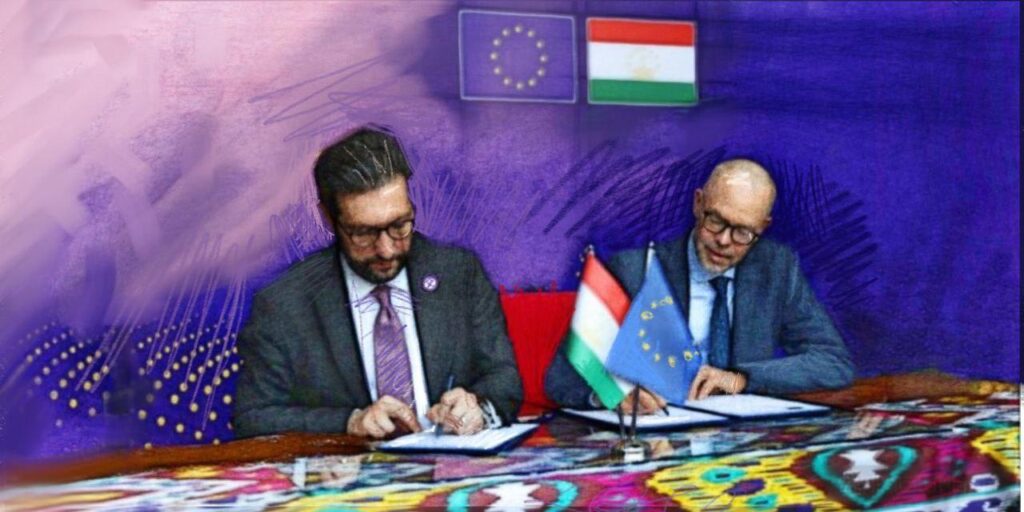
The European Union will maintain its current level of assistance to Tajikistan despite the recent suspension of U.S. funding through USAID, EU Ambassador to Tajikistan Raimundas Karoblis has confirmed. He emphasized that European and American aid programs operate independently and that EU support will remain unaffected. “Aid from the EU will continue and will not be reduced,” Karoblis stated. He added that the EU's assistance framework for Tajikistan is already set through 2027 and cannot be revised before then. Discussions about increased support may take place after that period.   EU and Central Asia: Toward a Historic Summit On March 27, Ashgabat will host the 20th meeting of foreign ministers from the European Union and Central Asia. The key objective of this gathering is to prepare for the first-ever EU-Central Asia Summit, scheduled for April 3-4 in Samarkand. The summit will bring together the President of the European Council, the head of the European Commission, and the leaders of all five Central Asian states. According to the EU Delegation in Tajikistan, the summit will mark a new milestone in EU-Central Asia relations, reflecting the EU’s deepening political engagement with the region. Financial Assistance and Strategic Priorities Between 2021 and 2027, the EU has committed more than €550 million in aid to Central Asia, with €142 million allocated to Tajikistan. The focus areas include building an inclusive green economy, investing in human capital, and ensuring sustainable management of natural resources. Under its Global Gateway initiative, the EU is working to develop smart and sustainable connectivity across transport, digital infrastructure, energy, and education. A key initiative is the Trans-Caspian Transport Corridor, to which the EU has allocated more than €88 million. Other efforts target enhanced digital and energy integration in the region. In the strategic domain of critical raw materials, the EU has earmarked €16 million to support local value chains and promote sustainable investments. Additionally, through the European Fund for Sustainable Development Plus (EFSD+), €30 million in guarantees have been allocated for renewable energy and raw material extraction projects. Security, Education, and Youth Engagement The EU plays an active role in regional security initiatives. Its BOMCA program supports border management and the fight against transnational crime, while the CADAP program focuses on drug use prevention. In Tajikistan specifically, the EU, in partnership with the OSCE, is implementing a project to strengthen the capacity of border guards along the Tajik-Afghan frontier. The EU also contributes to counter-terrorism efforts and collaborates with the government on related initiatives. Education and youth empowerment are additional EU priorities. From 2013 to 2027, €95 million has been directed toward reforming Tajikistan’s education sector. The Erasmus+ program received €73 million for 2021-2027, enabling students from Central Asia to study at European universities. Youth employment is also being addressed through the €10 million DARYA program, and the recently launched €4.5 million Regional Civil Society Fund (as of September 2024) is aimed at strengthening civic engagement. Karoblis reaffirmed the EU’s long-term commitment to Tajikistan, noting that assistance will remain consistent,...