• KGS/USD = 0.01144 0%
  • KZT/USD = 0.00193 -0%
  • TJS/USD = 0.10838 -0.09%
  • UZS/USD = 0.00008 0%
  • TMT/USD = 0.28490 0%
  • KGS/USD = 0.01144 0%
  • KZT/USD = 0.00193 -0%
  • TJS/USD = 0.10838 -0.09%
  • UZS/USD = 0.00008 0%
  • TMT/USD = 0.28490 0%
  • KGS/USD = 0.01144 0%
  • KZT/USD = 0.00193 -0%
  • TJS/USD = 0.10838 -0.09%
  • UZS/USD = 0.00008 0%
  • TMT/USD = 0.28490 0%
  • KGS/USD = 0.01144 0%
  • KZT/USD = 0.00193 -0%
  • TJS/USD = 0.10838 -0.09%
  • UZS/USD = 0.00008 0%
  • TMT/USD = 0.28490 0%
  • KGS/USD = 0.01144 0%
  • KZT/USD = 0.00193 -0%
  • TJS/USD = 0.10838 -0.09%
  • UZS/USD = 0.00008 0%
  • TMT/USD = 0.28490 0%
  • KGS/USD = 0.01144 0%
  • KZT/USD = 0.00193 -0%
  • TJS/USD = 0.10838 -0.09%
  • UZS/USD = 0.00008 0%
  • TMT/USD = 0.28490 0%
  • KGS/USD = 0.01144 0%
  • KZT/USD = 0.00193 -0%
  • TJS/USD = 0.10838 -0.09%
  • UZS/USD = 0.00008 0%
  • TMT/USD = 0.28490 0%
  • KGS/USD = 0.01144 0%
  • KZT/USD = 0.00193 -0%
  • TJS/USD = 0.10838 -0.09%
  • UZS/USD = 0.00008 0%
  • TMT/USD = 0.28490 0%
10 December 2025

Viewing results 193 - 198 of 287

IFC to Support Central Asian Tech Startups With New Fund

The International Finance Corporation (IFC) is allocating $5 million to a new fund that will be used to support technology startups in Central Asia, Gazeta.uz reports. IFC is reportedly investing in Sturgeon Emerging Opportunities, a new venture capital fund managed by Sturgeon Capital, a major venture capital investor in emerging markets. Sturgeon Emerging Opportunities will focus on supporting startup projects in areas such as fintech, business-to-business platforms, agri-tech, healthcare and education. The investment in Sturgeon is part of IFC's Startup Catalyst program, which aims to address financial challenges in undervalued venture capital ecosystems by investing in incubators, gas pedals and funds in emerging markets. "The fund will help start-up entrepreneurs to expand their businesses, improve operational efficiency and create long-term employment opportunities," the statement said. Besides investing  in projects in Central Asia, the fund also intends to work in other emerging markets such as Egypt and Pakistan. Sturgeon Capital estimates that the IT startup market in these countries could generate nearly $300 million in annual digital revenue by 2030. However, startups in these countries are currently struggling to raise capital to launch and scale their products and services.

Tajikistan Abolishes Electricity Rationing

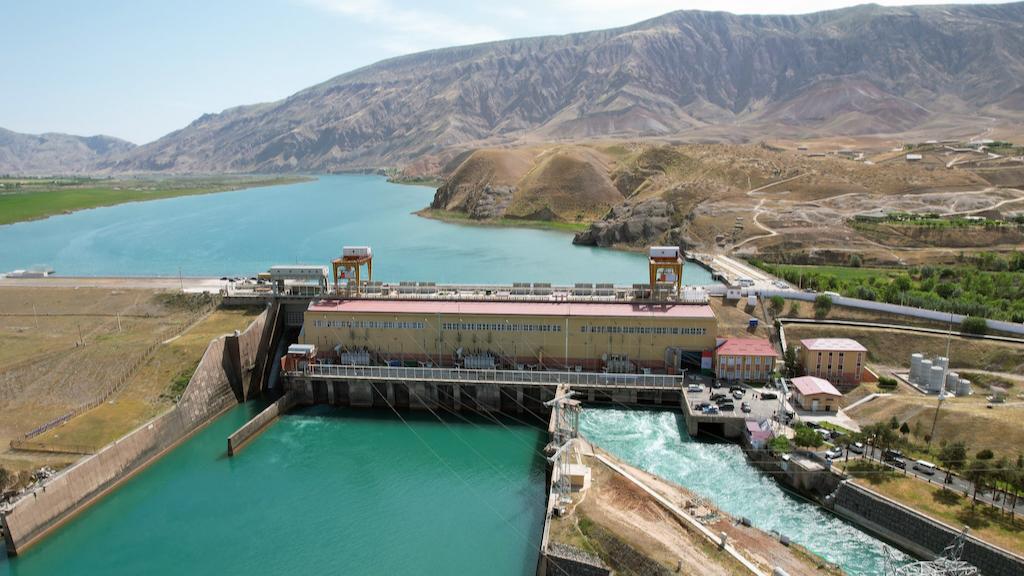
The end of a system of electrical power rationing was announced by Bakhtiyor Rakhmatzoda, deputy head of the Electric Distribution Networks Company in Tajikistan. In early March, after an abnormally warm winter, snow suddenly fell in the country, which almost immediately led to an accident at the Nurek Hydroelectric Power Plant (HPP). As a result, the entire country was left without electricity, water and cell phone services for several hours, as reported by the Russian news portal, Sputnik. After the restoration of the power supply, a rationing system to limit energy use was introduced. In most districts, power for lighting was supplied only for two hours in the morning, and two hours in the evening. The authorities explained the rationing by pointing to the high consumption of electricity - which was logical due to the cold weather at the beginning of spring. They also noted that there was not enough water in the Nurek Reservoir. Now, all restrictions have been lifted, according to Rakhmatzoda. "The country's population has access to electricity 24 hours a day, and the limit is no longer in effect," he said. Still, residents of Tajikistan are complaining on social media about power outages not only in the regions, but also in Dushanbe. The blackouts in some districts were due to technical problems or repair work, the deputy head of the Electric Distribution Networks stated.

Tajikistan Faces Acute Shortage of Human Capital in Field of Land Reclamation and Irrigation

In Tajikistan, specialists are leaving the important sphere of land reclamation and irrigation due to low salaries. In the last five months alone, 1,000 employees of the Land Reclamation and Irrigation Department (LRID) in Sughd Province have quit their jobs. That could mean trouble for the agricultural sector sooner rather than later. As Asia-Plus reports, subordinate enterprises under the Land Reclamation and Irrigation Agency are among the main debtors to the tax authorities. Their debt at the beginning of the year is 83.8 million somoni ($7.7 million) - and more than 80 million also belongs to the energy sector. For the first quarter of 2024, the Agency's wage arrears amounted to about 1.7 million somoni. "This is primarily due to the fact that water users do not pay or delay payment for reclamation services. Today, the debt of water users amounts to 95.6 million somoni," according to the Soghd regional leadership. More than 5,600 people work in Tajikistan's land reclamation and irrigation sector. The average salary of employees is about 850 somoni per month ($78), and in the regions that salary hasn't been paid for months. Only during the irrigation season can employees of local water management organizations go to the fields and collect money for irrigation services rendered. Those proceeds often pay rank-and-file workers' salaries. In order to pay their employees, managers of local water management organizations let them use equipment (excavators, tractors, trailers, etc.) that's available in order to make money. There are 779 units of machinery of different brands on the balance sheet of the subordinate enterprises of the Agency, 350 of which are so outdated they are no longer suitable for use. The sad state of affairs in the Land Reclamation and Irrigation Agency and its subordinate organizations has become a key reason for the mass departure of employees As a consequence, the Agency is facing a crippling staff shortage, with some water pumping stations employing 5-6 people instead of the 18 needed. The department plans to increase salaries for its specialists - especially young personnel - at the expense of payments for water supply. However, most water consumers are also unable to pay for irrigation, thereby threatening the wage increases before they even begin - meaning both problems may yet persist in tandem.

Kazakhstan and Tajikistan Plan to Double Trade to $2 Billion

On 30 April, talks held in Dushanbe between Prime Minister of Kazakhstan Olzhas Bektenov and Prime Minister of Tajikistan Kokhir Rasulzoda focused on Kazakh-Tajik cooperation in trade and investment, industrial cooperation, agriculture, transport connectivity, water, and energy. Kazakhstan is Tajikistan's fourth largest trading partner and with the aim to double bilateral trade to $2 billion,  Kazakhstan announced its readiness to increase exports of 85 commodities worth about $190 million. Both governments stressed the importance of developing industrial cooperation by creating new export-oriented joint ventures, with specific reference to Kazakhstan’s large production capacity of equipment for Tajik railways, including  electric and diesel locomotives, in addition to locally manufactured transformers, agricultural machinery, batteries and motor vehicles. An important issue on the bilateral agenda is cooperation in the water sector and the need for joint action to ensure  the smooth operation of Tajikistan’s Bakhri Tojik reservoir during the growing season. In further discussions on agricultural cooperation, both parties noted that in January-February, bilateral trade of agricultural products totalled $84.9 million, an increase of 8.9 percent compared to the same period in 2023. Future plans include increasing Kazakh wheat and flour exports to Tajikistan, and creating joint ventures for flour milling and processing of livestock products.  

Wages in Uzbekistan Continue to Rise in Early 2024

According to the Uzbek Statistics Agency, as of the end of the first quarter of 2024, the average monthly nominal salary in Uzbekistan reached $389. This translates to an increase of almost 20% compared to the same period last year. Average wages are among the highest in the capital of Tashkent ($640) and the Navoi region ($514). Workers in the banking, insurance, credit and professional services spheres earn the most, at $1,043 per month. In the IT sector, Uzbeks earn $925 on average. The lowest wages are traditionally paid to workers in education and healthcare; in the first quarter of 2024, their salaries averaged $269 and $253, respectively. Since 2019, average salaries in Uzbekistan have increased from $183 to $389. For 2023, all Commonwealth of Independent States (CIS) countries saw an increase in average monthly wages. The highest rates of growth were recorded in Armenia and Belarus. Average wages in the CIS countries in 2023 were as follows (based on state statistics): 1. Tajikistan - 2,013.11 somoni ($183) 2. Uzbekistan - 4.5 million som ($360) 3. Turkmenistan - 1,200 manat ($360) 4. Kyrgyzstan - 33,664 som ($376) 5. Azerbaijan - 942 manat ($550) 6. Belarus - 1,991.2 rubles ($616.50) 7. Armenia - 266,990 dram ($660) 8. Russia - 73,709 rubles ($805) 9. Kazakhstan - 393,605 tenge ($874)

EBRD Helps Improve Dushanbe’s Environment and Support Tajikistan’s Banking Sector

During a visit by Odile Renaud-Basso, President of the European Bank for Reconstruction and Development to Tajikistan, on 29-30 April, the EBRD committed funds to upgrade Dushanbe's  infrastructure,  develop sustainable transportation solutions , and  support for women’s entrepreneurship. The EBRD’s loan of up to €28.45 million will help improve  transportation  in the city’s riverside area through the reconstruction of roads and  a bridge across the Varzob River, as well as the construction of dedicated bus and trolleybus lanes, and purpose-built routes for walking, cycling, electric wheelchairs etc. “We are very pleased to sign this project with the authorities of Dushanbe,” commented EBRD's president. “They have been committed to the green agenda ever since the city joined the EBRD Green Cities programme in 2019.” The Dushanbe Green City Action Plan was developed in collaboration with the EBRD to address environmental and development issues affecting the 800, 000 residents of Tajikistan’s largest municipality. Investment to  promote a strategic shift from carbon-intensive, traditional transportation towards more eco-friendly, sustainable alternatives,  aims to reduce annual carbon dioxide emissions by 37 percent. Joined by the Chairman of the National Bank of Tajikistan, Firdavs Nazrimad Tolibzoda, Renaud-Basso then signed a memorandum of understanding to support the country’s development of the Women Entrepreneurs Finance Code. Representing  providers of financial services, regulators, development banks and other stakeholders, the WE Financial Code was formed to increase financial assistance to women-led micro, small and medium enterprises, and as a globally accepted multi-stakeholder approach, help eliminate constraints and gaps in financing women entrepreneurs in Tajikistan. The EBRD has now provided fresh funds and created new growth opportunities for women-owned and managed businesses in Tajikistan. Under the auspices of its Women in Business (WiB) programme for Central Asia, a loan of US$ 5 million (€4.6 million) has been granted  to one of the country’s largest lenders, Bank Arvand, alongside technical assistance to help the bank promote women’s entrepreneurship and business activity. In addition, and under the EBRD’s Trade Facilitation Programme, a limited loan of US$ 1 million (€0.9 million) was offered to country’s leading microlenders, MDO HUMO, to help local clients both import goods, services, and equipment, and export their products.