
• KGS/USD = 0.01144 0%
  • KZT/USD = 0.00209 0%
  • TJS/USD = 0.10431 0.1%
  • UZS/USD = 0.00008 0%
  • TMT/USD = 0.28571 0%
  • KGS/USD = 0.01144 0%
  • KZT/USD = 0.00209 0%
  • TJS/USD = 0.10431 0.1%
  • UZS/USD = 0.00008 0%
  • TMT/USD = 0.28571 0%
  • KGS/USD = 0.01144 0%
  • KZT/USD = 0.00209 0%
  • TJS/USD = 0.10431 0.1%
  • UZS/USD = 0.00008 0%
  • TMT/USD = 0.28571 0%
  • KGS/USD = 0.01144 0%
  • KZT/USD = 0.00209 0%
  • TJS/USD = 0.10431 0.1%
  • UZS/USD = 0.00008 0%
  • TMT/USD = 0.28571 0%
  • KGS/USD = 0.01144 0%
  • KZT/USD = 0.00209 0%
  • TJS/USD = 0.10431 0.1%
  • UZS/USD = 0.00008 0%
  • TMT/USD = 0.28571 0%
  • KGS/USD = 0.01144 0%
  • KZT/USD = 0.00209 0%
  • TJS/USD = 0.10431 0.1%
  • UZS/USD = 0.00008 0%
  • TMT/USD = 0.28571 0%
  • KGS/USD = 0.01144 0%
  • KZT/USD = 0.00209 0%
  • TJS/USD = 0.10431 0.1%
  • UZS/USD = 0.00008 0%
  • TMT/USD = 0.28571 0%
  • KGS/USD = 0.01144 0%
  • KZT/USD = 0.00209 0%
  • TJS/USD = 0.10431 0.1%
  • UZS/USD = 0.00008 0%
  • TMT/USD = 0.28571 0%

Viewing results 205 - 210 of 497

What Awaits Central Asia When the War in Ukraine Ends?

U.S. President Donald Trump seems resolute in his goal to end, or at least freeze, the war in Ukraine. To achieve such an ambitious objective, he is using a strategy of gradually normalizing relations with Russia, with his recent talks with Russian leader Vladimir Putin playing an important part. But how will Trump’s Russia policy impact Central Asia – a region that has traditionally been in Moscow’s geopolitical orbit, but is now aiming to develop closer ties with the West? Ever since Russia launched its full-scale invasion of Ukraine, on February 24, 2022, Kazakhstan – the region’s largest country – has been offering its services as a mediator. Astana hoped to eventually host peace talks between Russian and Ukrainian representatives. Such a possibility, at least at this point, does not seem very realistic, given that Putin and Trump are reportedly scheduled to meet in Saudi Arabia, and Kyiv and Moscow still refuse to negotiate directly.  In the month since Trump returned to the White House, he has not focused on Central Asia. That, however, does not mean that Kazakhstan, as well as the other Central Asian countries, will not play a significant role in the post-war period.  Several Russian analysts claim that Washington’s ultimate goal is to “turn Russia against China” and use Moscow as an instrument against Beijing in a potential new Cold War between the United States and the People’s Republic. Given the strategic importance of Central Asia for both Russia and China, in the long term, the region could very well become a theater for various proxy conflicts.  For the time being, however, such a scenario does not seem very probable, as there is no strong anti-Chinese sentiment in Russia, and Central Asian nations are determined to continue pursuing their “multi-vector” foreign policies, rather than picking a side in global conflicts. Thus, once the Ukraine war comes to an end, regional actors will undoubtedly seek to strengthen their political, economic, and military positions, aiming to avoid being involved in another Great Game.  Although economic indicators in Central Asia are trending upwards in many respects, higher wages in areas such as construction and the broader services sector can still be earned outside the region. Although Russia has traditionally been the top destination for Central Asian migrants, that might soon change. Faced with the growing anti-migrant sentiment that came as a result of the Crocus City Hall terrorist attack in 2024, and the fact that Russia is actively recruiting labor migrants to fight in Ukraine, many of them are expected to look for new destinations, where they can find safer conditions and better opportunities. A post-war Ukraine could be one of them. According to Vasily Voskoboynik, President of the All-Ukrainian Association of Companies for International Employment, in 2023 Ukraine needed 4.5 million migrant workers, while the International Organization for Migration and the International Labor Organization believe that it will need 8.2 million laborers. In Voskoboynik’s view, it is necessary to consider countries such as Bangladesh, Nepal, and India, as...

Central Asia’s Growing Domestic Drug Problem

It’s in the headlines every few days now in Central Asian countries. February 1 – Uzbekistan’s law enforcement agencies report raiding a laboratory producing synthetic drugs, and seizing narcotics worth more than $800,000.  February 3 – Uzbek law enforcement announces that their latest counter-narcotics operation has resulted in the seizure of 111 kilograms of illegal drugs. February 10 – police in Kyrgyzstan’s northern Chuy region seize 1.5 kilograms of hashish and 1 kilogram of marijuana. February 11 – Kazakhstan’s Committee for National Security (KNB) announces it had uncovered a laboratory in Almaty region that was producing synthetic drugs. More than 15 kilograms of these synthetic drugs were seized and 200 liters of precursor materials. In the first decade after the five countries of Central Asia became independent in 1991, many of the reports from foreign media were about Central Asia being a major transit route for narcotics coming out of Afghanistan that were for buyers in Russia and Europe. Thirty years later, drugs are still coming into Central Asia from Afghanistan, but it is no longer just opium and heroin. And now it seems a good portion of these illicit narcotics are being consumed in Central Asia. Made in Central Asia Drug-producing laboratories are multiplying, and while there are no precise figures for the number of addicts, it is clear an increasing number of young people in Central Asia are using drugs. Ashita Mittal, the regional representative of the UN Office on Drugs and Crime in Central Asia, said in January 2025 that during the “last several years in just Kazakhstan, law enforcement agencies have uncovered and destroyed 87 laboratories producing synthetic drugs, and in Kyrgyzstan about 11-12.” Law enforcement agencies in Kazakhstan said earlier in January that they had destroyed 63 laboratories producing illegal narcotics just in 2024. Tajikistan’s Agency for Narcotics Control said at the end of its Kuknor-2024 counter-narcotics campaign in December 2024 that it had confiscated more than 1 ton of synthetic drugs. The synthetic drugs most often mentioned in these seizures are mephedrone, a type of amphetamine and stimulant that causes euphoria, and a-PvP, another stimulant. However, there are many types of synthetic drugs now available in Central Asia.  Batum Estebesova, director of Kyrgyzstan’s Sotsium drug rehabilitation center, said the variety of synthetic drugs is increasing quickly. “We can’t keep up with all the new drugs to add them to the list of prohibited substances,” Estebesova said. UN Office on Drugs and Crime representative Mittal said part of the problem comes from Afghanistan. Mittal noted in 2023, there was a 95 percent reduction in heroin production in Afghanistan, but at the same time there was an “exponential growth” in the production of methamphetamines crossing into the bordering Central Asian countries – Tajikistan, Turkmenistan, and Uzbekistan. In May 2023, Uzbek border guards noticed some strange marking on several boxes of pomegranate juice coming from Afghanistan.  Testing showed bottles of juice in those boxes contained methamphetamine. Apparently, the buyers intended to evaporate the liquid and then collect...

U.S. Urges Tajikistan to Enforce Sanctions on Russian Firms Amid Ongoing Compliance Review

The Tajik government has received an official letter from the United States requesting compliance with sanctions against several Russian companies operating in the country, Chairman of the State Committee on Investment and State Property Management Sulton Rakhimzoda announced at a press conference on February 11. According to Rakhimzoda, the U.S. has requested clarification on what measures Tajik authorities plan to take regarding the sanctions. “This is a sensitive topic, and it is currently under consideration,” he stated. He added that sanctions against Russian companies are not a new phenomenon and that businesses affected by the restrictions should already have mechanisms in place to adapt. “It is clear that sanctions impact companies to varying degrees. However, as far as I know, they have already developed strategies to operate under these conditions. These issues are also being discussed in negotiations with the government,” Rakhimzoda said. He noted that the Investment Committee does not oversee this sector directly, but that the relevant government agencies are handling the matter. Following the start of the conflict in Ukraine, the U.S. and the European Union imposed strict sanctions on several Russian enterprises. In January 2025, the U.S. Department of the Treasury sanctioned Gazpromneft Tajikistan along with its parent company, Gazprom Neft. Tajik authorities have stated that the sanctions will not affect oil product imports into the country. However, experts warn that the restrictions could eventually impact other companies cooperating with Gazpromneft Tajikistan.

Riot in Tajik Prison Leaves Several Inmates Dead

On February 3, a riot broke out in Tajikistan's Vahdat Penitentiary No. 3/2, 15 miles from Dushanbe, resulting in the deaths of several prisoners. According to Tajikistan’s Ministry of Justice, the incident occurred when nine inmates - convicted over links to Islamic State and the Jihadi Salafi movement - launched an armed attack on prison staff using improvised weapons. “As a result of the attack, three guards were seriously injured,” the ministry’s statement said. The prisoners, armed with makeshift knives, refused to comply with prison authorities and attempted to kill security personnel in an escape attempt. According to the authorities, the prison guards responded with firearms, killing three of the attackers and detaining the others. The injured staff members received medical treatment and were reported to be in stable condition. Authorities also confirmed that security at the facility has been fully restored. While official reports initially listed three inmate fatalities, some sources suggest that the actual number of prisoner deaths may be higher. Condemning the treatment of detainees by officials at the prison, the Civil Committee for the Rescue of Hostages and Political Prisoners of Tajikistan (CCHP) stated that “at least 10 prisoners were killed and a number were injured as a result of guards shooting at prisoners.” Despite reports that the detainees had briefly raised the Islamic State flag over the prison, CCHP claimed that those killed were political prisoners who had no connection to ISIS or any other banned group.   History of Prison Riots in Tajikistan This is not the first violent uprising within Tajikistan’s penitentiary system. In May 2019, inmates in the same facility armed with knives took three staff members hostage and killed them. They also executed five fellow prisoners before security forces suppressed the riot. Among those killed was Behruz Halimov, son of Gulmurod Halimov, a former Tajik special forces officer who later joined ISIS. The riot left 29 prisoners dead, and Tajikistan’s Supreme Court subsequently increased the sentences of 28 convicts involved in the incident. ISIS claimed responsibility for the riot. In November 2018, a similar riot occurred in a high-security prison in Khujand, where 21 inmates and two prison staff members were killed. Five guards were also injured. Following an investigation, 33 prisoners stood trial, and nine prison officials, including the warden, received prison sentences for negligence. Broader Security Concerns In recent years, Tajikistan has witnessed numerous escape attempts from detention facilities, though nearly all have ended in failure. Most escape organizers have either been killed during apprehension or recaptured. These recurring incidents highlight ongoing security challenges within the country’s prison system and underscore the need for further reforms to prevent future outbreaks of violence.

CNN Report on Ibn Sina Sparks Central Asian Nationality Debate

A recent CNN report referring to the scholar Ibn Sina as an Uzbek scientist has ignited controversy in Central Asia, particularly in Tajikistan. Tajikistan’s Minister of Culture, Matlubakhon Sattoriyon, strongly criticized the report, calling it a “distortion of reality.” Ibn Sina, known as Avicenna in the West, was a polymath who made groundbreaking contributions to medicine, logic, physics, mathematics, and other sciences. Born in 980 in the village of Afshona near Bukhara, an area now part of Uzbekistan, he died in 1037. Over his lifetime, he authored more than 450 works, with about 240 surviving to this day. His most renowned book, The Canon of Medicine (Tib qonunlari), served as a standard medical text in Europe and the Islamic world for centuries. While the Ibn Sina segment was actually created not by CNN itself but by the Center of Islamic Civilization in Uzbekistan, Sattoriyon accused CNN of disregarding historical facts and described the report as another example of what she called the “appropriation” of Tajik's scientific and literary heritage. “This is an insult not only to the Tajik people but also to the history and culture of Persian literature worldwide,” she said. The minister urged Tajik scientists and intellectuals to counter such claims with evidence, though she also dismissed CNN’s report as “just a TV channel’s material with no historical basis,” pointing out that it does not reflect Uzbekistan’s official stance. In Uzbekistan, reactions to the controversy varied. Sherzodkhon Kudratkhuja, Rector of the University of Journalism and Mass Communications, acknowledged the shared history of Uzbekistan and Tajikistan and called for moderation. “At a time when Central Asia is strengthening its unity, we must all approach such issues carefully,” Kudratkhuja said. He emphasized that Ibn Sina is commonly described as a scholar born in Bukhara, a region now within Uzbekistan’s borders, but suggested that he should be seen as a figure representing the entire Central Asian region. Bobur Bekmurodov, Chairman of Uzbekistan’s “Yuksalish” movement, expressed disappointment with Tajikistan’s criticism. “The legacy of figures like Ibn Sina belongs to the entire region and the world,” Bekmurodov said. He urged Central Asian nations to focus on shared challenges such as climate change, economic growth, and security rather than divisive historical disputes. Azamat Ziyo, Director of the Institute of History at Uzbekistan’s Academy of Sciences, echoed calls for regional unity. “There is no written evidence about the nationality of many historical figures in Central Asia, including Ibn Sina. What matters is their contribution to science and humanity, not their nationality,” he stated. Ziyo also appealed to politicians to avoid interfering in historical scholarship. “The science of history is the business of historians. We should rely on objective, source-based research rather than political interpretations,” he said. He emphasized the importance of collaboration among historians from Uzbekistan, Tajikistan, Kazakhstan, Kyrgyzstan, and Turkmenistan to address shared historical legacies. Drawing on his 40 years of research into the history of Central Asian statehood, Ziyo explained the complexity of national identities in the region. “During the reign of the...

Kazakhstan Leads Central Asia in Average Salaries

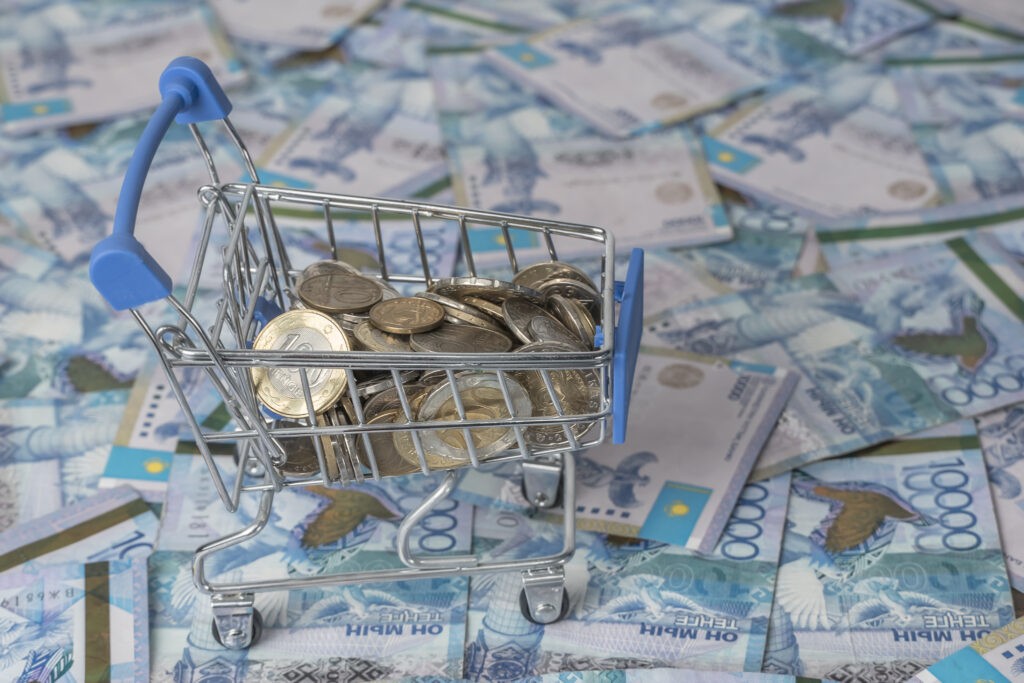
Kazakhstan continues to hold the top position in terms of average wages among Central Asian countries, according to a study conducted by analysts at Ranking.kz. Wage Comparisons Across Central Asia Data from the Interstate Statistical Committee of the CIS reveals that as of September 2024, Kazakhstan's average nominal monthly salary stood at $817.20. This figure is nearly twice as high as in Uzbekistan ($437.80) and Kyrgyzstan ($411.20). Tajikistan trails significantly behind, with an average salary of just $242.80 - 3.4 times lower than Kazakhstan’s. Notably, the wage gap between Kazakhstan and Tajikistan would have been even greater if not for a significant increase in Tajik wages. Over the past year, nominal salaries in Tajikistan rose by 24.9%, while real wages increased by 21.1% - the highest growth rate in the region. In comparison, wage growth in Kazakhstan, Kyrgyzstan, and Uzbekistan was more moderate. Data on salaries in Turkmenistan remains unavailable as the country has not updated its wage statistics since 2023. Minimum Wage Comparison Kazakhstan also leads the region in terms of minimum wages. In 2024, the minimum wage in Kazakhstan is 85,000 KZT ($181.10). By contrast: In Uzbekistan, the minimum wage is $89.40. In Tajikistan, it is $54.90. In Kyrgyzstan, it is just $28.30. In Turkmenistan, the official minimum wage is reported as $402.90, based on the fixed exchange rate of 3.5 TMT per dollar. However, due to the country’s reliance on a "black market" exchange rate (approximately 19 TMT per dollar), the actual minimum wage is estimated to be much lower, around $74.20. Sectoral Analysis When analyzing nominal salaries by economic sector, the highest wages in the region are found in finance and insurance. In Kazakhstan, the average salary in this sector exceeds $1,700 - three times higher than in Tajikistan ($561.90). Workers in Kazakhstan's mining industry also enjoy high incomes. In Uzbekistan and Kyrgyzstan, the financial sector and IT industry offer the highest salaries. Meanwhile, in Tajikistan, relatively high wages are reported in the manufacturing and service sectors. Inflation and Its Impact Inflation remains a key factor affecting the real purchasing power of wages across Central Asia. According to the CIS Interstate Statistical Committee, the most significant price increases in 2024 occurred in the economically developed countries of the region - Kazakhstan and Uzbekistan. Uzbekistan: Inflation reached 7.7% in October 2024. Kazakhstan: Inflation stood at 6.6%. Kyrgyzstan: Inflation was lower at 4.2%. Tajikistan: The region’s lowest inflation rate was recorded at 3.2%. These inflation rates directly influence the population's purchasing power, even in countries with higher nominal salaries like Kazakhstan and Uzbekistan. Kazakhstan’s leadership in wages and minimum income underscores its position as the most economically advanced country in Central Asia. However, inflation and significant disparities in income distribution between sectors and regions remain challenges. While countries like Tajikistan are showing progress in wage growth, the overall gap in earnings between Central Asian nations continues to highlight economic inequalities within the region.
