• KGS/USD = 0.01144 0%
  • KZT/USD = 0.00204 0%
  • TJS/USD = 0.10394 -0.38%
  • UZS/USD = 0.00008 0%
  • TMT/USD = 0.28571 0%
  • KGS/USD = 0.01144 0%
  • KZT/USD = 0.00204 0%
  • TJS/USD = 0.10394 -0.38%
  • UZS/USD = 0.00008 0%
  • TMT/USD = 0.28571 0%
  • KGS/USD = 0.01144 0%
  • KZT/USD = 0.00204 0%
  • TJS/USD = 0.10394 -0.38%
  • UZS/USD = 0.00008 0%
  • TMT/USD = 0.28571 0%
  • KGS/USD = 0.01144 0%
  • KZT/USD = 0.00204 0%
  • TJS/USD = 0.10394 -0.38%
  • UZS/USD = 0.00008 0%
  • TMT/USD = 0.28571 0%
  • KGS/USD = 0.01144 0%
  • KZT/USD = 0.00204 0%
  • TJS/USD = 0.10394 -0.38%
  • UZS/USD = 0.00008 0%
  • TMT/USD = 0.28571 0%
  • KGS/USD = 0.01144 0%
  • KZT/USD = 0.00204 0%
  • TJS/USD = 0.10394 -0.38%
  • UZS/USD = 0.00008 0%
  • TMT/USD = 0.28571 0%
  • KGS/USD = 0.01144 0%
  • KZT/USD = 0.00204 0%
  • TJS/USD = 0.10394 -0.38%
  • UZS/USD = 0.00008 0%
  • TMT/USD = 0.28571 0%
  • KGS/USD = 0.01144 0%
  • KZT/USD = 0.00204 0%
  • TJS/USD = 0.10394 -0.38%
  • UZS/USD = 0.00008 0%
  • TMT/USD = 0.28571 0%

Viewing results 91 - 96 of 152

Brother of Tajik Opposition Activist Sentenced to 12 Years in Prison

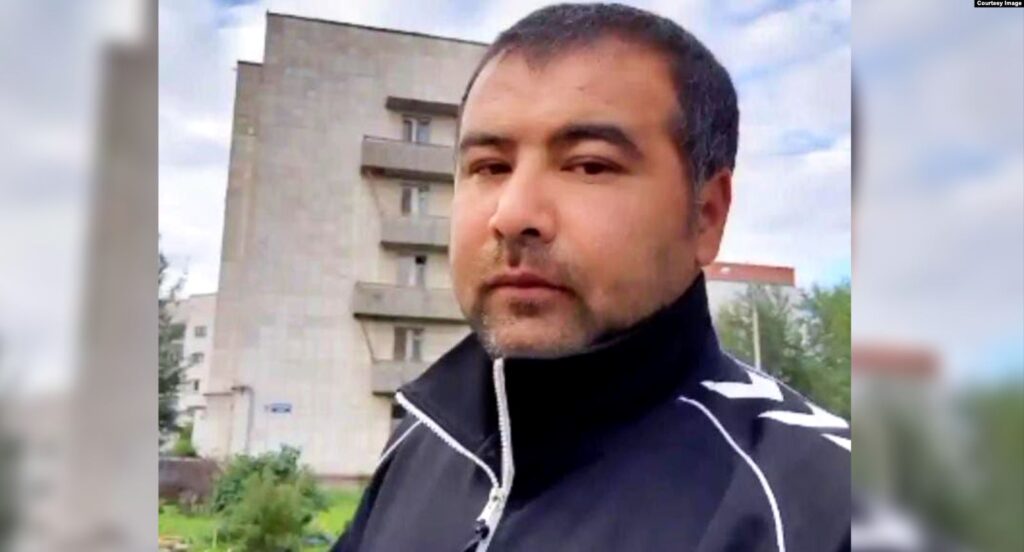
Asliddin Sharipov, the brother of Tajik opposition activist Shavkat Muhammad, has been sentenced to 12 years in prison. The sentence was handed down in March of this year, but information only appeared on July 29; authorities have not provided an official comment. One of Sharipov's acquaintances said that he was transferred from the Khujand pre-trial detention center to a prison in Dushanbe. He had been living in Russia since 2016 but was detained at the request of Tajik authorities in September 2022 and extradited to Tajikistan on October 1, 2023. For almost two months there was no information about his whereabouts. It later became known that Sharipov, 37, was being held in one of the isolation centers in Khujand. The Tajik authorities have not commented on the reasons for Asliddin Sharipov's detention. Human rights organizations link Sharipov's arrest and extradition to the activities of his brother Shavkat Muhammad, editor of the television channel “Payom,” which is banned in Tajikistan and run by the Islamic Renaissance Party. According to human rights activists and Shavkat Muhammad himself, his brother's arrest is aimed at silencing him and stopping him from criticizing the authorities.

Tajikistan-Born Singer, Criticized in Russia, Prepares to Release an Anti-War Song

In 2023, Tajik-Russian singer Manizha Sanghin, harshly criticized in Russia for her public comments on sensitive issues, travelled to the picturesque “Valley of the Forty Girls” in southern Tajikistan to record an anti-war song to be released on Friday. The mountainous location, known to Tajiks as Childukhtaron, derives its name from ancient lore about a group of girls who turned into towering rock formations when an invading force swept through their homeland. Whether the girls-turned-rocks were meant to block the invaders, or simply bear silent witness, depends on the telling. Tajikistan-born Sanghin said she felt an affinity for the girls as standing at the foot of the rock, she recorded ‘Gun’. Written a decade ago, the song was originally about the devastating civil war in Tajikistan in the 1990s but had been put to rest after being abandoned by music producers in Britain. Following  Russia’s full-scale invasion of Ukraine in 2022, they talked about the song again and the singer, a goodwill ambassador for UNHCR, the U.N. refugee agency, said in YouTube video, "I thought, I have to release it. Because now, it's not just a song about war in Tajikistan. It's a song about war in Ukraine, in Gaza, and all wars around the globe." Music producer Liz Horsman who described Sanghin as" brave in the face of ongoing investigations into her anti-war stance,” readily agreed to record the song and since the war made travel between Britain and Russia impossible, the pair arranged to meet in Tajikistan. Seven months pregnant with her daughter, Sanghin described her return to her homeland as “very poetic”. Over the years, the singer has sparked a fair share of controversy. In 2021, when she represented Russia at the Eurovision contest with a song called “Russian Woman,” she was condemned for advocating women’s and LGBT rights. She was then denounced online and Russian promoters cancelled many of her concerts after she criticized the invasion of Ukraine. She was further alienated following her comments about the brutal treatment of several Tajik suspects in a terrorist attack that killed 144 people at a Moscow music venue in March. Sanghin condemned the attack but described the abuse of the suspects as “public torture.” “I am a systemic victim of cyberattacks and cyberbullying. Sometimes I have to block thousands of bots a week and sometimes daily... They follow, mass unfollow and report my profile,” Sanghin said on Instagram in May. “Instagram’s algorithm then thinks that I am breaking community rules and doesn’t show my posts to most of my followers. (Sometimes it can last for months).” Sanghin asked followers on the social media platform to leave a comment or just a heart emoji as a possible way to help her “get out of this ‘shadow ban.’”  

A Eurasian Perspective on the Historic Conviction of U.S. Senator Bob Menendez

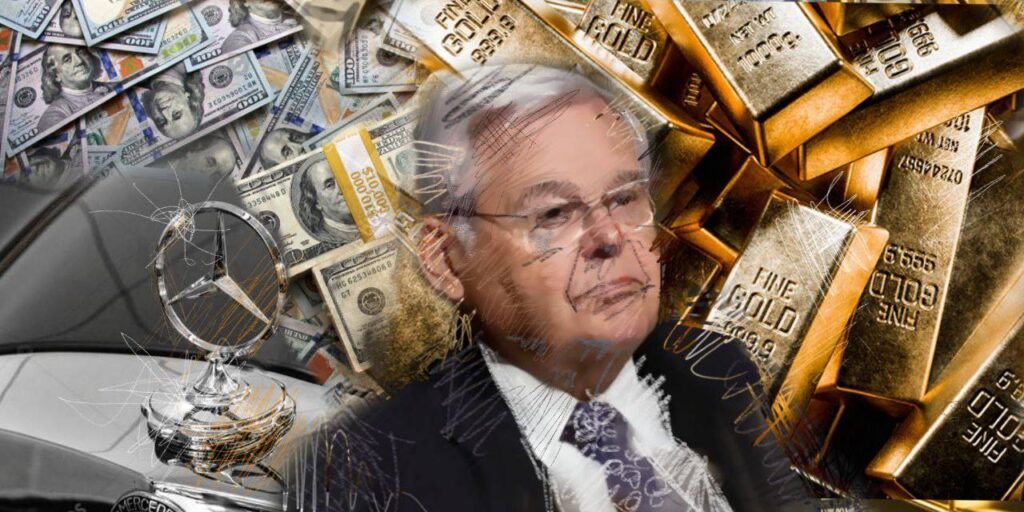
On July 16, a federal court in New York found United States Senator Robert "Bob" Menendez (D) guilty on 16 counts in a corruption trial, including charges of accepting bribes to benefit the governments of Egypt and Qatar, obstruction of justice and extortion. He is the first U.S. senator to be convicted as a foreign agent and the charges collectively carry a potential sentence of 222 years in prison. Bribery charges involved receiving gold bars worth over $100,000 and more than $480,000 in cash as well as a Mercedes-Benz for his wife. “This wasn't politics as usual. This was politics for profit,” summarized Damian Williams, an attorney for the Southern District of New York. According to federal prosecutors, among other things, Menendez helped secure millions of dollars of U.S. aid for Egypt and used his office to assist a multi-million-dollar deal with a Qatari fund. Egypt’s intelligence and military officials are said to have bribed him and his wife at a time when U.S. military aid to the country would have paused due to human rights concerns. Menendez also used his official position “to protect and enrich” individuals in exchange for payments, including helping a New Jersey businessman secure a halal certification monopoly with regards to U.S. meat exports to Egypt. Striking similarities to another recent “influence-for-sale” scandal For many Europeans, this U.S. case resembles the European Union’s own Qatargate scandal, which broke out in 2022 and unveiled how foreign governments (Qatar, Morocco and Mauritania) have been channeling hundreds of thousands of euros to a ring of elected European Parliament officials who, in turn, were leveraging their authority to benefit these clients. The services included “attempts to manipulate the Parliament” and “scheming to kill off six parliamentary resolutions condemning Qatar’s human rights record” as Politico reports. In his plea deal, Antonio Panzeri, the chief of the European Parliament's Subcommittee on Human Rights (DROI), admitted to receiving bribes as well as to leading and participating in a criminal organization. This criminal organization reportedly doled out bribes to EU officials through two NGOs named Fight Impunity and No Peace Without Justice, which were allegedly set up to launder money and help fund the scheme. In Menendez’s case, the money ran through his wife’s consultancy. Qatargate allegations extended beyond the Middle East and North Africa. For instance, Atlantico.fr reported that Panzeri and his associates may have been corrupted by at least two Kazakh criminal figures. Europeans appeared lenient on corruption as Panzeri only received a five-year prison sentence, of which four would be suspended and the one year he’d serve would be under house arrest with an electronic bracelet. Momentum behind investigations of key suspects has since waned, leading the EU Observer to call Qatargate “a missed opportunity to bring Europe to justice”. Foreign policy priorities pushed by Senator Menendez need to be re-examined When public officials are found to have used their office to promote external interests, their past policy activities should be closely examined. Bob Menendez has been a member of...

EU Urges Tajikistan to Investigate Human Rights Violations

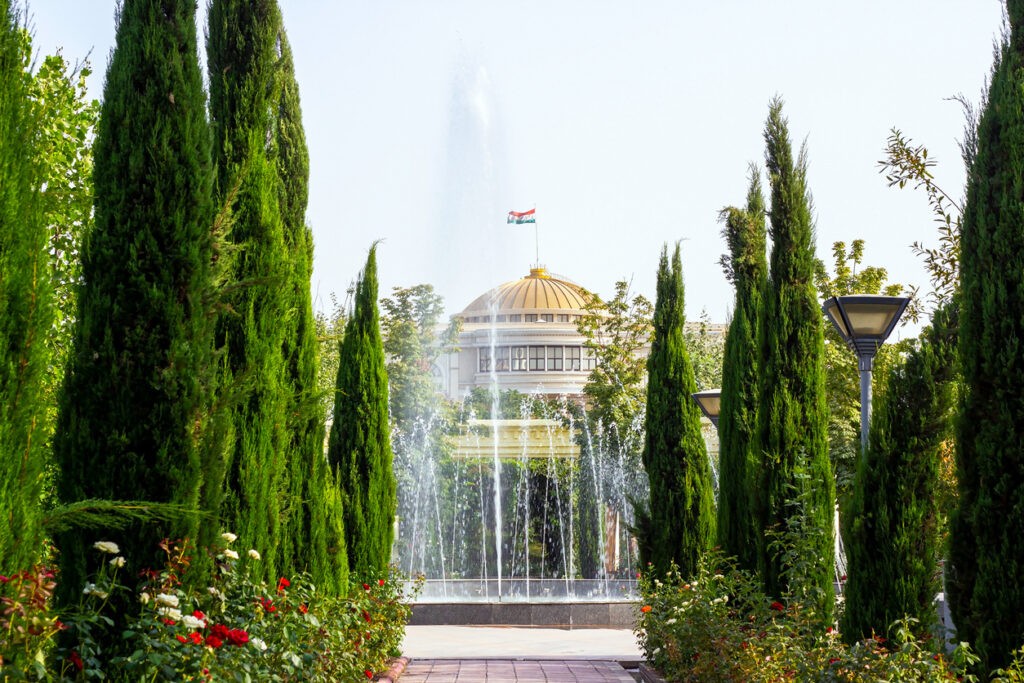
The European Union has once again called on the Tajik authorities to investigate human rights violations thoroughly and expressed concern about imprisoned human rights defenders, journalists, and bloggers. This was announced at the eleventh annual meeting of the European Union-Tajikistan Cooperation Committee held in Dushanbe. “An independent and active civil society together with free media is essential for developing a democratic society,” the EU Delegation in Tajikistan stated. Between 2022 and 2023, eight independent Tajik journalists and bloggers were sentenced to prison terms ranging from 7 to 21 years. Several human rights defenders and civil activists were also convicted during this period. Neither statements by international organizations and human rights defenders, individual appeals to the president, nor public outcry saved them from imprisonment. The authorities found them guilty of collaborating with banned organizations, but the journalists themselves confessed under pressure and torture. The EU report also mentions the May 2022 events in Gorno-Badakhshan Autonomous Oblast, when 34 people were killed following widespread protests and the response by security forces, where dozens of people, including civil activists, were detained and thrown behind bars for long terms. Authorities call them “members of criminal groups,” but relatives of the victims say most of them were simple civilians who had no weapons. Western organizations and countries believe that Tajik authorities violated human rights in suppressing the rally. The EU said that during the discussions, both sides exchanged views on regional and international interest issues, including the situation in Afghanistan, the increased threat of global terrorism and violent extremism, the environment, energy, trade, and other regional priorities.

Islamic State Khorasan Province as Part of the Struggle for Central Asia

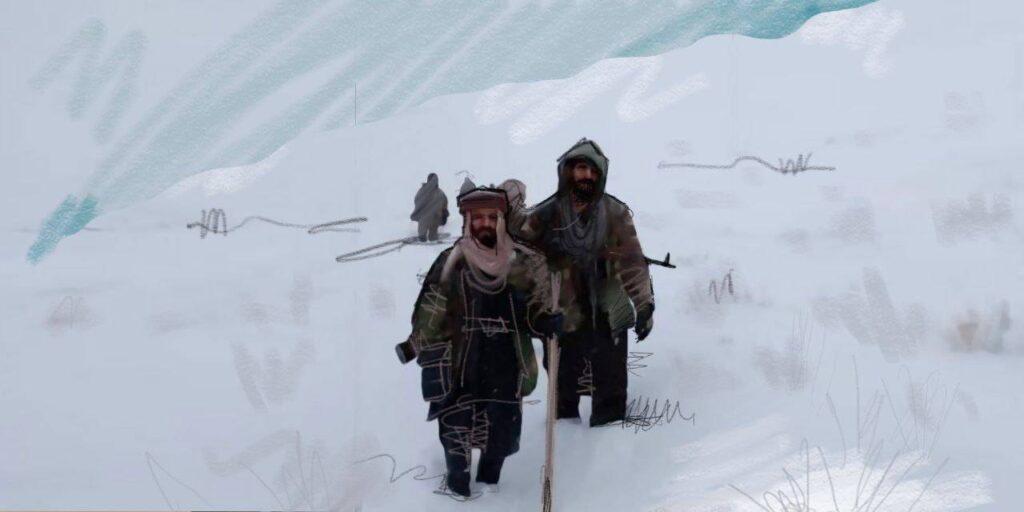
Following the high-profile terrorist attack at Moscow’s Crocus City Hall in March and reports that eight Tajik immigrants were arrested in the U.S., the media spotlight has once again fallen on Islamic State Khorasan Province (ISKP), also known as "Wilayat Khorasan", and the "Khorasan Project.” Many observers link ISKP to the countries of Central Asia, even though the terrorist organization, as it has been designated for a long time, has purely Afghanistani roots. In addition, there is a lot of talk about its geopolitical ambitions for “recreating” the state of “Khorasan.” Where this region’s boundaries lie is the subject of debate. The most expansive definitions include northeastern Iran, western and northern Afghanistan, eastern Turkmenistan, and parts of Tajikistan and Uzbekistan. It is important to understand, however, that clear boundaries have never existed, and neither has a state with that name. In modern times, the term “Khorasan” has only historical and cultural connotations, with no political meaning attached to it. ISKP has suffered a clear military defeat in the borderlands of Afghanistan and Pakistan, and faces significant opposition there. Still, weakening and even destroying the Taliban remains an important goal for the organization. It continues to fight in several regions of Afghamistan, which has prompted the Taliban to intensify their counter-terrorism efforts. [caption id="attachment_19644" align="alignnone" width="1920"] Sanaullah Ghafari, Emir of ISIS-K has a U$10 million bounty on his head; image: rewardsforjustice.net[/caption] The countries of Central Asia, having emerged out of the Soviet Union, are attractive for ISKP ideologists in the sense that they share a common historical and cultural past, while there are even linguistic similarities with Afghanistan (between the Persian languages). The Russian internet portal and analytical agency, TAdviser, points out that ISKP, through its online propaganda publication, announced the start of a new campaign against the countries of the post-Soviet space in April 2022. In June of that year, the ISKP publication, written in the Uzbek language, declared that the countries of Central and South Asia would be united under the flag of the “Islamic Caliphate.” TAdviser highlights that Turkmenistan has a special place in ISKP propaganda because according to the group a large part of what is now Turkmenistan was previously part of “Greater Khorasan,” while the foreign policy of the Turkmen authorities of actively cooperating with the Taliban is wholly at odds with the core goals of ISKP. The Lapis Lazuli corridor linking Afghanistan to Turkey, along with the Turkmenistan-Afghanistan-Pakistan-India gas pipeline (TAPI) which is being developed, are identified as priority targets for ISKP. But what in fact is ISKP? As previously noted by The Times of Central Asia, the answer to this question is known by only a very narrow circle. Indeed, no one can provide objective data on the qualitative and quantitative composition of ISKP. Nevertheless, the group is taking on real dimensions in the media. The threat to Central Asia from ISKP looks more virtual than real at this point. Any small group of terrorists can declare themselves part of ISKP, and, without any...

Prominent Political Figure Akbarsho Iskandarov Detained in Tajikistan

The former Chairman of the Supreme Soviet of Tajikistan, Akbarsho Iskandarov, has been detained in Dushanbe. During the wave of conflicts in the early 1990s, he took over as the Chairman of Parliament and served as Tajikistan's acting president. In recent years, he worked at the Institute of Philosophy, Political Science, and Law of the Academy of Sciences. Prior to this, for many years he served as Ambassador Extraordinary and Plenipotentiary of Tajikistan to Turkmenistan, Kazakhstan, and Mongolia. The General Prosecutor's Office summoned Akbarsho Iskandarov for questioning on June 13 and 14, following which they did not release him. The reason he was interviewed and the grounds on which he has been detained are unknown. "Investigators of the General Prosecutor's Office questioned about 50 people during these days and released them on their recognizance, while Akbarsho Iskandarov was not released," a source stated. Officials and relatives of Akbarsho Iskandarov have refused to comment. Iskandarov was detained after MP Saidjafar Usmonzoda and former Foreign Minister Hamrokhon Zarifi were also held in custody. It is not known whether these detentions are related.