• KGS/USD = 0.01144 0%
  • KZT/USD = 0.00205 0%
  • TJS/USD = 0.10722 0%
  • UZS/USD = 0.00008 0%
  • TMT/USD = 0.28490 0%
  • KGS/USD = 0.01144 0%
  • KZT/USD = 0.00205 0%
  • TJS/USD = 0.10722 0%
  • UZS/USD = 0.00008 0%
  • TMT/USD = 0.28490 0%
  • KGS/USD = 0.01144 0%
  • KZT/USD = 0.00205 0%
  • TJS/USD = 0.10722 0%
  • UZS/USD = 0.00008 0%
  • TMT/USD = 0.28490 0%
  • KGS/USD = 0.01144 0%
  • KZT/USD = 0.00205 0%
  • TJS/USD = 0.10722 0%
  • UZS/USD = 0.00008 0%
  • TMT/USD = 0.28490 0%
  • KGS/USD = 0.01144 0%
  • KZT/USD = 0.00205 0%
  • TJS/USD = 0.10722 0%
  • UZS/USD = 0.00008 0%
  • TMT/USD = 0.28490 0%
  • KGS/USD = 0.01144 0%
  • KZT/USD = 0.00205 0%
  • TJS/USD = 0.10722 0%
  • UZS/USD = 0.00008 0%
  • TMT/USD = 0.28490 0%
  • KGS/USD = 0.01144 0%
  • KZT/USD = 0.00205 0%
  • TJS/USD = 0.10722 0%
  • UZS/USD = 0.00008 0%
  • TMT/USD = 0.28490 0%
  • KGS/USD = 0.01144 0%
  • KZT/USD = 0.00205 0%
  • TJS/USD = 0.10722 0%
  • UZS/USD = 0.00008 0%
  • TMT/USD = 0.28490 0%

Viewing results 31 - 36 of 197

Power Shifts in Central Asia: The Unpredictable Path of Leadership

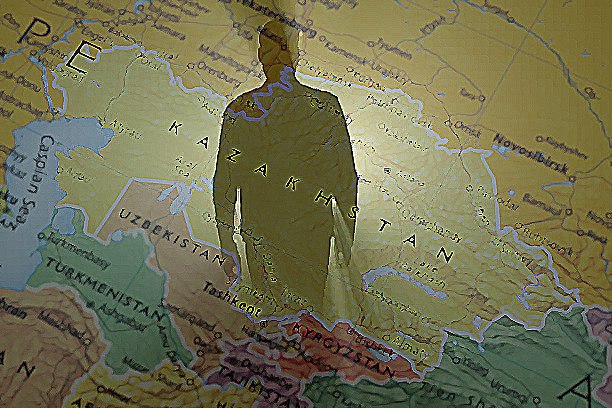
European Union Commissioner for International Partnerships Josef Sikela has concluded his tour of Central Asia, a visit conducted against the backdrop of global geopolitical turbulence. Unlike previous engagements, where European officials often criticized the region’s leadership for a lack of democratic progress, Sikela refrained from making demands on local governments. Historically, Europe has accused Central Asian states of authoritarianism and the entrenchment of long-serving leaders. However, the idea that power is uniquely permanent in the region is increasingly questioned. Critics point to Western examples, such as Angela Merkel’s 16-year tenure as Germany’s chancellor, and alleged electoral manipulation within the EU, such as in Romania, where elections were annulled after an undesired candidate’s victory. Meanwhile, in Central Asia, even presidents once considered “eternal” have eventually left office, sometimes peacefully, sometimes under turbulent conditions. Kyrgyzstan: The Unpredictable Outlier Kyrgyzstan is often described as a "democratic exception" within Central Asia, yet its history is marked by political instability and frequent leadership changes, arguably more so than in many of the world’s most conflict-prone regions. The country’s first president, Askar Akayev, held power from 1990 to 2005. Though re-elected three times, his rule ended in March 2005 when protests erupted over parliamentary election results that heavily favored pro-government candidates. Demonstrators stormed the Government House in Bishkek, prompting Akayev to flee. Reports, though unverified, claimed he was smuggled out wrapped in a carpet. Following Akayev’s ouster, Kurmanbek Bakiyev took power, but his rule ended in 2010 after violent unrest. His downfall was allegedly facilitated by Kazakhstan’s intelligence services, and he later found political asylum in Belarus under President Alexander Lukashenko. Since Bakiyev’s departure, Kyrgyzstan has continued to experience political turbulence. Presidents Almazbek Atambayev (2010-2017) and Sooronbai Jeenbekov (2017-2020) both left office under pressure. Atambayev’s tenure saw a diplomatic fallout with Kazakhstan, while Jeenbekov resigned in 2020 amid protests over parliamentary elections. His successor, Sadyr Japarov, remains in office, but whether he will complete his term is an open question. Uzbekistan: Reform Within Limits Islam Karimov, Uzbekistan’s first post-Soviet leader, ruled for over 26 years before his death in 2016. While he maintained a strictly centralized government, his tenure was also marked by violent crackdowns, most notably the Andijan uprising in 2005, which resulted in a Western diplomatic fallout​. His successor, Shavkat Mirziyoyev, has introduced some reforms, loosening restrictions on civil liberties and the economy. However, the fundamental structure of state control remains intact, with opposition movements still tightly monitored. Kazakhstan: From Nazarbayev to Tokayev Kazakhstan’s transition from Nursultan Nazarbayev to Kassym-Jomart Tokayev is often described as managed succession rather than a genuine power shift. Nazarbayev, who led Kazakhstan for nearly three decades, officially stepped down in 2019, yet retained significant influence until the January 2022 unrest, which forced him to relinquish much of his remaining power. These protests, initially sparked by fuel price hikes, rapidly escalated into anti-government riots. While official accounts describe the unrest as an attempted coup orchestrated by figures within Nazarbayev’s inner circle, critics suggest Tokayev used the crisis to consolidate power....

Kyrgyzstan, Tajikistan, and Uzbekistan Reach Border Agreement After Years of Negotiations

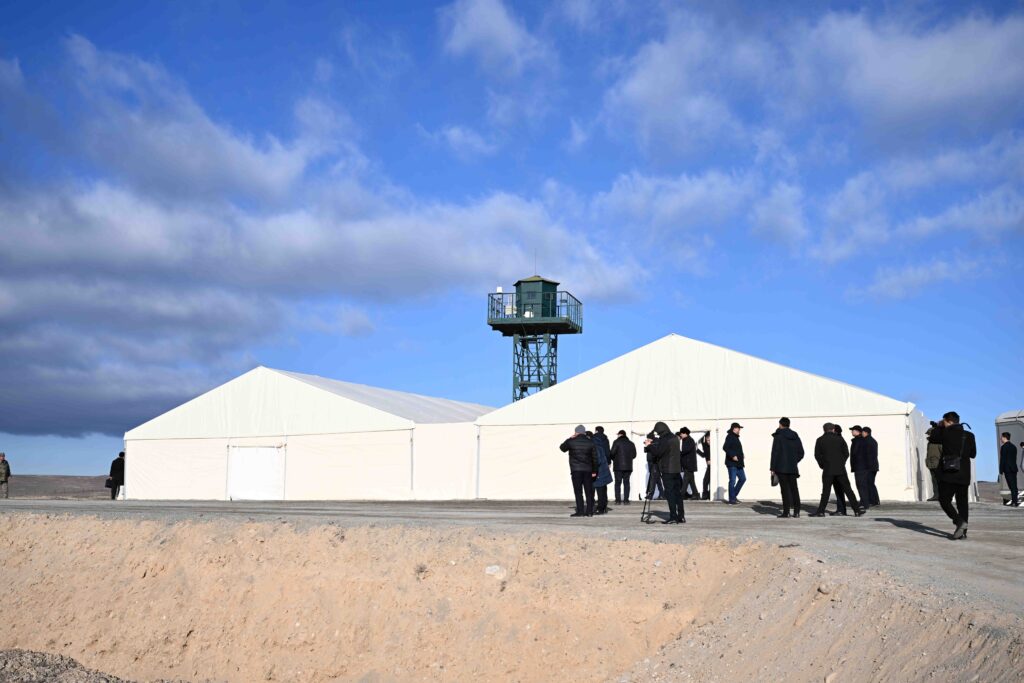
After nearly two decades of discussions, Kyrgyzstan, Tajikistan, and Uzbekistan have officially determined the junction point of their shared borders. Kamchibek Tashiyev, head of the Kyrgyz National Security Committee, presented the final border demarcation to Kyrgyz lawmakers, AKIpress reported. On March 19, Tashiyev stated that trilateral negotiations on this issue had been ongoing since 2007. Government delegations from the three countries held six meetings before reaching an agreement. The dispute over the exact location of the border junction remained unresolved until a March 2025 meeting in Dushanbe, where representatives of Kyrgyzstan, Tajikistan, and Uzbekistan finalized the demarcation. During the meeting, Tashiyev displayed a map marking the agreed border point in blue. He noted that Uzbekistan had previously suggested a location marked in green, while Tajikistan proposed a spot marked in red. Accepting these alternative proposals would have left key roads outside Kyrgyzstan's territory. Under the final agreement, Kyrgyzstan retains approximately 100 hectares of land, which, although uninhabited, includes an important road. This breakthrough follows a March 13 border agreement between Kyrgyzstan and Tajikistan, aimed at ending long-standing tensions that had made their shared border the most volatile in Central Asia for over a decade. The deal was underscored by Tajik President Emomali Rahmon’s first visit to Bishkek in nearly 12 years, highlighting its importance. As part of the agreement, the two countries also agreed to reopen the Kairagach (Leilek district) and Kyzyl-Bel (Batken district) border checkpoints, which had been closed for nearly four years. Both checkpoints resumed operations on March 13.

Kyrgyzstan and Tajikistan Finalize Historic Border Agreement, Ending Decades-Long Dispute

On March 13, the presidents of Kyrgyzstan and Tajikistan met in Bishkek, where Sadyr Japarov and Emomali Rahmon signed a landmark agreement on the delimitation and demarcation of the Kyrgyz-Tajik border. Following the signing, the agreement will be sent to the parliaments of both countries for consideration. Deputies must approve the ratification bill before it returns to the heads of state for final endorsement. The presidents are expected to exchange instruments of ratification on March 31 during the Fergana Valley summit, where Uzbek President Shavkat Mirziyoyev is also set to attend. Only then will the demarcation process, marking the border with physical infrastructure, begin. The Kyrgyz-Tajik border stretches 1,006 kilometers. As of 2011, only 520 kilometers had been officially defined. In the past three years, both nations have settled on an additional 487 kilometers of the border. During a recent parliamentary session, Kamchybek Tashiyev, head of Kyrgyzstan’s State Committee for National Security (GKNB) and chair of the intergovernmental commission on border negotiations, outlined key principles that guided the discussions. Notably, Tajikistan agreed to use 1991 documents to define border territories instead of relying on maps from 1924-1927. The negotiations aimed to balance both nations' interests while avoiding unilateral decisions that could lead to renewed tensions. Beyond the border agreement, both governments also signed intergovernmental deals on cooperation between their Foreign Ministries, as well as agreements on water and energy management and road transportation infrastructure.  Additionally, the two sides agreed to officially reopen the Kairagach (Leilek district) and Kyzyl-Bel (Batken district) border checkpoints, which had been closed for nearly four years. Both checkpoints resumed operations on March 13.

Tajik Women Unite to Urge Rahmon to Grant Leniency for Journalist Rukhshona Khakimova

A group of 130 women in Tajikistan have appealed to President Emomali Rahmon, requesting leniency for journalist Rukhshona Khakimova, who was sentenced to eight years in prison. A Plea for Mercy In their appeal, the women expressed deep concern over the fate of Khakimova’s two young daughters, one of whom is an infant still in need of breastfeeding. “This verdict has shaken us to the core, but most of all, it has shattered the lives of her two tiny daughters, Shakhnura and Shukrona, who overnight lost the most precious thing a child has, a mother's love, warmth, and care. Ten-month-old Shukrona was deprived not only of her mother’s hands but also of her mother’s milk, which is not just nourishment but the very essence of the mother-child bond. We cannot imagine the pain of these children, who cannot yet speak but already feel the cruel emptiness that nothing and no one can fill,” the letter reads. The signatories emphasized that they were not calling for the sentence to be overturned but rather for clemency. They urged the government to apply legal mechanisms that would allow Khakimova to serve an alternative sentence while remaining with her children. “We believe there are lawful ways to take her motherhood into account and ensure that two young children are not left without maternal care,” the appeal stated. A Controversial Conviction Khakimova was charged with high treason under Article 305 of Tajikistan’s Criminal Code, with the case initiated by the General Prosecutor’s Office in June 2024. According to sources familiar with the investigation, her prosecution is linked to a survey on China’s influence in Tajikistan. She was sentenced on February 5 during a closed trial at the Dushanbe detention center, alongside other defendants in the so-called “coup d’état case”. Before the verdict, she had been allowed to remain free, albeit with restricted movement, due to her responsibilities as a mother. However, her documents had been confiscated, preventing her from traveling. Following the court ruling, she was taken into custody immediately. International Outcry International human rights organizations have condemned the sentence. The International Coalition for the Protection of Human Rights Defenders (The Observatory for the Protection of Human Rights Defenders) has called for Khakimova’s immediate release. Similar statements have been issued by Human Rights Watch (HRW) and Reporters Without Borders (RSF), both of which have criticized the court’s decision.

Kyrgyzstan Hails Border Deal with Tajikistan as Major Diplomatic Success

Kamchybek Tashiyev, head of Kyrgyzstan's State Committee for National Security (GKNB), addressed parliament for the first time regarding the Kyrgyz-Tajik border agreements. He clarified the terms of the final agreement and explained the territorial concessions Kyrgyzstan made to prevent future border conflicts. The document has sparked mixed reactions in Kyrgyz society, with some deputies expressing dissatisfaction with the delimitation results, while ordinary citizens hope for lasting peace between the two countries. Final Agreement Tashiyev stated that the border agreement was based on the 1991 accords, countering earlier Tajik proposals to rely on documents from 1924-27. Years of work by geographers enabled both sides to reach mutual compromises. The Kyrgyz-Tajik border spans 1,006 kilometers. By 2011, 520 kilometers had been delineated, while the remaining 486 kilometers were settled over the past three years. “We have prepared several documents for signing by the presidents of both countries, including an agreement on the state border, an agreement on water resources—a previous water dispute in 2022 led to armed conflict—as well as agreements on cross-border road use and new infrastructure projects,” Tashiyev said. Over the past three years, the two nations have held numerous bilateral meetings, resulting in the signing of 45 protocols. Tashiyev noted that the process could be finalized within a month, as the Kyrgyz parliament has already approved the agreement, leaving only the leaders' signatures. Parliamentary Debate “We are making history! We have responsibly completed border delimitation with Uzbekistan. We approved the agreements with Tajikistan without debate. The people appreciate this. But public opinion is divided—that is common. If 50-60% of citizens support it, stability will follow,” said MP Nadira Narmatova during the parliamentary session. However, some MPs opposed the government's decision. Sultanbai Aizhigitov, an MP from Batken Oblast, criticized the transfer of Dostuk village, where Kyrgyz authorities had previously built roads and reinforced the state border. He also disapproved of the shared water intake arrangement, arguing that the territory had always belonged to Kyrgyzstan. Voices from Border Villages In an interview with The Times of Central Asia, Kanybek Myrzamuratov, a resident of Samarkandek village near the border, said most locals supported the government's decision. While some land was ceded, he emphasized that peace was the priority. “In some places, one street belongs to two countries—Tajiks on one side, Kyrgyz on the other. Disputes often started over minor issues but escalated into larger conflicts. At times, entire villages would mobilize against each other, leading to casualties,” he said. According to villagers, tensions with Tajikistan became serious in 1996, though minor disputes occurred even during Soviet times. The Soviet authorities, however, downplayed such incidents. Both sides engaged in stone-throwing, livestock theft, and occasional violence. Myrzamuratov noted that Kyrgyz authorities kept negotiations with Tajikistan confidential to prevent unrest among border residents. “In Dostuk, Leilek District, houses were burned down in last year’s clashes. Residents would not have accepted a transfer to Tajikistan. To prevent confusion and disputes, the authorities remained silent,” he said. He added that locals now look forward to reopening the...

Tajikistan Announces Preliminary Parliamentary Election Results; OSCE Absent

Bakhtiyor Khudoyorzoda, the chairman of Tajikistan's Central Commission for Elections and Referenda (CCER), has announced the preliminary results of the March 2 parliamentary elections to the Assembly of Representatives. According to Khudoyorzoda, 4.71 million of the 5.52 million registered voters participated in the election, representing an 85.3% turnout. The election results for party-list voting were as follows: The People's Democratic Party of Tajikistan secured the most support, receiving 2,435,541 votes (51.9%). The Agrarian Party of Tajikistan garnered 986,887 votes (21%). The Economic Reform Party of Tajikistan received 595,281 votes (12.7%). The Socialist Party of Tajikistan obtained 248,064 votes (5.3%). The Democratic Party of Tajikistan received 237,536 votes (5.1%). The Communist Party of Tajikistan received 89,738 votes (1.9%), failing to meet the 5% threshold required for parliamentary representation. Additionally, 50,895 voters chose the "against all" option. As a result of the party-list vote count, the 22 parliamentary seats allocated through the national proportional system were distributed as follows: People's Democratic Party of Tajikistan - 12 seats Agrarian Party of Tajikistan - 5 seats Economic Reform Party of Tajikistan - 3 seats Socialist Party of Tajikistan - 1 seat Democratic Party of Tajikistan - 1 seat The Communist Party of Tajikistan did not secure any seats. In total, five of the six registered parties gained representation in the Majlisi Oli, Tajikistan’s parliament. The remaining parliamentary seats were allocated through single-mandate districts. On February 6, 2025, the OSCE/ODIHR canceled a planned election observer mission, stating that the Tajik authorities' failure to accredit the observers had "denied the people of Tajikistan an impartial and independent assessment of the elections." A mission from the Shanghai Cooperation Organization, meanwhile, characterized the election as "transparent, credible and democratic." In the latest presidential elections, held in 2020, incumbent Emomali Rahmon won a fifth consecutive term, securing a purported 92.08% of the vote. Rahmon has been president since 1994, having previously led the country as Chairman of the Supreme Assembly from 1992 to 1994. TCA has previously reported on long prison sentences for Tajik opposition figures. Elections to the National Assembly will be held on March 28, 2025.