• KGS/USD = 0.01144 0%
  • KZT/USD = 0.00214 0%
  • TJS/USD = 0.10508 0.48%
  • UZS/USD = 0.00008 0%
  • TMT/USD = 0.28571 0%
  • KGS/USD = 0.01144 0%
  • KZT/USD = 0.00214 0%
  • TJS/USD = 0.10508 0.48%
  • UZS/USD = 0.00008 0%
  • TMT/USD = 0.28571 0%
  • KGS/USD = 0.01144 0%
  • KZT/USD = 0.00214 0%
  • TJS/USD = 0.10508 0.48%
  • UZS/USD = 0.00008 0%
  • TMT/USD = 0.28571 0%
  • KGS/USD = 0.01144 0%
  • KZT/USD = 0.00214 0%
  • TJS/USD = 0.10508 0.48%
  • UZS/USD = 0.00008 0%
  • TMT/USD = 0.28571 0%
  • KGS/USD = 0.01144 0%
  • KZT/USD = 0.00214 0%
  • TJS/USD = 0.10508 0.48%
  • UZS/USD = 0.00008 0%
  • TMT/USD = 0.28571 0%
  • KGS/USD = 0.01144 0%
  • KZT/USD = 0.00214 0%
  • TJS/USD = 0.10508 0.48%
  • UZS/USD = 0.00008 0%
  • TMT/USD = 0.28571 0%
  • KGS/USD = 0.01144 0%
  • KZT/USD = 0.00214 0%
  • TJS/USD = 0.10508 0.48%
  • UZS/USD = 0.00008 0%
  • TMT/USD = 0.28571 0%
  • KGS/USD = 0.01144 0%
  • KZT/USD = 0.00214 0%
  • TJS/USD = 0.10508 0.48%
  • UZS/USD = 0.00008 0%
  • TMT/USD = 0.28571 0%

Viewing results 613 - 618 of 1153

Child Malnutrition Hits Central Asia

In its recently published report “Child Food Poverty 2024,” UNICEF has identified 63 countries, including four Central Asian countries, where child malnutrition has reached a  crisis point. Severe child food poverty threatens the survival, growth, and development of an estimated 181 million children under five globally, denying them the opportunity to escape social and economic deprivation. As stated in the report, “Child food poverty harms all children, but it is particularly damaging in early childhood when insufficient dietary intake of essential nutrients can cause the greatest harm to child survival, physical growth, and cognitive development. The consequences can last a lifetime: children deprived of good nutrition in early childhood perform worse in school and have lower learning capacity in adulthood, trapping them and their families in a cycle of poverty and deprivation.” The indicator of food ration determines children’s food security. It was developed by UNICEF and the World Health Organization (WHO). For healthy growth and development, children should consume at least five products from the following eight groups: Breast milk Grains, roots, tubers, and plantains Pulses, nuts, and seeds Dairy products Fresh foods Egg Vitamin A-rich fruits and vegetables Other fruits and vegetables. If children consume products that belong to just two groups, they live in extreme nutritional poverty; if they consume products belonging to three-four groups, they live in a moderate state related to nutrition. If they consume products belonging to five or more groups, they are considered not to be in a poor situation related to nutrition. Uzbekistan and Kyrgyzstan have average levels of child malnutrition, Turkmenistan has a low level, and Tajikistan has a high level.
South Korea Set to Intensify Cooperation with Central Asia

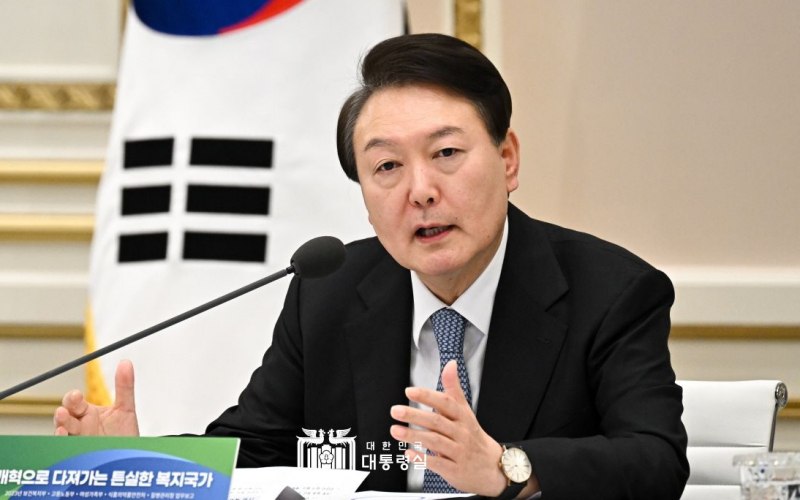
With the intention of  intensifying  cooperation between Seoul and Central Asia, South Korean President Yoon Suk-Yeol will make a state visit to three Central Asian countries from 10-15 June. As reported by Kim Tae-hyo First Deputy Director of the National Security Office of the Presidential Administration, President Yoon Suk-Yeol accompanied by his wife Kim Gong Hee, will visit Turkmenistan, Kazakhstan, and Uzbekistan and engage in talks with the countries' leaders as well as participate in business forums. Kim Tae-hyo emphasized that South Korea aims to intensify diplomacy and cooperation with Central Asia through wide-ranging efforts. These include a regular summit of the Korea-Central Asia K-Silk Road Initiative, the first of which will be hosted by Seoul next year. “Through this initiative, we intend to promote the joint, free, and peaceful development and prosperity of Korea and the Central Asian region,” stated Kim Tae-hyo The main areas of cooperation under the Initiative include the development of four key sectors : natural resources, official development assistance, cultural and people-to-people exchanges, and enhanced official and private contacts. Areas for cooperation will be identified and prioritized in each of the five Central Asian countries :Kazakhstan, Kyrgyzstan, Turkmenistan, Uzbekistan and Tajikistan. Cooperation in Kazakhstan will focus on energy and infrastructure; in Kyrgyzstan, water resources and tourism, and in Turkmenistan, constructing energy plants. Seoul makes no secret of its high interest in the region's rich natural resources, including uranium, lithium and tungsten.

Residents of Turkmenistan Urged Not to Disseminate What’s Happening in the Country

In the city of Turkmenbashi, local authorities, including the khakimlik (mayor's office), the National Security Ministry (NSM), the court, the police, and elders, are holding meetings with youth and cultural workers. At these meetings, they are warned not to disseminate information about events in the country, such as natural disasters and traffic accidents, on the internet or to journalists. The meetings are hosted mainly by elders who reprimand the youth. “They demanded not to share pictures and videos of someone asking for money for a sick child and not to write comments under posts about problems,” a cultural worker said during an anonymous conversation. Meeting participants claim that the elders said, “There are no countries without faults, and faults need to be hidden.” They also emphasized that freedom on the internet should not lead to the spread of negative information. Authorities stated that citizens who distributed videos about the Ashgabat floods have already been identified, and most were cultural workers. "Cultural workers are lighthearted, and all the videos and information leaking online are mostly what you're doing. All problems come either from singers or actors, and the people following them,” a cultural worker was quoted as saying by an NSM official. The elders and representatives of the khakimlik also urged parents to monitor how their children use the internet and what sites they visit and read. Participants in the meeting were required to use VPN programs approved by the authorities and only share positive photos, videos, and messages about the country online.

Central Asian Public Opinion is the Latest Battle Front Between Putin and Zelenskiy

The settings were starkly different. An Uzbek honor guard in elaborate uniform greeted Russian President Vladimir Putin after he arrived at Uzbekistan’s Tashkent airport on May 26 for a state visit. Two days earlier, Ukrainian President Volodymyr Zelenskiy gave an interview to Central Asian media in his signature army-green combat-ready t-shirt, sitting in the ruins of a Kharkiv printing house destroyed by Russian missiles.  With the war in Ukraine into its third year, Putin’s trip to Uzbekistan represents part of his broader mission to nurture long-standing trade and security ties with Central Asian countries, who have been trying to walk a delicate line in their relationships with Russia. Uzbekistan’s President Shavkat Mirziyoyev welcomed Putin with a literal embrace. Their official meeting the next day was scheduled to address bilateral issues and views on “current regional problems,” reported Russia’s state-run news agency Tass.  While in Uzbekistan President Putin had boasted that Russia was Uzbekistan’s biggest trading partner with export growth by 23% this year and had invested over $13 billion in the country. He called Uzbekistan to be the biggest state in Central Asia; praised Mirziyoyev’s language policy that protects Russian language in schools and as an official language in Uzbekistan. Russia has started exporting gas to Uzbekistan through Kazakhstan, with some of the gas staying in Kazakhstan. Some analysts argue that Russia can circumvent sanctions by partly relying on imports, mainly from Europe, that come through Central Asia.  Over in the war-torn Ukrainian city of Kharkiv, President Zelenskiy’s interview with six journalists from Uzbekistan, Kyrgyzstan and Kazakhstan, some openly affiliated with Radio Free Europe and the Soros Foundation, included a discussion on how to deepen solidarity between the people of Central Asia and Ukraine over a shared anti-Russian sentiment. Zelenskiy tells Central Asians to drop their balancing act towards Russia In the interview, President Zelenskiy challenged Central Asian countries to overcome their economic dependencies and security vulnerabilities and adopt Ukraine’s hardline posture against Russia. The region’s leaders “are still [positioned] more in the Russian direction because of fear of the Kremlin. We [the Ukrainians] have made our choice, we are fighting,” Zelenskiy said, according to a Russian transcript of the interview published by Kazakh media outlet Orda.kz. Zelenskiy told Central Asians and others who are “trying to balance” their relationships with Russia to "not wake the beast" that this strategy will not work because “the beast does not ask anyone: he wakes up when he wants”.  Zelenskiy warned Central Asian people that alongside the Baltic states and Moldova, they, too, face a risk of being invaded by Russia given their Russian populations, which the Kremlin may decide to intervene to protect, as it did in Ukraine. He also added grimly, “if you, your people, resist becoming part of Russia, you will inevitably be waiting for a full-scale invasion, death and war.” Calling on the world to unite against Russia, President Zelenskiy recommended that Central Asians isolate Russia economically and diplomatically, arguing that “balancing acts” to help their economy in the...

Turkmenistan to Ditch Forced Labor in Cotton Harvesting

According to reports  published by Turkmen.news, the government of Turkmenistan and the International Labor Organization (ILO) have adopted a roadmap for cooperation for 2024-2025, The document details specific steps to prevent the use of forced labor by adults and children during the cotton harvest. It also provides mechanisms for hired labourers to lodge  complaints regarding coercion or extortion, and sets a minimum wage for pickers. If  all of the conditions and measures outlined in the roadmap are implemented,  significant progress will be made towards eradicating forced labor in Turkmenistan.  The key aim is the legislation of a  presidential decree on measures for organized cotton harvesting to eliminate the use of forced or compulsory  labor. It is expected that a system of prohibitions and penalties will be introduced regarding the  practice of forced mobilization or extortion.  The roadmap stresses the need for a simple and easily accessible  means whereby complaints of coercion can be anonymously filed to prevent officials  retaliating against the complainant. The Ministry of Foreign Affairs, the Supreme Court, the Prosecutor General's Office, the Interior Ministry, the Ministry of Justice, the Ombudsman Institute, and the Ministry of Labor and Social Security are tasked with developing the document's recommendations. “Overall, if the measures in the roadmap are implemented, it will be a big step forward. Although the government has not publicly recognized the problem, such a detailed plan is encouraging,” said Ruslan Myatiev, editor of Turkmen.news.

Erdogan: Turkmenistan Gas Exports to Turkey “Only a Matter of Time”

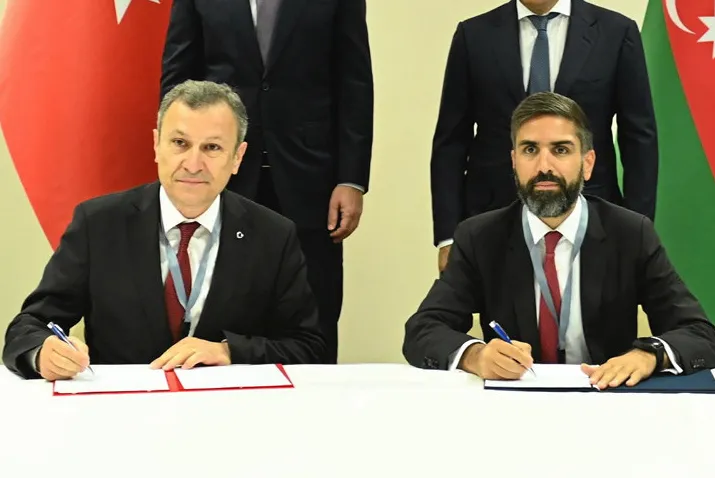
Turkey's president Recep Tayyip Erdogan has said that it is "only a matter of time" before gas from Turkmenistan is exported to Turkey and Europe through the expanded Trans-Anatolian Gas Pipeline (TANAP) project. “Our long-standing cooperation, crowned with infrastructure investments such as Baku-Tbilisi-Ceyhan, Baku-Tbilisi-Erzurum pipelines, and TANAP, has not only benefited Turkey and Azerbaijan but has also made significant contributions to the energy security of the region and Europe,” Erdogan said at the International Caspian Oil and Gas Exhibition in Azerbaijan's capital of Baku. Two gas routes from Turkmenistan to Azerbaijan are being reported. The Turkish Daily Sabah reports that this plan involves transporting gas by sea on gas carrying ships. Upstream, citing experts, reports that SOCAR will start negotiations with Turkmenistan on the resumption of gas supply through Iran under the exchange scheme. On June 4th, Turkey’s Botas Petroleum Pipeline and Azerbaijan’s SOCAR also signed agreements to promote an intergovernmental deal calling for cooperation on natural gas issues reached in May. In one of the five signed contracts, Botash and SOCAR must jointly organize the natural gas supply from Turkmenistan to Azerbaijan and then through Turkey to other countries.