• KGS/USD = 0.01144 0%
  • KZT/USD = 0.00214 0%
  • TJS/USD = 0.10508 0.48%
  • UZS/USD = 0.00008 0%
  • TMT/USD = 0.28571 0%
  • KGS/USD = 0.01144 0%
  • KZT/USD = 0.00214 0%
  • TJS/USD = 0.10508 0.48%
  • UZS/USD = 0.00008 0%
  • TMT/USD = 0.28571 0%
  • KGS/USD = 0.01144 0%
  • KZT/USD = 0.00214 0%
  • TJS/USD = 0.10508 0.48%
  • UZS/USD = 0.00008 0%
  • TMT/USD = 0.28571 0%
  • KGS/USD = 0.01144 0%
  • KZT/USD = 0.00214 0%
  • TJS/USD = 0.10508 0.48%
  • UZS/USD = 0.00008 0%
  • TMT/USD = 0.28571 0%
  • KGS/USD = 0.01144 0%
  • KZT/USD = 0.00214 0%
  • TJS/USD = 0.10508 0.48%
  • UZS/USD = 0.00008 0%
  • TMT/USD = 0.28571 0%
  • KGS/USD = 0.01144 0%
  • KZT/USD = 0.00214 0%
  • TJS/USD = 0.10508 0.48%
  • UZS/USD = 0.00008 0%
  • TMT/USD = 0.28571 0%
  • KGS/USD = 0.01144 0%
  • KZT/USD = 0.00214 0%
  • TJS/USD = 0.10508 0.48%
  • UZS/USD = 0.00008 0%
  • TMT/USD = 0.28571 0%
  • KGS/USD = 0.01144 0%
  • KZT/USD = 0.00214 0%
  • TJS/USD = 0.10508 0.48%
  • UZS/USD = 0.00008 0%
  • TMT/USD = 0.28571 0%

Viewing results 625 - 630 of 1153

Signs of Racism in Central Asia

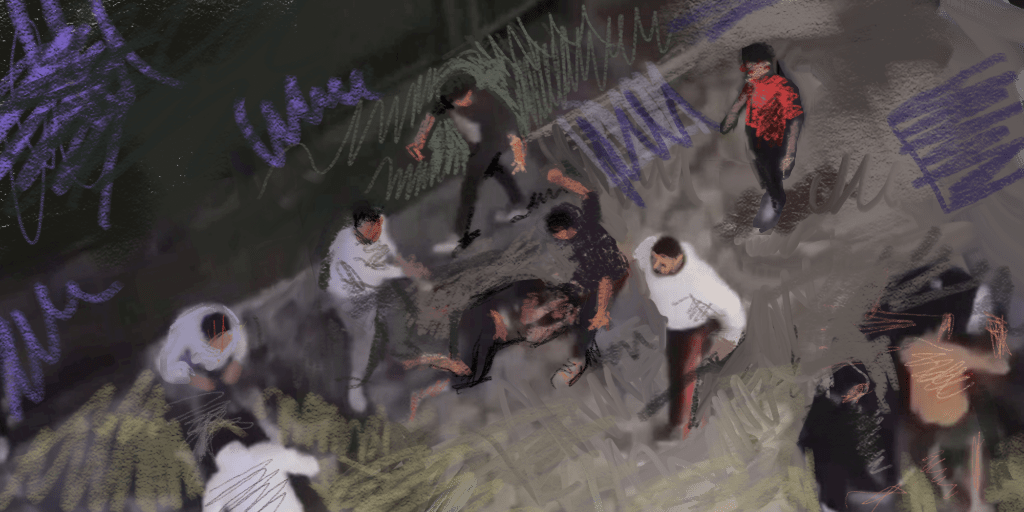
By Bruce Pannier Incidents in May showed two Central Asian countries – Kyrgyzstan and Turkmenistan – are afflicted by racism that is tacitly or explicitly supported by their governments. Overnight on May 17-18, hundreds of young Kyrgyz men gathered in eastern Bishkek near a dormitory used by foreign students. The Kyrgyz men were angered by a video posted on popular Kyrgyz social media sites on the morning of May 17 that showed a fight in Bishkek on May 13 between a small group of Kyrgyz and foreigners. The foreigners in the fight on May 13 turned out to all be Egyptians, and they were all detained. However, some social media posts claimed at least some of the foreigners involved in the fight were Pakistanis. Many people from Bangladesh, India, and Pakistan come to Kyrgyzstan to study at universities, particularly at medical colleges. More than 90% of foreign students at Kyrgyz universities are from India and Pakistan. A smaller number, in the low thousands, are working there illegally. In March, Kyrgyz authorities launched a campaign to find and deport illegal migrant laborers some 1,500 Pakistanis and 1,000 Bangladeshis have been caught. There have been isolated incidents when Kyrgyz were involved in physical altercations with South Asians in recent years, but nothing on scale of what happened in May 17-18. Besides bursting into the dormitory and assaulting foreign students, a group of some 60-70 Kyrgyz men broke into a sewing factory in Bishkek early morning May 18 and attacked foreign workers, who mostly from Bangladesh, India, and Pakistan. At least 41 people were injured, most of them South Asians. Pakistan in particular reacted, summoning the Kyrgyz Charge d'Affaires in Islamabad while a group of Pakistanis protested outside the Kyrgyz Embassy. Pakistani authorities also sent charter flights to Kyrgyzstan that brought back more than 1,000 Pakistani citizens. Kyrgyz authorities criticized the police for failing to calm the situation before it went out of control and later 10 policemen were sacked. Deputy Cabinet Chairman Edil Baisalov went to the dormitory to meet with some of the foreign students and apologize for the harm done to them “by a bunch of hooligans.” The top two people in the government – President Sadyr Japarov and head of security service Kamchybek Tashiyev – were more equivocal in their comments on the violence. Since coming to power in late 2020, Japarov and his longtime friend Tashiyev have promoted nationalist policies. Their emphasis on respecting Kyrgyz traditions and customs has gained them significant popularity in Kyrgyzstan. They need such support in a country that has had three revolutions since 2005, including the October 2020 revolution that resulted in them occupying their current positions. Young Kyrgyz men, like the hundreds who gathered on the evening of May 17, are an important pillar of support for Japarov and Tashiyev. President Japarov vaguely blamed “forces interested in aggravating the situation,” and added, “The demands of our patriotic youth to stop the illegal migration of foreign citizens and take tough measures against those...
Authorities in Turkmenistan Using Cab Drivers As Informants to Identify “Unreliable” Citizens

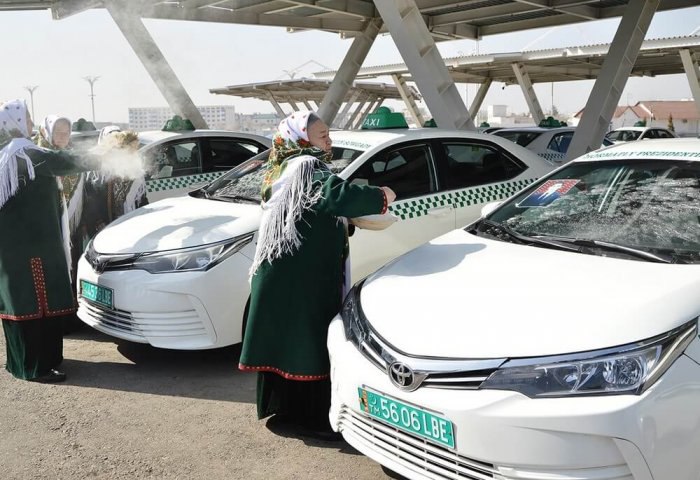
Turkmen authorities are forcing cab drivers to denounce and identify citizens they consider "unreliable". This is being reported by Radio Azatlyk. Ministry of Homeland Security (MHS) officers are reportedly forcing cab drivers to ask passengers various questions to find out their attitudes toward events in the country, and the overall situation. "MHS officers are using cab drivers in the capital as informants. They try to incentivize these cab drivers with promises to help them if they are stopped by traffic police officers to extort bribes," one of the capital's cab drivers said, on condition of anonymity. In an attempt to recruit cab drivers as informants, MHS officials hint that if the drivers agree to cooperate and provide information of interest to the authorities, their cooperation may also be rewarded financially. "Security officials instruct drivers who agree to cooperate to ask certain questions. The questions should mostly be put to passengers who are coming from the airport, railway station, shopping centers and bazaars," said another cab driver. According to him, in order to strike up a conversation, the MHS officers tell drivers to ask a certain list of questions to gauge their passengers' opinions and attitudes. "In this way, they say, they are trying to identify 'unreliable people'. Some drivers are agreeing to participate in these dirty games," said a driver from Ashgabat. Azatlyk is reporting that in recent months the Turkmen authorities have increased control over the country's citizens. Earlier this year it reported that security agencies were questioning the parents of schoolchildren who used VPN services to visit sites disapproved by the authorities, and that these families were included in the lists of "unreliable families".

Turkmen Gas to Europe Mooted Again

Turkmenistan and Pakistan intend to independently finance the construction of the TAPI gas pipeline (Turkmenistan-Afghanistan-Pakistan-India) to transport Turkmen gas to Europe, according to a statement made by Pakistani Minister, Musadiq Malik, who said the decision was driven by the international community's reluctance to recognize the Afghan government, which has stalled foreign funding. "Turkmenistan, rich in gas reserves and currently only selling to China, has considered exporting its gas to Europe via an LNG train," Malik was quoted as saying by the Profit portal. The minister also talked about the idea of exporting Turkmen gas to the EU via Pakistan. According to this plan, the gas would be piped to Pakistan, and then transported to Europe by rail. According to previous agreements, the $10 billion TAPI gas pipeline project was to be 30% financed ($3 billion) by the participants, and 70% ($7 billion) by loans from international financial institutions. Of the 30% to be allocated by the participating countries, 85% ($2.55 billion) was from to Turkmenistan, and the other 5% ($150 million each) from Afghanistan, Pakistan and India.

Only Turkmen Graduates Allowed to Participate in “Last Call”

In Balkan velayat (administrative district) this year, only graduates of Turkmen nationality will be able to participate in the "last call" -  the secondary-school graduation ceremony held throughout the CIS, which is held annually in front of the Central Library of Balkanabad. This decision by the local authorities caused bewilderment among the residents of the velayat, where representatives of many nationalities live. This is the second known case in the last four months when the authorities of the western velayat have infringed on the rights of ethnic minorities. In early February, it was reported that in Balkanabad and Turkmenbashi, only Turkmen music was allowed at weddings, whilst songs in the languages of other ethnicities were prohibited. Violations of the rights of ethnic minorities, limiting their opportunities for education in their native language, and observance of cultural traditions is a long-standing problem. Turkmenistan says it "condemns racial discrimination and constantly pursues a policy of mutual understanding between peoples." However, members of minorities complain of systematic restrictions of their rights on ethnic grounds.

Turkmen Scientists Find Way to Make Depleted Gas Wells More Productive

The government of Turkmenistan has reported that a group of scientists working for the state company Türkmengaz have developed a new technology to increase the productivity of depleted gas wells. The technology, which uses hydrogen thermobaric chemicals, impacts the reservoir and increases production of oil, gas, and condensate. This allows for more efficient use of resources.

Higher Education in Central Asia: Leaders and Outsiders

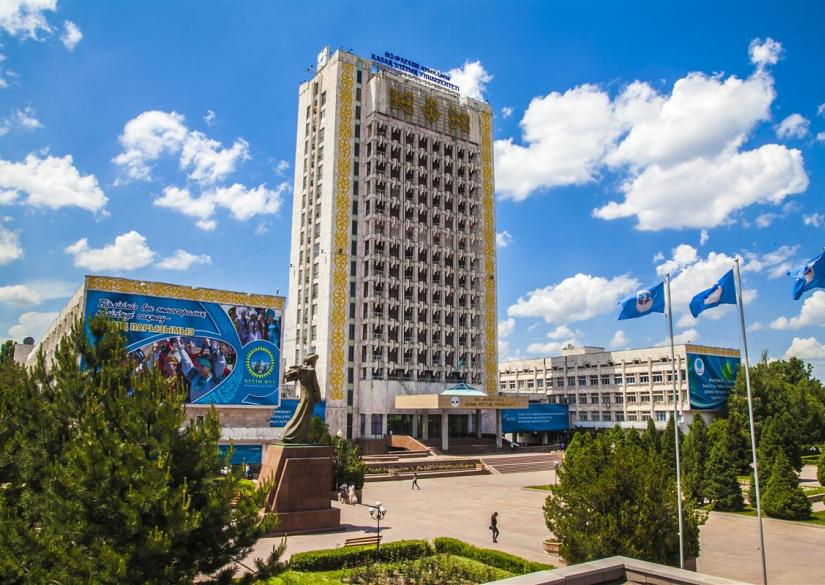
In June, it will be three years since the signing of a declaration at a forum held in the city of Turkestan between the heads of the Ministries of Education of Kazakhstan, Uzbekistan, Tajikistan, Turkmenistan, and Kyrgyzstan. According to the document, the Central Asian states agreed to expand cooperation and unite the scientific, intellectual, and creative potential of higher education institutions throughout the region. However, only Kazakhstan and Uzbekistan have made progress in terms of synergy during this time. The reason for this is the serious gaps between the Central Asian states in the level of provision of higher education for their citizens.   The pace of reform In the 1990s, the reform of education in Central Asia occurred at different rates. Although the Central Asian republics had similar problems at the time of the collapse of the Soviet Union, they began to address them depending on the degree of influence of global trends. For example, Kazakhstan signed the Bologna Declaration and joined the European Higher Education Area in 2010, while Turkmenistan switched to two-stage higher education under the "Bachelor's - Master's" system only in 2013. Some started organizing English-language curricula at their universities as soon as the early 1990s, such as Kazakhstan's KIMEP University or the University of Central Asia in Kyrgyzstan. Uzbekistan, on the other hand, only came around to the idea of the need for English-language education in the noughties. In the 2000s, universities established jointly with foreign partners, such as the Kyrgyz-Russian Slavic University and the Kazakh-British Technical University, began to open in the region. Uzbekistan was again somewhat late to the trend, first opening the International Westminster University (a branch of the University of London) and a branch of Turin Polytechnic University. In 2014, the first university established jointly with foreign partners from South Korea - Inha University, specializing in the training of IT specialists - appeared. Kazakhstan, Kyrgyzstan, and Uzbekistan are currently implementing reforms in the recognition of diplomas and attracting foreign employees and students, while Tajikistan and Turkmenistan are experiencing problems of a different nature related to low levels of enrollment in higher education.   Kazakhstan Kazakhstan has been the most successful nation in reforming higher education. Degrees have been reduced to four years, and the Unified National Testing (UNT) and credit system of education appeared, creating favorable conditions for accession to the Bologna Process in 2010. By 2016, almost every second Kazakhstani was studying at a higher education institution. Now, Kazakhstan has more than 120 universities. There are more than 600,000 students, and about 40% of Kazakhstanis are certified specialists. Kazakhstan's supremacy in this arena is confirmed by international rankings. For example, the international organization, Times Higher Education included four Kazakhstani universities in its rating for 2024: the Eurasian National University named after L.N. Gumilev; Satpayev University; the Kazakh National University named after Al-Farabi; Nazarbayev University (NU). Participating in these rankings for the first time, the latter was recognized as the best in Central Asia. NU is the first university of its...