• KGS/USD = 0.01144 0%
  • KZT/USD = 0.00204 0%
  • TJS/USD = 0.10429 0.29%
  • UZS/USD = 0.00008 0%
  • TMT/USD = 0.28490 0%
  • KGS/USD = 0.01144 0%
  • KZT/USD = 0.00204 0%
  • TJS/USD = 0.10429 0.29%
  • UZS/USD = 0.00008 0%
  • TMT/USD = 0.28490 0%
  • KGS/USD = 0.01144 0%
  • KZT/USD = 0.00204 0%
  • TJS/USD = 0.10429 0.29%
  • UZS/USD = 0.00008 0%
  • TMT/USD = 0.28490 0%
  • KGS/USD = 0.01144 0%
  • KZT/USD = 0.00204 0%
  • TJS/USD = 0.10429 0.29%
  • UZS/USD = 0.00008 0%
  • TMT/USD = 0.28490 0%
  • KGS/USD = 0.01144 0%
  • KZT/USD = 0.00204 0%
  • TJS/USD = 0.10429 0.29%
  • UZS/USD = 0.00008 0%
  • TMT/USD = 0.28490 0%
  • KGS/USD = 0.01144 0%
  • KZT/USD = 0.00204 0%
  • TJS/USD = 0.10429 0.29%
  • UZS/USD = 0.00008 0%
  • TMT/USD = 0.28490 0%
  • KGS/USD = 0.01144 0%
  • KZT/USD = 0.00204 0%
  • TJS/USD = 0.10429 0.29%
  • UZS/USD = 0.00008 0%
  • TMT/USD = 0.28490 0%
  • KGS/USD = 0.01144 0%
  • KZT/USD = 0.00204 0%
  • TJS/USD = 0.10429 0.29%
  • UZS/USD = 0.00008 0%
  • TMT/USD = 0.28490 0%

Viewing results 121 - 126 of 307

Turkmen Civil Servants Could Lose Jobs for Misusing Newspapers with Pictures of Berdimuhamedovs

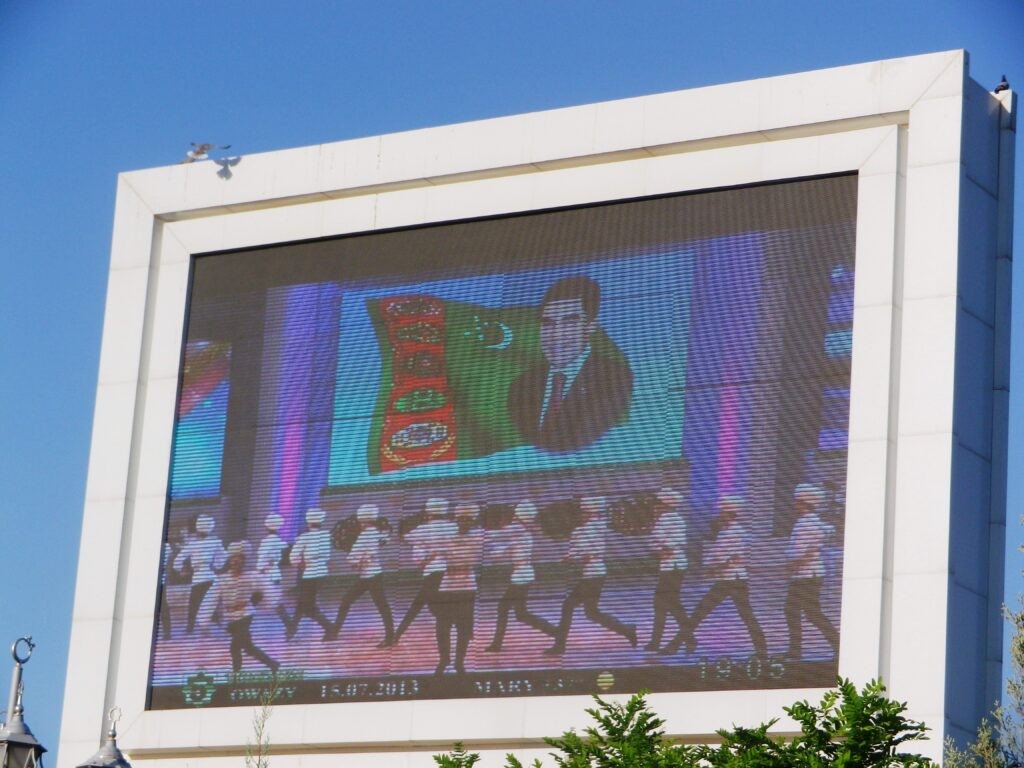
Authorities in Turkmenistan have warned civil servants that they could face dismissal for misusing state newspapers featuring images of President Serdar Berdimuhamedov and his father, former President Gurbanguly Berdimuhamedov. Officials have been explicitly banned from using these newspapers as toilet paper, food packaging, or firewood. Government employees are now required to sign pledges to “carefully keep the pages” containing photographs of the ruling family. According to civil servants, they have been instructed to ensure that images of the Berdimuhamedovs do not end up in the trash or repurposed for household use. Authorities are reportedly even considering introducing QR codes on each page of newspapers to track subscribers and monitor how printed materials are used. “Now we are afraid that children might accidentally tear or throw away a newspaper with the president’s image - because you can lose your job for that,” said one civil servant, who spoke anonymously for fear of reprisals. Human rights organizations, including Reporters Without Borders (RSF), consistently rank Turkmenistan among the world’s worst countries for press freedom. Since Serdar Berdimuhamedov succeeded his father as president in 2022, the country’s media environment has remained tightly controlled. Despite officially stepping down, Berdimuhamedov Sr. continues to wield significant influence over decision-making in the government.

Kazakhstan, Turkmenistan, Russia, and Iran to Boost Cargo Transport Along North-South Corridor

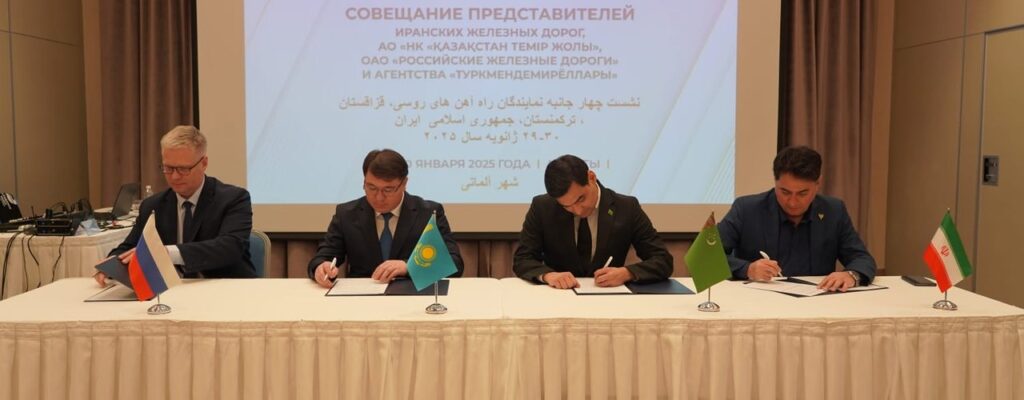
Kazakhstan, Turkmenistan, Russia, and Iran have reaffirmed their commitment to increasing cargo transportation along the North-South transport corridor. Representatives of national railway companies from the four countries met on January 30 in Almaty to discuss ways to enhance the corridor’s attractiveness and establish favorable end-to-end tariffs for shipments passing through Russia, Kazakhstan, and Turkmenistan to Iran’s Bandar Abbas port. According to Kazakhstan Temir Zholy (KTZ), the country’s national railway company, the meeting also addressed cargo transportation across Kazakhstan, particularly through the Bolashak rail station, located on the border between Kazakhstan and Turkmenistan. In 2024, 1.6 million tons of cargo was transported via this station. The North-South corridor, linking Russia, Kazakhstan, Turkmenistan, and Iran, has an annual capacity of 10 million tons of cargo. In July 2024, Kazakhstan hosted its first international meeting on the North-South transit and trade corridor, bringing together delegations from Azerbaijan, Armenia, Afghanistan, Kazakhstan, Russia, Belarus, Turkmenistan, the UAE, Iran, Iraq, Oman, and Uzbekistan. During that meeting, Kazakhstan, Iran, Turkmenistan, and Russia signed a roadmap for the eastern route of the corridor. The plan aims to expand the corridor’s capacity to 15 million tons annually by 2027 and 20 million tons by 2030. By connecting Russia and Belarus to Iran’s Persian Gulf ports, with further access to India, the North-South corridor is expected to enhance trade opportunities and further solidify Kazakhstan’s role as a key transit hub in the region.

Kazakhstan Leads Central Asia in Average Salaries

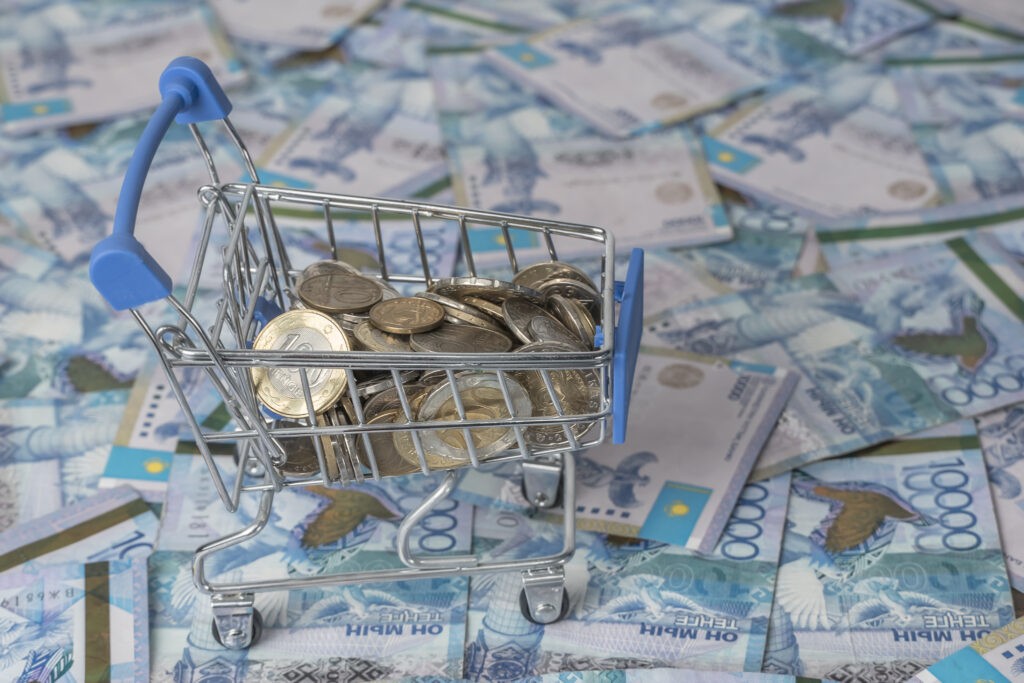
Kazakhstan continues to hold the top position in terms of average wages among Central Asian countries, according to a study conducted by analysts at Ranking.kz. Wage Comparisons Across Central Asia Data from the Interstate Statistical Committee of the CIS reveals that as of September 2024, Kazakhstan's average nominal monthly salary stood at $817.20. This figure is nearly twice as high as in Uzbekistan ($437.80) and Kyrgyzstan ($411.20). Tajikistan trails significantly behind, with an average salary of just $242.80 - 3.4 times lower than Kazakhstan’s. Notably, the wage gap between Kazakhstan and Tajikistan would have been even greater if not for a significant increase in Tajik wages. Over the past year, nominal salaries in Tajikistan rose by 24.9%, while real wages increased by 21.1% - the highest growth rate in the region. In comparison, wage growth in Kazakhstan, Kyrgyzstan, and Uzbekistan was more moderate. Data on salaries in Turkmenistan remains unavailable as the country has not updated its wage statistics since 2023. Minimum Wage Comparison Kazakhstan also leads the region in terms of minimum wages. In 2024, the minimum wage in Kazakhstan is 85,000 KZT ($181.10). By contrast: In Uzbekistan, the minimum wage is $89.40. In Tajikistan, it is $54.90. In Kyrgyzstan, it is just $28.30. In Turkmenistan, the official minimum wage is reported as $402.90, based on the fixed exchange rate of 3.5 TMT per dollar. However, due to the country’s reliance on a "black market" exchange rate (approximately 19 TMT per dollar), the actual minimum wage is estimated to be much lower, around $74.20. Sectoral Analysis When analyzing nominal salaries by economic sector, the highest wages in the region are found in finance and insurance. In Kazakhstan, the average salary in this sector exceeds $1,700 - three times higher than in Tajikistan ($561.90). Workers in Kazakhstan's mining industry also enjoy high incomes. In Uzbekistan and Kyrgyzstan, the financial sector and IT industry offer the highest salaries. Meanwhile, in Tajikistan, relatively high wages are reported in the manufacturing and service sectors. Inflation and Its Impact Inflation remains a key factor affecting the real purchasing power of wages across Central Asia. According to the CIS Interstate Statistical Committee, the most significant price increases in 2024 occurred in the economically developed countries of the region - Kazakhstan and Uzbekistan. Uzbekistan: Inflation reached 7.7% in October 2024. Kazakhstan: Inflation stood at 6.6%. Kyrgyzstan: Inflation was lower at 4.2%. Tajikistan: The region’s lowest inflation rate was recorded at 3.2%. These inflation rates directly influence the population's purchasing power, even in countries with higher nominal salaries like Kazakhstan and Uzbekistan. Kazakhstan’s leadership in wages and minimum income underscores its position as the most economically advanced country in Central Asia. However, inflation and significant disparities in income distribution between sectors and regions remain challenges. While countries like Tajikistan are showing progress in wage growth, the overall gap in earnings between Central Asian nations continues to highlight economic inequalities within the region.

Russian Foreign Ministry Responds to Turkmen Displeasure Over ‘Second Turkmenbashi’ Article

The Russian Foreign Ministry has issued a statement following a controversial article in Nezavisimaya Gazeta that drew criticism from the Turkmen leadership. On January 12, the newspaper published an article titled "Neutrality Turned Out to Be an Excuse for Strengthening the Personality Cult of the 'Second Turkmenbashi.'" The piece compared former president Gurbanguly Berdimuhamedov to his predecessor, Saparmurat Niyazov, who was the subject of a personality cult during his rule over Turkmenistan from 1985 to his death in 2006. Niyazov often called himself "Turkmenbashi" (father of the Turkmen). The Nezavisimaya Gazeta article quoted Arkady Dubnov, an expert on post-Soviet affairs, in relation to a meeting of the Organizing Committee for the 30th anniversary of Turkmenistan's neutrality. During the event, Turkmen Foreign Minister Rashid Meredov reportedly referred to Berdimuhamedov as the “father of the nation.” Dubnov, a critic of authoritarian regimes, remarked that the event symbolized “the birth of another father of the nation on the ruins of the USSR.” The article was subsequently removed from Nezavisimaya Gazeta's website, but not before it provoked discontent in Ashgabat. In response, the Russian Foreign Ministry issued a clarification. In a statement on its official website, the ministry emphasized that "The assessments given in the article have nothing in common with the official position of Russia and do not reflect the high status of ties between our friendly countries." This incident highlights a pattern in which the Russian Foreign Ministry has distanced itself from media outlets over publications that anger foreign governments. Similar cases have occurred in the past, underscoring the delicate balancing act Moscow maintains with its partners in post-Soviet space.

How Orthodox Christmas Is Celebrated in Central Asia

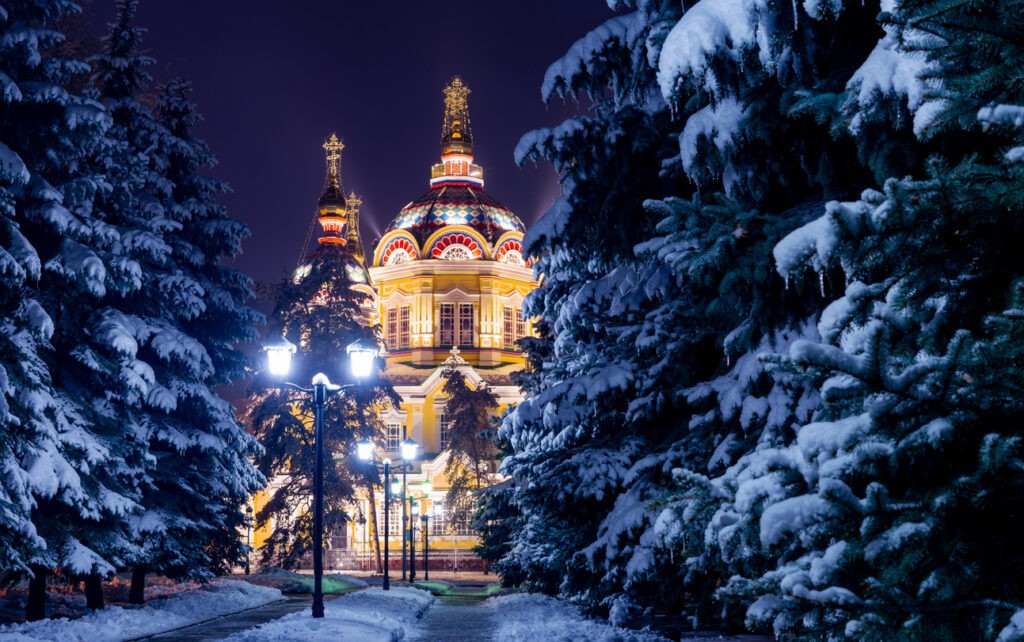
Orthodox Christmas, observed on January 7, holds a significant place in Central Asia, even in predominantly Muslim countries such as Tajikistan and Turkmenistan. This article explores how the holiday is celebrated in Kazakhstan, Uzbekistan, Kyrgyzstan, Tajikistan, and Turkmenistan. Kazakhstan Orthodox Christmas in Kazakhstan is a public holiday, alongside the Muslim celebration of Kurban-Ayt (Eid al-Adha). This recognition stems from the efforts of Kazakhstan's first president, Nursultan Nazarbayev, who proposed in 2005 during the XI session of the Assembly of People of Kazakhstan to declare both holidays as non-working days. Despite opposition from the Constitutional Court, which cited the country's secular constitution, members of the parliamentary faction Asar, led by Nazarbayev's daughter Dariga Nazarbayeva, and the presidential party Otan amended the Labor Code to accommodate these holidays. Since then, Orthodox Christmas and Kurban-Ayt have been official holidays. Celebrations in major cities include festive liturgies. In Almaty, the Ascension Cathedral holds a service beginning at 11pm on January 6, followed by a midnight procession. In Astana, the Assumption Cathedral similarly hosts a midnight service. For those unable to attend, events from the Assumption Cathedral are live-streamed on the YouTube channel “Live Broadcasts of the Orthodox Church of Kazakhstan.” Uzbekistan Orthodox Christians comprise 4-5% of Uzbekistan’s population of over 37.5 million. Uzbekistan is part of the Tashkent and Uzbekistan Diocese under the Russian Orthodox Church. The Cathedral of the Dormition of the Blessed Virgin Mary in Tashkent is the focal point of Christmas celebrations. Services begin at 11.30pm on January 6 and end at 3.30am. To ensure maximum participation, the cathedral holds five separate liturgies. Metropolitan Vikenty of the Tashkent and Uzbekistan Diocese explains, “Traditionally, the liturgy was held at night because the Nativity of Christ took place at night. But not everyone can attend a night service, so we perform several liturgies.” Kyrgyzstan Approximately 350,000 Orthodox Christians live in Kyrgyzstan, according to Bishop Daniel of Bishkek and Kyrgyzstan. The country is part of the Bishkek and Kyrgyzstan Diocese of the Russian Orthodox Church. January 7 is a public holiday in Kyrgyzstan, aligning with the extended New Year vacations, which last from January 1 to 7. Festive services are held at the Resurrection Cathedral and the Church of the Holy Prince Vladimir in Bishkek. Tajikistan In Tajikistan, the Orthodox Christian community numbers around 80,000, or 1.2% of the population, though regular church attendance is much smaller. The country is under the jurisdiction of the Dushanbe Diocese of the Russian Orthodox Church. Christmas services are held at St. Nicholas Cathedral in Dushanbe, beginning at 11pm on January 6 and lasting about three hours. The diocese oversees six churches in Tajikistan, served by five priests. Turkmenistan As of 2019, Turkmenistan’s Orthodox Christian population is about 485,000, or 9% of the total population. All Orthodox parishes are under the Patriarchal Parishes of the Russian Orthodox Church, established in 2007. Services on Christmas Eve and January 6 are conducted in all 12 Orthodox churches in Turkmenistan, adhering strictly to church traditions. According to Archpriest John, dean of...

Central Asia Attracted $24.8 billion in Investments in 2024

Despite global economic challenges, Central Asia has experienced growth in attracting foreign direct investment (FDI). According to the United Nations Economic and Social Commission for Asia and the Pacific (ESCAP), investment in the region increased by 27%, reaching $24.8 billion in 2024. Kazakhstan and Uzbekistan have become the main centers of attraction for capital, offering investors significant opportunities in the energy sector and green technologies. Uzbekistan attracted $4 billion in foreign investment, reflecting a 49% year-on-year decline. However, the country is actively developing sustainable environmental projects. South Korea’s Western Power plans to build a $152 million biofuel plant in Fergana region. The plant will process cotton stalks to heat greenhouses, which will replace coal and reduce emissions by 120,000 tons of CO2 over 10 years. This project reflects Uzbekistan's policy of reducing dependence on fossil fuels and introducing “green” technologies. Kazakhstan maintained its position as the regional leader in attracting investment, accounting for 63% of Central Asia's total FDI. The country increased its investment inflow by 88%, reaching $15.7 billion. An important role was played by Qatari company UCC Holding, which invested $11 billion in the construction of two gas processing plants, a compressor station, and new main gas pipelines. These projects strengthen Kazakhstan's role as a key energy hub in the region. Kyrgyzstan recorded the highest relative growth in investment, increasing by 310% to $2.1 billion. Turkmenistan and Tajikistan received $339 million and $281 million, respectively. As for outgoing investments, their volume from the region decreased by 58% to $2.3 billion. Russia remains the primary source of outgoing investments, accounting for 90% ($2.1 billion). Georgia invested $105 million, Azerbaijan $76 million, and Kazakhstan $47 million.