• KGS/USD = 0.01143 -0%
  • KZT/USD = 0.00193 -0%
  • TJS/USD = 0.10881 0%
  • UZS/USD = 0.00008 0%
  • TMT/USD = 0.28575 0%
  • KGS/USD = 0.01143 -0%
  • KZT/USD = 0.00193 -0%
  • TJS/USD = 0.10881 0%
  • UZS/USD = 0.00008 0%
  • TMT/USD = 0.28575 0%
  • KGS/USD = 0.01143 -0%
  • KZT/USD = 0.00193 -0%
  • TJS/USD = 0.10881 0%
  • UZS/USD = 0.00008 0%
  • TMT/USD = 0.28575 0%
  • KGS/USD = 0.01143 -0%
  • KZT/USD = 0.00193 -0%
  • TJS/USD = 0.10881 0%
  • UZS/USD = 0.00008 0%
  • TMT/USD = 0.28575 0%
  • KGS/USD = 0.01143 -0%
  • KZT/USD = 0.00193 -0%
  • TJS/USD = 0.10881 0%
  • UZS/USD = 0.00008 0%
  • TMT/USD = 0.28575 0%
  • KGS/USD = 0.01143 -0%
  • KZT/USD = 0.00193 -0%
  • TJS/USD = 0.10881 0%
  • UZS/USD = 0.00008 0%
  • TMT/USD = 0.28575 0%
  • KGS/USD = 0.01143 -0%
  • KZT/USD = 0.00193 -0%
  • TJS/USD = 0.10881 0%
  • UZS/USD = 0.00008 0%
  • TMT/USD = 0.28575 0%
  • KGS/USD = 0.01143 -0%
  • KZT/USD = 0.00193 -0%
  • TJS/USD = 0.10881 0%
  • UZS/USD = 0.00008 0%
  • TMT/USD = 0.28575 0%
21 December 2025

Viewing results 217 - 222 of 404

Kazakhstan’s Silk Way TV May Become Unified Central Asian Channel

Central Asia is considering creating a unified television channel and a regional media platform, which would help to strengthen information security and cultural exchange in the region. The idea was discussed at a meeting of representatives of Central Asian media in Astana. The project was proposed to be an extension of Kazakhstan's Silk Way TV channel. According to Kanat Iskakov, Kazakhstan's deputy minister for culture, Silk Way already broadcasts in more than 120 countries and in six languages. "At present, the people of our countries are not quite aware of the achievements of neighboring countries. There is a certain lack of information. And in this regard, to fill this gap, we have gathered our colleagues. We have several TV channels that broadcast in Central Asian countries. And we believe that to have a better promotion, these countries can give their content, which we will show not only in the countries of Central Asia but also on international television," Iskakov said.

Sixth Consultative Meeting of Heads of Central Asian States Takes Place in Astana

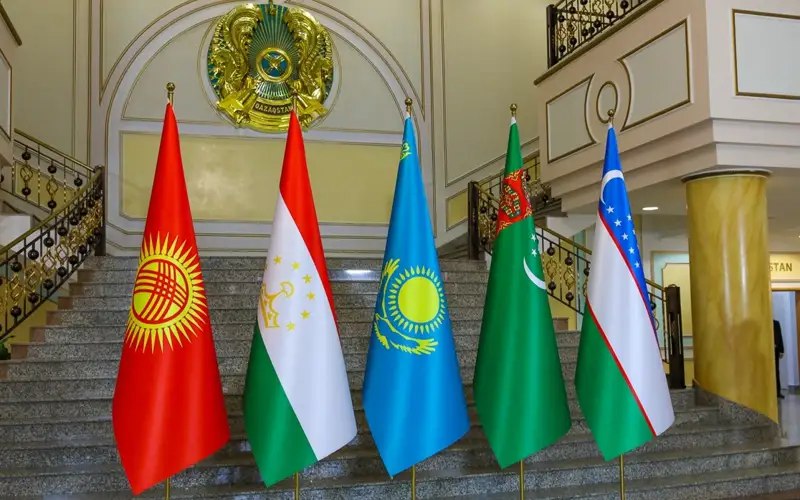
On August 9, 2024, Astana will host the Sixth Consultative Meeting of Heads of State of Central Asia, bringing together the leaders of Kazakhstan, Kyrgyzstan, Tajikistan, Turkmenistan, and Uzbekistan. This event has become an important platform for discussing critical issues of regional cooperation, strengthening economic ties, and addressing everyday challenges. This year’s guests of honor were the President of Azerbaijan, Ilham Aliyev, and the head of the UN Regional Center for Preventive Diplomacy for Central Asian countries, Kakha Imnadze. The main topics of this year's meeting will be economic cooperation, regional security and cooperation, water resources, and energy. Special attention will be paid to water resources management, which is critical to the region's sustainable development. The leaders will also discuss strengthening trade and economic ties, which has become especially important given the growing indicators of mutual trade, which have grown 2.5 times over the past ten years, reaching almost $11 billion. Another important topic will be ensuring regional stability, including fighting terrorism and extremism, and developing joint measures to strengthen border security. The summit is also expected to adopt the "Strategy for the Development of Regional Cooperation in Central Asia-2024", which aims to expand the five-party interaction and strengthen the international role of the region. These consultative meetings of Central Asian leaders, which began in 2018, have become an important tradition and serve as a constructive platform to discuss and address common challenges. The 2024 meeting emphasizes Central Asia's growing importance in the international arena and the readiness of the region's countries to address current challenges and seize opportunities for joint development jointly. On August 9, 2024, a meeting of Central Asian foreign ministers was also held in Astana. Kazakh Foreign Minister, Murat Nurtleu opening the meeting, emphasizing that the event demonstrates the strong commitment of Central Asian countries to strengthening cooperation in all spheres, and that the region's governments have all made significant progress in economic and political interaction in recent years. The total GDP of the Central Asian countries now stands at about $450 billion, and mutual trade has grown by 80% over the past five years, reaching $11 billion. The meeting focused on strengthening regional cooperation in the key areas of energy, transportation, logistics, industry. Kazakhstan proposed developing a long-term comprehensive mechanism of collaboration in the area of water resources and hydropower that would consider the interests of all countries in the region. On the same day, the summit, Central Asia + Japan was to be attended by Japanese Prime Minister Fumio Kishida; however, Kishida cancelled his visit to Kazakhstan due to a powerful earthquake which struck off the coast of Japan.

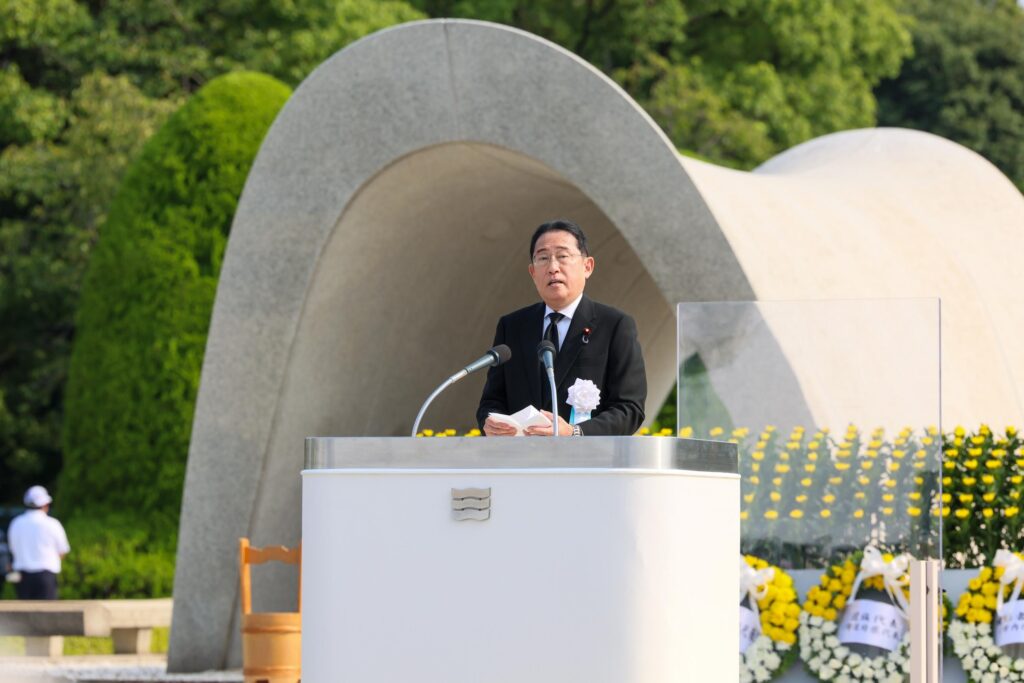
Japanese PM Cancels Attendance at Central Asia + Japan Summit.

A visit to Kazakhstan, Uzbekistan, and Mongolia by Japanese Prime Minister Fumio Kishida scheduled for August 9-12, has been cancelled. According to the publication Kyodo, the trip was cancelled in response to a warning issued by the Japan Meteorological Agency on the possibility of a strong earthquake and tsunami in Japan. In an apology made at a press conference today, the prime minister who was due to participate in the summit of Japan and the Central Asian countries in Astana, stated,  “As the top official in charge of the nation's crisis management, as an extra precaution, I should remain in Japan for at least about a week." Confirming the decision, official representative of the Ministry of Foreign Affairs Aibek Smadiyarov announced, "According to the information of the Embassy of Japan, in connection with the earthquake in their country, a decision was made to cancel the visit of Prime Minister Fumio Kishida to Kazakhstan." On August 8, a 7.1-magnitude earthquake occurred in Miyazaki prefecture in southwestern Japan and the Japan Meteorological Agency recorded earthquakes at a depth of 30 km. The Japanese government also issued a tsunami warning for Kochi and Miyazaki prefectures. The Times of Central Asia previously reported on the Prime Minister of Japan's intention to announce a package of economic assistance to Central Asia. According to the Japanese government, the initiative which Kishida planned to outline at the summit,  will reduce the heavy influence of both Russia and China on the region and afford Central Asia economic independence.

Turkmen Students To Be Able to Apply for British Scholarships

The British Embassy in Turkmenistan has announced the opening of applications for the Chevening Scholarship program for the 2025-2026 academic year. The scholarship, funded by the UK government, gives Turkmen students a unique opportunity to earn a Master's degree at leading British universities within one year. The Chevening program covers many specialties, and the scholarship covers all tuition, accommodation, and transportation costs, allowing students to focus fully on their studies. Candidates wishing to participate in the program must be at the beginning or middle stage of their professional career, and have an excellent command of English. Chevening provides young professionals in Turkmenistan with an opportunity to enhance their qualifications, gain invaluable learning experience at one of the world's leading universities, and broaden their professional horizons.

Steel Highways: The State of Central Asia’s Railways

Railways in Central Asia have always played an important political and economic role, but amid the current geopolitical turbulence, they have become a crucial means of  transporting  goods from China to Europe and the Middle East, bypassing sanctioned Russia. But what is the state of  Central Asia's railway industry, and is it up to the new challenges? The history of rail transport in Central Asia dates back to the end of the 19th century. In 1874, a special commission of the Russian Empire recognized the need to construct a line from Orenburg to Tashkent. Later, however, strategic considerations forced a change of plan and to ensure a stable connection between the Turkestan and Caucasus regions, the first steel highway in Central Asia would be built to connect Tashkent with the eastern coast of the Caspian Sea. This was an active period of the so-called Great Game, when Russia and Great Britain competed in Central Asia. Since then, the geopolitical importance of railways in the region, which lacks access to oceans, has not decreased whatsoever. Indeed, amid armed conflicts in the Middle East and between Russia and Ukraine, railways have become even more important given their role in ensuring the movement of goods along the Trans-Caspian International Transport Route (TITR) and the International North-South Transport Corridor (INSTC). Against this backdrop, Kazakhstan's President Kassym-Jomart Tokayev has tasked the national railway company Kazakhstan Temir Zholy (KTZ) with leading the transformation of the country into a transport and logistics hub.   Kazakhstan: A story of steady development The length of Kazakhstan's mainline rail network is over 16,000 km, with over 800 stations and crossing points. The freight car fleet exceeds 120,000 units, while locomotives number more than 1,700. Kazakhstan’s railways account for 70% of freight traffic, and 60% of passenger traffic in the country. Just under 1% of the country’s population is employed in the rail industry. According to the KTZ's annual report in 2023, container transit rose 14% year-over-year to 1.282 million TEU (twenty-foot equivalent units), which drove a 30.6% year-on-year rise in operating income to KZT1.934 trillion, while net profit came in at KZT136.8 billion ($286.8 million). The volume of freight transported between Kazakhstan and China was also up 22% to 28 million tons. In addition, KTZ reported the completion of large-scale track repairs in 2023, with 1,443 km of railway track repaired, double the figure achieved in 2022. The start of large infrastructure projects was also noted. In particular, construction was launched of the Darbaza–Maktaaral and Bakhty–Ayagoz lines (with a third border crossing with China set to be opened in 2027), while construction of the bypass line around Almaty also commenced. Over 300 km of the second track was laid on the Dostyk-Moyynty railway section. Finally, a Kazakh transport and logistics terminal was opened in the Chinese dry port of Xi'an.   Uzbekistan: First high-speed rail in Central Asia O’zbekiston Temir Yo’llari (UTY), Uzbekistan's national rail carrier, was founded on November 7, 1994, taking over the lines of the Soviet-era Middle...

China Expands Footprint in Central Asia

In July, Chinese leader Xi Jinping, architect of the Belt and Road economic initiative, traveled to Kazakhstan for a meeting of the Shanghai Cooperation Organization, a security group whose founding members include several Central Asian countries. There, Xi warned against the threat of “external interference” and celebrated Chinese collaboration with President Vladimir Putin of Russia, the region’s other traditional power. Then he visited Tajikistan, a security partner that borders China and Afghanistan. Europe and the United States, which want to counterbalance Chinese and Russian sway in Central Asia, were watching. Last week, several analysts affiliated with Western institutions held a Zoom discussion titled "The China-Central Asia Crossroads." It was hosted by the Center for the National Interest, a non-profit group based in Washington – a few blocks from the White House. Here are excerpts from the analysis:   Balancing China and Russia: Temur Umarov, a fellow at the Berlin-based Carnegie Russia Eurasia Center: There is a misconception that “China is somehow replacing Russia” as the main partner in Central Asia because of unease over Russia´s full-scale invasion of Ukraine in 2022. “The reality is much more nuanced and detailed,” Umarov said. Since the end of the Soviet Union in 1991, he said, Central Asian countries have always looked for “diversified ties with the world” and “Central Asia wants to have China’s presence be enlarged into other spheres and to have a counterbalance in the face of Russia.”   Elizabeth Wishnick, an expert on Sino-Russian relations at the Center for Naval Analyses and the Weatherhead East Asian Institute at Columbia University: “Central Asians wanted to diversify away from Russia to have more choice. China is not necessarily the only partner they want. And they they've been trying, especially recently, to engage with European countries, with India, with Iran, with Turkey, with a broader range of countries.” Wishnick, who traveled recently to Central Asia, said some people described Russia as “toxic” in private conversations. She also said: “You see a lot of caution about the relationship with China in terms of the lack of transparency of some of the projects that China is investing in, the potential environmental consequence of some of these projects.”   Brian Carlson,  a research professor at the Strategic Studies Institute of the U.S. Army War College: There is “a little bit of slippage of Russian influence in the region,” although Putin has worked to maintain it with frequent meetings with Central Asian leaders, Carlson said. He noted that, after Putin visited China in May, he called the leaders of Kazakhstan and Uzbekistan to update them on the trip. Even so, China’s influence is increasing. “And so, this does pose challenges for the Central Asian countries. In the past, they've kind of tried to play Russia and China off against each other. To some extent, that will be more difficult given that China and Russia have a very close partnership. So, it will be difficult for Central Asian countries to navigate great power relations in the coming years....