• KGS/USD = 0.01144 0%
  • KZT/USD = 0.00212 0%
  • TJS/USD = 0.10543 -0.09%
  • UZS/USD = 0.00008 0%
  • TMT/USD = 0.28530 0%
  • KGS/USD = 0.01144 0%
  • KZT/USD = 0.00212 0%
  • TJS/USD = 0.10543 -0.09%
  • UZS/USD = 0.00008 0%
  • TMT/USD = 0.28530 0%
  • KGS/USD = 0.01144 0%
  • KZT/USD = 0.00212 0%
  • TJS/USD = 0.10543 -0.09%
  • UZS/USD = 0.00008 0%
  • TMT/USD = 0.28530 0%
  • KGS/USD = 0.01144 0%
  • KZT/USD = 0.00212 0%
  • TJS/USD = 0.10543 -0.09%
  • UZS/USD = 0.00008 0%
  • TMT/USD = 0.28530 0%
  • KGS/USD = 0.01144 0%
  • KZT/USD = 0.00212 0%
  • TJS/USD = 0.10543 -0.09%
  • UZS/USD = 0.00008 0%
  • TMT/USD = 0.28530 0%
  • KGS/USD = 0.01144 0%
  • KZT/USD = 0.00212 0%
  • TJS/USD = 0.10543 -0.09%
  • UZS/USD = 0.00008 0%
  • TMT/USD = 0.28530 0%
  • KGS/USD = 0.01144 0%
  • KZT/USD = 0.00212 0%
  • TJS/USD = 0.10543 -0.09%
  • UZS/USD = 0.00008 0%
  • TMT/USD = 0.28530 0%
  • KGS/USD = 0.01144 0%
  • KZT/USD = 0.00212 0%
  • TJS/USD = 0.10543 -0.09%
  • UZS/USD = 0.00008 0%
  • TMT/USD = 0.28530 0%

Viewing results 4423 - 4428 of 5994

Embracing the Spirit: An Interview with Nick Willert of the U.S. Team at the World Nomad Games

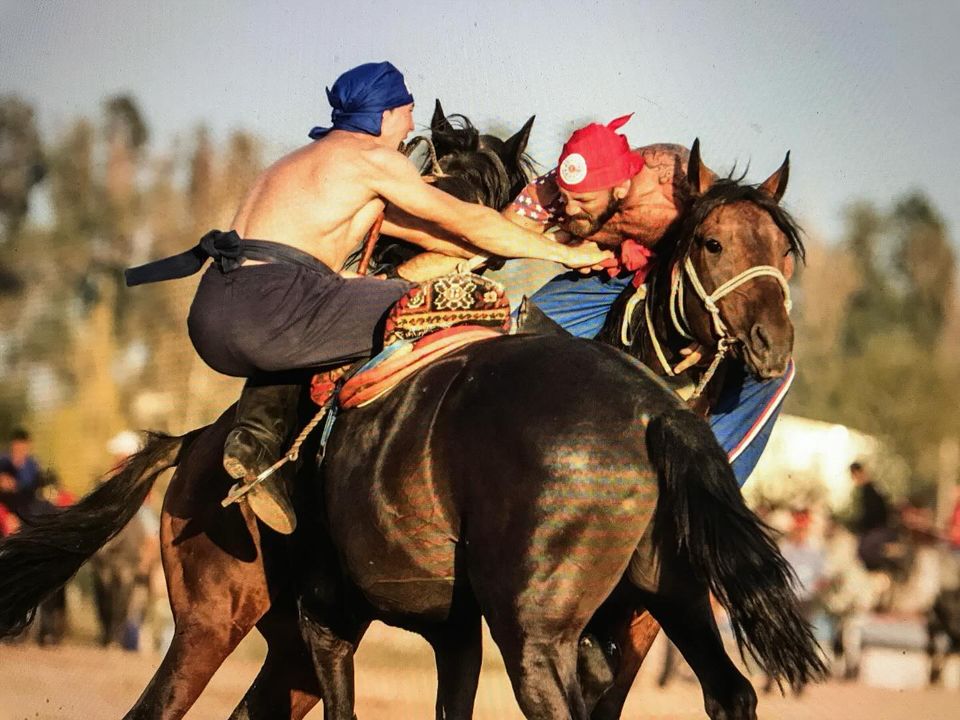
As Kazakhstan gears up to host the 5th World Nomad Games in Astana from September 8-13, a vibrant festive atmosphere is taking over the city with streets adorned with flags and banners celebrating this year's theme, "The Gathering of the Great Steppe." In the build-up to the games, which will host competitors from 89 countries, TCA spoke to Nick Willert, who will be representing the U.S. in kokpar, horseback wrestling, and kok boru. [caption id="attachment_22495" align="aligncenter" width="1080"] Kokpar; image: Nick Willert[/caption] TCA: What is your equestrian background, and when did you first hear about, become interested in, and start competing in kokpar and kok buru? Willert: I grew up on a horse ranch in Wyoming, so I have always been comfortable around horses, but equestrian sports were never my main focus. After I served in the United States Marine Corps, I worked as a professional skier and professional MMA fighter, as well as a surf instructor and salvage diver in California. In 2018, I was recruited by friends that I grew up with to compete in kokpar and kok boru in the World Nomad Games. That is where I also discovered horseback wrestling, and became the first American horseback wrestler. [caption id="attachment_22496" align="aligncenter" width="1080"] Image: Nick Willert[/caption] TCA: Have you traveled much in Central Asia before? Willert: Besides traveling to Central Asia two previous times for horseback wrestling and kokpar par/kok boru, I spent a lot of time in Asia working for a wildlife production company as their animal wrangler and scout locator. That is where I truly developed a deep love and admiration for Asia and Central Asia and the cultures that exist in those regions. [caption id="attachment_22497" align="aligncenter" width="423"] Image: Nick Willert[/caption] TCA: What kind of horses do you use for training? During the competition, what horses will your team use? Willert: Finding horses and having enough time to get to know each horse has always been a big challenge for the American team. However, our Kyrgyzstan colleagues have been a big help in facilitating the procurement of horses for our team. [caption id="attachment_22498" align="aligncenter" width="886"] Image: Nick Willert[/caption] TCA: Does your team try to imitate the Central Asian players, or are there some distinctive ways in which Americans play kokpar? Willert: I think it tends to be an interesting mix of imitation of the techniques that we have seen, as well as combining some western horsemanship skills and bringing those into play as well. [caption id="attachment_22499" align="aligncenter" width="826"] Image: Nick Willert[/caption] TCA: How do you expect your team to fare in the World Nomad Games? Willert: I’m aware that the U.S. team is considered underdogs in this sport, but are ready to play to the best of our ability, without fear, and have a lot of fun doing it!
ADB Launches New Strategy for Turkmenistan

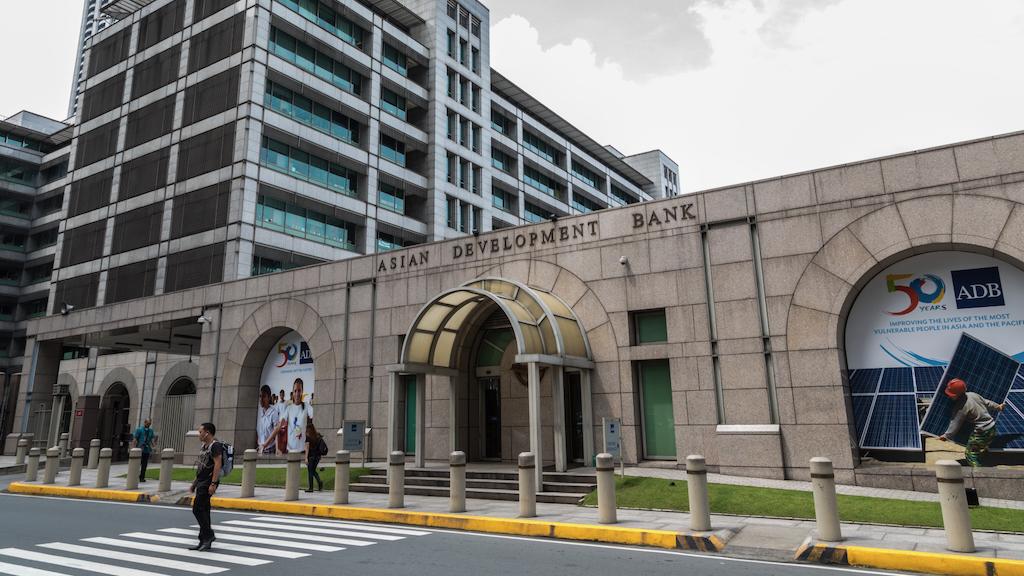
The Asian Development Bank (ADB) announced its new country partnership strategy for Turkmenistan on August 28. The strategy is designed to help the country develop a competitive, diversified, and knowledge-based economy driven by an innovative private sector. Under the new strategy, which spans from 2024 to 2028, the ADB’s assistance will focus on three strategic priorities: supporting the green transition to a sustainable and climate-resilient economy, promoting economic competitiveness through diversification with an emphasis on private sector and human capital development, and promoting structural reforms and institutional development. The ADB Director General for Central and West Asia, Yevgeniy Zhukov, commented: “ADB and Turkmenistan have a longstanding partnership, and the new strategy underscores our unwavering commitment to the country’s development. We will continue working closely with the government and Turkmenistan’s development partners to help the country realize its ambitious long-term development goals.” The ADB will support Turkmenistan’s green transformation with investments in energy efficiency, renewable energy, low-carbon pilot projects, and policy reforms. The bank will continue to help Turkmenistan develop long-term decarbonization plans and reduce methane emissions. The ADB will also support the development of sustainable and integrated transport networks focusing on railways along crucial trade corridors. Recognizing the critical role of the private sector in driving inclusive economic growth in Turkmenistan, the ADB will help build an export-oriented private sector and continue supporting domestic financial institutions, including improving access to capital for small and medium-sized enterprises targeting export markets. To support human capital development, the ADB will help reform the country’s healthcare sector to improve access, quality, and the range of services.

Kazakh-German Business Council Meets to Expand Economic Cooperation

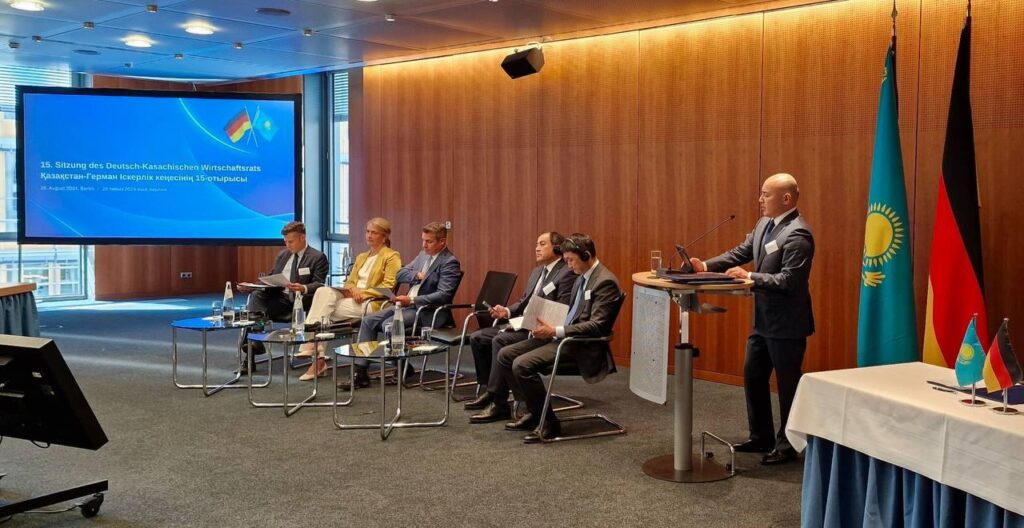
The 15th meeting of the Kazakh-German Business Council for Strategic Cooperation, co-chaired by First Deputy Prime Minister of Kazakhstan Roman Sklyar and Director of the Eastern Committee of the German Economy Michael Harms, was held in Berlin on August 28. The meeting gathered Kazakh government and business representatives and heads of leading German companies such as Siemens, Svevind Energy, CT Agro, CLAAS KGaA, Flight Design General Aviation, Deutsche Bahn, KfW Banken Gruppe, and Deutsche Bank. The co-chairs emphasized that the event was taking place ahead of Federal Chancellor of Germany Olaf Scholz's visit to Kazakhstan in September. The meeting focused on expanding Kazakh-German trade and economic cooperation, attracting investments, and implementing joint projects in the agro-industrial sector and processing industry. It was noted that Germany is Kazakhstan's largest trading partner in the European Union, and that Kazakhstan is among Germany's top 50 foreign trade partners. The lion's share of German investments in Kazakhstan go to the country’s non-raw materials sector — the processing industry, chemical industry, production of building materials, transport, and agro-industrial sector. Speaking on the sidelines of the event, Kazakhstan Deputy Minister of Foreign Affairs Alibek Kuantyrov urged further to intensify cooperation between the Kazakh and German business communities. Noting the critical role of German companies in Kazakhstan’s industrialization, Kuantyrov stated that German companies are implementing 66 projects in Kazakhstan for a total of $54 billion, creating about 15,000 jobs. Kuantyrov added that since 2005, German companies have invested about $7.8 billion in Kazakhstan’s economy, with a significant increase in the past year, reaching $770 million. He expressed confidence that the upcoming visit of Scholz to Kazakhstan will bring bilateral relations to a new level and give an additional impetus to strengthening existing and creating new economic ties. Kuantyrov emphasized the significance of cooperation in the context of the Trans-Caspian International Transport Route (TITR), also known as the Middle Corridor. He noted that cargo traffic through the Middle Corridor to Germany and the EU has increased almost threefold since the beginning of 2022 — to 1.5 million tons and 2.6 million tons, respectively, during the first seven months of this year, adding that the potential of TITR is estimated at 10 million tons of cargo a year. In this regard, Kuantyrov invited German partners to participate in developing Kazakhstan’s Caspian Sea ports of Aktau and Kuryk.

Lessons in Self-Defense for Kindergarten Kazakhs

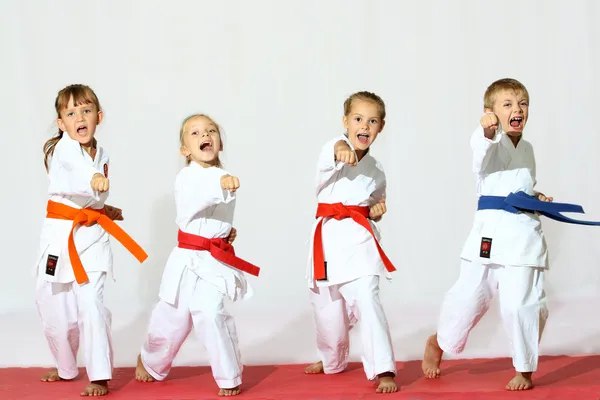
From September 1, Kazakhstan will introduce “Personal Safety” lessons to the curricula of its kindergartens, schools, and colleges. Developed by Kazakhstan's Ministry of Education, the program of 130 training sessions aims to teach children the basics of self-defense and develop a responsible attitude towards their own and others' safety. According to Nasymzhan Ospanova, Chair of the Committee for the Protection of Children's Rights, the lessons are tempered according to the children's age and developmental level to help motivate and support participants. Conducted in batches of weekly ten-minute classes, repeated three times a year, the training courses will include practical tips, games, interactive teaching methods, demonstrations, and videos, making the material accessible and exciting for children of all ages. It is worth noting that over the past three years, the number of children who have committed criminal offenses has increased by 20.3%. In 2023 alone, 1,823 juveniles were convicted. In most cases, crimes are committed by teenagers 16 - 17 years old (80.4%), with about 93.6% of juvenile offenders being boys. Statistics confirm that crime is higher among those with little education and those living in difficult situations. Thus, the share of those who neither study and nor work is 51.9%, the share of those who study in colleges is 26.9%, and in schools, gymnasiums, and lyceums, 20.6%.

Silk Road Treasures: The Wild Beauty of Mangistau

Under the banner of "Silk Road Treasures", TCA's people -journalists, editors, authors - share their personal experiences of Central Asia and her people, and by listing their favorite places, literature, films, art, architecture and archaeological sites, alongside encounters and customs, provide pointers for readers wishing to visit the region. Aliya Haidar, Journalist Kazakhstan's Mangistau Peninsula (Mangyshlak) is far from fit for human habitation. Fresh water is scarce, the air is filled with dust raised by searing desert winds, huge waves roll over the turbulent Caspian Sea, and only camels can feed on its vegetation. Mangistau is a symbol of the triumph of nature and, simultaneously, a symbol of victorious industrialization. The balance between the two, however, is very fragile, as events on the peninsula have repeatedly confirmed. In 2000, the peninsula's landscape still retained its wild, natural beauty but just a decade later, it was a place plagued by social conflict. The remains of ancient nomadic sites and necropolises of Sufi missionaries illustrates that people have long been determined to tame and develop this remote and barren land but its explosive growth only occurred with the discovery of oil and uranium.  In the 1960s, geologists settled in the desert. Within ten years, cities appeared and hundreds of enterprises were established, making  Mangistau one of the gems in the Soviet Union's crown. Colossal desalination plants near the regional center of Aktau (former Shevchenko) resembling spaceships, are a legacy of the era of rapid development when the world's first industrial nuclear reactor on fast neutrons, the BN-350, was built on the peninsula. The reactor was shut down after independence in the late 1990s, but conservation is ongoing. Today, few people are allowed into the gloomy catacombs, to the heart of the reactor, but the memory of the power of the atom and the payback has remained. BN-350 is part of the Mangistau Atomic Energy Combine (MAEC), and the giant desalination plants now supply most of the peninsula with water from the Caspian Sea. But there is still insufficient capacity, and the presence of the endless row of desalination plants warns: "Beware, man. You will have to fight for every drop." Even in the regional center of Aktau, water cuts are not uncommon, and intensive farming is out of the question. In the bazaars of Mangistau, most of the products, especially fruit and vegetables, are imported and far more expensive than elsewhere in Kazakhstan where they grow in abundance.  And although salaries in the oil industry are higher than the national average, locals pay triple the price for just about  everything. Irresistibly attracted by the glitter of “black gold," the population in the peninsula continues to rise. Almost 800 thousand people currently live in the Mangistau region, making it the ninth most populous region in the country. The load on the peninsula's natural resources however, is now so disproportionate that it has become the cause of constant conflicts. But outside the cities, it is easy to forget the harsh reality of the industrial...

Turkmenistan and Iran to Expand Cooperation in Natural Gas and Transport

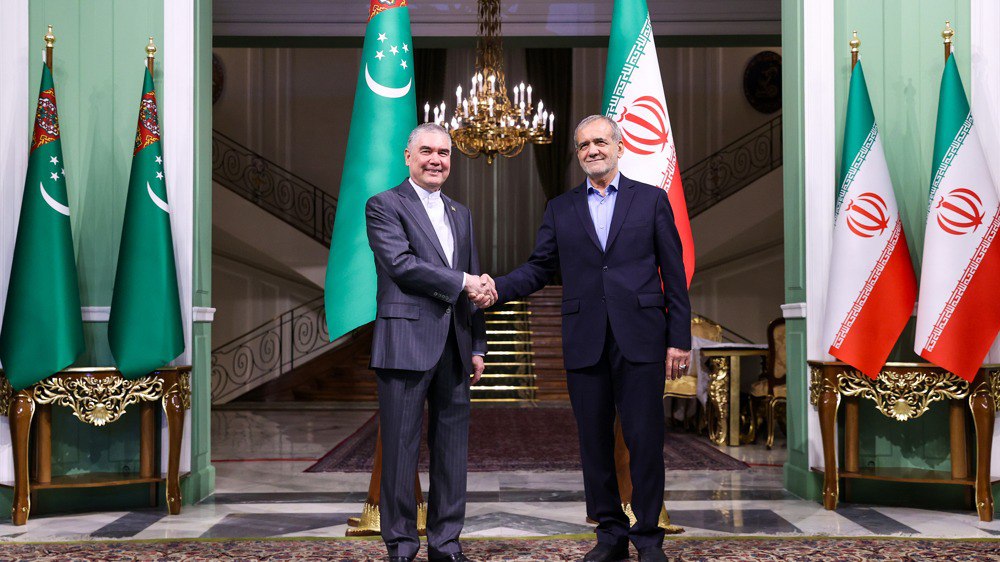
On August 28, the chairman of the Halk Maslahaty (People’s Council) of Turkmenistan, the country's former president Gurbanguly Berdimuhamedov, visited Iran and held talks with the Iranian president Masoud Pezeshkian. Iran’s Press TV news agency quoted Pezeshkian as describing four memorandums of understanding signed during Berdimuhamedov’s visit as “strategic,” saying that a document signed between Iran's state gas companies and Turkmenistan will turn Iran into a regional gas transfer hub. No details of the document have been released. Turkmen media reported that Gurbanguly Berdimuhamedov proposed implementing joint projects with Iranian companies to increase the volume of gas supply to Iran to 40 billion cubic meters per year. The Turkmen side also reported that the talks in Tehran discussed exporting Turkmen electricity to Iran. Concerning cooperation in the transport sector, Berdimuhamedov urged increasing cargo transportation along the Kazakhstan-Turkmenistan-Iran railway route, while the Iranian president proposed increasing cargo flows along the Armenia-Iran-Turkmenistan-Kazakhstan route. Turkmenistan and Iran have agreed to start negotiations for a comprehensive deal on transportation issues. The talks, expected to kick off next month, will be part of an intergovernmental committee chaired by Iran’s transportation minister.