• KGS/USD = 0.01144 0%
  • KZT/USD = 0.00218 0%
  • TJS/USD = 0.10610 -0.09%
  • UZS/USD = 0.00008 0%
  • TMT/USD = 0.28530 0%
  • KGS/USD = 0.01144 0%
  • KZT/USD = 0.00218 0%
  • TJS/USD = 0.10610 -0.09%
  • UZS/USD = 0.00008 0%
  • TMT/USD = 0.28530 0%
  • KGS/USD = 0.01144 0%
  • KZT/USD = 0.00218 0%
  • TJS/USD = 0.10610 -0.09%
  • UZS/USD = 0.00008 0%
  • TMT/USD = 0.28530 0%
  • KGS/USD = 0.01144 0%
  • KZT/USD = 0.00218 0%
  • TJS/USD = 0.10610 -0.09%
  • UZS/USD = 0.00008 0%
  • TMT/USD = 0.28530 0%
  • KGS/USD = 0.01144 0%
  • KZT/USD = 0.00218 0%
  • TJS/USD = 0.10610 -0.09%
  • UZS/USD = 0.00008 0%
  • TMT/USD = 0.28530 0%
  • KGS/USD = 0.01144 0%
  • KZT/USD = 0.00218 0%
  • TJS/USD = 0.10610 -0.09%
  • UZS/USD = 0.00008 0%
  • TMT/USD = 0.28530 0%
  • KGS/USD = 0.01144 0%
  • KZT/USD = 0.00218 0%
  • TJS/USD = 0.10610 -0.09%
  • UZS/USD = 0.00008 0%
  • TMT/USD = 0.28530 0%
  • KGS/USD = 0.01144 0%
  • KZT/USD = 0.00218 0%
  • TJS/USD = 0.10610 -0.09%
  • UZS/USD = 0.00008 0%
  • TMT/USD = 0.28530 0%

Viewing results 1477 - 1482 of 3053

Stay or Go? Uzbek Students Ponder Studies at Home, Abroad

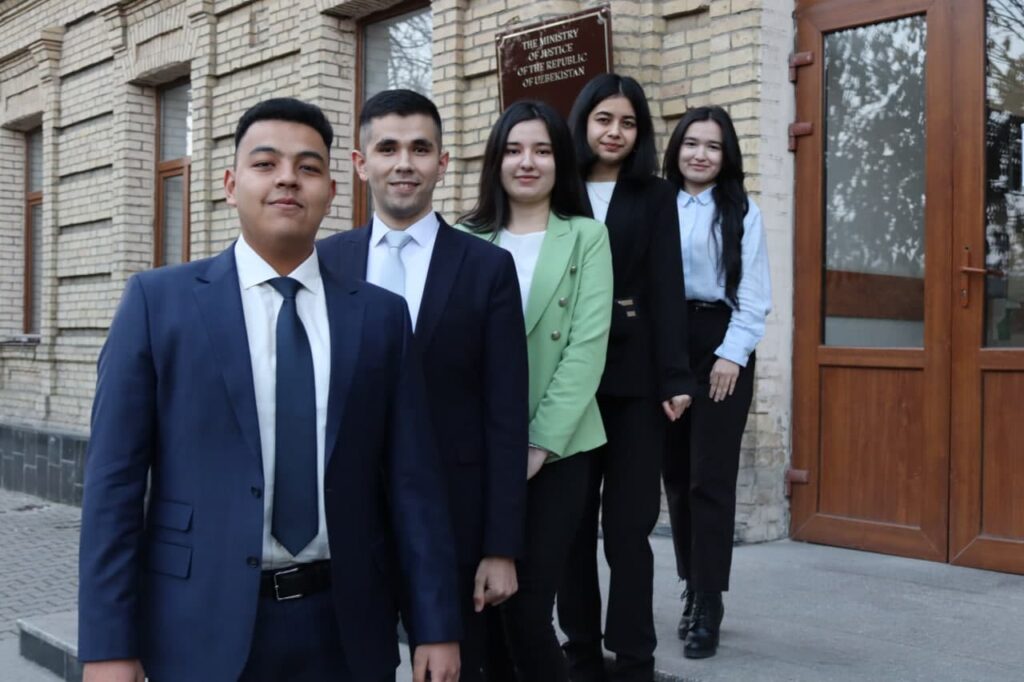
Like many Uzbek students, Nigina Poziljonova left Uzbekistan to study at a university abroad. She doesn’t regret her decision. “Unlike the teachers I personally saw in Uzbekistan, professors are happy when students say, ‘I don’t understand, please explain again,’” said Poziljonova, who is studying for a bachelor’s degree in business economics with data science at the University of Cassino in Italy. “If necessary, they are willing to spend two hours after class for that student. If I fail one exam, I can take it 5 times a year for 3 years for free,” said the Uzbek student, who nevertheless describes her Italian experience as “more challenging than I anticipated.” --- The perceived shortcomings of higher education have long been a preoccupation in Uzbekistan, which has a large population of young people and is the most populous country – with about 35 million citizens – in Central Asia. Authorities are trying to fix the problem. Last month, Minister of Higher Education Kongratbay Sharipov said 20 underperforming universities will be closed because only 5-10% of their graduates are employed. Uzbekistan has more than 200 universities - 114 are state-run, 65 are private and 30 are foreign university branches, according to 2023 data. Uzbekistan had the fifth largest number of “tertiary” students (students who have completed secondary school) studying abroad – 109,945 – among countries around the world that were surveyed, according to UNESCO data in 2021. Around that time, more than 570,000 students were studying in higher education institutions in Uzbekistan. As in many countries, a lot of Uzbek students believe a quality education lies abroad and their increasing command of English and openness to the world can bring that goal within reach. Additionally, Uzbekistan’s El-Yurt Umidi foundation, a state agency launched in 2018, covers tuition fees and living expenses of talented people who want to study abroad. The foundation signs a contract with scholarship holders that requires them to return to Uzbekistan and work for three years. Many students study at universities in neighboring countries such as Kazakhstan, Kyrgyzstan, and Tajikistan, and then, after one or two years, transfer to universities in Uzbekistan. According to Kyrgyz data, some 38,857 Uzbek students studied in higher education institutions in Kyrgyzstan in 2022 and the figure reached 40,282 in 2023. Uzbek President Shavkat Mirziyoyev chaired a meeting in May at which officials discussed the 306 majors available at the bachelor’s level in Uzbekistan, and the 625 specialties at the master’s level. They acknowledged that some don’t meet international standards and labor market requirements and explored ways to revise them. Opening new courses in areas of high demand was also discussed. Another problem in Uzbek universities is an excessive focus on specializations. At one journalism university, specialists taught multiple sub-topics, including TV, international news, public relations, the internet, as well as military, travel, art, economic and sports journalism. Progress has been made. More people have access to higher education. Starting this year, state grants are given for one year, and in the remaining years of...
Henley Passport Index 2024: Kazakhstan Again the Strongest Central Asian Passport

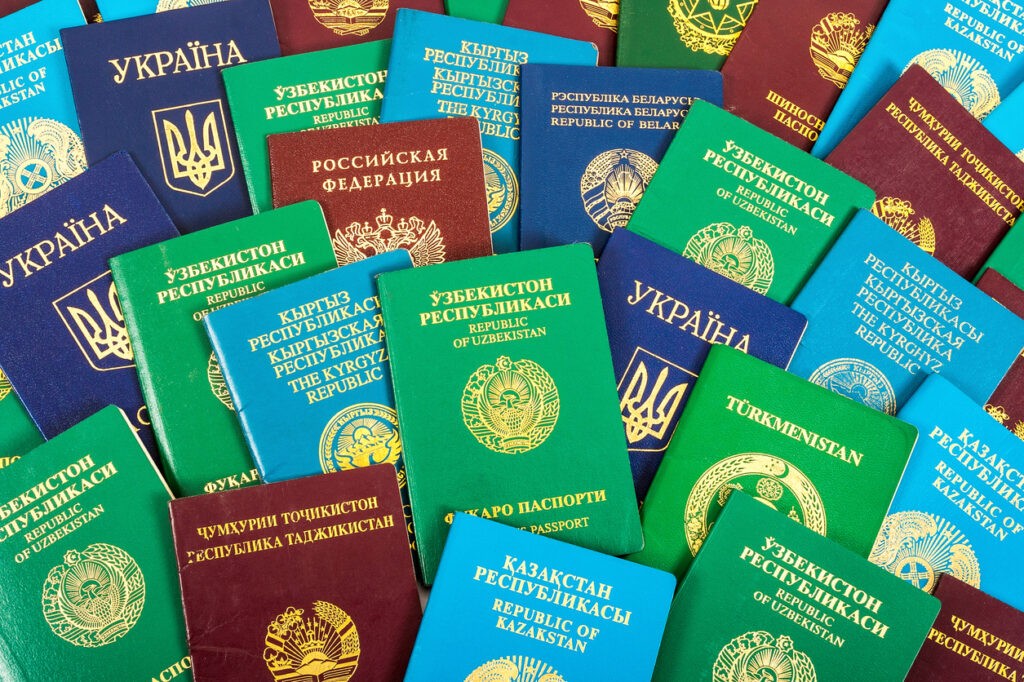
This year's Henley Passport Index, a ranking that shows how many countries citizens of each country can visit without a visa, has been announced. The rating is compiled using information from the International Air Transport Association. It covers 199 passports and 227 countries. The Singaporean passport again takes first place in the rating. Singaporean citizens can visit 195 countries without a visa. In joint second place, able to freely enter 194 countries, are passport holders from France, Germany, Italy, Japan and Spain. Kazakhstan ranks 67th in this year's Index: holders of a Kazakhstani passport can enter 79 countries without a visa. Next in Central Asia is Kyrgyzstan, in 78th place, whose citizens can freely visit 65 countries. Uzbekistan is 79th in the ranking (64 countries), Tajikistan is 82nd (60), and Turkmenistan is 90th (52) The world's weakest passport is the Afghan passport. Citizens of Afghanistan can only visit 28 countries without a visa.

Kazakhstan and Uzbekistan Set to Expand Economic Cooperation

On July 12, the 21st meeting of the Kazakh-Uzbek Intergovernmental Commission on Bilateral Cooperation was held in Almaty, co-chaired by the Prime Ministers of Kazakhstan and Uzbekistan, Olzhas Bektenov and Abdulla Aripov. As reported by the Kazakh prime minister’s press service, the parties exchanged views on their bilateral agenda ahead of the upcoming visit of Uzbekistan's President Shavkat Mirziyoyev to Kazakhstan. The prime ministers discussed joint projects in trade, the economy, investment, water and energy sectors, transport, industry, agriculture, ecology, and digitization. It was noted at the meeting that Kazakhstan and Uzbekistan account for 57% of all trade in Central Asia. Last year, the trade turnover between the two countries amounted to $4.5 billion; during the first four months of 2024, the figure exceeded $1.2 billion. The industrial cooperation portfolio of Kazakhstan and Uzbekistan includes 69 projects worth $3.1 billion, which have created more than 14,000 jobs. Furthermore, twelve joint projects worth $217 million have been successfully implemented, creating another 4,500 jobs. The ongoing construction of the International Center for Industrial Cooperation, "Central Asia," in a border area between the Turkestan region of Kazakhstan and the Syr Darya region of Uzbekistan will create additional opportunities for joint projects. Kazakh Prime Minister Bektenov emphasized that Uzbekistan is one of the largest trading partners of Kazakhstan, adding that the heads of the two states have set the task of increasing bilateral trade to $10 billion in the medium term. Uzbek Prime Minister Aripov, meanwhile, stated that relations between Kazakhstan and Uzbekistan have rapidly developed in the spirit of strategic partnership in recent years. Still, he noted, there is enormous potential for their further strengthening.

The State of Civil Aviation in Central Asia Post-Pandemic and Amid Russia Sanctions

The pandemic of 2020-21 took a toll on civil aviation worldwide, and Central Asia was no exception. However, since then and post-February 2022, the region’s leading economies - Kazakhstan and Uzbekistan - have improved passenger air transport through low-cost carriers and made themselves more attractive for air cargo. In addition, Russia is steadily exiting the market due to sanctions, whilst Beijing is looking to fill the void. Air cargo: Kazakhstan and Uzbekistan Less than a month ago, the Silk Road in the Sky—Kazakhstan Cargo Hub regional forum on cargo transportation and logistics took place. It was held under the auspices of the International Air Cargo Association (TIACA) with the support of Kazakhstan’s Ministry of Transport and the country’s Aviation Administration. The forum hosted talks between various organizations, with documents signed between Astana, Karaganda, and Aktobe airports with MNG Airlines, MSC Air Cargo, Coyne Airways, and Alpha Sky (Kazakhstan). Memorandums of cooperation were also concluded between TIACA and the airports of Aktau, Aktobe, Astana, Karaganda, Uralsk, and SCAT Airlines, as well as between TIACA and the Joint Authorities for Rulemaking on Unmanned Systems (JARUS). More than 300 participants from 30 countries attended the forum, representing organizations across the freight transport chain, including shippers, forwarders, ground service providers, airports, airlines, manufacturers, and IT service providers. According to the Civil Aviation Committee under Kazakhstan’s Ministry of Industry and Infrastructure, the cooperation of local companies with the international community, as well as their use of advanced technologies, is expected to boost Kazakhstan’s trade with the other countries of Central Asia by 2.4 times – from $6.3 billion to $15.0 billion – amid a $560 million increase in Kazakhstani exports. The Government of Uzbekistan, meanwhile, began looking into the idea of making the country a regional transshipment hub back in September 2022, when Central Asia was seeing an influx of emigrants from Russia, especially Russian men fleeing mobilization. The lion's share of Uzbekistan Airways cargo traffic represents China-Europe deliveries transiting through Uzbekistan. For these deliveries, the company has operated routes such as Tianjin–Athens, Hong Kong–Amsterdam, and Shenzhen–Chalons-Vatry (Paris), with plans to increase freight volumes with the routes Tashkent–Guangzhou–Tashkent (currently being implemented), Tashkent–Lahore–Tashkent (to be launched in 2025-26), Tashkent–Xi'an–Tashkent (launch scheduled for this year), Tashkent–Chengdu–Tashkent (planned for 2026), and Tashkent–Dhaka–Tashkent (to be launched in 2027). Foreign players have shown increased interest in Uzbekistan’s transit potential, as well. For example, Poland’s SkyTaxi has launched cargo transportation from China through Uzbekistan to Europe. The first plane landed in Tashkent back on June 11, 2022. Indeed, Tashkent Airport has gained importance as a transfer point for technical stops and refueling. On July 7, 2022, Azerbaijan’s Silk Way West cargo carrier made its maiden flight on the Baku–Navoi–Hong Kong route. The company delivers goods from Europe to Asia, as well as from the U.S. to Africa. In 2020, an open skies policy was introduced across all regions of Uzbekistan, giving international airlines access to the country’s airports and ground services. Meanwhile, Kazakhstan’s open skies policy was extended last year until...

Central Asia Reacts to Trump Assassination Attempt

An assassination attempt was made on former U.S. president Donald Trump last night, as the current Republican presidential candidate spoke at a rally in the town of Butler, Pennsylvania. Trump was wounded by a gunshot to the ear, before being removed from the stage by members of the US Secret Service. Tragically, one audience member died in the assault, and another was injured. A bloodied Trump said afterwards that he was "fine", and was "not going to give up." The Secret Service has announced that the attacker had been killed. The attack on Trump has alarmed Central Asia and its countries' leaders. Several heads of state have already publicly condemned the assassination attempt. Kazakhstan's president Kassym-Jomart Tokayev strongly condemned the attempt on Trump's life and gave him his support, wishing the former president a speedy recovery. The press secretary of Uzbek leader Shavkat Mirziyoyev commented that the president "is deeply concerned about the assassination attempt", and "strongly condemns this act of violence and wishes Donald Trump a speedy recovery." The president of Azerbaijan, Ilham Aliyev, wrote that he was "Appalled and shocked by the attack on President Trump [sic]. We strongly condemn this act of political violence. We wish President Trump [sic] a soonest recovery."

Uzbekistan’s Investment in Kazakhstan Reaches Record Levels

The volume of gross direct investment flow from Uzbekistan to Kazakhstan in 2023 was a record $22.2 million, as reported by Zakon.kz. This is the largest statistic recorded since the end of 2005. Last year, Kazakhstan and Uzbekistan implemented several important investment projects. In particular, $71.2 million was invested into the production of Chevrolet Onix cars in the Kostanay region. A metal rolling plant was built in the Almaty region after a roughly $57 million investment. Lastly, a facility to produce various sterile pharmaceutical and hygiene products was established in Shymkent following an approximately $9.3 million investment. The increase in investment offers from Uzbekistan is reported to be related to the positive business environment in Kazakhstan. The report notes that extremely favorable conditions have been created for business in the neighboring country. The current conditions in Kazakhstan effectively protect the rights of investors and thus encourage investments. The governments of Tashkent and Astana recently signed a Treaty to enhance cooperation between the two countries. The countries agreed to increase the volume of mutual trade to $10 billion and expand business relations soon. According to the Telegram channel “Data Hub,” Uzbekistan had become the third largest foreign investor, surpassing China, regarding the number of companies registered in Kazakhstan. These statistics show that Uzbekistan is increasingly becoming an important trade partner for Kazakhstan.