• KGS/USD = 0.01144 0%
  • KZT/USD = 0.00213 0%
  • TJS/USD = 0.10562 0%
  • UZS/USD = 0.00008 0%
  • TMT/USD = 0.28530 0%
  • KGS/USD = 0.01144 0%
  • KZT/USD = 0.00213 0%
  • TJS/USD = 0.10562 0%
  • UZS/USD = 0.00008 0%
  • TMT/USD = 0.28530 0%
  • KGS/USD = 0.01144 0%
  • KZT/USD = 0.00213 0%
  • TJS/USD = 0.10562 0%
  • UZS/USD = 0.00008 0%
  • TMT/USD = 0.28530 0%
  • KGS/USD = 0.01144 0%
  • KZT/USD = 0.00213 0%
  • TJS/USD = 0.10562 0%
  • UZS/USD = 0.00008 0%
  • TMT/USD = 0.28530 0%
  • KGS/USD = 0.01144 0%
  • KZT/USD = 0.00213 0%
  • TJS/USD = 0.10562 0%
  • UZS/USD = 0.00008 0%
  • TMT/USD = 0.28530 0%
  • KGS/USD = 0.01144 0%
  • KZT/USD = 0.00213 0%
  • TJS/USD = 0.10562 0%
  • UZS/USD = 0.00008 0%
  • TMT/USD = 0.28530 0%
  • KGS/USD = 0.01144 0%
  • KZT/USD = 0.00213 0%
  • TJS/USD = 0.10562 0%
  • UZS/USD = 0.00008 0%
  • TMT/USD = 0.28530 0%
  • KGS/USD = 0.01144 0%
  • KZT/USD = 0.00213 0%
  • TJS/USD = 0.10562 0%
  • UZS/USD = 0.00008 0%
  • TMT/USD = 0.28530 0%

Viewing results 1471 - 1476 of 2985

Paving the Path Westward: Insights from the Astana and Shusha Summits

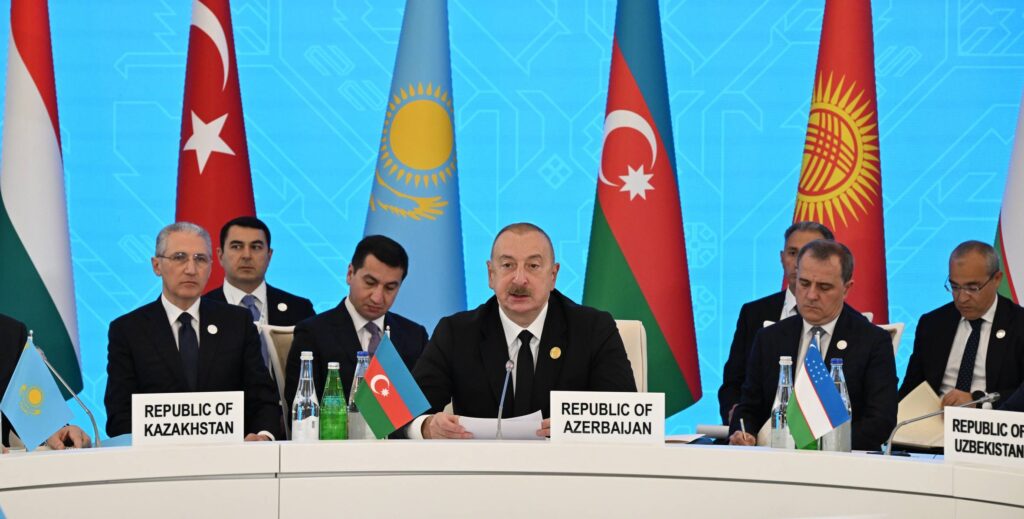
The informal OTS summit in Shusha, hosted at the invitation of Ilham Aliyev, centered on the theme of "Building a Sustainable Future through Transportation, Connectivity and Climate Action." Attendees included Presidents Kassym-Jomart Tokayev of Kazakhstan, Sadyr Japarov of Kyrgyzstan, Shavkat Mirziyoyev of Uzbekistan, Ersin Tatar of the Turkish Republic of Northern Cyprus, Prime Minister Viktor Orban of Hungary, and OTS Secretary General Kubanychbek Omuraliev. In place of Erdoğan, who was in Germany supporting the Turkish national soccer team ahead of a crucial Euro 2024 quarter-final against the Netherlands, Vice President Cevdet Yılmaz attended. Turkmen President Serdar Berdimuhamedov was also absent due to hosting UN Secretary-General António Guterres in Ashgabat. Notably, the Shusha summit occurred just two days after the meeting of SCO leaders in Astana, which drew an exceptional amount of attention from international observers due to the participation of the Russian and Chinese leaders. The intrigue surrounding the SCO summit was linked to its closed session, attended only by the Shanghai Ten. At the summit, only the speech delivered by Tokayev was made available to the press. Speeches made in the subsequent SCO+ format sessions were made public, wherein Russian President Vladimir Putin and Chinese President Xi Jinping underscored the need for a multi-polar world, suggesting that the SCO members had discussed shifting away from Western cooperation towards the Global South. At the Shusha summit Aliyev highlighted Azerbaijan's commitment to strengthening ties within the Turkic world, emphasizing the importance of the political, economic, and military consolidation of Turkic States as a global power center. Aliyev stated that Azerbaijan has consistently sought to unite the Turkic world and enhance its influence on the global stage, stressing that the OTS should seek to emerge as a significant global power. "We cover a large geographical space and positive demographic dynamics are observed in the member countries. Our greatest assets are our rich natural resources, modern infrastructure for their delivery, transportation corridors connecting Central Asia and the Caucasus with Mediterranean and Black Sea ports, and our rich and ancient history and culture. The commitment of our people to traditional values and ethnic commonality closely unites our countries. The 21st century should become the century of prosperity of the Turkic world," the Azerbaijani leader emphasized. Aliyev also addressed the primary tasks which lie ahead for the OTS, referencing the Astana Declaration of the SCO, which designates Central Asian republics as the organization's foundation. Leaders of these republics who attended the summit in Shusha, Tokayev, Shavkat Mirziyoyev, and Sadyr Japarov, endorsed Aliyev's call for the expansion of the East-West transport corridor connecting Central Asia and Eurasia to Europe. Aliyev further highlighted the Digital Silk Road project, which aims to establish a fiber-optic telecommunication route between Europe and Asia via the Caspian Sea through Azerbaijan. Furthermore, when the President of Kazakhstan delivered his speech, he stressed the significance of the Trans-Caspian International Transportation Route. "The potential of the Trans-Caspian International Transport Route should be fully utilized. Today, the volume of container transportation along this corridor has...
Roundtable on Uzbekistan’s Reform Agenda

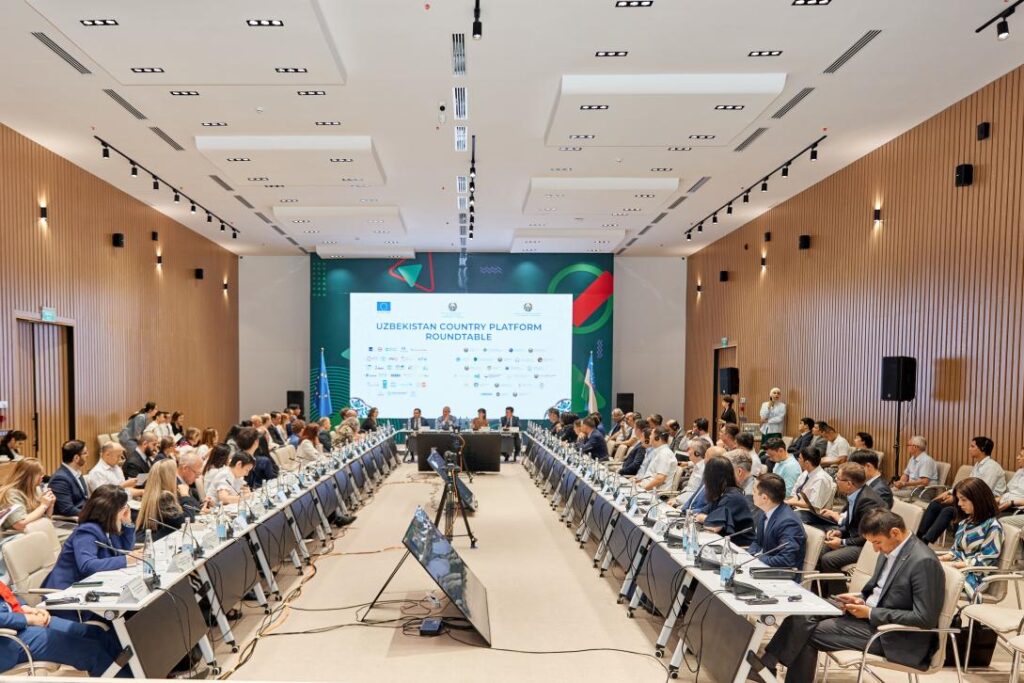
The 2nd Roundtable of Uzbekistan’s Country Platform was held last week in Tashkent. Backed by the European Union, the event provided a platform for discussions amongst over 80 government partners and international institutions on Uzbekistan’s reform agenda and coordinate support activities. As reported by the Delegation of the European Union to Uzbekistan, the participants agreed to continue collaboration through more than 13 sectoral working groups supporting issues prioritized by the Uzbekistan–2030 Strategy including agriculture, energy security, green growth, and the rule of law. Led by the Agency for Strategic Reforms (ASR) under the President of Uzbekistan and the Ministry of Economy and Finance of Uzbekistan, and with secretarial assistance from the European Union, the Country Platform aims to foster effective coordination. Bakhodir Rakhmatov, Director of the Agency for Strategic Reforms, commented: “Constructive collaboration between development partners and government ensures achievement of the priority reform objectives identified by President Mirziyoyev aimed at creating a more prosperous and sustainable future for all. The ASR plays a pivotal role in coordinating the engagement of ministries and agencies with development partners.” Taking over the support previously provided by the World Bank in May, the European Union committed to assisting the Country Platform until the end of 2025. “The European Union is honored to co-chair and promote the Country Platform as a forum for open dialogue, cooperation and collaboration between Uzbekistan and development partners,” said Charlotte Adriaen, Ambassador of the European Union to Uzbekistan. “The common goal is to support Uzbekistan in its reform path. The Platform is an opportunity to join forces, to effectively move together bringing prosperity, sustainable development, leaving no one behind.”    

Foreign Political Parties Banned in Uzbekistan

Uzbekistan has added to the law "On Political Parties," prohibiting the establishment and operation of foreign political parties and their subdivisions in Uzbekistan. The corresponding amendments were signed by President Shavkat Mirziyoyev, Kun.uz reports. Furthermore, the amendments broadened the conditions under which the powers of a deputy of the lower house and a senator could be terminated early. Elected representatives are prohibited from engaging in other paid activities (except for scientific, creative, and pedagogical work) and holding their positions if they have a permanent residence permit abroad. Additionally, parliamentarians will lose their mandate if they fail to participate for 30 days without a valid reason in the activities of their respective chamber, political party faction, committee, or commission. Similar measures are envisaged for deputies of regional, district, and city councils of people's deputies (local parliament). Five political parties are registered in Uzbekistan: the Liberal Democratic Party, the Milliy Tiklanish (National Revival) Democratic Party, the Adolat (Justice) Social Democratic Party, the People's Democratic Party, and the Ecological Party.

Nuclear Race: Will Central Asia Build a Nuclear Power Plant?

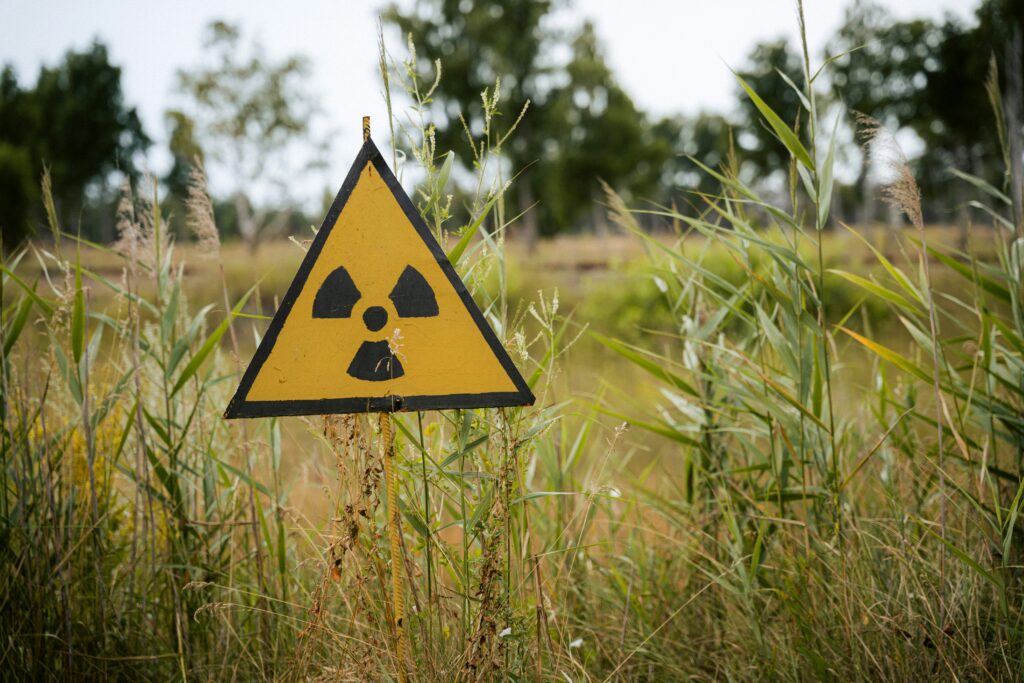
The answer to the question posed in the title remains uncertain. While Uzbekistan has plans to construct a nuclear power plant and Kazakhstan is set to hold a referendum this fall to gauge public opinion on building one, progress is sluggish. Tashkent has postponed the start of construction, and the issue sparks heated debate in Kazakhstan. The First Nuclear Power Plant in Central Asia Historically, Central Asia did host a nuclear facility. Located on the shore of the Caspian Sea in Kazakhstan, this was not a conventional nuclear power plant but a fast neutron reactor known as BN-350. The reactor was the core of the Mangistau Nuclear Power Plant, designed to transform the Mangyshlak Peninsula by providing energy to the city of Aktau (formerly Shevchenko) and powering large-scale desalination plants that supplied drinking water to the arid region. [caption id="attachment_20031" align="aligncenter" width="366"] BN-350[/caption] Operational from 1973 until its shutdown in 1999, the BN-350 reactor was decommissioned due to the allocation of U.S. funds for new desalination and heating equipment and the disposal of its remaining fuel. The extensive maintenance and decommissioning work on the BN-350 have given Kazakhstani nuclear physicists significant experience with such complex and hazardous technology. However, younger generations in Kazakhstan are largely unaware of the BN-350 reactor’s existence. Their knowledge of nuclear physics is often limited to the harrowing stories passed down about nuclear warhead tests at the Semipalatinsk test site and their devastating effects. Fear and Nuclear Power: Kazakhstan's Dilemma The societal fear surrounding nuclear energy in Kazakhstan is deeply intertwined with political concerns. For a long time, the leadership in Kazakhstan has hesitated to move beyond merely discussing the need for a nuclear power plant (NPP) to actually initiating the project. President Kassym-Jomart Tokayev recently announced that a referendum would take place in the fall of 2024. However, Ministry of Energy's officials avoided mentioning the word "referendum" until the last moment, previously asserting it was unnecessary. Public hearings were held last year in the village of Ulken, Zhambyl district, Almaty region, a proposed site for the nuclear plant. The Ministry of Energy’s press release stated that the local populace supported developing nuclear power, highlighting its significance for regional socio-economic growth. However, media reports revealed that the hearings were contentious, with opposing viewpoints almost disrupting the speech of Nurlan Ertas, the head (akim) of the Zhambyl district. Activists even displayed banners and posters against the plant's construction. Certain groups have exploited the population's fear of another disaster like Chernobyl. Additionally, the government has struggled to convince the public that nuclear technologies are becoming safer. In contrast, Europe now includes nuclear power plants in its list of green energy sources, similar to other renewable energy sources (RES). In Kazakhstan, renewable energy accounts for only 5% of the total energy produced. The introduction of NPPs could significantly enhance the country’s position in reducing carbon emissions. The government faces a growing electricity shortage that can be addressed either harmfully or fearfully. The harmful options are coal-fired thermal power plants...

Kyrgyz-Uzbek Automobile Plant Imports Components from Uzbekistan

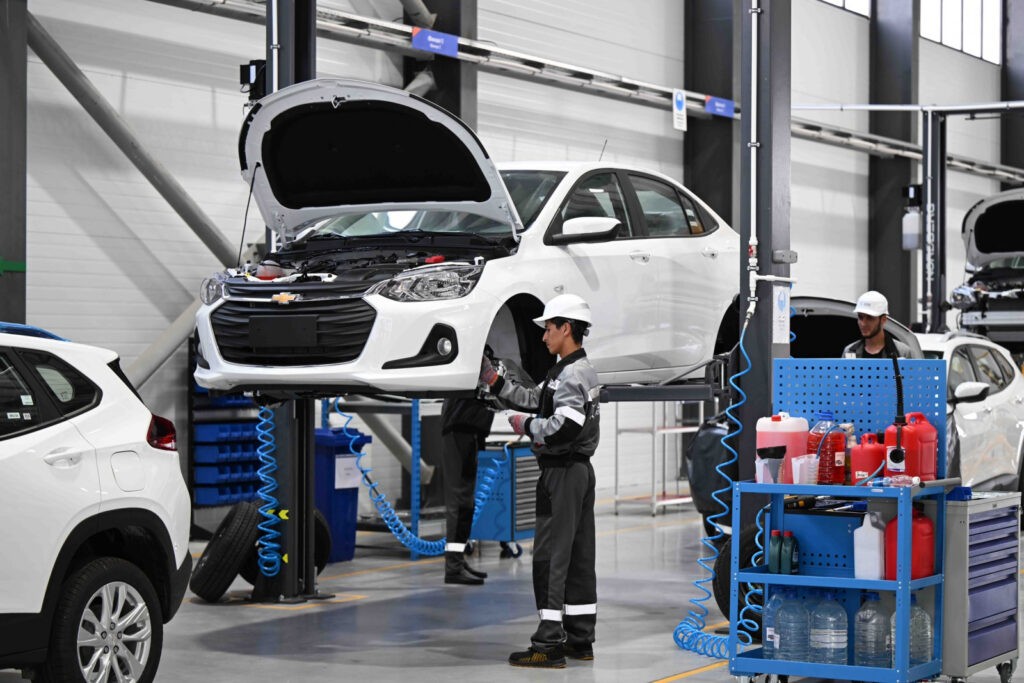
On July 5, Chairman of the Cabinet of Ministers of the Kyrgyz Republic, Akylbek Japarov visited the northern Chui region to inspect the Tulpar Motors assembly plant, a joint Kyrgyz-Uzbek enterprise for the manufacture of Chevrolet and Isuzu vehicles. Construction of the plant began in May 2023 and the first car rolled off its assembly line in May 2024. Already in operation, the plant will be officially opened in July-August by the president of Kyrgyzstan. According to plans, within five years, the number of employees at the plant will reach 1,400 and the total investment in the project, will amount to $110 million. During the first year, Uzbekistan’s UzAuto Motors will invest $50 million in the assembly of 10,000 cars, beginning with the Chevrolet Nexia R3. At the initial stage, components will be provided by Uzbekistan but thereafter, will be produced inhouse to enable the Kyrgyz plant's manufacture of some 20,000 vehicles per year. During his visit, the head of the Cabinet of Ministers noted that the cars, trucks, and buses produced by the plant will meet the demand in Kyrgyzstan and be available for export to other Central Asian countries.  

UN: Central Asia’s Big Youth Population is Key to Progress

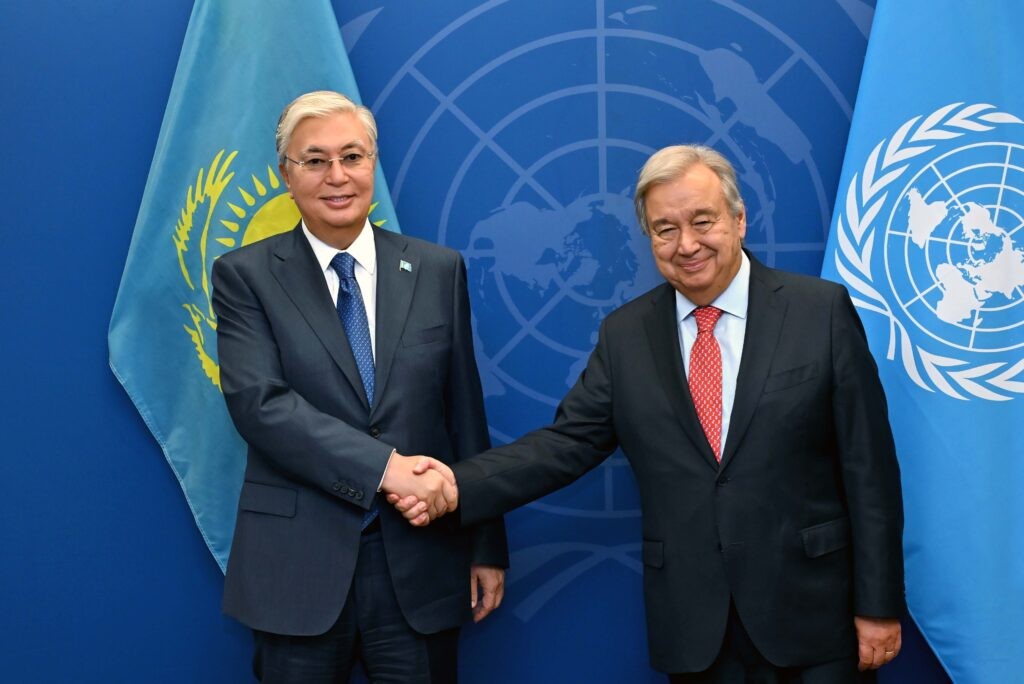
U.N. Secretary-General António Guterres shook hands with presidents and addressed dignitaries in ornate halls during a tour of Central Asia last week. But he also spent a lot of time with young people, saying “their potential is largely untapped” in a region where, by United Nations estimates, people under 30 years old make up more than 50% of the population. Guterres, a former prime minister of Portugal, met young climate activists in Kyrgyzstan and students in Turkmenistan. In Tajikistan, the U.N. chief said 70% of that country’s population is under 30 and told young people at a school there to hold elders to account on the pressing challenge of climate change. “You have the moral authority to talk to others - as those that suffered the impacts of climate change and are not contributing essentially to it,” Guterres said at a school established by UNICEF with funding from the European Union. “You are the victims of climate change. So, you have the right to tell the others, ‘Behave.´ Because they are not behaving.” Think globally, Guterres told the students. “It’s not Tajikistan or Uzbekistan,” he said. “No, it’s everything together.” The U.N.’s focus on young people having a say in Central Asia stems from a sense of possibility in what could shape up as an increasingly strong labor and leadership pool, as well as concern that young people with few prospects drift into unemployment and disenchantment, fueling social pressures and instability. The fertility rate in the wider region comprising Europe, North America and Central Asia has dropped in numerous countries in the last decade, while the “five Central Asian countries, Georgia, Israel and Monaco are the only countries in the region with a total fertility rate at or above replacement level,” the United Nations Economic Commission for Europe said in a report in October. At the same time, the report said, the Central Asian states are among the countries in the region that have “experienced negative net migration” since 2015, while countries receiving the largest numbers of migrants in that period were the United States, Russia, and Germany. The total population of the five Central Asian countries is about 76 million. Some of those countries, especially Tajikistan and Kyrgyzstan, rely heavily on remittances from nationals who struggle to find work at home and seek opportunities abroad, particularly in Russia. The alleged involvement of several Tajiks in a deadly terror attack in the Moscow area in March led to a backlash of harassment and intense scrutiny aimed at many Central Asian migrants in Russia. At a regional health forum in Kyrgyzstan last month, the Europe director of the World Health Organization, a U.N. agency, noted that Central Asia has a “significant young and educated population” at a time when European populations are aging. “This will – if the youth potential is maximized – give Central Asia an edge in the decades ahead,” the director, Dr. Hans Kluge, said.