• KGS/USD = 0.01144 0%
  • KZT/USD = 0.00216 0%
  • TJS/USD = 0.10456 0%
  • UZS/USD = 0.00008 0%
  • TMT/USD = 0.28490 0%
  • KGS/USD = 0.01144 0%
  • KZT/USD = 0.00216 0%
  • TJS/USD = 0.10456 0%
  • UZS/USD = 0.00008 0%
  • TMT/USD = 0.28490 0%
  • KGS/USD = 0.01144 0%
  • KZT/USD = 0.00216 0%
  • TJS/USD = 0.10456 0%
  • UZS/USD = 0.00008 0%
  • TMT/USD = 0.28490 0%
  • KGS/USD = 0.01144 0%
  • KZT/USD = 0.00216 0%
  • TJS/USD = 0.10456 0%
  • UZS/USD = 0.00008 0%
  • TMT/USD = 0.28490 0%
  • KGS/USD = 0.01144 0%
  • KZT/USD = 0.00216 0%
  • TJS/USD = 0.10456 0%
  • UZS/USD = 0.00008 0%
  • TMT/USD = 0.28490 0%
  • KGS/USD = 0.01144 0%
  • KZT/USD = 0.00216 0%
  • TJS/USD = 0.10456 0%
  • UZS/USD = 0.00008 0%
  • TMT/USD = 0.28490 0%
  • KGS/USD = 0.01144 0%
  • KZT/USD = 0.00216 0%
  • TJS/USD = 0.10456 0%
  • UZS/USD = 0.00008 0%
  • TMT/USD = 0.28490 0%
  • KGS/USD = 0.01144 0%
  • KZT/USD = 0.00216 0%
  • TJS/USD = 0.10456 0%
  • UZS/USD = 0.00008 0%
  • TMT/USD = 0.28490 0%

Viewing results 1513 - 1518 of 2883

Uzbekistan Plans to Earn $300 Million a Year From Medical Tourism

Nuz.uz reports that Uzbekistan plans to earn $300 million annually from medical services and tourism. At the meeting chaired by President Mirziyoyev, the program “Medical Hospitality” was announced, under which the budget will cover the costs of private clinics for international certification and participation in foreign exhibitions. Doctors traveling abroad to advertise and provide diagnostic services will be reimbursed for transportation and accommodation expenses. In addition, value-added tax will be refunded to foreign patients visiting clinics. "Last year, more than 60,000 foreign tourists were treated in 86 sanatoriums and medical institutions of the country. Suppose the number of such institutions is increased. In that case, it is possible to attract an additional 100,000 foreign patients, making it possible to earn $300 million a year from medical services,” the publication notes. Zumrad Bekatova, a member of the Legislative Chamber of the Oliy Majlis, said that Uzbekistan is paying special attention to expanding the network of private medical organizations, diversifying their activities, and strengthening their material and technical base. However, despite these efforts, only two private clinics have received international certification, and the share of foreign patients has yet to exceed 12%.
First NPP Reactor in Uzbekistan May Start Before 2033

Spot.uz reports that the first reactor of the Small Nuclear Power Plant is planned to be operational in five years. The project will be built near Tuzkon Lake, Farish District, Jizzakh Region. The cost has yet to be disclosed. “The cost of the low-power nuclear power plant construction project based on six RITM-200N reactor units with an installed capacity of 330 MW is confidential information and will not be disclosed,” Uzatom told Spot.uz. The small nuclear power plant's first reactor will be commissioned 60 months after the completion of priority works, which should begin this summer. Each subsequent reactor will be commissioned within six months. The full commissioning will occur before 2033. “During the construction of a low-power nuclear power plant, local general industrial equipment, products, and components are used by the specifications specified in the project documents. Considering the long service life of the small nuclear power plant, it is necessary to use local raw materials,” Uzatom stated. The Times of Central Asia previously reported that the contract for the construction of the NPP was concluded on May 27th, during Russian President Vladimir Putin's visit to Tashkent, between the Directorate for NPP Construction under the Atomic Energy Agency and the Atomstroyexport joint stock company (Rosatom’s engineering department).

Child Malnutrition Hits Central Asia

In its recently published report “Child Food Poverty 2024,” UNICEF has identified 63 countries, including four Central Asian countries, where child malnutrition has reached a  crisis point. Severe child food poverty threatens the survival, growth, and development of an estimated 181 million children under five globally, denying them the opportunity to escape social and economic deprivation. As stated in the report, “Child food poverty harms all children, but it is particularly damaging in early childhood when insufficient dietary intake of essential nutrients can cause the greatest harm to child survival, physical growth, and cognitive development. The consequences can last a lifetime: children deprived of good nutrition in early childhood perform worse in school and have lower learning capacity in adulthood, trapping them and their families in a cycle of poverty and deprivation.” The indicator of food ration determines children’s food security. It was developed by UNICEF and the World Health Organization (WHO). For healthy growth and development, children should consume at least five products from the following eight groups: Breast milk Grains, roots, tubers, and plantains Pulses, nuts, and seeds Dairy products Fresh foods Egg Vitamin A-rich fruits and vegetables Other fruits and vegetables. If children consume products that belong to just two groups, they live in extreme nutritional poverty; if they consume products belonging to three-four groups, they live in a moderate state related to nutrition. If they consume products belonging to five or more groups, they are considered not to be in a poor situation related to nutrition. Uzbekistan and Kyrgyzstan have average levels of child malnutrition, Turkmenistan has a low level, and Tajikistan has a high level.

South Korea Set to Intensify Cooperation with Central Asia

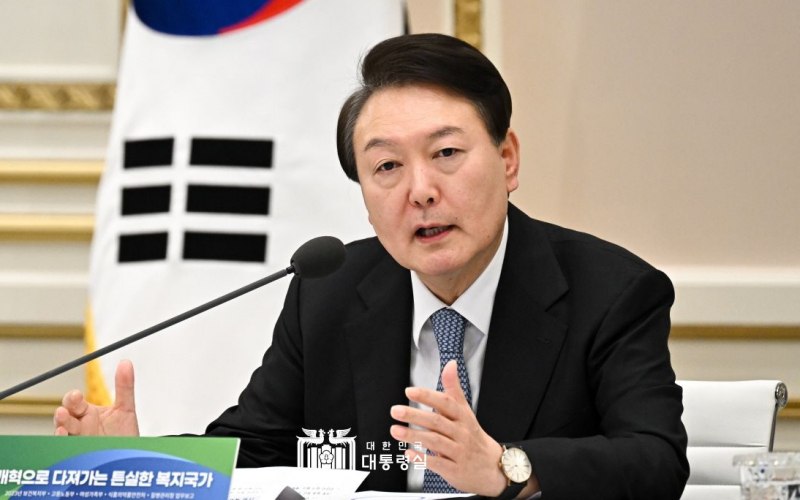
With the intention of  intensifying  cooperation between Seoul and Central Asia, South Korean President Yoon Suk-Yeol will make a state visit to three Central Asian countries from 10-15 June. As reported by Kim Tae-hyo First Deputy Director of the National Security Office of the Presidential Administration, President Yoon Suk-Yeol accompanied by his wife Kim Gong Hee, will visit Turkmenistan, Kazakhstan, and Uzbekistan and engage in talks with the countries' leaders as well as participate in business forums. Kim Tae-hyo emphasized that South Korea aims to intensify diplomacy and cooperation with Central Asia through wide-ranging efforts. These include a regular summit of the Korea-Central Asia K-Silk Road Initiative, the first of which will be hosted by Seoul next year. “Through this initiative, we intend to promote the joint, free, and peaceful development and prosperity of Korea and the Central Asian region,” stated Kim Tae-hyo The main areas of cooperation under the Initiative include the development of four key sectors : natural resources, official development assistance, cultural and people-to-people exchanges, and enhanced official and private contacts. Areas for cooperation will be identified and prioritized in each of the five Central Asian countries :Kazakhstan, Kyrgyzstan, Turkmenistan, Uzbekistan and Tajikistan. Cooperation in Kazakhstan will focus on energy and infrastructure; in Kyrgyzstan, water resources and tourism, and in Turkmenistan, constructing energy plants. Seoul makes no secret of its high interest in the region's rich natural resources, including uranium, lithium and tungsten.

Uzbekistan’s Soaring Air Transit Potential

Located at the heart of Central Asia, Uzbekistan offers great potential for air transit. According to the Transport Ministry of Uzbekistan, the country’s airspace transit routes comprise a 60% flow between Southeast Asia and Europe; 20% between the Middle East and China, Korea, and Japan; 10% between the Middle East and Russia; and 10% between Southeast Asia and Canada and the USA. The State Unitary Enterprise Uzaeronavigation, operating under the Ministry of Transport and responsible for air traffic control in Uzbekistan, currently serves over 500 airlines from around the world. As evidenced by the growth of traffic in the Uzbek airspace, routes through Uzbekistan are becoming increasingly profitable for many countries’ air carriers. Last year, Uzaeronavigation served 188 thousand flights, including 143 thousand by foreign airlines. Between January and April 2024, over 74 thousand flights were serviced in Uzbekistan’s airspace, an increase of 30% compared to the first quarter of 2023. Flights operated by Uzbek airlines rose by 42% to over 17 thousand, and those operated by foreign airlines increased by 26% to 56 thousand.      

Uzbekistan and Turkey Deepen Strategic Partnership

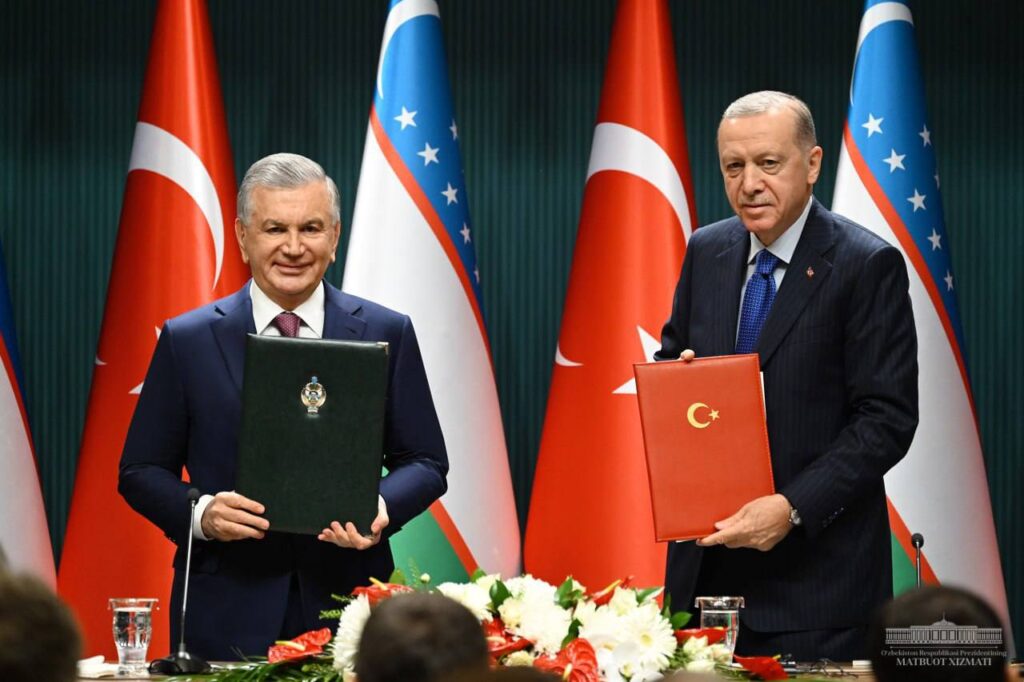
On 6 June, President of Uzbekistan Shavkat Mirziyoyev and President of Türkiye Recep Tayyip Erdogan signed a Joint Declaration in Ankara on deepening the comprehensive strategic partnership between the two nations. During the third meeting of the Uzbek-Turkish High-Level Strategic Cooperation Council, chaired by the presidents, Mirziyoyev emphasized that the establishment of the Strategic Cooperation Council “opened a new page in the history of Uzbek-Turkish relations and gave a powerful impetus to the further development of partnership in all areas.” It was stated that in recent years, trade turnover between Uzbekistan and Turkey has increased 1.5-fold, the number of joint ventures has doubled, and Turkish investments in the Uzbek economy has grown 2.5-fold. Ninety flights operate weekly between the countries’ major cities and the number of Turkish tourists in Uzbekistan has tripled. The two countries now aim to increase the volume of bilateral trade turnover to five billion dollars in the shortest possible time. Leading Turkish companies as Cengiz Holding, Aksa Energy, Çalık Holding, Akay Inşaat, Anadolu Group, Özgüven, and Eczacıbaşı Holding are currently implementing over 100 projects in Uzbekistan and during President Mirziyoyev’s visit, a portfolio of new investment projects worth $10 billion was formed. The agenda focused on strengthening industrial cooperation, deepening the localization of production of goods with high added value, and joint entry into the markets of third countries. Emphasis was also placed on the need to reduce customs tariffs within the framework of the Agreement on Preferential Trade and on the introduction of a trade mission of Uzbekistan in Istanbul. ​​The importance of cooperation in increasing the transport and logistics potential of the two countries, including  effective harnessing of opportunities of the Middle Corridor, was discussed. In recognition of his role in their countries’ allegiance, President Erdogan awarded President Mirziyoyev with the Order of the Republic; the highest state order awarded to foreign nationals by the President of Turkey. Thanking the president, Mirziyoyev announced: “It is a great honor for me to receive such a high award from the Republic of Turkey on the day of signing the Declaration on Deepening the Comprehensive Strategic Partnership between our countries. This award is a symbol of thousands of years of fraternal ties between our peoples, confidential dialogue at the highest level, as well as rapidly developing multifaceted bilateral relations.”